Strawberry rhubarb custard pie lands in that sweet spot between bright fruit pie and silky cream pie. The filling sets into a soft, sliceable custard with pockets of tart rhubarb and juicy strawberries, all tucked into a flaky crust that keeps its shape instead of turning soggy. When it’s cooled properly, each slice holds clean edges and gives you that creamy center people always hope for but don’t always get.
The part that makes this version work is the balance of fruit and custard. Rhubarb brings sharpness, strawberries bring perfume and juice, and the eggs with flour set the filling without making it dense. The first blast of high heat helps the crust start setting before the custard fully cooks, then the lower temperature finishes the pie gently so the eggs don’t curdle or weep.
Below you’ll find the one cooling step you really can’t rush, plus a few small adjustments that help if your berries are extra juicy or your crust browns faster than the filling sets.
The custard set up beautifully and the strawberries stayed bright instead of disappearing into the filling. I let it cool the full 3 hours, and the slices came out clean with no runny center.
Like this strawberry rhubarb custard pie? Save it to Pinterest for the days when you want a creamy fruit pie with a flaky crust and clean slices.
The Reason the Filling Sets Cleanly Instead of Turning Watery
Custard pies fall apart for two reasons: the filling gets overheated, or the fruit dumps too much liquid into the mixture before the eggs can set. This pie sidesteps both problems by baking in two stages and by relying on flour to help stabilize the custard. The first 15 minutes at 400°F start the crust and the outer edge of the filling, which gives you structure early. Then the lower heat lets the center finish gently.
The fruit also matters here. Rhubarb softens as it bakes but keeps enough shape to give the pie texture. Strawberries break down a little faster, so slicing them instead of chopping them keeps the fruit pieces visible without flooding the custard. If your berries are especially juicy, don’t add extra flour to the filling unless you want a heavier slice; the better fix is to let the pie cool completely so the custard can finish setting.
What Each Ingredient Is Doing in This Pie
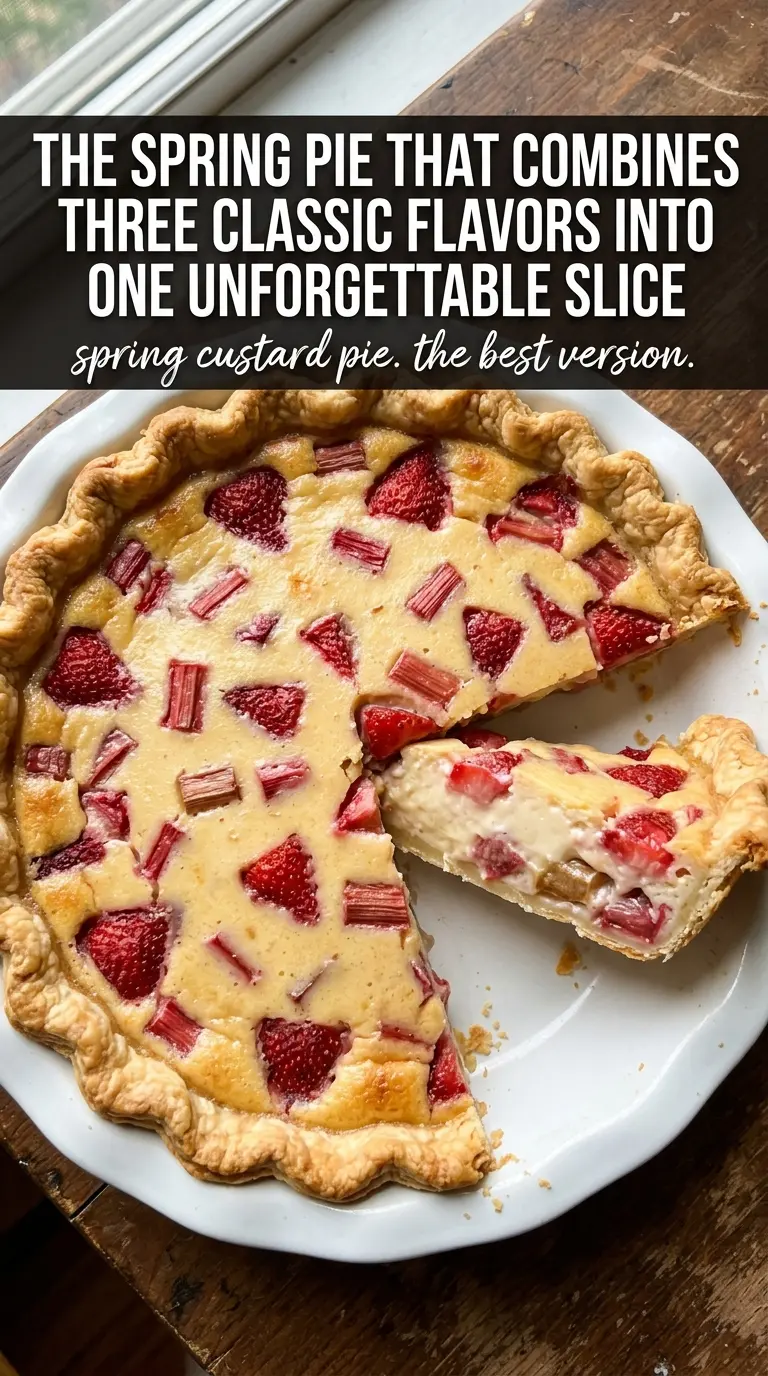
- Rhubarb — This is the tart backbone of the pie. Fresh rhubarb gives you clean flavor and enough structure to stay distinct in the custard. If you use frozen, thaw it first and drain it well, or the filling can turn loose.
- Strawberries — These soften into sweet pockets and balance the rhubarb’s sharpness. Fresh berries hold their shape better than frozen, which matters if you want those visible fruit pieces in every slice.
- Eggs — They set the custard. There isn’t a true substitute if you want the same sliceable texture. Beat them until smooth with the sugar so the filling bakes evenly instead of streaking.
- Flour — A little flour gives the custard body and helps prevent a runny center. That small amount is what keeps the pie from acting like a fruit soup under the crust.
- Heavy cream — This adds richness and keeps the filling from tasting flat or eggy. Half-and-half can work in a pinch, but the custard will be a little less luxurious.
- Pie crust — A sturdy unbaked crust is the base that makes this pie possible. If your crust tends to brown fast, set the pie on a lower oven rack and shield the edges partway through baking.
Building the Custard Without Scrambling the Eggs
Layering the Fruit First
Arrange the rhubarb and strawberries directly in the unbaked crust before the custard goes in. That keeps the fruit distributed all the way through the pie instead of floating to the top. If you pile the filling into the center first, the custard will set unevenly and the slices won’t look as clean.
Whisking the Custard Smooth
Whisk the sugar, eggs, flour, cream, vanilla, and salt until the mixture looks completely smooth and a little pale. Any little pockets of flour left behind will show up as lumps in the baked filling. The goal is a pourable custard that looks uniform before it ever hits the oven.
Baking in Two Temperatures
Start at 400°F for 15 minutes, then drop the heat to 350°F for the remaining 35 to 40 minutes. That first burst helps the crust begin to set, while the lower temperature keeps the custard from curdling at the edges. Pull the pie when the center still has a slight wobble; it should jiggle like set gelatin, not slosh like liquid.
Cooling Until the Slice Holds
Let the pie cool completely for at least 3 hours before cutting. This is the part that tests your patience, but it’s what turns a soft bake into a clean slice. If you cut too soon, the custard will spill and the filling will look underbaked even when it’s not.
How to Adapt This Pie When You Need a Different Finish
Use a Frozen Fruit Shortcut
You can use frozen rhubarb and strawberries if that’s what you have, but thaw them first and drain off as much liquid as possible. Frozen fruit releases more moisture, so skipping the drain step usually leads to a softer, looser custard.
Make It Gluten-Free
Use your favorite gluten-free pie crust and swap the all-purpose flour for a 1:1 gluten-free baking blend. The crust is the part where gluten matters most, so choose one that bakes up sturdy; the filling itself handles the swap without much trouble.
Make the Pie a Little Less Sweet
Reduce the sugar by 2 to 3 tablespoons if your strawberries are very ripe. The pie will still set the same, but the flavor shifts toward a tarter, brighter finish that lets the rhubarb come forward more.
Storage and Reheating
- Refrigerator: Store covered for up to 4 days. The crust softens a little after day one, but the filling stays pleasant and sliceable.
- Freezer: This pie freezes fairly well after baking and cooling completely. Wrap it tightly, freeze up to 2 months, and thaw overnight in the fridge; the custard texture may be a touch softer after thawing, but it still holds together.
- Reheating: Serve chilled or let slices sit at room temperature for 20 to 30 minutes. If you warm it, do it gently and only briefly, because high heat will loosen the custard and make the filling seep.
Answers to the Questions Worth Asking
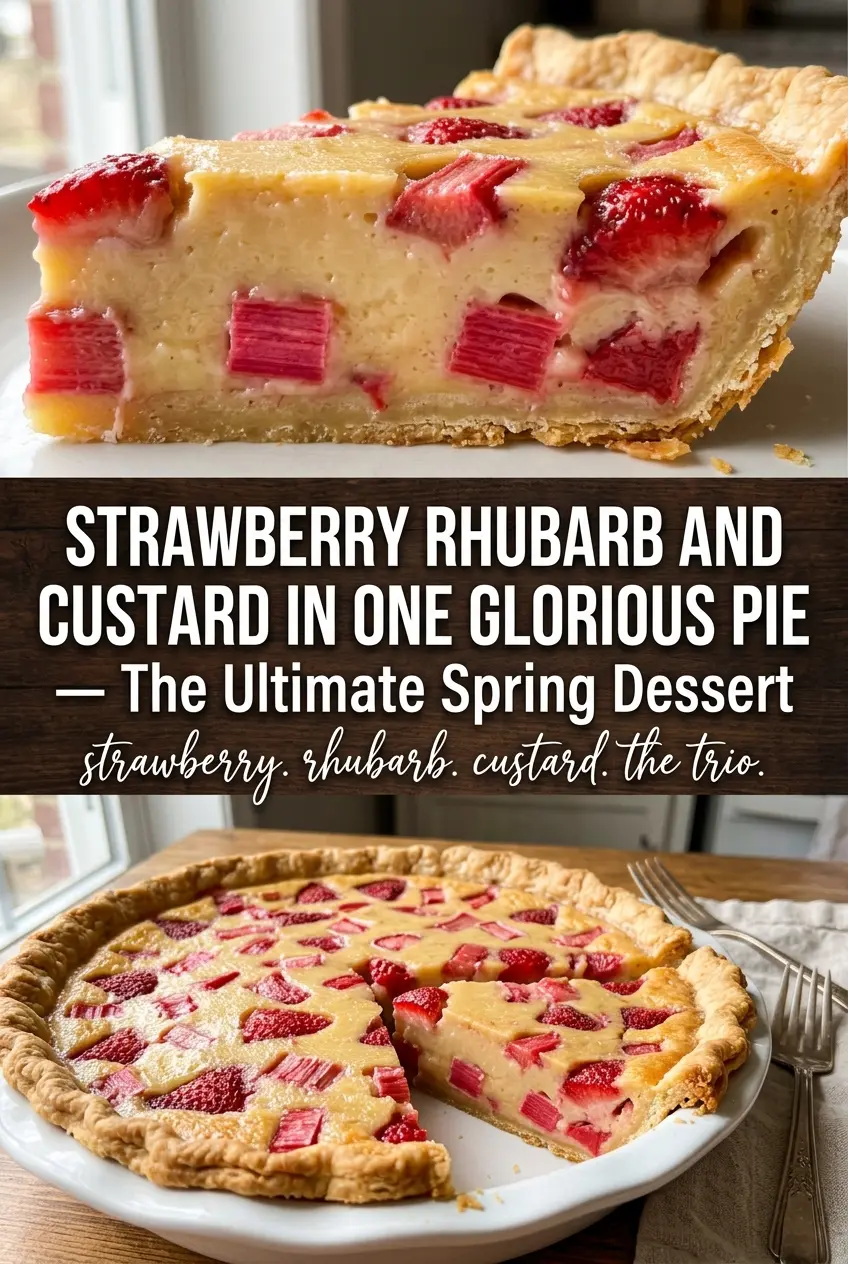
Strawberry Rhubarb Custard Pie
Ingredients
Equipment
Method
- Preheat the oven to 400°F and place the unbaked 9-inch pie crust into a 9-inch pie plate so it sits flat at the edges.
- Arrange the diced rhubarb and sliced strawberries in the bottom of the crust in an even layer.
- Whisk together the sugar, eggs, all-purpose flour, heavy cream, vanilla extract, and salt until smooth and fully combined with no visible flour pockets.
- Pour the custard mixture over the fruit, making sure it fills gaps so the fruit is mostly covered.
- Bake at 400°F for 15 minutes until the custard begins to set around the edges.
- Reduce the oven temperature to 350°F and bake for 35-40 minutes more until the custard is set and still slightly jiggly in the center.
- Cool the pie completely for at least 3 hours until fully chilled and firm, with a sliceable custard texture.
- Serve chilled with whipped cream so each slice shows custard and visible fruit pieces.