Juicy roasted chicken, cool crunchy vegetables, and a bright herby ranch dressing make these sheet pan chicken pitas the kind of dinner that disappears fast. The chicken gets deeply seasoned and roasted until the edges turn golden, then it’s sliced and tucked into warm pita with enough fresh crunch to keep every bite lively. It’s the balance that makes it work: savory chicken, cold vegetables, soft bread, and a dressing that ties everything together without turning heavy.
Boneless chicken thighs are the right choice here because they stay tender under high oven heat and keep their flavor even after a short rest. Roasting everything on a sheet pan keeps the process simple and gives the chicken enough direct heat to brown instead of steam. The herby ranch matters just as much as the chicken. Fresh dill, chives, and parsley cut through the richness of the mayonnaise and sour cream, and a small splash of buttermilk loosens it just enough to drizzle cleanly.
Below, you’ll find the small details that make these pitas better than a basic chicken wrap, including how to keep the chicken juicy, how to build the ranch so it tastes fresh instead of flat, and a few smart swaps if you want to change up the vegetables or make them dairy-free.
The chicken stayed juicy even at 25 minutes, and the herby ranch made the whole pita taste fresh instead of heavy. I liked that the pita warmed at the same time, so dinner came together fast.
Save these sheet pan chicken pitas with herby ranch for a fast dinner with juicy chicken, crisp vegetables, and a bright homemade dressing.
The Trick to Chicken Thighs That Stay Juicy in a Hot Oven
Chicken thighs earn their place here because they can take the heat. The biggest mistake with sheet pan chicken is cutting the pieces too small or crowding them so tightly that they steam instead of roast. Keep the thighs in a single layer with space around them, and let the oven do the work. You’re looking for browned edges, opaque juices, and meat that gives slightly when pressed, not dry shreds that collapse as soon as you slice them.
The seasoning mix matters too. Oil helps the paprika and garlic powder cling to the chicken and encourages browning, while salt pulls flavor into the meat. If your chicken comes out pale, the pan was likely overcrowded or the oven wasn’t fully hot before the tray went in. A properly preheated 425°F oven gives the thighs enough direct heat to develop color before the interior overcooks.
What Each Part of the Pita Is Doing
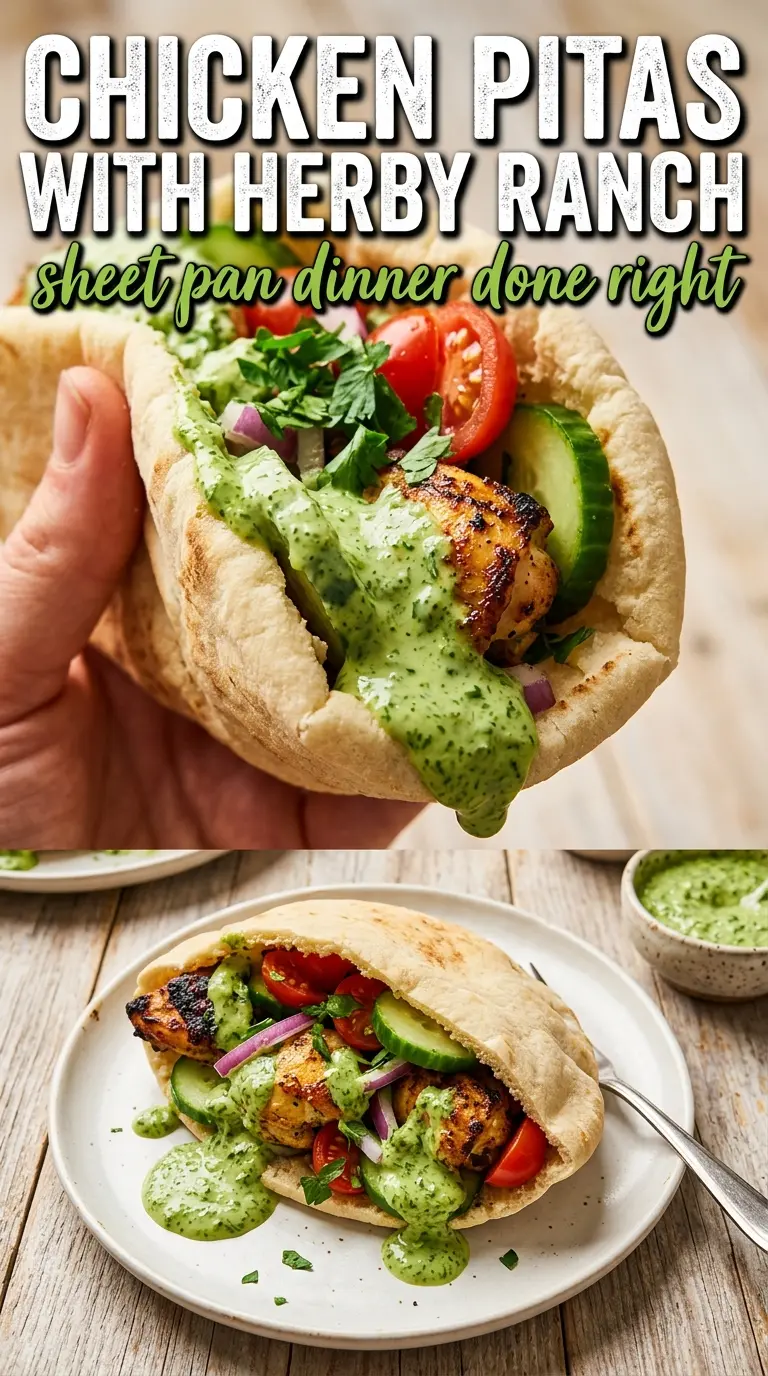
- Boneless chicken thighs — Thighs stay tender and flavorful even at high heat, which makes them more forgiving than chicken breast. If you swap in breast, cut it into larger strips and pull it early so it doesn’t dry out.
- Olive oil — This helps the spices coat the chicken evenly and promotes browning on the sheet pan. A neutral oil works, but olive oil adds a little extra flavor that fits the ranch and vegetables.
- Fresh dill, chives, and parsley — These herbs give the dressing its clean, green flavor. Dried herbs won’t give the same brightness here, so this is one place where fresh matters.
- Mayonnaise and sour cream — Mayo gives the ranch body, while sour cream brings tang and keeps it from tasting flat. You can replace the sour cream with Greek yogurt if you want a sharper, thicker dressing.
- Buttermilk or milk — This loosens the dressing to a drizzleable consistency. Buttermilk gives the best ranch flavor, but milk works fine if you want a lighter, milder sauce.
- Pita breads — Warm pita tears less and tastes better against the hot chicken. If the pita is stiff or cold, it will crack when you fold it.
Roasting, Resting, and Building the Pitas Without a Soggy Middle
Season and space the chicken
Toss the chicken thighs with olive oil, garlic powder, paprika, salt, and pepper until every piece looks evenly coated and glossy. Spread them on a foil-lined sheet pan in a single layer with a little space between pieces. If they’re piled up, the juices trap steam and the surface won’t brown. The pan should go into a fully preheated oven, not one that’s still climbing toward temperature.
Make the herby ranch while the chicken roasts
Stir the mayonnaise, sour cream, herbs, garlic, and buttermilk together until the dressing looks smooth and flecked with green. It should be thick enough to cling to a spoon but loose enough to drizzle. If it seems too thick, add a little more milk one teaspoon at a time. Refrigerating it while the chicken cooks helps the garlic mellow and the herbs infuse the dressing.
Rest before slicing
When the chicken comes out, let it rest for 5 minutes before slicing. That short pause keeps the juices inside the meat instead of running across the cutting board. Slice against the grain into strips so the chicken stays tender inside the pita. If you cut too soon, the chicken will look moist for a minute and then go dry in the sandwich.
Warm the pitas at the end
Slip the pitas into the oven for the last 2 minutes of cooking so they come out soft and pliable. Cold pita tears, and an overbaked pita turns brittle fast. You want them warm enough to bend but still soft at the center. Fill them right away so they stay flexible while you add the chicken and vegetables.
How to Adjust These Pitas for What’s in Your Kitchen
Make It Dairy-Free
Use a dairy-free mayonnaise and replace the sour cream with an unsweetened dairy-free yogurt. Thin the dressing with a little unsweetened non-dairy milk until it can be drizzled. The flavor will still be creamy and herb-forward, though it won’t have the same tang as classic ranch.
Swap the Chicken for Breast
Chicken breast works if that’s what you have, but it needs less time and a closer eye. Cut it into thick strips so it doesn’t dry out before the outside browns. The result will be leaner and a little less rich than thighs, so the herby ranch becomes even more important.
Turn It Into a Bowl
Skip the pita and pile everything over rice, chopped romaine, or quinoa. This keeps all the same flavors but gives you a sturdier base if you want a gluten-free meal or a lighter dinner. The ranch works especially well this way because it acts like both dressing and sauce.
Storage and Reheating
- Refrigerator: Store the chicken and vegetables separately for up to 3 days. The pitas soften if they’re filled ahead of time.
- Freezer: The roasted chicken freezes well for up to 2 months. Freeze it sliced in an airtight container, but don’t freeze the ranch or fresh vegetables.
- Reheating: Warm the chicken in a skillet over medium-low heat or in the oven until just hot. Microwaving too long will dry out the thighs and make the edges rubbery.
Answers to the Questions Worth Asking

Sheet Pan Chicken Pitas with Herby Ranch
Ingredients
Equipment
Method
- Preheat oven to 425°F and line a sheet pan with foil.
- In a bowl, toss chicken thighs with olive oil, garlic powder, paprika, salt, and pepper, then spread on the sheet pan in an even layer.
- Roast for 22–25 minutes until cooked and golden, with a visible browned surface.
- Rest the chicken 5 minutes, then slice into strips while the surface remains juicy.
- Blend mayonnaise, sour cream, fresh dill, fresh chives, fresh parsley, minced garlic, and buttermilk or milk until smooth.
- Season with salt and pepper to taste, then refrigerate until ready to use.
- Warm the pita breads in the oven for the last 2 minutes of chicken cooking until hot and pliable.
- Load each pita with roasted chicken slices, shredded lettuce, cherry tomatoes, cucumber, and red onion.
- Drizzle generously with herby ranch and serve immediately, with herbs visible on top.