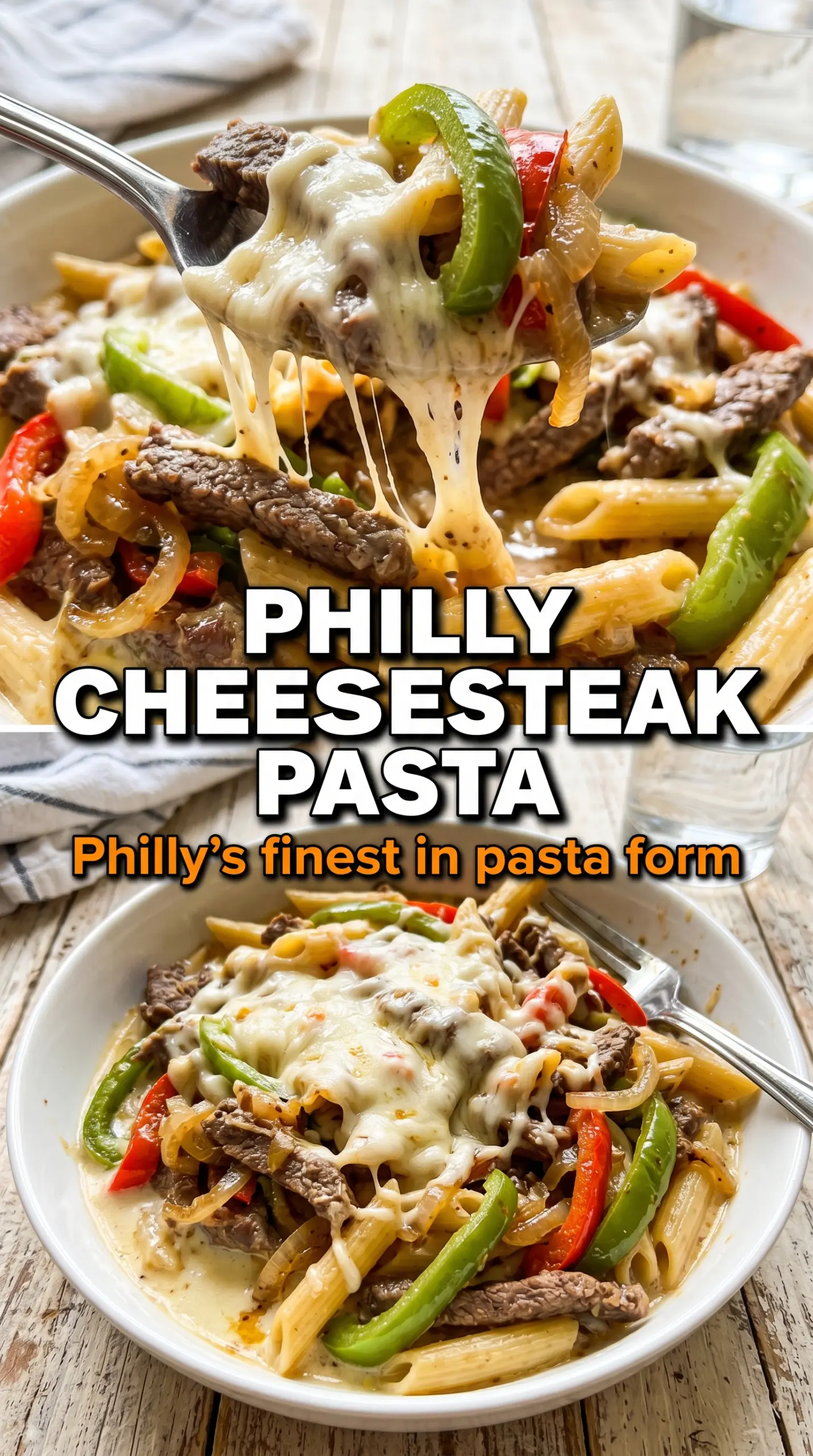
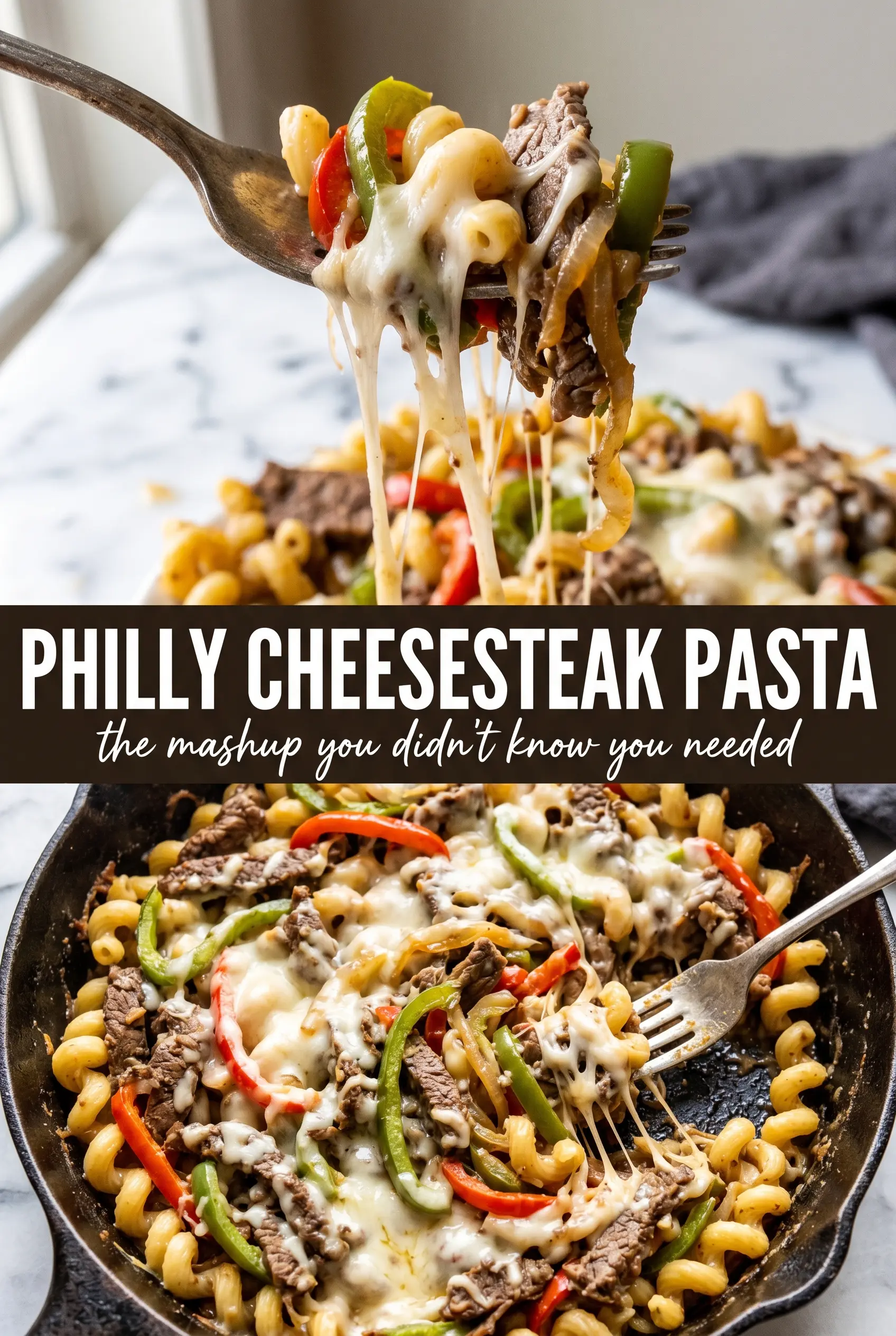
Penne coated in a provolone cream sauce, tucked around shaved steak, sweet peppers, and caramelized onions, has the same satisfying pull as a classic cheesesteak but eats like a full pasta dinner. The sauce clings to every ridge and curve, and the mushrooms round out the filling without stealing the spotlight from the beef. It lands on the plate rich, savory, and sturdy enough to hold up for seconds without turning heavy.
What makes this version work is the order. The steak gets browned first and taken out, which keeps it tender instead of overcooked while the vegetables cook down in the same pan. Then the broth and cream pick up the browned bits, and the provolone goes in off a gentle simmer so it melts smooth instead of turning stringy or grainy. That pan sauce is the whole game here.
Below, I’ve added the small details that matter most: how to keep the cheese sauce silky, which shortcut works if you can’t find shaved steak, and the best way to reheat the leftovers without drying out the pasta.
The provolone sauce coated every piece of pasta and stayed smooth, and the steak was still tender after I tossed it back in at the end. My husband kept going back for seconds because the peppers and onions tasted just like a cheesesteak.
Save this Philly Cheesesteak Pasta for the nights when you want steak, peppers, and melty provolone in one pan.
The Steak Needs a Head Start, Not the Pasta
The biggest mistake in a dish like this is trying to cook everything together from the beginning. Steak and pasta want different timing. The pasta needs boiling water and then a quick toss at the end, while the steak needs a hot skillet and a short sear before it goes back in only long enough to warm through.
That separation keeps the beef tender and the pasta from going mushy. It also gives the vegetables room to actually brown. If you crowd the pan at the start, the peppers and onions steam, the mushrooms turn soft instead of golden, and the sauce loses the deep savory base that makes this taste like more than just creamy pasta with meat in it.
- Shaved steak or thin-sliced sirloin — Shaved steak cooks fast and stays tender. If you use sirloin, slice it as thinly as you can against the grain so it doesn’t eat like roast beef chunks.
- Provolone — This is the flavor that makes the dish read as cheesesteak, not just beef pasta. Mild provolone melts smoothly; sharp provolone gives more bite if that’s what you want.
- Beef broth — It stretches the cream and carries the steak flavor through the whole sauce. A good boxed broth is fine here, but a weak one will leave the sauce flat.
- Mushrooms — They’re not traditional in every cheesesteak, but here they add depth and help the pan sauce taste fuller. Slice them thick enough that they brown instead of disappearing.
What Each Ingredient Is Actually Doing in This Recipe
- Primary ingredient (the star) — Quality matters most. Choose the best you can find.
- Cooking medium (oil, butter, or broth) — This carries flavors and prevents dryness.
- Seasonings (salt, pepper, spices, herbs) — Layer flavors so nothing overpowers. Build depth gradually.
- Aromatics (garlic, onion, herbs) — Cook with fat to bloom flavors. Become the foundation.
- Supporting ingredients — Complement the main ingredient without overpowering it.
- Sauce or liquid (if applicable) — Brings flavors together. Balance richness with acid.
- Acid (lemon, vinegar, wine, or other) — Brightens and prevents flat-tasting results.
- Final finish (garnish, glaze, or sauce) — Prevents one-dimensional taste and adds visual appeal.
Building the Sauce So It Stays Smooth
Browning the Steak Fast
Get the skillet hot before the steak goes in. You want a sizzle the second the meat hits the pan and browned edges within a couple of minutes, not a slow gray cook. Pull it out as soon as it’s browned; if it stays in while the sauce finishes, it tightens up and turns chewy.
Cooking the Vegetables Down
The onions, peppers, and mushrooms need enough time to lose their raw bite and pick up color. Cook them over medium-high heat until the onions turn soft and the pan looks a little glossy from the butter and released juices. If the pan starts to dry out before the vegetables brown, add a small splash of broth instead of more butter.
Finishing the Sauce Without Breaking It
Once the broth and cream go in, let the mixture come to a gentle simmer and reduce slightly before adding the cheese. The provolone melts best when the heat is low enough that the sauce is barely moving. If the sauce looks grainy, it usually means the cheese went in over high heat or was stirred into a hard boil; take the pan off the burner and stir until it smooths out.
Tossing Everything Together
Add the drained pasta to the sauce first, then fold in the steak. That gives the pasta a chance to coat fully before the beef is added back, which keeps the meat from getting lost at the bottom of the pan. If the sauce seems tight, a splash of reserved pasta water loosens it and helps the cheese cling instead of seizing.
How to Adapt This for Different Pans and Diets
Gluten-Free Philly Cheesesteak Pasta
Use your favorite gluten-free penne or rigatoni and keep the sauce ingredients the same. The only real difference is timing: gluten-free pasta can go from firm to soft fast, so pull it when it still has a little bite and finish it in the sauce for the best texture.
Dairy-Free Version
Swap the butter for olive oil and use an unsweetened dairy-free cream with a meltable dairy-free cheese if you’ve found one that behaves well in sauce. The flavor will be less classic, but the steak, peppers, and onions still carry the dish if you season carefully and keep the sauce at a low simmer.
No Shaved Steak on Hand
Thin-sliced sirloin works well if you cut it across the grain into short strips. It won’t shred as delicately as shaved steak, but it still gives you that thin, tender bite as long as you sear it quickly and don’t overcook it in the sauce.
Storage and Reheating
- Refrigerator: Store in an airtight container for up to 4 days. The sauce thickens as it chills, and the pasta will keep soaking up a little of it.
- Freezer: It freezes, but the cream sauce can loosen and separate slightly after thawing. If you do freeze it, cool it completely first and thaw it in the refrigerator before reheating.
- Reheating: Warm it gently on the stove or in the microwave with a splash of broth or milk to bring the sauce back. High heat is what usually makes the cheese sauce break and the steak turn tough.
Questions I Get Asked About This Recipe
Philly Cheesesteak Pasta
Ingredients
Equipment
Method
- Cook penne or rigatoni pasta in salted boiling water until al dente, about 9–11 minutes, then reserve 1/2 cup pasta water and drain.
- Drain the pasta well so it doesn’t dilute the sauce.
- Season shaved steak or thinly sliced sirloin with salt and black pepper to taste, then sear in a hot skillet with 1 tablespoon butter for 2–3 minutes until browned.
- Set the browned steak aside to keep it from overcooking.
- Melt remaining butter in the same skillet and cook the sliced large onion, green bell pepper, red bell pepper, and mushrooms over medium-high heat for 6–8 minutes until caramelized.
- Add minced garlic and Worcestershire and cook for 30–60 seconds until fragrant.
- Pour in beef broth and heavy cream, bring to a simmer, and cook for 3–4 minutes until slightly reduced.
- Stir in shredded provolone cheese until melted and smooth.
- Toss the pasta and set-aside steak into the provolone sauce, adding reserved pasta water as needed to loosen.
- Serve immediately with extra provolone on top.