Silky garlic Parmesan sauce clings to every strand of pasta here, and the golden sliced chicken on top gives the whole bowl enough substance to turn dinner into something people actually look forward to. The sauce tastes rich without feeling heavy, and it settles into that sweet spot where it’s creamy, glossy, and just loose enough to coat the noodles instead of burying them.
What makes this version work is the order. The chicken gets a proper sear first, then the same skillet builds the sauce, so every browned bit left behind ends up in the final dish. Freshly grated Parmesan melts cleanly, while a little pasta water helps the sauce emulsify instead of turning grainy or gluey.
Below, I’ve broken down the one step people usually rush, the ingredient choices that matter most, and the small adjustments that keep the sauce smooth if you want to change the pasta shape or make it lighter.
The sauce came together smooth and glossy, and the pasta water kept it from getting too thick. I was nervous about the Parmesan clumping, but it melted right in and coated every strand.
Save this garlic Parmesan chicken pasta for the night you want creamy spaghetti, golden chicken, and a skillet sauce that stays silky.
The Trick That Keeps the Sauce Smooth After the Parmesan Goes In
The biggest failure point in garlic Parmesan chicken pasta is adding the cheese too early or over too much heat. Parmesan can turn sandy or seize into little threads if the sauce is boiling when it goes in, and that’s how a dish that should taste luxurious ends up grainy. Pull the heat back to a gentle simmer, then stir in the cheese a handful at a time so it melts into the cream instead of clumping on contact.
The other thing that matters is the pasta water. It isn’t just there to thin the sauce; the starch helps it cling to the spaghetti and gives the cream sauce a more velvety finish. If the sauce looks tight when the pasta goes in, add the water in small splashes until it turns glossy and moves easily around the noodles.
What Each Ingredient Is Actually Doing in This Dish
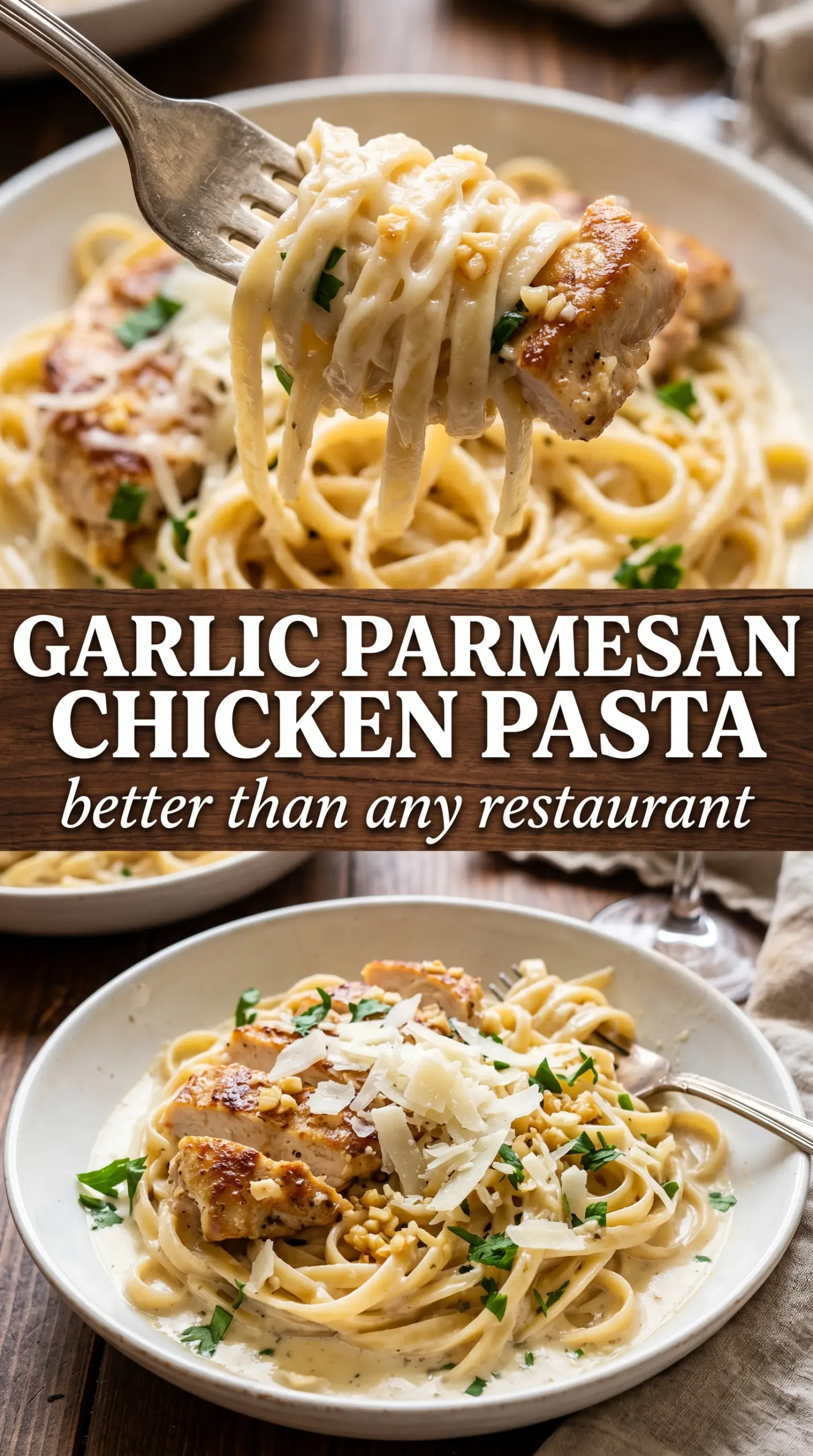
- Chicken breasts — Lean chicken works well here because the sauce carries the richness. Slice them thin after resting so they stay juicy and don’t shed all their moisture into the pasta.
- Fresh garlic — This is the backbone of the sauce. Minced garlic cooks fast, so keep it moving in the butter for just about a minute; if it browns, it turns bitter and the whole pan tastes sharp.
- Heavy cream — This gives the sauce its body and keeps it from splitting when you add the cheese. Half-and-half can work in a pinch, but the sauce will be looser and less stable.
- Freshly grated Parmesan — Buy the block and grate it yourself if you can. Pre-shredded cheese often has anti-caking agents that keep it from melting as smoothly.
- Pasta water — This is the quiet ingredient that ties everything together. Start with a small splash and build from there; too much at once will make the sauce thin instead of silky.
- Red pepper flakes — They don’t make the pasta spicy, just lively. That tiny bit of heat keeps the cream sauce from tasting flat.
Building the Chicken and Sauce in the Right Order
Seasoning and Searing the Chicken
Pat the chicken dry, season it well, and cook it in hot olive oil until both sides are deeply golden and the center reaches 165°F. Dry chicken browns better, and that browned crust gives the sauce extra flavor later. If the pan is crowded, the chicken steams instead of searing, so cook in batches if needed. Let it rest before slicing or the juices will run straight onto the cutting board.
Starting the Garlic Butter Base
Use the same skillet and melt the butter over medium heat. Add the garlic and stir for about a minute, just until it smells fragrant and the raw edge is gone. If it goes past pale gold, stop and move on quickly; burnt garlic will carry through the whole sauce. Those browned bits from the chicken should still be stuck to the pan at this point, because the cream will lift them up.
Thickening the Cream and Melting the Cheese
Pour in the cream and chicken broth, then let the mixture simmer gently until it starts to thicken and coat a spoon. Add the Parmesan off the strongest heat, stirring until smooth. If the sauce looks broken or grainy, the pan was too hot. Take it off the burner, stir in a splash of pasta water, and keep whisking until it comes back together.
Tossing the Pasta and Finishing the Bowl
Add the cooked pasta to the skillet and toss until every strand is coated. The sauce should cling without puddling at the bottom; if it tightens too much, loosen it with more pasta water a spoonful at a time. Taste for salt at the end, then top with the sliced chicken, basil, and a last shower of Parmesan. The fresh basil matters here because it cuts through the richness and keeps the bowl from tasting one-note.
How to Adapt This Garlic Parmesan Chicken Pasta Without Losing the Good Part
Use fettuccine instead of spaghetti
Fettuccine gives you a broader surface for the sauce to cling to, while spaghetti keeps the dish a little lighter and twirlable. Either works, but if you switch to a flatter noodle, you may need a touch more pasta water because the sauce will grab more aggressively.
Make it dairy-light
You can swap the heavy cream for half-and-half, but the sauce will be thinner and a little more fragile. To keep it from breaking, hold the heat low and add the Parmesan slowly. The result will still be creamy, just less plush.
Make it gluten-free
Use your favorite gluten-free spaghetti and keep a close eye on the cooking time, since gluten-free pasta can turn soft fast. Reserve the pasta water as directed, because it still helps the sauce cling, and toss gently so the noodles don’t break apart.
Swap the chicken for shrimp
Shrimp cooks much faster, so sear it separately and pull it off as soon as it turns pink and opaque. You’ll get a sweeter, lighter version of the dish, but you lose the deeper pan fond that chicken gives you, so don’t rush the garlic-butter step.
Storage and Reheating
- Refrigerator: Store leftovers in an airtight container for up to 3 days. The sauce will thicken as it chills.
- Freezer: I don’t recommend freezing this one. Cream sauces can separate after thawing, and the pasta turns soft.
- Reheating: Warm it gently in a skillet over low heat with a splash of milk, cream, or water. The common mistake is blasting it in the microwave or on high heat, which makes the sauce split and the chicken dry out.
Answers to the Questions Worth Asking
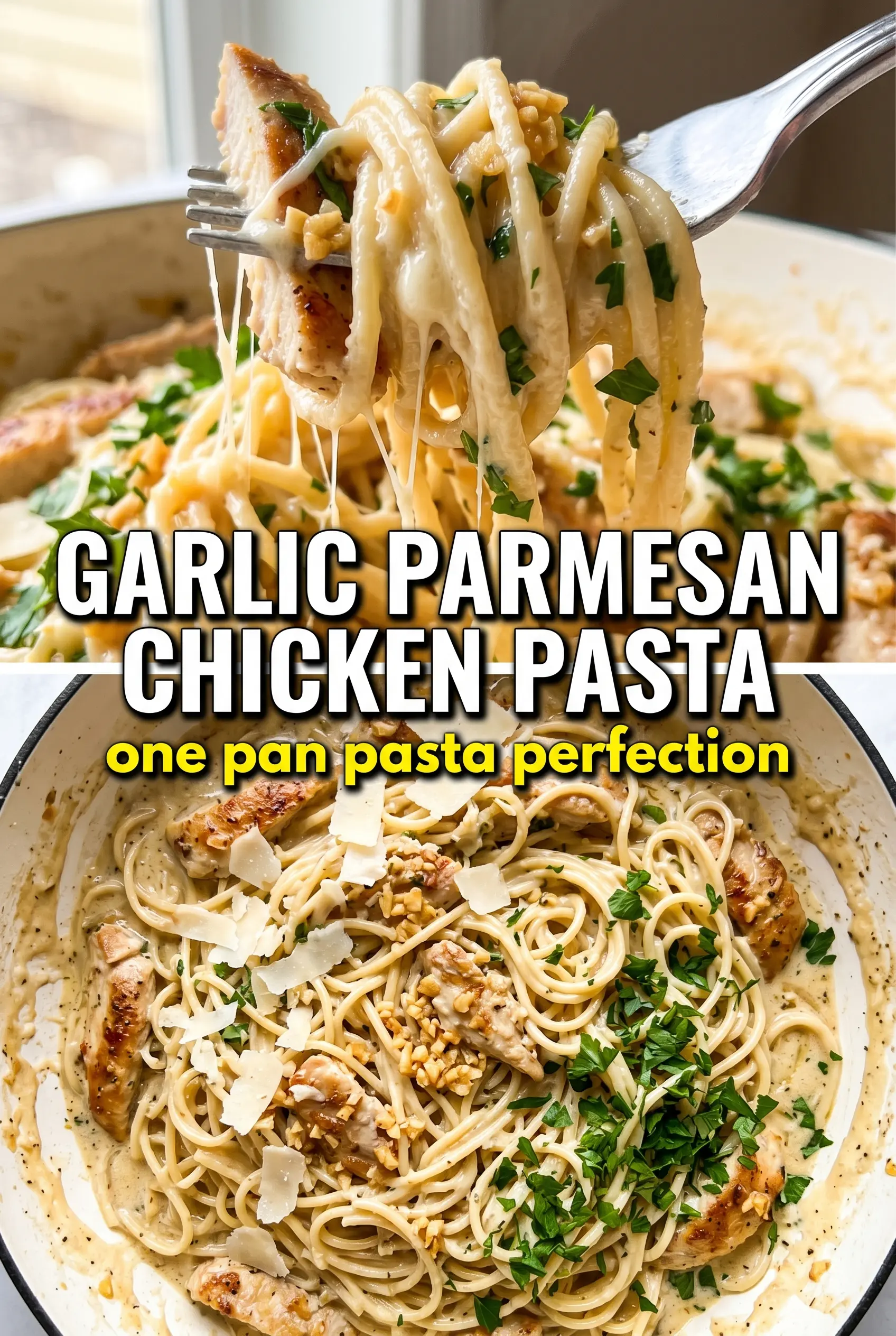
Garlic Parmesan Chicken Pasta
Ingredients
Equipment
Method
- Season the chicken breasts with salt, pepper, garlic powder, and Italian seasoning to taste. Heat olive oil in a large skillet over medium-high heat, add chicken, and cook 5-6 minutes per side until golden and cooked through to 165°F.
- Rest the chicken briefly, then slice it thin so it’s ready to fan over the pasta.
- In the same skillet, cook minced garlic in butter over medium heat for 1 minute until fragrant, stirring so it doesn’t brown.
- Pour in heavy cream and chicken broth, then simmer 4-5 minutes until slightly thickened with visible gloss.
- Stir in Parmesan, 1 teaspoon Italian seasoning, and red pepper flakes until the sauce is smooth and fully melted.
- Add reserved pasta water as needed, stirring until the sauce clings to a spoon and looks silky.
- Toss the cooked spaghetti (or fettuccine) in the garlic Parmesan sauce until every strand is coated and glistening.
- Divide pasta among plates and top each serving with the sliced chicken so the golden pieces sit centered on top.
- Garnish with fresh basil and extra Parmesan, finishing with a generous shower across the surface.