Stuffed peppers soup turns the classic comfort of stuffed peppers into a bowl that’s easier to cook, easier to serve, and just as satisfying. The broth is tomato-rich and savory, the peppers stay tender without disappearing, and the rice gives it that familiar hearty bite that makes a second bowl feel like a given.
What makes this version work is the order of operations. The beef browns first so the soup starts with depth, then the tomato paste cooks with the onions and peppers long enough to lose that raw edge. The rice goes in uncooked, where it swells right in the broth and takes on all the flavor instead of tasting like an add-in.
Below, I’m walking through the one part that matters most if you want the rice to stay pleasant instead of mushy, plus a few swaps that keep the soup working if you need to adapt it.
The rice cooked right in the broth and stayed tender without getting gummy, and the tomato flavor tasted like a real stuffed pepper filling in soup form.
Save this stuffed peppers soup for a one-pot dinner with tender rice, savory beef, and a tomato broth that tastes like the classic casserole.
The Rice Is What Makes or Breaks This Soup
Stuffed peppers soup has one common failure point: the rice. If it’s cooked too long, it swells past the point of comfort and turns the whole pot heavy and starchy. If it’s added too late, it stays bland and separate, which makes the soup taste more like tomato beef broth with extras than the real thing.
The fix is to let the rice cook directly in the soup, but only after the broth is fully seasoned and boiling. That gives each grain a chance to absorb the tomato, beef, and spice mixture from the inside out. Keep the simmer gentle once the rice goes in. A hard boil will beat the grains up and make the texture muddy before the rice is even tender.
- A gentle simmer keeps the rice intact and helps the broth stay clear enough to spoon instead of turning pasty.
- The tomato paste needs a quick cook with the vegetables so it loses its sharp canned taste and deepens the broth.
- The bell peppers should stay in small dice. Too large, and they stay crunchy in a way that fights the soup; too small, and they disappear before the bowl is done.
- Beef broth brings the backbone here. Water works in a pinch, but the soup tastes flatter and needs more seasoning to wake up.
What Each Ingredient Is Actually Doing in the Bowl
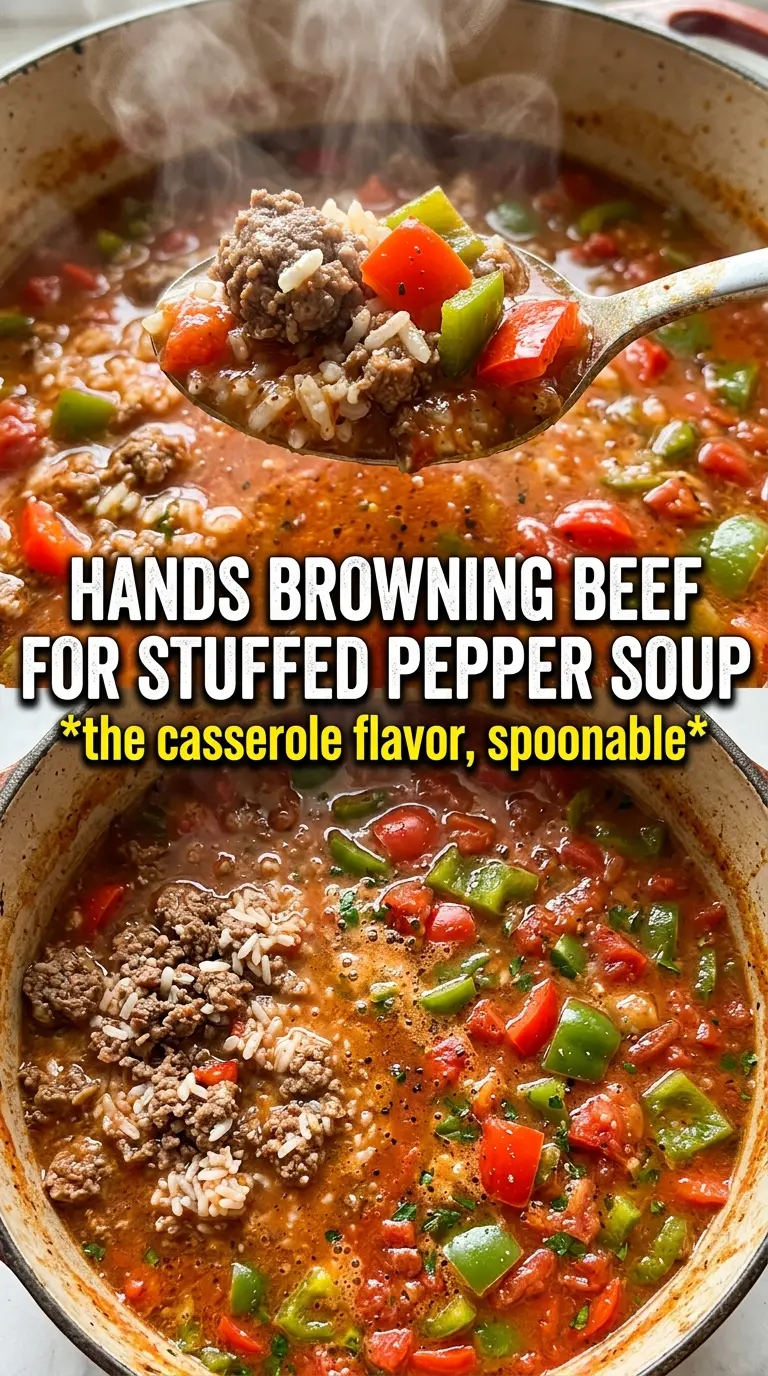
- Ground beef — This gives the soup its stuffed-pepper filling flavor. Use 85/15 or similar if you can; leaner beef works, but you’ll want to keep an eye on seasoning because it brings less richness.
- Green and red bell peppers — The mix matters. Green peppers bring the classic stuffed pepper bite, while red peppers soften the edges and add a little sweetness.
- Tomato paste — This is the quiet workhorse. Cooking it with the vegetables before the broth goes in deepens the soup and keeps it from tasting thin.
- Crushed tomatoes and diced tomatoes — Crushed tomatoes build the body, while diced tomatoes leave you with a bit of texture. If you only have one type, use it, but the combination gives the best balance.
- Long grain white rice — Long grain holds its shape better than short grain or instant rice. If you substitute brown rice, you’ll need a longer simmer and extra broth.
How to Build the Soup Without Ending Up With Mushy Rice
Brown the Beef First
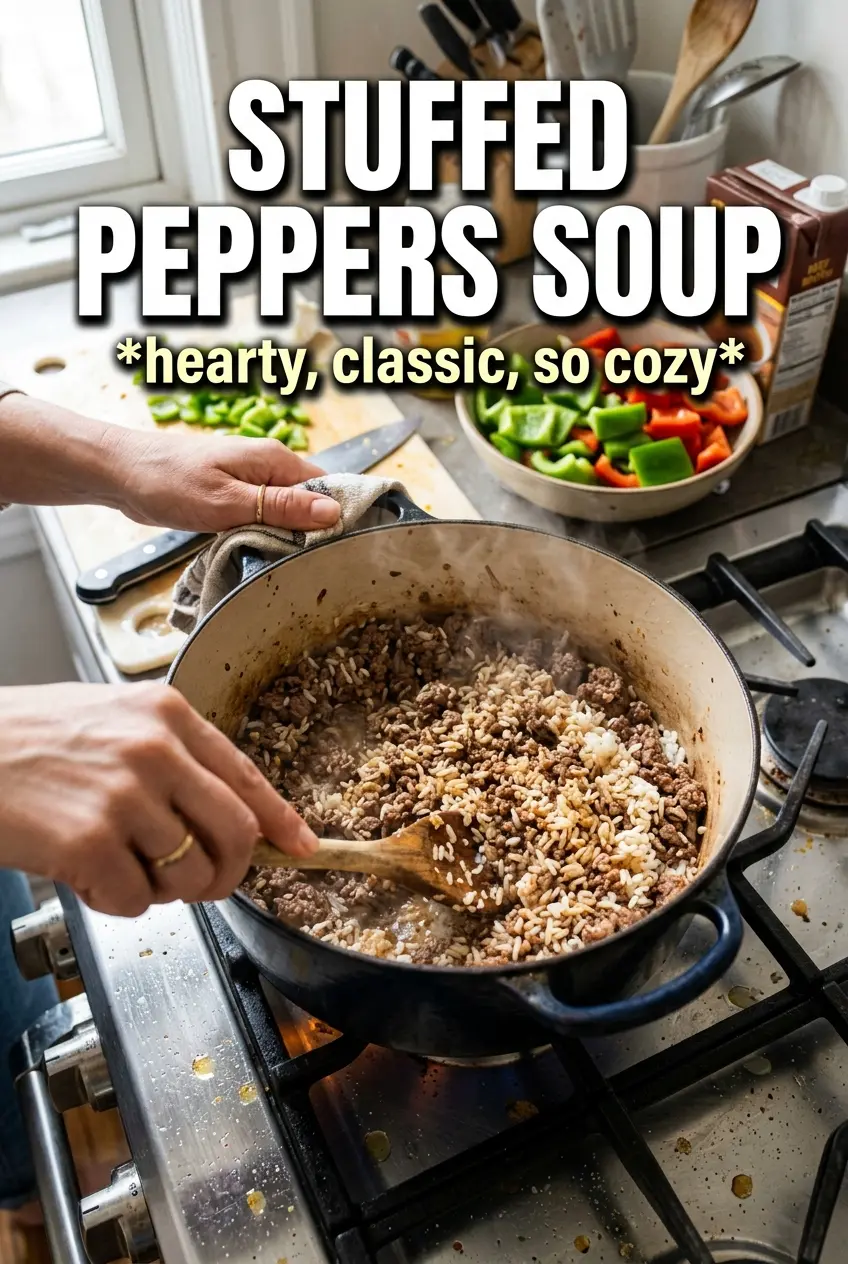
Start by browning the ground beef in a large pot until there’s no pink left and the bottom of the pot has some browned bits stuck to it. Those bits dissolve into the broth later and give the soup more depth than a plain boil ever could. Drain off excess fat so the finished soup doesn’t feel greasy, but leave enough behind that the vegetables can sauté without sticking. If your beef is steaming instead of browning, the pot is overcrowded — let it cook a little longer before stirring again.
Cook the Vegetables Until They Start to Softten
Add the onion and bell peppers and cook them for 4 to 5 minutes, just until the onion turns translucent and the peppers lose their raw snap. You’re not trying to brown them hard here. They need enough time to soften so the final soup tastes integrated, not like beef floating through a pile of half-cooked vegetables. Stir in the garlic and tomato paste and cook for 2 minutes; that short time is enough to take the edge off both ingredients without burning the garlic.
Let the Broth Taste Complete Before the Rice Goes In
Once the tomatoes, broth, and seasonings go in, bring everything to a real boil so the soup starts cohesive and hot all the way through. This is the point where the flavor should already taste like a finished soup, just a little thin, because the rice is about to thicken it. Add the uncooked rice, cover, and lower the heat to a steady simmer. If the heat stays too high, the rice breaks down on the outside before the center is done.
Finish When the Rice Is Tender and the Broth Has Thickened Slightly
After 18 to 20 minutes, check a few grains. They should be tender with just a little bite left, and the broth should look fuller, not loose and watery. Season with salt and pepper at the end because the broth reduces as the rice cooks, which changes how salty the pot tastes. Serve right away with cheddar and parsley, since the rice keeps absorbing liquid as it sits.
How to Adapt This for a Bigger Pot, a Lighter Bowl, or a Gluten-Free Table
Make It Gluten-Free Without Changing the Texture
This recipe is naturally gluten-free as written, as long as your beef broth is certified gluten-free. That’s the only place hidden wheat usually shows up. Keep the rice and tomatoes the same and nothing about the texture changes.
Use Ground Turkey for a Lighter Version
Ground turkey works well, but it needs help where beef usually brings richness. Add a little extra salt and don’t skip the tomato paste step, since that extra cook time gives the soup more depth. The finished bowl will taste lighter and cleaner, not as savory as the beef version.
Swap in Brown Rice When You Want More Chew
Brown rice gives you a nuttier flavor and a firmer bite, but it needs more time and more liquid. Plan on a longer simmer and add extra broth as needed so the soup doesn’t go dry before the grains finish cooking. Instant rice isn’t the right swap here because it collapses fast and makes the broth soft and cloudy.
Storage and Reheating
- Refrigerator: Store for up to 4 days. The rice will keep absorbing broth, so expect the soup to thicken as it sits.
- Freezer: It freezes, but the rice softens after thawing. For the best texture, freeze without the rice if you know you’ll be making it ahead, then cook fresh rice into the reheated soup.
- Reheating: Warm it gently on the stove over medium-low heat with a splash of broth or water. Don’t boil it hard or the rice will break apart and the soup will turn gummy.