Pumpkin gingersnap cookies bake up with crisp, crinkled edges, a chewy center, and that deep molasses-ginger bite that keeps you reaching for one more. The pumpkin doesn’t make them cakey here because it’s used sparingly and blotted dry, which keeps the texture closer to a classic gingersnap with just enough soft warmth in the middle. Rolled in sugar before baking, they come out with a sparkling shell and a little snap when you bite in.
The spice blend does the heavy lifting. Ginger leads, cinnamon and cloves round it out, and the black pepper gives the cookies that old-fashioned gingersnap finish that wakes up the molasses. The dough also gets a short chill, which helps the butter firm back up so the cookies spread into thick, wrinkled rounds instead of thin puddles.
Below you’ll find the exact timing that keeps the centers chewy without losing the crisp edge, plus a few smart swaps and storage notes for when you want to bake ahead.
The cookies crinkled up beautifully and stayed chewy in the middle even the next day. Blotting the pumpkin made a big difference — mine didn’t turn cakey at all.
Save these pumpkin gingersnap cookies for the days you want a crinkled, sugar-sparked cookie with real ginger snap and warm molasses depth.
The Secret to Keeping Pumpkin Gingersnaps Chewy Instead of Puffy
The biggest mistake with pumpkin cookies is treating pumpkin puree like a regular add-in. Pumpkin carries a lot of moisture, and that extra water can push a cookie toward soft and cakey instead of crisp at the edges. Blotting the pumpkin first takes care of that problem before the dough even comes together, so the cookies bake up dense enough to crinkle properly.
The short chill matters for the same reason. Warm dough spreads too fast, and these cookies need enough structure to hold the crackled top while the edges set. If your cookies look domed and pale instead of wrinkled and dark at the edges, the dough was too warm or they came out too early. Pull them when the edges look set and the centers still seem a little underdone; they finish firming on the sheet.
What Each Ingredient Is Doing in These Cookies

- Pumpkin puree — Use just a small amount and blot it well. That step gives you the pumpkin flavor and color without dumping extra moisture into the dough. Canned pumpkin works fine as long as it’s thick and drained a bit; watery puree is what turns these soft.
- Molasses — This is what gives the cookies their deep, dark backbone and that classic gingersnap bite. Light or regular molasses both work, but don’t use blackstrap unless you want a sharper, slightly bitter cookie.
- Brown sugar — It adds moisture, chew, and a caramel note that matches the molasses. Packed brown sugar matters here because the extra density helps the dough hold together after the pumpkin goes in.
- Black pepper — It sounds small, but it’s part of what makes these taste like real gingersnaps. You won’t taste pepper on its own; it just sharpens the spice and keeps the cookies from tasting flat.
- Butter — Softened butter creams with the sugar and traps enough air for a tender center. If it’s melted, the dough turns greasy and spreads too much.
- Granulated sugar for rolling — This gives the cookies that sparkling crust and helps the tops crack as they bake. Don’t skip it if you want the classic crinkled look.
Getting the Crinkle Right in the Oven
Start with a Properly Dried Pumpkin
Press the pumpkin puree between paper towels until it looks thick and almost paste-like. You’re not trying to remove every trace of moisture, just enough that it won’t flood the dough. If you skip this, the cookies bake up softer and puffier, with less of that crisp edge.
Cream the Butter and Sugar Until It Lightens
Beat the softened butter and brown sugar until the mixture looks fluffy and a shade lighter. That step gives the cookies a little lift and helps the sugar dissolve enough for a smooth dough. Once you add the pumpkin, egg, molasses, and vanilla, stop mixing as soon as they look combined; overbeating after the flour goes in makes the cookies tough.
Chill Long Enough for the Dough to Firm Up
After folding in the flour mixture, refrigerate the dough for 30 minutes. The dough should feel scoopable, not sticky and loose. If it still feels too soft to roll cleanly, give it another 10 minutes in the fridge rather than adding extra flour, which can make the cookies dry.
Bake Until the Centers Look Just Set
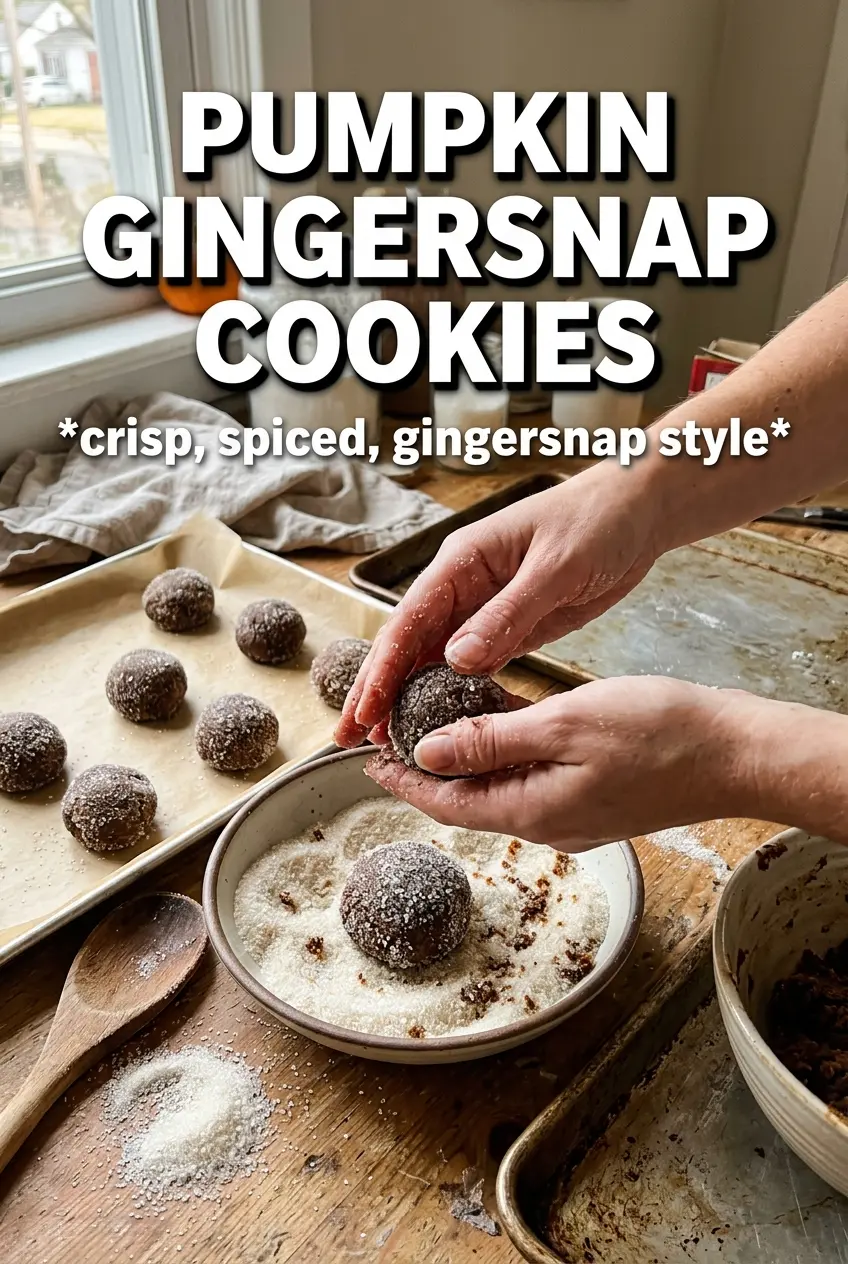
Scoop 1 1/2 tablespoon portions, roll them in sugar, and bake until the edges are crisp and the tops are deeply crinkled. The cookies will look slightly underdone in the center when you pull them, and that’s the right moment. Let them sit on the baking sheet for a few minutes before moving them so the centers finish setting without losing the chewy middle.
How to Adapt These Cookies Without Losing the Ginger Snap Bite
Make Them Gluten-Free
Use a good 1:1 gluten-free baking blend that includes xanthan gum. The texture will be a little more delicate, but the sugar crust and chill time still help the cookies hold their shape. Don’t swap in almond flour alone; it won’t give you the same crinkled structure.
Make Them Dairy-Free
Use a plant-based butter that comes in sticks, not a soft tub spread. You want the same fat content and structure as regular butter, or the cookies will spread too much. The flavor stays close, though the finish can be a touch less rich.
Turn Up the Spice
If you like a sharper gingersnap, add another 1/2 teaspoon ginger and an extra pinch of black pepper. That pushes the cookie farther toward the classic snap-side of the spectrum without changing the dough balance.
Storage and Reheating
- Refrigerator: Store in an airtight container for up to 5 days. They stay chewy, though the sugar coating softens a little.
- Freezer: Freeze baked cookies for up to 2 months, or freeze the dough balls after rolling in sugar and bake from frozen with 1 to 2 extra minutes.
- Reheating: Warm baked cookies in a 300°F oven for 3 to 4 minutes if you want the edges to crisp back up. The mistake is using the microwave, which makes the sugar coating sticky and soft.
Questions I Get Asked About This Recipe
Pumpkin Gingersnap Cookies
Ingredients
Equipment
Method
- Preheat oven to 375F and line baking sheets with parchment or silicone mats; the sheets should be ready before dough is scooped.
- Blot pumpkin puree dry, then whisk together all dry ingredients (flour, baking soda, ginger, cinnamon, cloves, allspice, black pepper, pumpkin pie spice, and salt) until evenly blended.
- Beat softened butter and packed brown sugar until smooth, thick, and cohesive.
- Beat in blotted pumpkin puree, egg, molasses, and vanilla until the mixture looks glossy and evenly colored.
- Fold in the flour mixture just until no dry streaks remain, then refrigerate the dough for 30 minutes to firm up for clean scooping.
- Scoop 1-1/2 tablespoon balls, roll each in granulated sugar, and set on the prepared baking sheets with space between for spreading.
- Bake for 9-11 minutes at 375F until cookies are crinkled with crisp edges, then cool briefly on the sheet before moving.