Pillowy gnocchi, sweet butternut squash, and crisp-edged sausage make this the kind of dinner that lands in the rotation fast. The sauce turns silky and clingy without feeling heavy, and the fried sage gives each bite a sharp, woodsy finish that keeps the whole pan from tasting one-note. It eats like a cozy restaurant plate, but it comes together in about half an hour with one skillet and a pot of water.
The trick is building the sauce in the same pan you used for the sausage and sage. Those browned bits add depth that plain cream can’t fake, and the squash puree gives body without needing a long simmer. Parmesan helps the sauce tighten up, but it’s the low heat that keeps everything smooth instead of grainy. If you’ve ever had gnocchi drown in a thin sauce, this version stays glossy and clings to every ridge.
Below, I’m walking through the small details that matter most: how to keep the sage crisp, when to add the cream, and what to do if your squash puree seems loose. Those little choices are what make this dish feel polished instead of rushed.
The sauce turned out silky and coated the gnocchi perfectly, and the crispy sage on top made it taste like something from a nice Italian restaurant.
Save this creamy butternut squash gnocchi with sausage and sage for the night you want a fast skillet dinner with a velvety sauce and crispy sage on top.
The Reason This Sauce Stays Silky Instead of Breaking
Butternut squash puree can make a sauce feel rich fast, but it also needs a little help to stay smooth. The mistake is cranking the heat once the cream goes in. That can make the dairy separate or give the sauce a slightly grainy edge, especially after the parmesan is added. Keep the simmer gentle and let the sauce tighten slowly.
Fried sage and sausage bring enough salt and fat to carry the dish, so the sauce doesn’t need to be overly complicated. What matters most is giving the squash puree a minute in the pan before the cream, because that step cooks off any raw, starchy taste and lets the garlic settle into the base. When the sauce is ready, it should coat a spoon in a soft ribbon, not run off like soup.
- Butternut squash puree — Roasted squash gives the deepest flavor, but canned puree works when it’s plain and unsweetened. If yours seems watery, simmer it a minute longer before adding the cream.
- Italian sausage — This brings the savory backbone of the dish. Mild or hot both work; hot sausage gives a cleaner contrast against the sweet squash.
- Heavy cream — Half-and-half will work in a pinch, but the sauce won’t cling as well and it’s more likely to look loose. Add it over low heat so it blends instead of splitting.
- Parmesan — Use finely grated parmesan, not big shards. Fine cheese melts into the sauce faster and gives you a smoother finish.
What Each Ingredient Is Actually Doing in This Recipe

- Primary ingredient (the star) — Quality matters most. Choose the best you can find.
- Cooking medium (oil, butter, or broth) — This carries flavors and prevents dryness.
- Seasonings (salt, pepper, spices, herbs) — Layer flavors so nothing overpowers. Build depth gradually.
- Aromatics (garlic, onion, herbs) — Cook with fat to bloom flavors. Become the foundation.
- Supporting ingredients — Complement the main ingredient without overpowering it.
- Sauce or liquid (if applicable) — Brings flavors together. Balance richness with acid.
- Acid (lemon, vinegar, wine, or other) — Brightens and prevents flat-tasting results.
- Final finish (garnish, glaze, or sauce) — Prevents one-dimensional taste and adds visual appeal.
Building the Pan in the Right Order
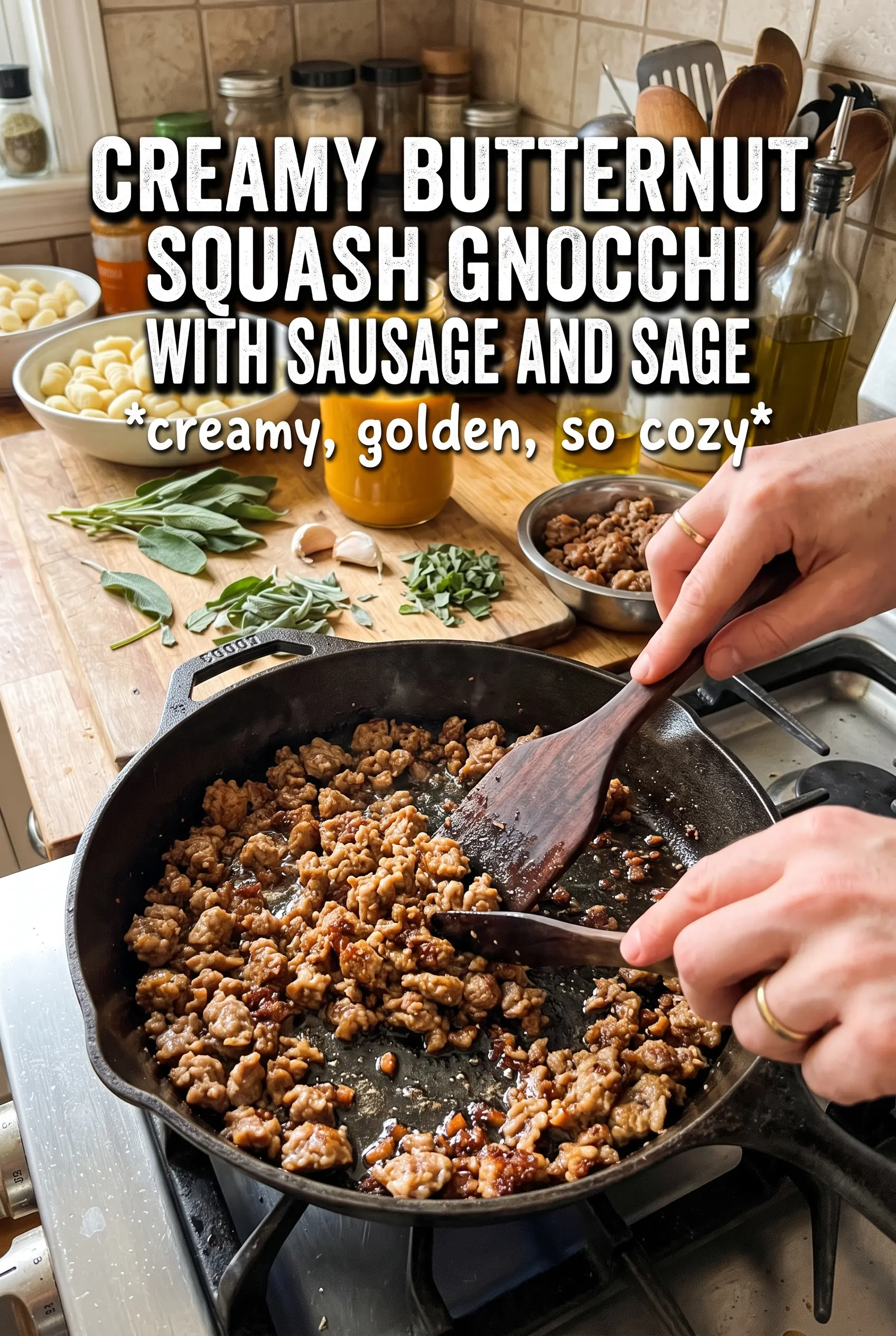
Brown the sausage first
Cook the sausage in a large skillet until it’s deeply browned and no longer pink, then move it to a plate. You want real color here, not just cooked-through meat, because the browned bits left behind will season the sauce. If the pan looks dry, that’s fine; the sausage usually leaves enough fat to work with, and you can use a touch of butter to help the sage fry.
Crisp the sage in butter
Add the butter and sage leaves to the same skillet and cook just until the leaves darken slightly and become crisp, about a minute or two. Pull them out right away and set them aside, because they go from crisp to burnt fast. The butter should smell nutty, not bitter.
Cook the squash base gently
Stir the garlic into the flavored butter for about a minute, just until fragrant, then add the butternut squash puree and cream. The goal is to loosen the puree and build a smooth sauce, not boil it hard. If the heat is too high here, the cream can separate before the parmesan ever gets a chance to melt in.
Finish with cheese and gnocchi
Stir in the parmesan, nutmeg, and red pepper flakes, then let the sauce simmer until it looks glossy and slightly thickened. Cook the gnocchi according to the package directions and add it straight to the sauce so it can soak up the flavor. Return the sausage to the pan, toss everything together, and top with the crispy sage and more parmesan right before serving.
How to Adapt It When You Need a Different Version
Make it dairy-free
Use a full-fat unsweetened coconut cream or an oat-based cooking cream instead of heavy cream, and swap the parmesan for a dairy-free parmesan-style cheese. The sauce won’t taste exactly the same, but it will still turn creamy and clingy if you keep the heat low and simmer just until it thickens.
Make it gluten-free
Choose a gluten-free gnocchi and check the sausage label, since some brands use fillers that contain wheat. The sauce itself is naturally gluten-free, so once the gnocchi is sorted, the whole dish comes together the same way.
Make it meatless
Skip the sausage and add sautéed mushrooms or browned mushrooms with a little fennel seed for depth. You’ll lose some of the savory richness, so lean a little harder on the parmesan and sage to keep the dish balanced.
Storage and Reheating
- Refrigerator: Store leftovers in an airtight container for up to 3 days. The sauce will thicken as it chills, and the gnocchi will soften a bit.
- Freezer: I don’t recommend freezing this one. Cream sauces can turn grainy after thawing, and gnocchi can get mushy.
- Reheating: Warm it gently in a skillet over low heat with a splash of cream or milk. Don’t blast it in the microwave or the sauce can separate before the center is hot.
Questions I Get Asked About This Recipe
Creamy Butternut Squash Gnocchi With Sausage And Sage
Ingredients
Equipment
Method
- Brown the Italian sausage in a large skillet over medium-high heat until browned. Drain off excess fat and set the sausage aside.
- Melt 2 tablespoons unsalted butter in the same skillet, then fry fresh sage leaves until crisp and fragrant, about 1–2 minutes. Remove to a plate lined with paper towels.
- Sauté the minced garlic in the same butter for 1 minute over medium heat, until fragrant but not browned. Immediately add the butternut squash puree and heavy cream.
- Stir in the grated parmesan, nutmeg, and red pepper flakes, then simmer for 5 minutes until smooth. Keep the heat at a gentle simmer and stir to prevent sticking.
- Cook the potato gnocchi according to package instructions. Add the gnocchi directly to the simmering sauce.
- Return the sausage to the skillet and toss until the gnocchi is coated and hot throughout. Season with salt and pepper to taste.
- Top with the crispy sage leaves and extra parmesan before serving. Add any remaining parmesan shavings as desired.