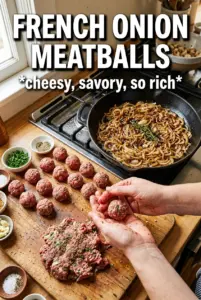
French onion meatballs land on the table with the kind of deep, savory comfort that makes a skillet disappear fast. The onions turn silky and dark, the broth tightens into a glossy sauce, and the Gruyere melts into a blanket with just enough browning at the edges to keep every bite interesting. It eats like French onion soup met a proper meatball dinner and decided to stay a while.
What makes this version work is patience in the pan. The onions need time to lose their sharp bite and build that sweet, browned base, and the meatballs need an initial sear so they hold together once they go back into the sauce. A splash of dry white wine lifts the browned bits off the skillet, and that is where a lot of the flavor lives.
Below, I’ll walk you through the part that matters most: how to get the onions deeply caramelized without burning them, how to keep the meatballs tender, and what to do if you want to make this ahead for an easy dinner later in the week.
The onions turned jammy and sweet, and the Gruyere browned beautifully under the broiler without making the meatballs dry. I served it with crusty bread and everyone went back for seconds.
Save this French Onion Meatball Skillet for nights when you want caramelized onions, melty Gruyere, and a one-pan dinner that feels special without extra fuss.
The Part Most Meatball Skillets Get Wrong: The Onion Base
The onions are the backbone here, and they need to be cooked until they’re deeply golden and almost spreadable. If they still taste sharp, the skillet will read more like oniony broth than French onion sauce. Medium-low heat is the difference between browned sweetness and a burnt edge with pale centers.
Use the same skillet for the onions after browning the meatballs. Those stuck-on bits at the bottom dissolve into the wine and broth, and they give the sauce its depth. If the pan looks too dry while the onions cook, add a small splash of water and keep going; dryness is what pushes onions from caramelized to scorched.
- Thinly sliced onions — Thin slices break down evenly and caramelize at the same pace. Thicker pieces can soften before they brown, which leaves you with a looser sauce.
- Dry white wine — This cuts through the richness and pulls flavor from the pan. Chicken broth can stand in if needed, but the sauce loses some brightness.
- Gruyere — Gruyere melts smoothly and gives you that nutty, French onion finish. Swiss cheese is the closest swap if that’s what you have.
- Fresh thyme — Fresh thyme is worth using here because it perfumes the onions as they cook. Dried thyme works in a pinch, but use less since the flavor is more concentrated.
What Each Ingredient Is Actually Doing in This Recipe
- Primary ingredient (the star) — Quality matters most. Choose the best you can find.
- Cooking medium (oil, butter, or broth) — This carries flavors and prevents dryness.
- Seasonings (salt, pepper, spices, herbs) — Layer flavors so nothing overpowers. Build depth gradually.
- Aromatics (garlic, onion, herbs) — Cook with fat to bloom flavors. Become the foundation.
- Supporting ingredients — Complement the main ingredient without overpowering it.
- Sauce or liquid (if applicable) — Brings flavors together. Balance richness with acid.
- Acid (lemon, vinegar, wine, or other) — Brightens and prevents flat-tasting results.
- Final finish (garnish, glaze, or sauce) — Prevents one-dimensional taste and adds visual appeal.
Building the Skillet So the Meatballs Stay Tender
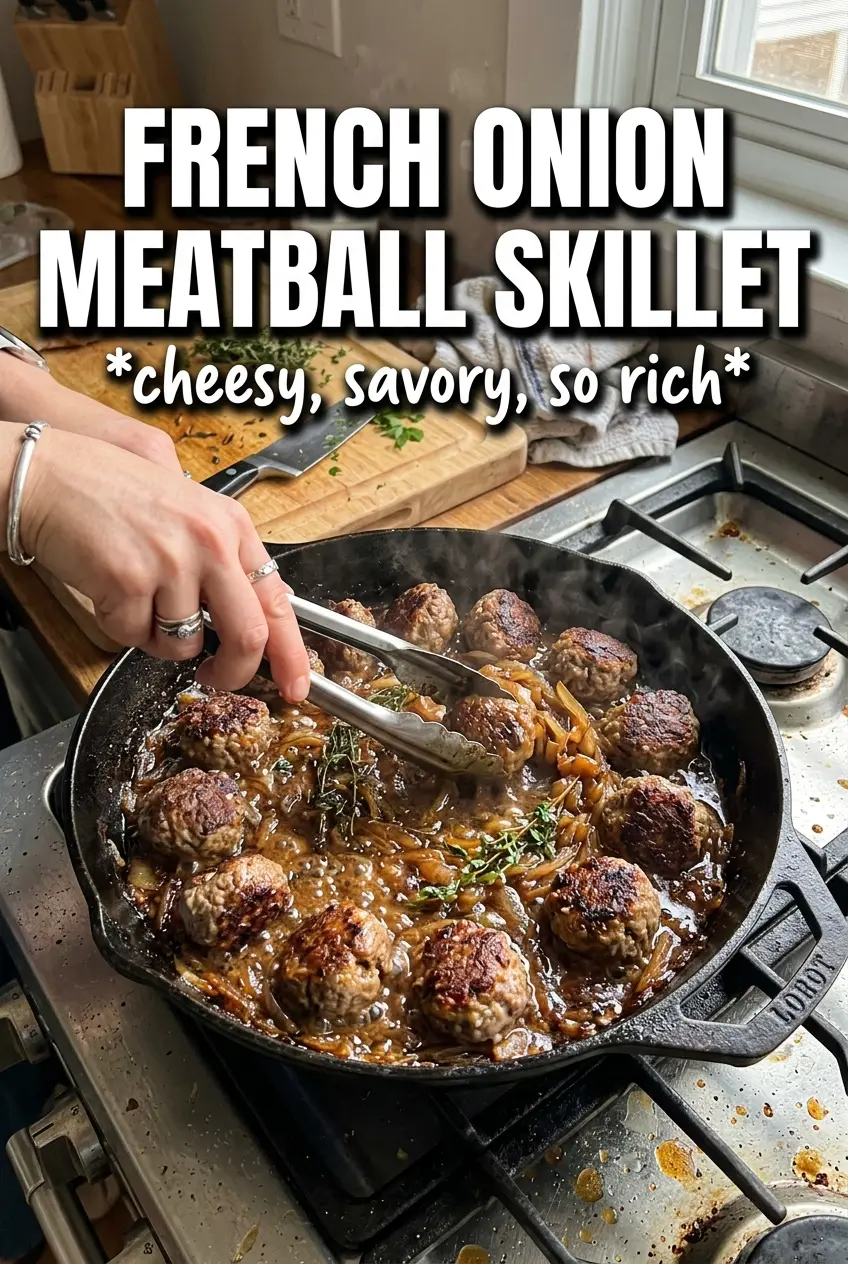
The meatballs should be browned first, not cooked through. That gives them structure so they can finish gently in the sauce without turning dense. Brown them in batches if needed so the pan stays hot; crowded meatballs steam, and steamed meatballs never get that nice savory edge.
When the wine goes in, let it simmer for a minute before adding the broth. That cooks off the harsh alcohol smell and leaves the flavor behind. Once the meatballs are nestled back into the onions, keep the simmer gentle; a hard boil can break the sauce and make the meatballs tough.
Mixing the Meatballs
Mix the beef with breadcrumbs, egg, Worcestershire, garlic powder, salt, and pepper until just combined. Overmixing makes the meatballs tight and springy instead of tender. Roll them into even balls so they cook at the same rate, and don’t pack them too firmly in your hands.
Getting a Real Browned Crust
Brown the meatballs in butter in an oven-safe skillet until the outside has color and they release easily from the pan. You’re not cooking them all the way through here. If they stick hard, give them another minute; forcing them early tears the crust you’re trying to build.
Finishing in the Onion Broth
After the onions are caramelized, add the garlic and thyme for a brief minute, then deglaze with wine and stir in the broth and Worcestershire. Nestle the meatballs into the sauce and simmer until they’re cooked through and the sauce has thickened slightly around them. The broth should coat a spoon, not run like soup.
Broiling the Cheese
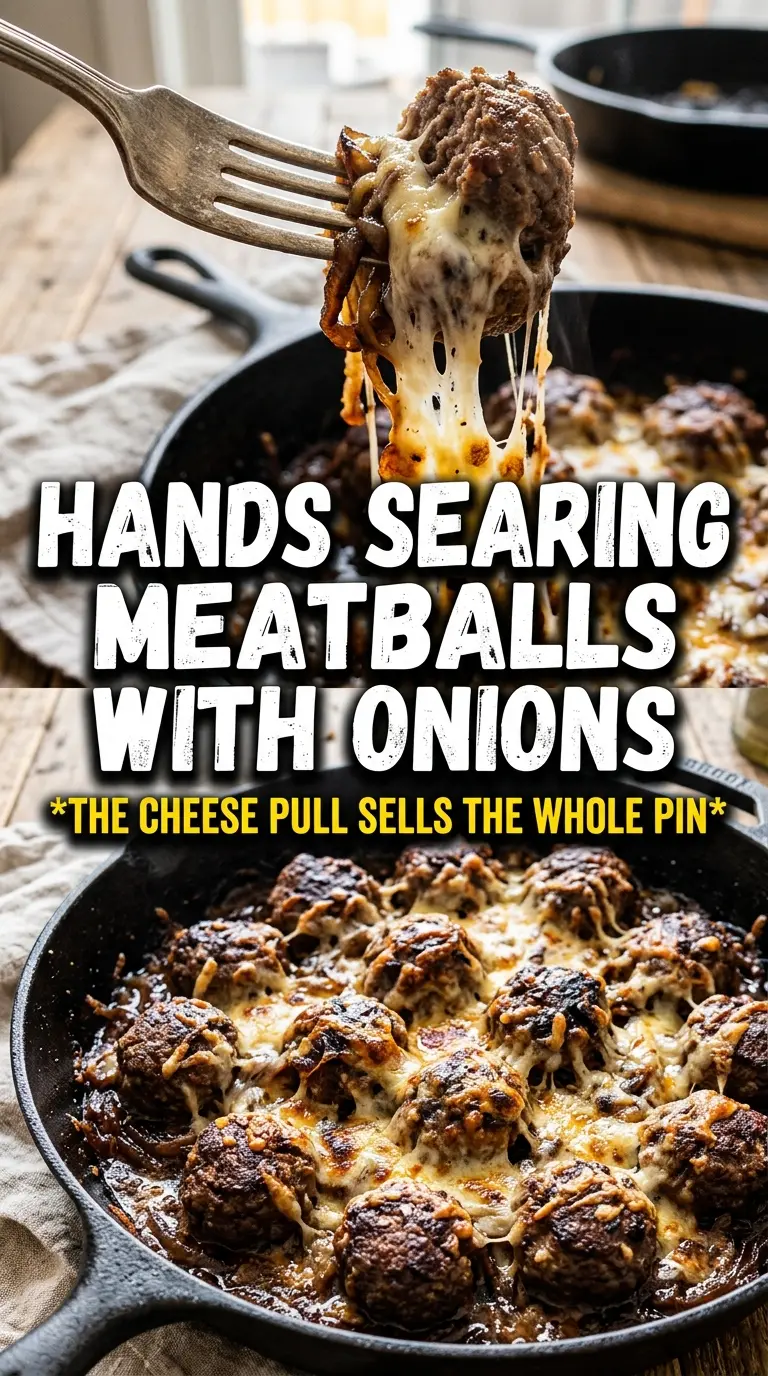
Scatter the Gruyere over the top and broil just until melted, bubbly, and spotted with golden brown. Stay close to the oven because cheese goes from perfect to scorched fast. If your broiler runs hot, lower the rack a notch so the meatballs don’t dry out before the top colors.
How to Change the Recipe Without Losing What Makes It Good
Gluten-Free Meatballs
Swap the breadcrumbs for gluten-free breadcrumbs or finely crushed gluten-free crackers. You still get the same binding effect, but the meatballs stay more tender than if you leave the binder out entirely.
Dairy-Free Version
Use olive oil instead of butter and skip the Gruyere, or finish with a dairy-free melting cheese if you have one that actually browns well. The skillet will still have the deep onion flavor, but you’ll lose the creamy, gratinéed top that makes this feel like French onion soup.
Make It a Little Leaner
Use ground turkey or a 50/50 blend of beef and turkey. The skillet will taste a bit lighter and less rich, so keep the Worcestershire and onions exactly as written to hold onto the savory depth.
Storage and Reheating
- Refrigerator: Store leftovers in a covered container for up to 3 days. The onions thicken as they sit, which actually helps the sauce cling to the meatballs.
- Freezer: Freeze without the cheese topping for up to 2 months. The sauce and meatballs hold up well, but the Gruyere is better added fresh after reheating.
- Reheating: Reheat gently on the stove over low heat with a splash of broth to loosen the sauce. High heat can make the meatballs firm and push the onion sauce toward greasy.
Questions I Get Asked About This Recipe
French Onion Meatball Skillet
Ingredients
Equipment
Method
- In a bowl, mix ground beef, breadcrumbs, egg, Worcestershire, garlic powder, salt, and black pepper until evenly combined. Roll into meatballs.
- Add butter to an oven-safe skillet and brown the meatballs in the same skillet. Cook until golden on the outside, then remove to a plate.
- In the same skillet, cook thinly sliced onions over medium-low heat for 30-35 minutes, stirring occasionally, until deeply caramelized. When the onions are nearly done, add minced garlic and fresh thyme and cook 1 minute.
- Pour in the dry white wine to deglaze, scraping up browned bits from the bottom of the skillet. Cook briefly until slightly reduced, then add beef broth and Worcestershire.
- Nestle the browned meatballs into the caramelized onion sauce so they are partially submerged. Simmer for 10 minutes, turning once if needed.
- Scatter shredded Gruyere over everything in an even layer. Broil for 3-5 minutes at high heat until golden and bubbly.