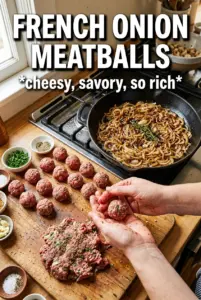
French onion meatballs bring all the deep, savory comfort of French onion soup into a main dish that eats like a full dinner. The meatballs stay tender, the onions cook down into a rich broth, and the melted Gruyere on top gives the whole dish that browned, bubbling finish you want to scoop up with bread or spoon over mashed potatoes.
What makes this version work is patience in two places: the onions and the cheese. The onions need time over medium-low heat so their sugars can soften and darken without burning, and the meatballs only need a quick browning before they finish gently in the sauce. That keeps them juicy instead of dense. A splash of white wine adds brightness, but beef broth works too if that’s what you have on hand.
Below, I’ll walk through the part that matters most — getting the onions deeply caramelized without rushing them — plus a few ways to adapt the dish depending on what kind of cheese or broth you’ve got in the kitchen.
The onions finally got that deep French onion soup flavor instead of just tasting cooked, and the meatballs stayed tender even after broiling. My husband kept sneaking pieces of the cheese crust straight from the dish.
Save these French Onion Meatballs for the night you want bubbling cheese, caramelized onions, and a dinner that feels like French onion soup in skillet form.
The Trick Is Letting the Onions Taste Like Themselves First
French onion flavor only works when the onions are taken past soft and pale into something sweet, jammy, and deeply browned. If you rush that stage, the sauce tastes flat no matter how much broth and cheese you add. The long cook time isn’t busywork here — it’s the point of the dish.
Brown the meatballs first so you get fond in the pan. Those browned bits dissolve into the sauce and give it the roasted, savory backbone that makes this taste like more than meatballs in onion gravy. Once the onions are cooked, the wine or broth lifts everything off the bottom of the skillet and pulls the flavor right back into the pan.
- Caramelized onions — This is the flavor base. Yellow onions work best because they soften and sweeten evenly. If you stop when they’re just translucent, the dish won’t taste like French onion at all.
- Dry white wine or beef broth — Wine adds brightness and helps clean up the pan, but broth still deglazes well if you want to skip alcohol. If you use broth only, the sauce will be a little rounder and less sharp.
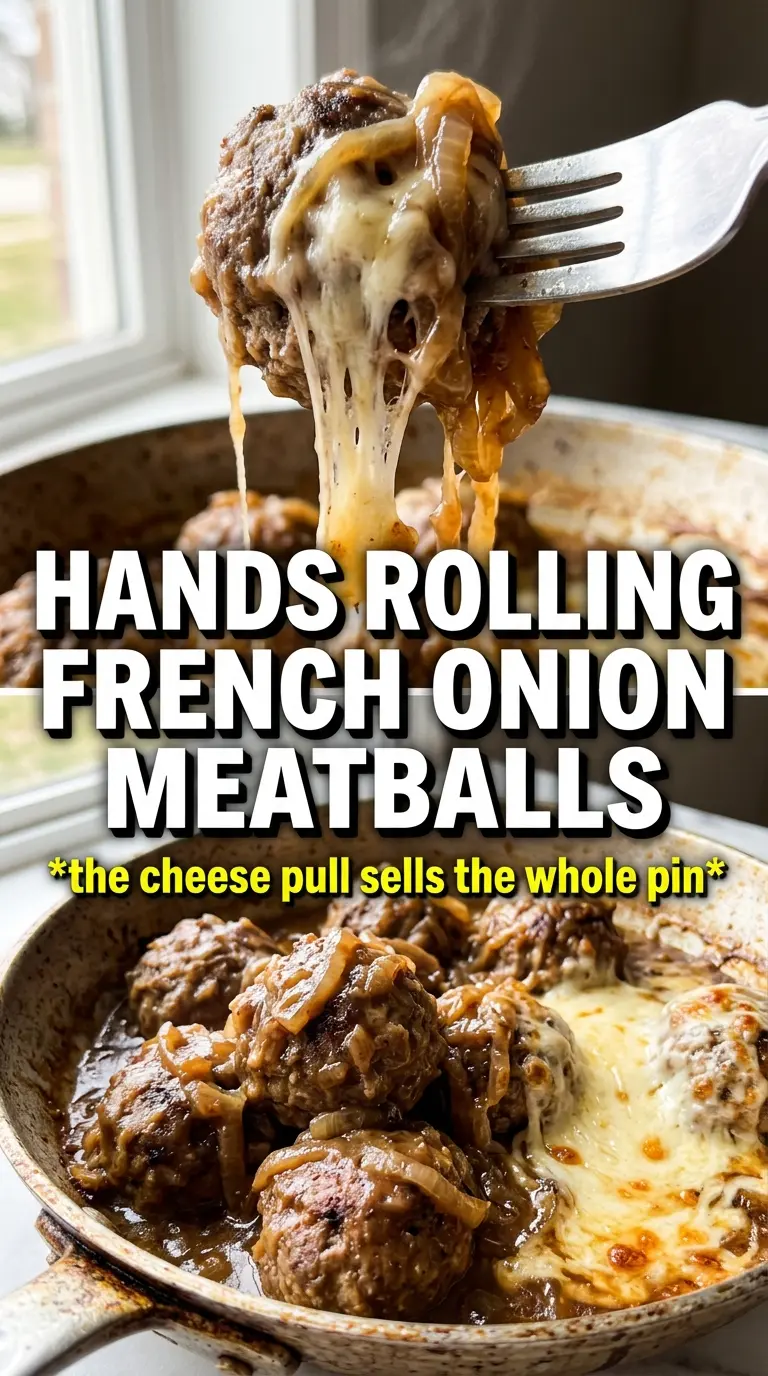
- Gruyere or provolone — Gruyere gives the classic nutty finish, while provolone melts beautifully and still gives you a great cheese cap. Pre-shredded cheese works in a pinch, but freshly shredded melts more smoothly.
- Breadcrumbs and egg — These keep the meatballs tender and help them hold together during browning and simmering. If you leave them out, the texture gets tighter and the meatballs are more likely to break apart in the sauce.
What Each Ingredient Is Actually Doing in This Recipe
- Primary ingredient (the star) — Quality matters most. Choose the best you can find.
- Cooking medium (oil, butter, or broth) — This carries flavors and prevents dryness.
- Seasonings (salt, pepper, spices, herbs) — Layer flavors so nothing overpowers. Build depth gradually.
- Aromatics (garlic, onion, herbs) — Cook with fat to bloom flavors. Become the foundation.
- Supporting ingredients — Complement the main ingredient without overpowering it.
- Sauce or liquid (if applicable) — Brings flavors together. Balance richness with acid.
- Acid (lemon, vinegar, wine, or other) — Brightens and prevents flat-tasting results.
- Final finish (garnish, glaze, or sauce) — Prevents one-dimensional taste and adds visual appeal.
Build the Sauce Before the Cheese Goes On
Mixing and Browning the Meatballs
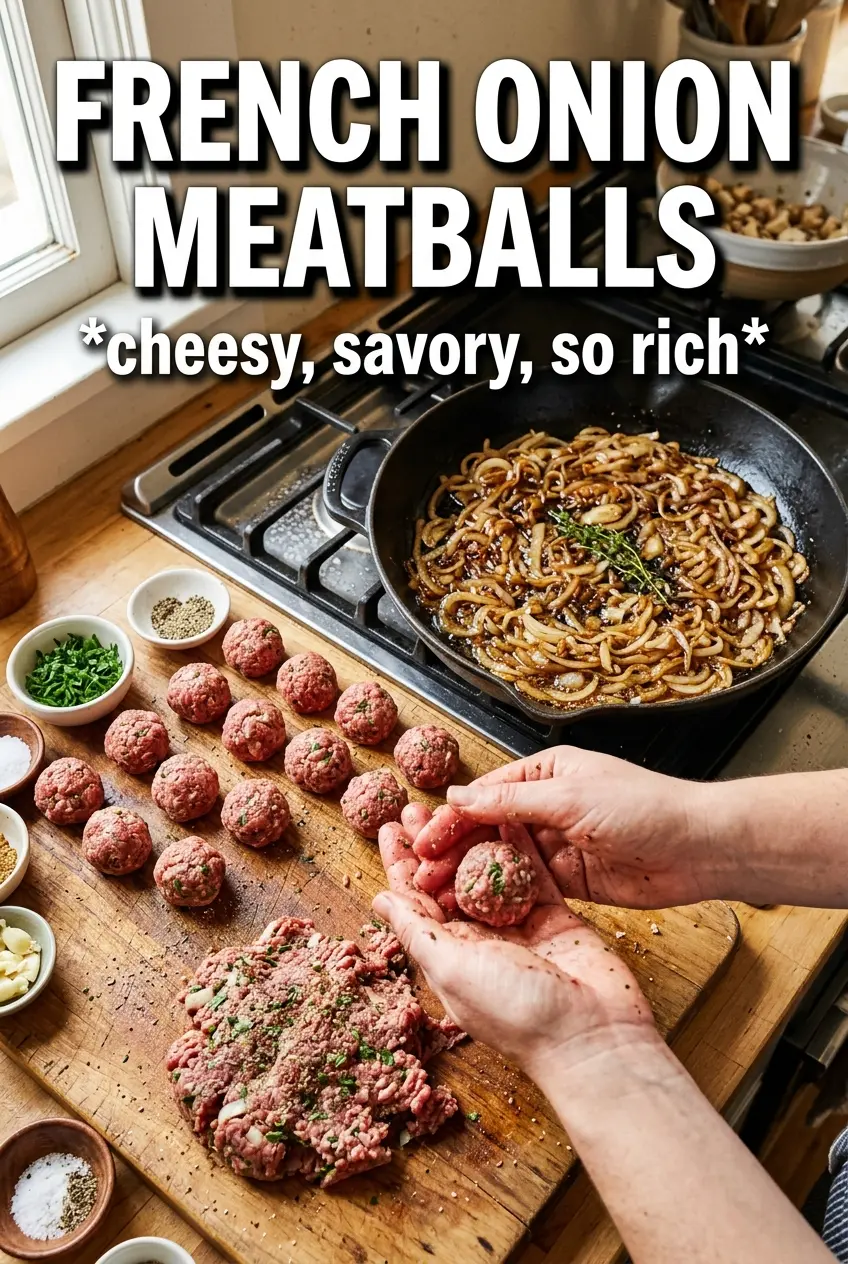
Combine the beef, breadcrumbs, egg, Worcestershire, garlic powder, onion powder, salt, and pepper just until the mixture comes together. Overmixing makes the meatballs firm, and you’ll notice it after they simmer because they won’t feel tender anymore. Roll them into even 1.5-inch balls so they brown at the same rate. Sear them in butter until the outside is deeply browned but the centers are still undercooked, then move them to a plate.
Caramelizing the Onions Slowly
Use the same skillet and add the sliced onions with butter over medium-low heat. Stir often enough to keep the bottom from scorching, but not so much that they never get a chance to color. After 30 to 35 minutes, they should be soft, dark golden, and slightly sticky. If the pan starts looking dry before the onions are ready, add a small splash of broth and keep going.
Turning the Pan Drippings Into Sauce
Pour in the wine or broth and scrape up every browned bit from the pan. That’s where the depth lives. Add the beef broth, Worcestershire, and thyme, then return the meatballs to the skillet so they can finish cooking gently in the onion broth. The sauce should stay at a steady simmer, not a hard boil, or the meatballs can toughen and the liquid can reduce too fast.
The Cheese Finish
Transfer everything to a baking dish if your skillet isn’t oven-safe, then cover the top with shredded cheese. Broil just until the cheese is melted, bubbling, and spotted with deep gold. Watch closely here, because the line between browned and burned is short. Let it sit for a few minutes before serving so the sauce settles and the cheese can cling instead of sliding off in one piece.
Make It with Ground Turkey
Ground turkey works if you want a lighter version, but it needs the extra fat from butter in the pan and a gentler simmer so it doesn’t dry out. The flavor is a little cleaner and less rich than beef, so lean on the Worcestershire and thyme to keep the sauce full-bodied.
Gluten-Free Version
Use gluten-free breadcrumbs and check that your Worcestershire sauce is certified gluten-free. The texture stays almost the same, especially if you mix the meatball mixture just until it holds together. The sauce doesn’t need flour, so nothing else has to change.
What to Use Instead of Gruyere
Provolone gives a softer, milder melt and is the easiest swap if Gruyere is pricey or hard to find. Mozzarella will melt, but it won’t give the same nutty finish, so the dish loses some of its French onion character. If you want the closest flavor without Gruyere, use a mix of provolone and a little Swiss.
Storage and Reheating
- Refrigerator: Store leftovers in an airtight container for up to 4 days. The onions will thicken as they sit, and that’s normal.
- Freezer: Freeze the meatballs and sauce without the cheese topping for up to 2 months. Add the cheese fresh after reheating so it melts instead of turning grainy.
- Reheating: Warm covered in a 325°F oven or over low heat on the stove with a splash of broth. Don’t blast it in the microwave on high or the meatballs can turn rubbery and the sauce can separate.
Questions I Get Asked About This Recipe
French Onion Meatballs
Ingredients
Equipment
Method
- Mix ground beef, breadcrumbs, egg, Worcestershire, garlic powder, onion powder, and Salt and pepper until evenly combined. Roll into 1.5-inch balls.
- Heat 2 tablespoons of butter in a skillet over medium-high heat until it foams, then brown the meatballs on all sides. Transfer browned meatballs to a plate.
- In the same skillet, add the remaining 2 tablespoons butter and cook the onions over medium-low heat, stirring often, for 30-35 minutes until deeply caramelized. Keep the heat low so the onions turn golden instead of burning.
- Pour in dry white wine (or beef broth) to deglaze, scraping up browned bits from the skillet. Cook for 1-2 minutes until the liquid slightly reduces.
- Add beef broth, Worcestershire, and fresh thyme to the skillet and bring to a gentle simmer. Simmer uncovered for 5 minutes to meld flavors.
- Return the meatballs to the onion sauce and simmer for 15 minutes, turning once halfway through, until cooked through. The sauce should cling lightly to the meatballs.
- If your skillet is not oven-safe, transfer the meatballs and sauce to a baking dish. Scatter Gruyere or provolone over everything in an even layer.
- Broil for 3-4 minutes until the cheese is golden and bubbly, watching closely to prevent scorching. Serve immediately while the crust is hot and melty.