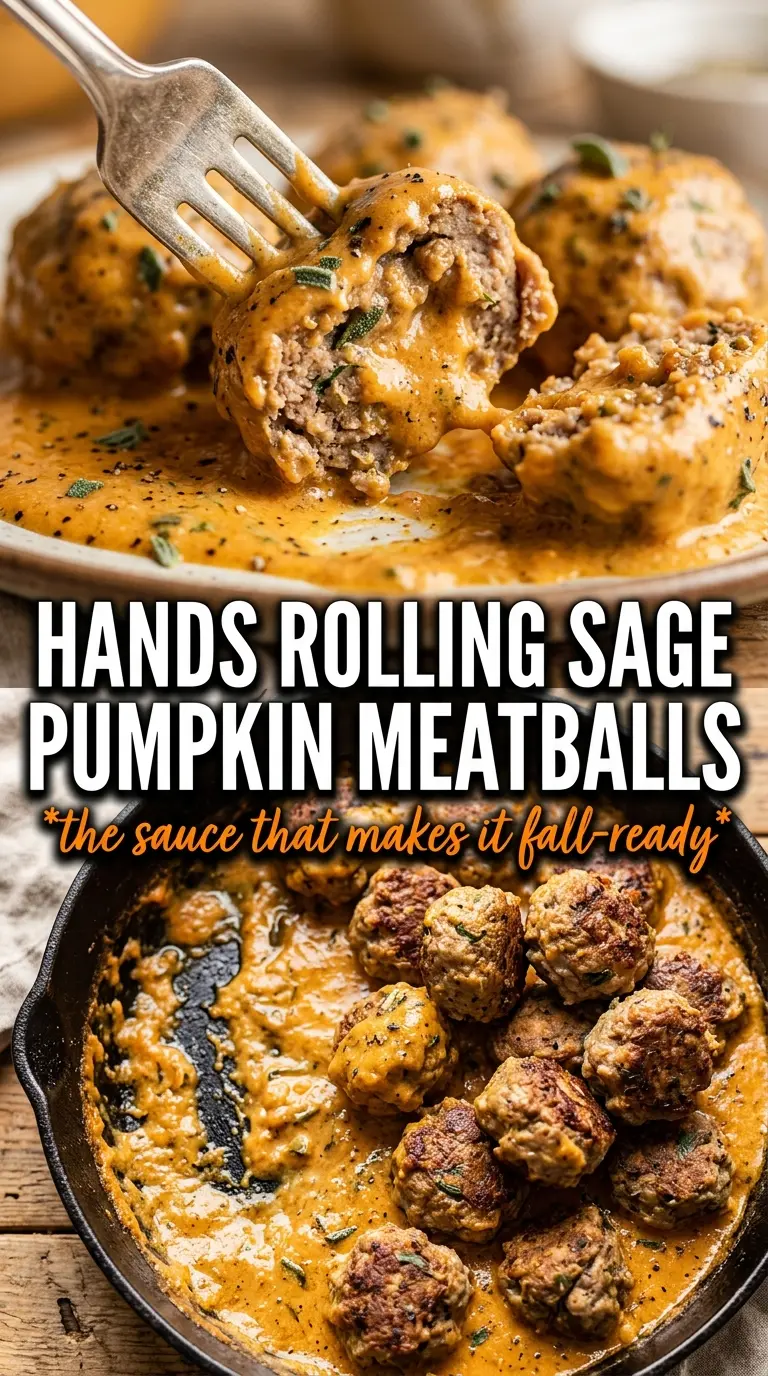
Golden-browned pumpkin sage meatballs tucked into a silky pumpkin cream sauce are the kind of dinner that disappears fast, especially when the sauce clings to every ridge of pasta or soaks into a bowl of soft polenta. The meatballs stay tender, the sage cuts through the richness, and the whole skillet tastes like it took much longer than it did.
What makes this version work is the pumpkin in both places: it keeps the meatballs moist without making them heavy, and it gives the sauce a deeper, rounder body than cream alone. A little parmesan sharpens everything up, while nutmeg and fresh sage keep the flavor from going flat. Browning the meatballs first matters too, because that crust is what gives the sauce its best savory base.
Below, I’ll walk through the small details that keep the meatballs tender and the sauce smooth, plus a few ways to adapt the recipe for different diets and pantry situations.
The sauce turned out so smooth and the meatballs stayed tender even after simmering. I served it over polenta and my husband went back for seconds before I even sat down.
Save these pumpkin sage meatballs for the night you want a cozy skillet dinner with a silky pumpkin cream sauce.
The Trick to Keeping Pumpkin Meatballs Tender Instead of Dense
The biggest mistake with pumpkin meatballs is overmixing. Once the meat, pumpkin puree, egg, and breadcrumbs are combined, stop as soon as the mixture looks even. If you work it like bread dough, the meatballs turn tight and bouncy instead of soft and juicy.
Pumpkin puree adds moisture, but it also makes the mixture a little looser than standard meatballs. That’s why the breadcrumbs matter here: they give the pork or beef something to hold onto so the balls keep their shape in the pan. If the mixture feels sticky, chill it for 10 minutes before rolling. Cold meatballs brown better and are easier to handle.
- The egg binds everything together without making the texture heavy.
- Fresh sage should be minced fine so you get flavor in every bite, not sharp pieces of herb.
- Parmesan adds salt and umami, so the meatballs taste seasoned all the way through before they ever hit the sauce.
What Each Ingredient Is Doing in the Skillet
- Ground pork or beef — Pork gives you a softer, richer meatball, while beef brings a deeper savory edge. Use whichever you have, but choose meat with enough fat to stay moist after browning.
- Pumpkin puree — Canned puree is perfect here. Use plain pumpkin, not pumpkin pie filling, or the sauce will skew sweet and spiced in the wrong way.
- Breadcrumbs — These keep the meatballs tender and help absorb the pumpkin’s moisture. If you need a gluten-free version, use gluten-free breadcrumbs or crushed rice crackers.
- Parmesan — Freshly grated parmesan melts better than the pre-shredded kind and gives the sauce a smoother finish. The shelf-stable grated version works in a pinch, but it won’t disappear as cleanly.
- Heavy cream — This is what turns the pumpkin into a proper sauce. Half-and-half will work, but the sauce will be a little thinner and less plush.
- Fresh sage — Don’t swap in dried sage unless that’s all you have; dried sage can turn dusty and harsh if you use too much. Fresh leaves also fry into crisp garnish better than any dried substitute.
- Nutmeg — Just a little wakes up the pumpkin and cream without making the dish taste like dessert. Too much and the whole skillet starts leaning sweet.
Building the Sauce Without Breaking It
Brown First, Sauce Second
Get a deep golden crust on the meatballs before you add the sauce. You’re not cooking them through at this stage, just creating flavor and structure. If they’re still pale, the sauce will taste flat. Work in batches if the pan is crowded, because steaming meatballs never brown properly.
Cook the Garlic Briefly
Add the garlic to the skillet just long enough for it to smell fragrant, not browned. Burnt garlic turns the sauce bitter fast, especially once the cream goes in. If the pan looks dry, add a small splash of oil before the garlic so it doesn’t catch.
Let the Pumpkin and Cream Simmer Gently
Stir in the pumpkin, cream, parmesan, and nutmeg, then keep the heat low enough for the sauce to barely bubble. High heat can make cream separate and can make the parmesan grainy. The sauce is ready when it coats the back of a spoon and looks glossy, not greasy.
Finish with the Meatballs
Return the browned meatballs to the skillet and simmer until they’re cooked through and the sauce has thickened around them. Turn them once or twice so they pick up sauce on all sides. The final texture should be tender meatballs in a thick, spoonable sauce, not a loose soup at the bottom of the pan.
Ground turkey instead of pork or beef
Turkey works, but it needs the fat from the sauce to stay pleasant. Use dark meat ground turkey if you can, and don’t overcook it during browning. The result will be lighter and a little less rich, but still good with pasta or polenta.
Gluten-free meatballs
Use gluten-free breadcrumbs in the same amount. They absorb moisture the same way and keep the mixture cohesive, so you won’t lose that tender texture. If your gluten-free crumbs are very coarse, let the mixture rest for a few minutes before rolling.
Dairy-free version
Skip the parmesan in the meatballs and sauce, then add a little extra salt and a spoonful of nutritional yeast if you want some of that savory depth back. Use unsweetened coconut cream or a thick oat cream in place of heavy cream. The sauce will be a little different in flavor, but still silky and coating.
Make it ahead for an easier night
You can roll the meatballs a day ahead and keep them covered in the fridge. You can also make the sauce ahead, then rewarm it gently and add the browned meatballs at the end. The sauce may thicken overnight, so loosen it with a splash of cream or water before reheating.
Storage and Reheating
- Refrigerator: Store leftovers in an airtight container for up to 4 days. The sauce will thicken as it sits.
- Freezer: Freeze the meatballs and sauce together for up to 2 months. Thaw overnight in the fridge before reheating.
- Reheating: Warm gently on the stovetop over low heat with a splash of cream, milk, or water. High heat can make the sauce split and can dry out the meatballs.
Questions I Get Asked About This Recipe

Pumpkin Sage Meatballs
Ingredients
Equipment
Method
- In a bowl, mix ground pork or beef, pumpkin puree, breadcrumbs, parmesan, egg, minced fresh sage, minced garlic, salt, and pepper just until combined.
- Roll the mixture into 1.5-inch meatballs and place them on a plate while you heat the pan.
- Heat olive oil in a large skillet over medium-high heat and brown the meatballs in batches until golden on the outside, then remove to a plate.
- Lower heat to medium and sauté garlic in the same skillet, then stir in pumpkin, heavy cream, parmesan, and nutmeg.
- Simmer the pumpkin cream sauce for 5 minutes until slightly thickened and fragrant.
- Return the browned meatballs to the sauce and simmer 15 minutes until cooked through.
- Fry fresh sage until crisp and use it to top the meatballs along with parmesan.
- Serve immediately over pasta or polenta while the sauce is warm and the sage stays crisp.