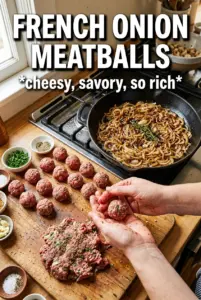
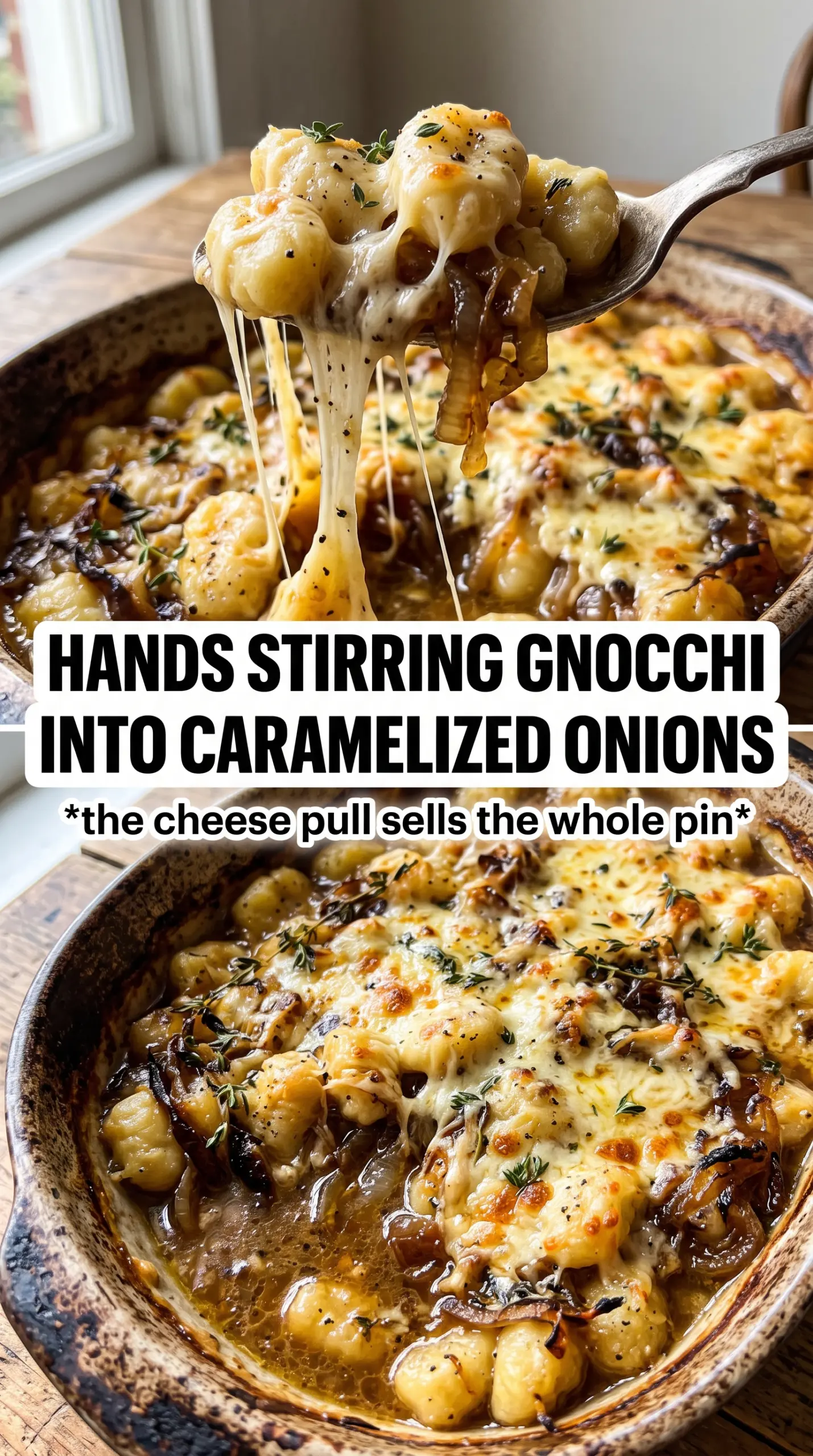
Baked French onion gnocchi turns a humble bag of potato gnocchi into a rich, spoonable dinner with all the comfort of French onion soup and the staying power of a proper main dish. The onions melt down into a deep, sweet base, the broth thickens just enough to coat the gnocchi, and the Gruyere on top bakes into a bronzed crust that cracks when you spoon through it.
What makes this version work is patience at the beginning and restraint at the end. The onions need time to cook past soft and into jammy, mahogany-brown sweetness before anything else is added. Once the broth and cream go in, the sauce only needs a gentle simmer so it stays smooth, and the gnocchi can cook right in the pan without turning gluey or falling apart.
Below, I’ve included the small details that matter most: how dark the onions should get, when the sauce is ready for the cheese, and what to change if you want to make it without wine.
The onions went exactly to that deep brown stage and the gnocchi soaked up the broth without getting mushy. The Gruyere top was bubbly and crisp at the edges, and my husband went back for seconds before I even sat down.
Save this baked French onion gnocchi for the night you want caramelized onions, bubbling Gruyere, and a one-pan dinner that eats like soup and comfort food at the same time.
The Onion Stage You Can’t Rush Here
The biggest mistake with French onion anything is stopping the onions too early. Pale, softened onions taste sweet, but they don’t give you that deep, rounded base that makes the whole dish taste like it cooked for hours. You want the onions to collapse, turn glossy, then slowly move from golden to a rich brown with sticky bits on the pan that loosen when you add the wine.
If the heat is too high, the onions scorch before they sweeten and the fond turns bitter. If the heat is too low, they sit in their own moisture and steam. Medium-low heat with a little patience gives you the middle ground: deep color, concentrated flavor, and a sauce that tastes built, not dumped together.
- Caramelized onions — These carry the whole dish. They need time, not just heat, so don’t rush them.
- Dry white wine or dry sherry — This lifts the browned bits from the pan and adds the sharp edge that keeps the sauce from tasting flat. If you skip alcohol, use a splash of extra broth plus a teaspoon of vinegar at the end.
- Gruyere — It melts smoothly and browns in a way that feels right for French onion flavor. Swiss cheese can work, but it won’t give you the same nutty depth.
What Each Ingredient Is Actually Doing in the Pan
- Potato gnocchi — Uncooked shelf-stable gnocchi works best here because it absorbs the sauce as it bakes. Fresh gnocchi can be used, but it cooks faster, so watch the pan closely near the end.
- Beef broth — This gives the sauce the classic French onion backbone. A good broth matters more than a fancy brand name; if yours tastes thin on its own, it will taste thin here.
- Worcestershire sauce — Just enough to deepen the savory flavor without making the dish taste like steak sauce. It adds the kind of background richness that makes the onions taste fuller.
- Heavy cream — This softens the broth into a silky sauce. Half-and-half can work in a pinch, but the sauce will be looser and less plush.
- Thyme — Fresh thyme gives the dish its classic herbal note. Dried thyme is fine, but use less because it reads louder and can take over if you’re heavy-handed.
Building the Sauce So the Gnocchi Cooks Through
Caramelize the Onions First
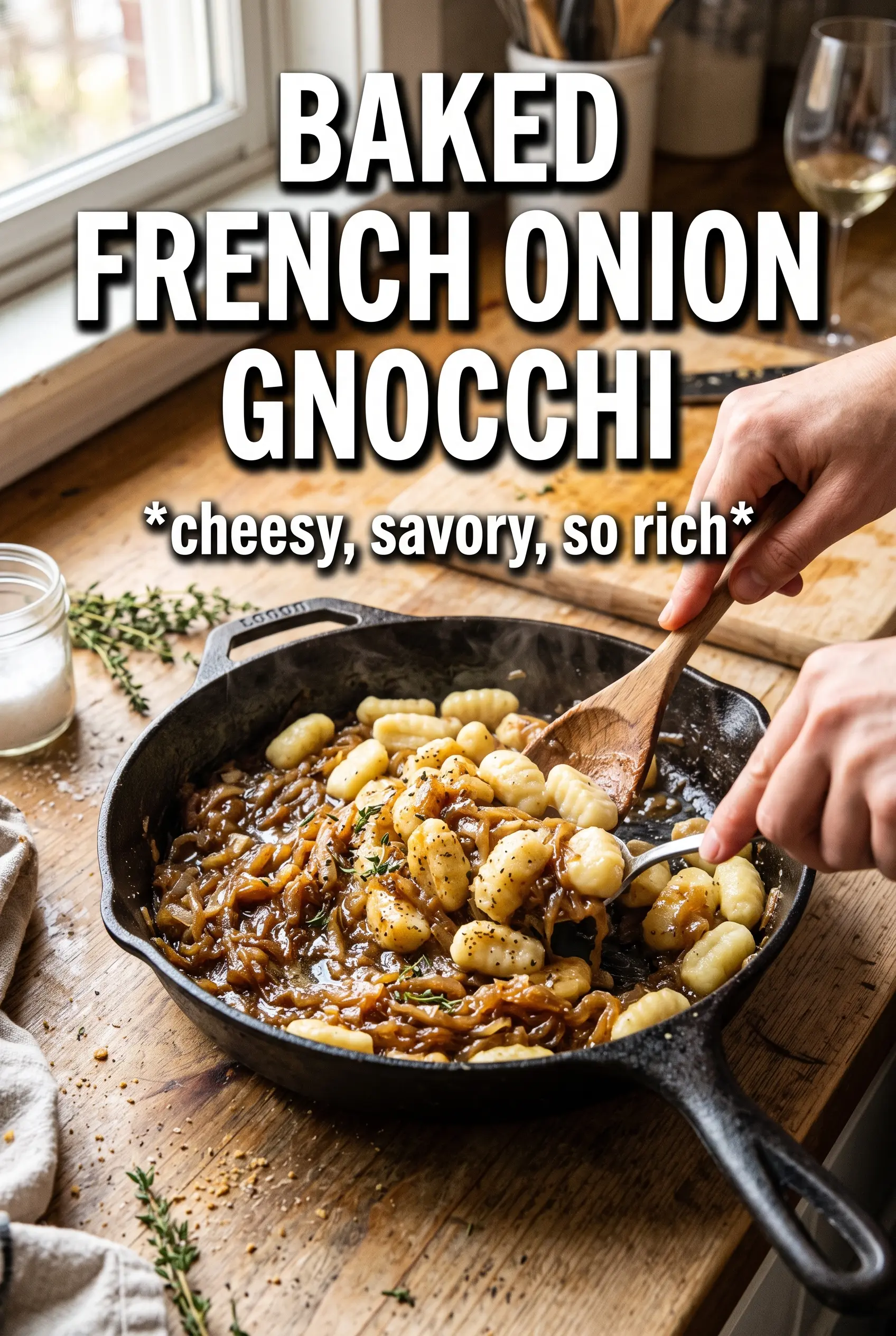
Melt the butter with the olive oil in a large oven-safe skillet, then add the onions and let them cook down slowly until they turn deep brown and silky. Stir often enough to keep the bottom from burning, but not so often that the onions never get a chance to sit and color. If the pan looks dry or the onions start sticking too hard, a splash of water or broth will loosen them without wiping out the flavor. This stage takes most of the time, and it is the stage that decides whether the dish tastes sweet and rich or just oniony.
Deglaze for the Flavor You Built
Pour in the wine or sherry and scrape the pan well. The brown layer on the bottom should dissolve into the liquid and disappear into the sauce, not stay stuck to the skillet. After that, add the garlic and thyme and cook just long enough for the garlic to smell fragrant, about a minute. If the garlic goes in too early, it can burn while the onions finish, and burned garlic will follow you through the whole dish.
Simmer the Sauce Before the Cheese Goes On
Stir in the broth, Worcestershire, and cream, then bring the mixture to a gentle simmer. You don’t want a hard boil here; a steady simmer is enough to marry the flavors and keep the cream smooth. Add the gnocchi while the sauce is hot so they start cooking right away, then stir to coat every piece. If the sauce looks a little thin at this point, that is normal — it tightens as the gnocchi cook and the cheese melts on top.
Finish Under Heat Until Bubbling and Brown
Scatter the Gruyere over the surface and bake or broil until the cheese is molten, browned in spots, and the sauce is bubbling around the edges. The gnocchi should be tender when pierced, not chalky in the center. If you’re broiling, stay close; Gruyere can go from golden to burnt fast because of its fat content. Let the pan sit for a few minutes before serving so the sauce settles and doesn’t run all over the plate.
How to Adapt It When You Need a Different Version
Dairy-Free Enough for a Weeknight Swap
Use olive oil in place of the butter, then finish the sauce with unsweetened oat cream or a plain dairy-free cooking cream. You won’t get the same Gruyere pull, but you can top it with a good vegan melty cheese and a little nutritional yeast for extra savoriness.
Make It Without Wine or Sherry
Replace the wine with extra beef broth plus 1 to 2 teaspoons of white wine vinegar or apple cider vinegar at the end. You lose the sharper edge that wine brings, but the vinegar keeps the sauce from tasting heavy and one-note.
Vegetarian Version That Still Tastes Deep
Swap the beef broth for a rich mushroom or vegetable broth and use vegetarian Worcestershire if needed. The flavor will be a little lighter, but mushrooms or a deeply browned vegetable broth can still give you that savory backbone the dish needs.
Storage and Reheating
- Refrigerator: Store leftovers covered for up to 3 days. The sauce will thicken and the gnocchi will soften a bit more overnight.
- Freezer: I don’t recommend freezing this one. Cream sauces can separate and the gnocchi tends to get mealy after thawing.
- Reheating: Warm it covered in a 350°F oven with a splash of broth or cream until hot and bubbling. The common mistake is blasting it in the microwave, which tightens the sauce and makes the gnocchi rubbery.
Answers to the Questions Worth Asking
Baked French Onion Gnocchi
Ingredients
Equipment
Method
- Melt the butter with the olive oil in a large oven-safe skillet, then add the thinly sliced onions. Cook over medium-low heat for 35-40 minutes, stirring occasionally, until deeply caramelized.
- Add the white wine (or dry sherry) to deglaze the skillet, scraping up browned bits, and cook for 2 minutes. Cook until the liquid reduces slightly.
- Stir in the minced garlic and fresh thyme and cook for 1 minute. Keep the heat at a gentle simmer so the garlic softens without browning too hard.
- Pour in the beef broth, Worcestershire sauce, and heavy cream, then bring everything to a simmer. Simmer briefly until the mixture looks cohesive and lightly thickened.
- Add the uncooked potato gnocchi and stir to coat them in the onion sauce. Season with salt and pepper to taste so every bite has balance.
- Scatter the shredded Gruyère over the top in an even layer. Make sure the cheese covers the surface so it melts into a crust.
- Broil or bake at 425F for 15-18 minutes until the gnocchi are cooked through, the sauce is bubbling, and the cheese is golden. Watch closely near the end to prevent over-browning.