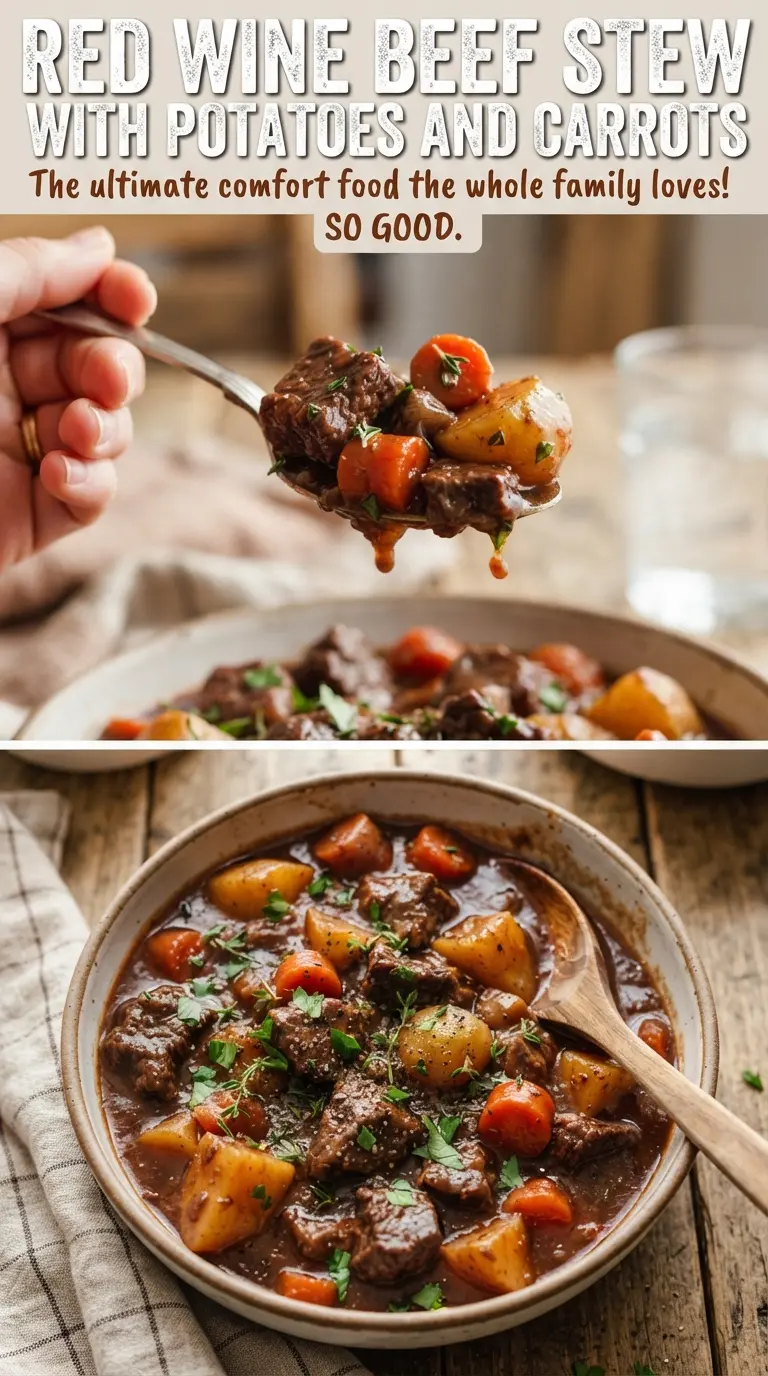
Red wine beef stew earns its place when you want meat that gives way under a spoon and a broth that tastes like it spent all afternoon building depth. The wine turns the sauce dark and silky, the potatoes soak up every bit of it, and the carrots keep the whole pot from feeling heavy. It’s the kind of stew that gets even better after a rest, which is exactly why I like making a full Dutch oven instead of just enough for dinner.
The trick here is to brown the beef in batches and keep the flour light on the outside of the meat, not clumped in the pot. That first sear gives the stew its backbone, and scraping the pan after the wine goes in pulls up the browned bits that would otherwise stay stuck and wasted. The balsamic doesn’t make it taste sweet; it sharpens the wine and rounds off the edges.
Below, I’ve laid out the part that matters most: how to keep the braise from tasting flat, how to time the potatoes so they hold their shape, and what to do if your stew looks too thin before serving.
The sauce reduced beautifully and the beef turned out fork-tender after the full braise. I loved that the potatoes held their shape instead of dissolving into the stew.
Save this red wine beef stew for the kind of night when you want fork-tender beef, buttery potatoes, and a deep braising sauce.
The Browning Stage Is Where the Stew Gets Its Depth
If the beef goes into the pot crowded, it steams instead of searing, and that’s the difference between a stew with real body and one that tastes boiled. Brown the cubes in batches until you get a dark crust on more than one side; you’re not trying to cook them through at this stage. The flour helps the surface develop color and later gives the broth a little natural body, but too much flour turns the pot pasty, so toss off the excess before the meat hits the oil.
The onion and tomato paste build on that base. Let the tomato paste cook for a full minute until it deepens in color and smells a little sweet and concentrated. If you rush the wine in too soon, the stew can taste sharp instead of rounded, so give it time to reduce and pick up the browned bits from the bottom of the pot.
What Each Ingredient Is Doing in the Pot
- Beef chuck — This is the cut that gives you tender strands after a long braise. Leaner beef turns dry and stringy before the sauce has time to develop, so chuck is worth buying for this one.
- Dry red wine — Use something you’d drink, not cooking wine. It doesn’t need to be expensive, but it does need to taste clean, because it becomes the backbone of the sauce.
- Tomato paste — This adds concentration and a little sweetness without making the stew taste like tomato. Cooking it briefly in the pot keeps it from tasting raw.
- Yukon gold potatoes — They hold their shape better than russets and still turn creamy at the edges. Cut them into chunks that are all about the same size so they finish together.
- Carrots — They bring sweetness and balance the wine’s edge. If you cut them too thin, they’ll disappear into the broth by the end of the braise.
- Balsamic vinegar — Just a spoonful sharpens the whole pot and makes the wine taste fuller. It’s not there to taste vinegary; it’s there to make the stew taste finished.
Building the Braise So the Beef Turns Tender, Not Dry
Season and Sear the Beef
Heat the oil until it shimmers, then add the beef in a single layer without crowding the pot. You want the surface to turn deep brown before you move it, because pale meat never gives this stew the right flavor. If the bottom of the pot starts looking black instead of brown, lower the heat and continue in smaller batches. That fond is worth protecting, not burning.
Cook Down the Aromatics
Add the onion after the last batch of beef comes out and cook it until soft and translucent with a little gold around the edges. Stir in the garlic and tomato paste and cook just long enough for the garlic to lose its raw edge. The paste should darken slightly; that’s your cue that it’s ready for the wine.
Reduce the Wine Before Braising
Pour in the red wine and scrape the bottom well with a wooden spoon. Let it bubble until it reduces by about a third, which cooks off the harsh alcohol edge and concentrates the flavor. If you skip this part, the stew can taste thin and wine-forward instead of rich and balanced. The pot should smell deep and savory before the broth goes in.
Slow-Braise, Then Add the Vegetables
Once the broth, vinegar, herbs, and beef go in, cover the pot and braise it until the meat is nearly tender before adding the potatoes and carrots. That timing keeps the vegetables from turning mushy while the beef finishes. By the end, the beef should pull apart with a fork, the potatoes should be tender at the center, and the sauce should coat a spoon without feeling gluey.
How to Adapt the Stew Without Losing the Right Texture
Make It Gluten-Free
Swap the all-purpose flour for a gluten-free flour blend or skip it entirely and reduce the finished stew a little longer at the end. The stew will still braise beautifully, but it may need a short uncovered simmer to reach the same body.
Use a Different Braising Wine
Cabernet, merlot, or a dry pinot noir all work well here. Go with something dry and fruity rather than oaky or sweet, because the wine cooks down and becomes the flavor of the broth.
Make It Dairy-Free and Naturally Rich
This stew is already dairy-free as written, and that’s part of why the broth tastes clean and deep. If you want extra richness without dairy, let it rest for 15 minutes before serving so the starches from the potatoes help thicken the sauce.
Storage and Reheating
- Refrigerator: Keeps well for 4 days. The flavor deepens overnight, and the sauce thickens as it chills.
- Freezer: Freezes well for up to 3 months. Cool it completely first, then freeze in airtight containers; the potatoes will soften a little after thawing but still taste good.
- Reheating: Reheat gently on the stove over low heat with a splash of broth or water if needed. Don’t boil it hard, or the beef can tighten up and the potatoes can break apart.
Questions I Get Asked About This Stew

Red Wine Beef Stew with Potatoes and Carrots
Ingredients
Equipment
Method
- Preheat oven to 325F. Season the beef cubes with salt and black pepper, toss with flour, and brown in batches in a Dutch oven using olive oil until well browned.
- Cook the onion in the Dutch oven for 5 minutes. Add the garlic and tomato paste and cook for 1 minute.
- Pour in the red wine and simmer for 5 minutes, scraping the bottom, until reduced by a third.
- Add the beef broth, balsamic vinegar, fresh thyme, bay leaves, and the browned beef to the Dutch oven. Cover and braise in the oven at 325F for 2 hours.
- Add the potatoes and carrots to the Dutch oven. Braise, covered, in the oven for 1 hour more, until everything is tender.
- Remove the thyme and bay leaves, then top the stew with chopped fresh parsley before serving.