Tender rhubarb under a golden, nubbly crumble is the kind of dessert that disappears fast because every bite gives you contrast: sharp fruit, syrupy juices, and a buttery topping that stays crisp at the edges. It tastes like a proper old-fashioned pudding, the sort you put on the table warm and watch everyone lean in for a spoonful before it has fully settled.
The trick is keeping the rhubarb juicy without turning the filling watery. Cornstarch gives the fruit enough body to thicken into a glossy sauce as it bakes, while the brown sugar in the topping adds a deeper, toffee-like note that plays nicely against rhubarb’s tartness. Cold butter matters here. If it softens too much before baking, you lose those crunchy little crumbs and end up with a denser lid instead of a true crumble.
Below, I’ve included the one timing detail that saves the texture, plus a few smart swaps if your rhubarb is especially tart or you want to make this with what’s already in the pantry.
The rhubarb softened beautifully and the juices thickened right up after cooling for 15 minutes. The crumble stayed crisp on top, and the tart-sweet balance was spot on with custard.
Save this old-fashioned rhubarb crumble for the days when you want sharp fruit, a buttery topping, and a spoonful of warm custard.
The Reason Rhubarb Needs a Thickener, Not Just Sugar
Rhubarb throws off a lot of juice as it bakes. If you skip the cornstarch, the filling can slide into a thin, sharp puddle beneath the topping, and the crumble softens before you get that clean spoonful you want. The goal is not a dry filling. It’s a lightly set, glossy one that still tastes bright.
The other thing worth knowing is that the crumble topping is doing two jobs at once: insulating the fruit and browning into a crisp lid. Cold butter is what gives you that rough, pebbly texture. Warm butter blends too smoothly into the flour and sugar, which bakes up more like a paste than a crumble.
- Cornstarch — This is what turns the rhubarb juices into a proper sauce as the dessert cools. Flour won’t thicken as cleanly here, and you’d need more of it to get the same effect.
- Brown sugar — It adds a deeper flavor than white sugar and helps the topping brown with a little more warmth. If you swap in white sugar, the crumble will taste lighter and a touch flatter.
- Cold butter — Keep it straight from the fridge and cut it into cubes before mixing. That’s what creates the crumbly, uneven texture that bakes into crisp little clusters.
What Each Ingredient Is Actually Doing in This Rhubarb Filling
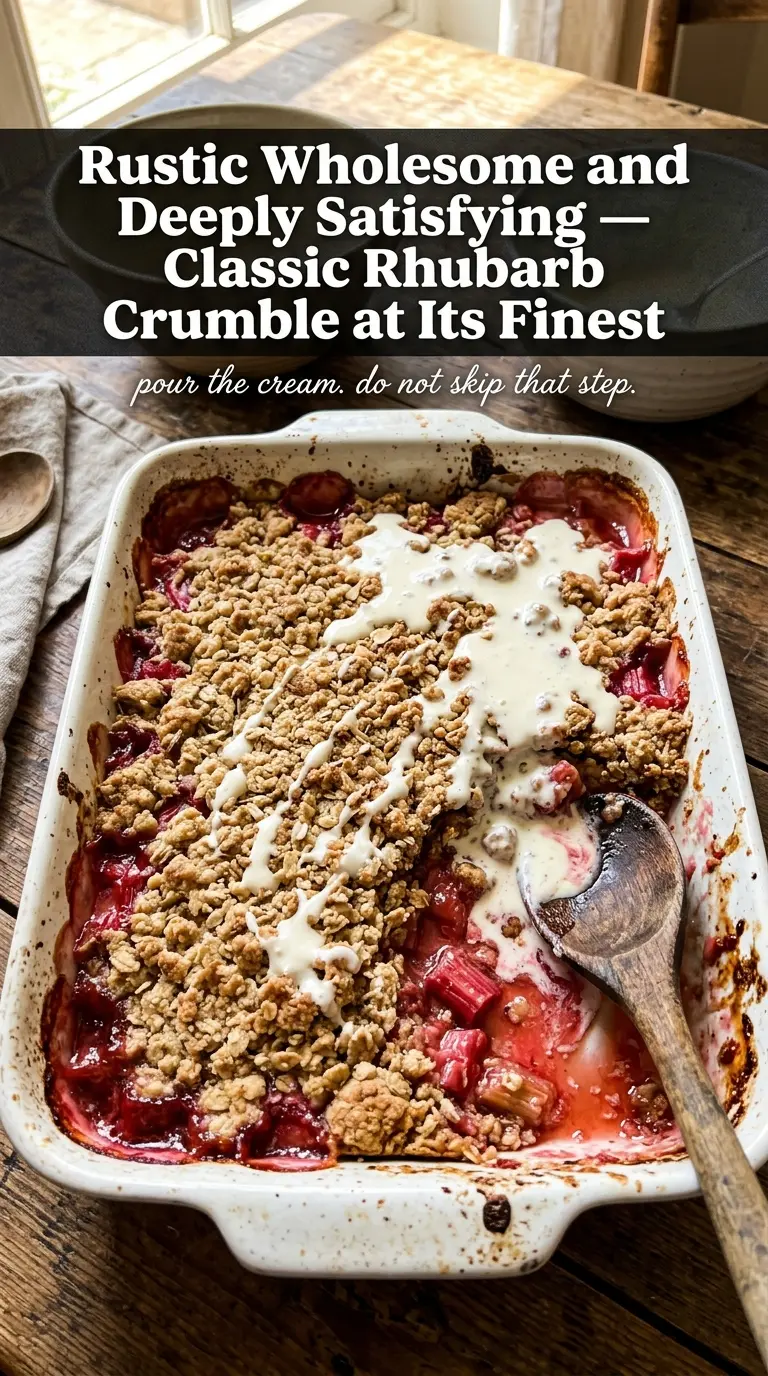
- Rhubarb cut into small pieces — Smaller pieces release their liquid faster. They also cook more evenly.
- Sugar — This draws out the rhubarb’s liquid and creates a syrup. The sugar dissolves as the rhubarb cooks, helping thicken the filling.
- Cornstarch or tapioca (the main thickener) — Sugar alone won’t thicken enough to prevent pooling. A thickener prevents the filling from turning to soup.
- Lemon juice (helps the thickener work) — The acid activates the thickener and helps it set properly. It also brightens the rhubarb flavor.
- Water (minimal amount) — Just enough to help the rhubarb cook without sticking. Too much water makes the filling thin even with a thickener.
- Heat (medium, not high) — Gentle heat helps the filling thicken evenly. High heat can scorch it or make the texture grainy.
- Cooking time (just until thickened) — Once the filling reaches a syrupy consistency, stop cooking. Overcooking can break down the thickener.
- Cooling before use — Let the filling cool completely before using it in a pie or cobbler. Hot filling can create steam that makes the crust or topping soggy.
Building the Crumble So It Stays Crisp
Prep the fruit first
Toss the rhubarb with sugar, cornstarch, and vanilla until every piece looks lightly coated, then spread it into the buttered baking dish. The sugar starts drawing out the juices right away, so don’t let the mixture sit around for long before it goes into the oven. If your rhubarb is especially thick and stalky, cut it into even 1-inch pieces so it softens at the same rate.
Work the topping until it looks sandy and uneven
Combine the flour, brown sugar, and salt, then cut in the cold butter with your fingers, a pastry cutter, or two forks. Stop when the mixture looks like coarse breadcrumbs with a few larger clumps. Those bigger clumps are a good thing; they bake into the golden, crunchy bits people pick off the top first.
Bake until the filling is actively bubbling
Spread the crumble evenly over the fruit and bake at 375°F for 35 to 40 minutes. The top should be deep golden and the filling should bubble at the edges and in a few spots through the center. If the top browns before the fruit bubbles, the oven is running hot, so move the dish to a lower rack for the rest of the bake.
Let it rest before serving
The crumble needs about 15 minutes to settle after it comes out of the oven. That pause lets the juices thicken instead of running all over the plate. Serve it warm with vanilla custard or ice cream, when the topping is still crisp and the fruit is spoon-soft.
How to Adapt This for Different Tastes and Diets
Make it gluten-free with a one-to-one flour blend
Swap the all-purpose flour for a good 1:1 gluten-free baking blend. The topping will still brown and crisp, though it may be a little more delicate when you scoop it. Choose a blend that already includes xanthan gum so the crumb holds together instead of turning sandy.
Use less sugar for a sharper, tarter filling
Drop the filling sugar to 3/4 cup if your rhubarb is very young and tender or if you like a more puckery dessert. The filling will taste brighter and less jammy, but it may also look a little looser before cooling. Don’t cut the cornstarch if you reduce the sugar; the thickener is still doing the same job.
Add strawberries for a softer, sweeter crumble
Replace up to half the rhubarb with sliced strawberries if you want a rounder, sweeter filling. Strawberries release even more juice than rhubarb, so keep the cornstarch in place and expect the filling to set a little more softly. The result is less tart and a bit more saucy.
Dairy-free version with plant butter
Use a solid plant-based butter block in place of dairy butter. The topping won’t taste quite as rich, but it will still bake up crumbly if the substitute is cold and firm when it goes in. Avoid soft tub spreads; they melt too fast and lose the texture that makes the topping worth eating.
Storage and Reheating
- Refrigerator: Store covered for up to 4 days. The topping softens a bit in the fridge, but the flavor holds well.
- Freezer: Freeze after baking and cooling completely. Wrap the dish well, or freeze portions in airtight containers for up to 2 months. The topping won’t stay as crisp after thawing, but the filling freezes nicely.
- Reheating: Warm in a 325°F oven until heated through and the topping has revived a little, about 15 to 20 minutes for a portion or longer for the full dish. Microwaving works in a pinch, but it makes the crumble soft instead of crisp.
Answers to the Questions Worth Asking
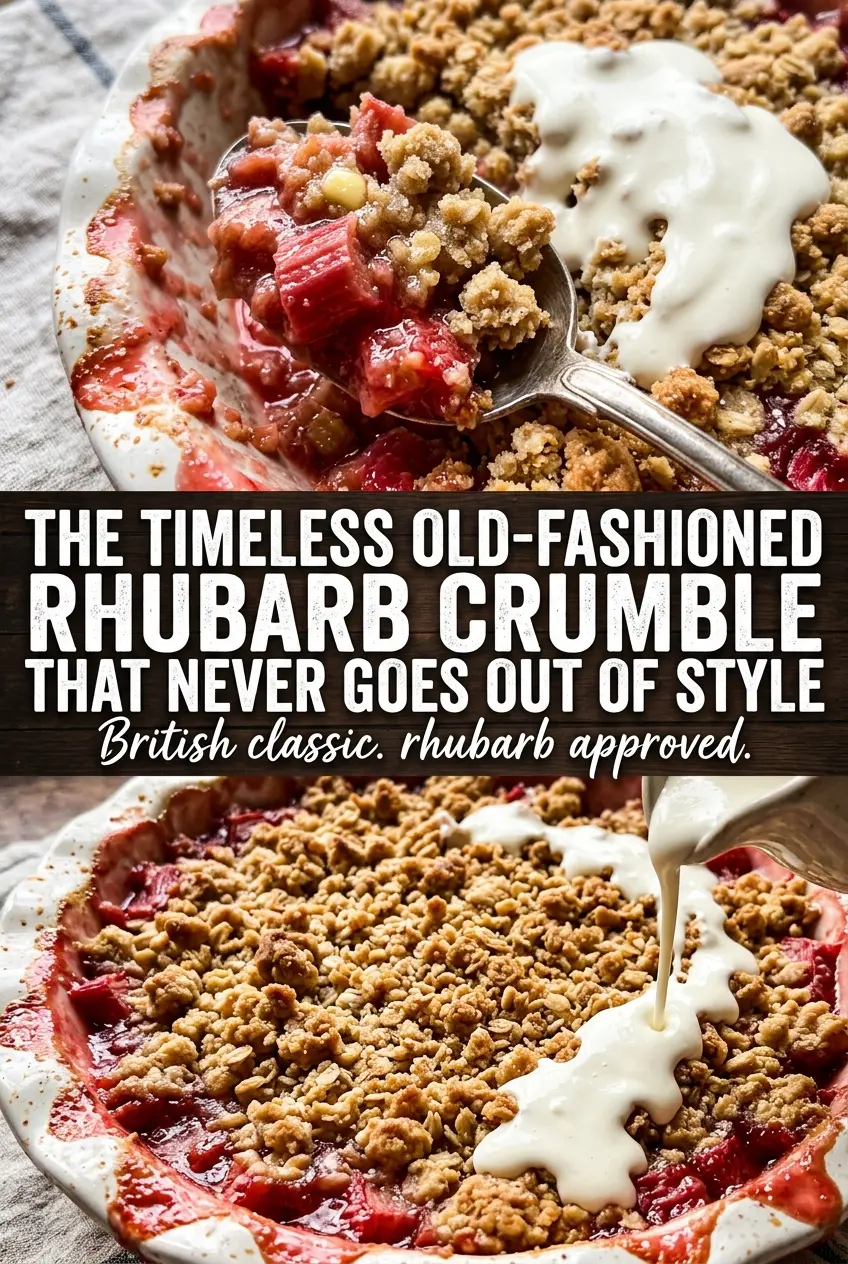
Old-fashioned Rhubarb Crumble
Ingredients
Equipment
Method
- Preheat oven to 375°F and butter a 2-quart baking dish. Use a dish that can hold the rhubarb in an even layer.
- Toss fresh rhubarb with sugar, cornstarch, and vanilla extract, then spread it in the prepared dish. The fruit should look evenly coated and slightly sticky.
- Combine all-purpose flour, brown sugar, and salt in a bowl. Mix until the dry ingredients are uniform in color.
- Cut in cold butter until the mixture resembles coarse breadcrumbs. Pinch a bit between your fingers—small clumps should form without melting.
- Sprinkle the crumble evenly over the rhubarb. Aim for an even layer so the top bakes golden throughout.
- Bake at 375°F for 35-40 minutes until the topping is golden and the filling is bubbling. You should see active bubbling around the edges when it’s ready.
- Let the crumble cool for 15 minutes before serving. The topping will set slightly, making it easier to scoop.