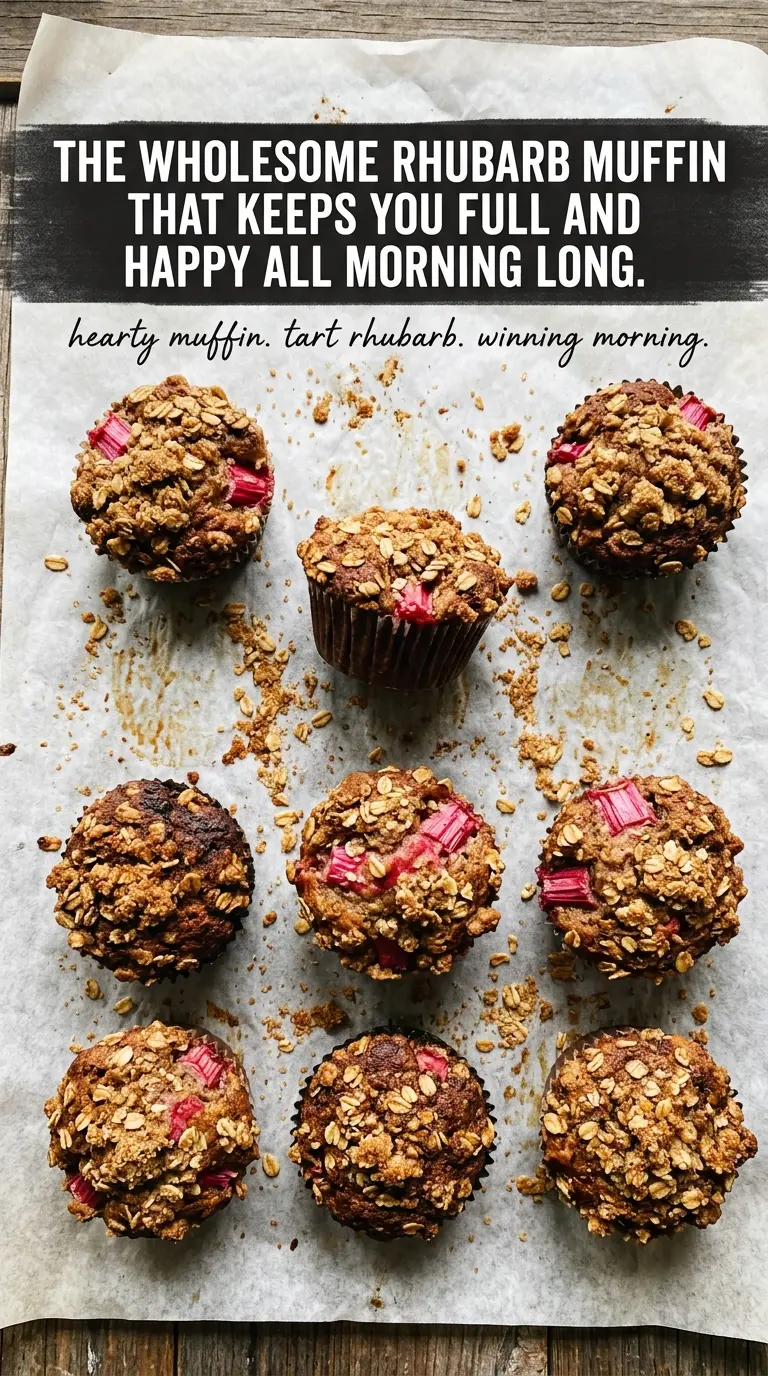
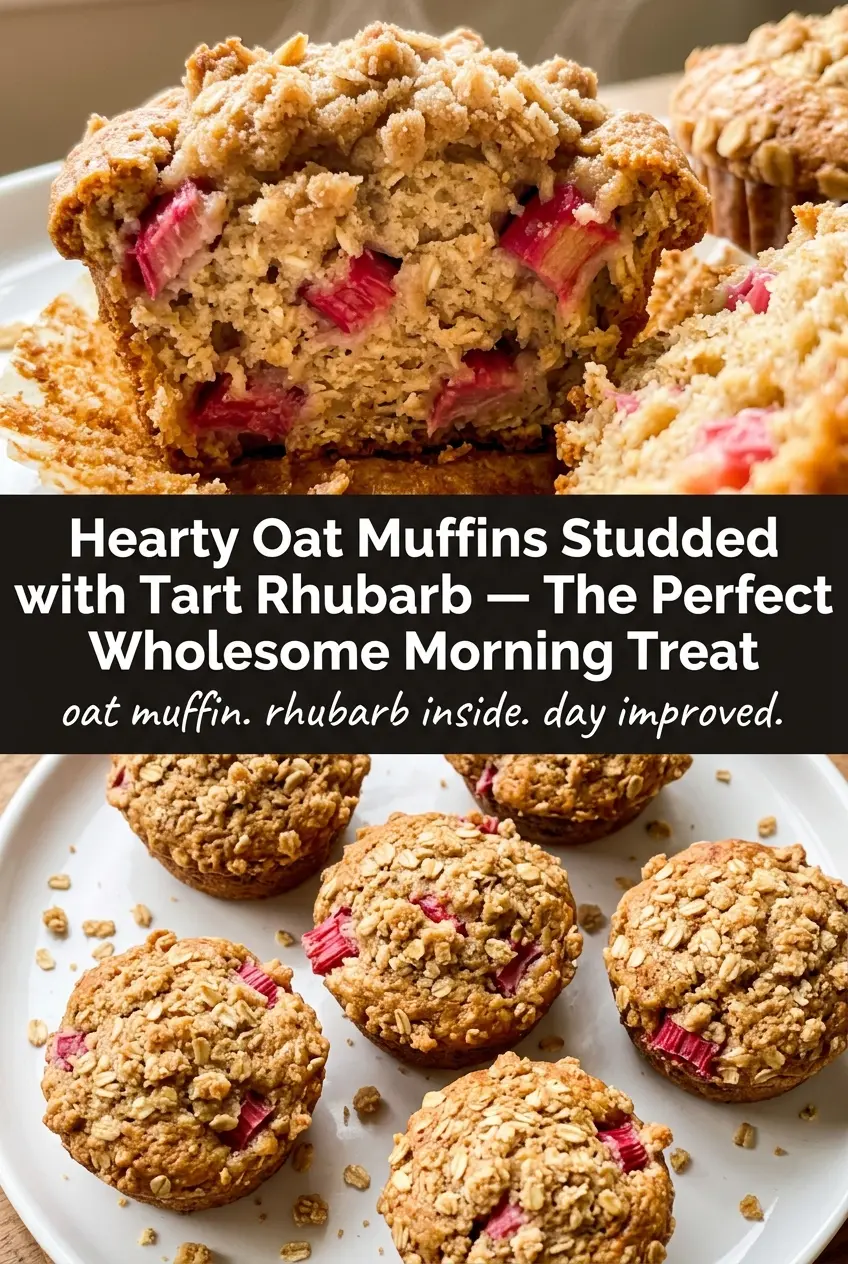
Rhubarb oat muffins bake up tender in the middle with crisp, sugared tops and just enough tang from the rhubarb to keep each bite interesting. The oats give them a hearty, almost chewy crumb that makes these feel like a proper breakfast instead of a cupcake in disguise. When the muffins are done right, the tops are golden and the rhubarb stays in little soft pockets instead of melting into the batter.
The trick is soaking the oats in buttermilk before they go anywhere near the oven. That short rest softens the oats so they blend into the batter without staying dry or gritty, and the buttermilk adds enough acidity to help the baking soda do its job. I also fold the rhubarb in at the very end so the batter stays light and the pieces stay distinct.
Below, I’ll show you how to keep the crumb tender, why the topping matters, and what to change if your rhubarb is especially tart or you want to make these ahead for busy mornings.
The oats came out soft instead of chewy and the rhubarb stayed in bright little pockets. I baked them for 21 minutes and the tops were perfectly domed with that nice brown sugar crunch.
Rhubarb oat muffins stay tender and crunchy on top — save this batch for the mornings when you want a hearty breakfast with a little tartness.
The Oats Need a Head Start, Or They Stay Stubborn
Old-fashioned oats can make muffins taste wholesome in the best way, but they can also turn dry and heavy if they go into the batter raw. Soaking them in buttermilk gives them time to soften before baking, which is what keeps the crumb moist instead of chewy in the wrong way. That step also helps the oats blend into the muffin instead of sitting there like little dry flakes.
The other thing that matters here is not overmixing once the wet and dry ingredients come together. Muffin batter should look a little rough when you stop stirring. If you beat it smooth, the flour develops too much gluten and the muffins lose that tender, bakery-style lift.
What Each Ingredient Is Actually Doing in These Muffins
- Old-fashioned oats — These give the muffins their hearty texture and keep the crumb interesting. Quick oats will work in a pinch, but they soften faster and lose some of that visible oat texture on top and inside.
- Buttermilk — This softens the oats and adds acidity, which helps the baking soda lift the muffins. If you don’t have it, use milk mixed with 1 tablespoon lemon juice or vinegar and let it sit for 5 minutes before using.
- Brown sugar — This adds a deeper sweetness that pairs well with rhubarb’s tart edge and helps keep the muffins moist. White sugar will sweeten them, but you’ll lose some of that warm, caramel note.
- Vegetable oil — Oil keeps the muffins tender even after they cool. Melted butter can be swapped in for a richer taste, but the crumb will be a little firmer once chilled.
- Fresh rhubarb — Fresh rhubarb gives clean tart bursts that hold their shape as the muffins bake. Chop it small so the pieces soften evenly without sinking to the bottom.
Building the Batter Without Killing the Rise
Softening the Oats First
Stir the oats into the buttermilk and let them sit for 15 minutes. By the end, the oats should look plump and the mixture will thicken a little. If you skip this rest, the muffins can bake up with dry little oat pockets, especially around the edges.
Mixing the Dry and Wet Ingredients
Whisk the flour, brown sugar, baking powder, baking soda, and salt together before adding the wet ingredients. That step spreads the leavening evenly so the muffins rise without bitter baking soda spots. When you add the wet mixture, stir only until the flour disappears; a few streaks are fine because the batter will finish coming together when you fold in the rhubarb.
Folding in Rhubarb and Topping the Muffins
Fold the diced rhubarb in at the end so it stays intact and doesn’t bruise the batter. Divide the batter evenly among the muffin cups, then sprinkle the oat-brown sugar topping over each one. If the topping is clumpy, break it up with your fingers before adding it so it bakes into a crisp, sandy crust instead of one big melted patch.
Baking Until the Centers Set
Bake at 375°F for 20 to 22 minutes, until the tops are golden and a toothpick comes out clean or with a few moist crumbs. If the tops brown before the centers are done, your oven may run hot, so start checking at 20 minutes. Let the muffins sit in the pan for 5 minutes, then move them out so steam doesn’t soften the bottoms.
Three Ways to Work With What You Have
Make Them Dairy-Free
Swap the buttermilk for an unsweetened non-dairy milk mixed with 1 tablespoon lemon juice or vinegar. You’ll still get the acidity needed for lift, though the flavor will be a little less tangy and the oats won’t soften quite as richly as they do with real buttermilk.
Use Frozen Rhubarb
Frozen rhubarb works well if you keep it frozen until the last moment and fold it in straight from the freezer. Don’t thaw it first or it will bleed too much moisture into the batter and can make the muffins dense around the rhubarb pockets.
Reduce the Sugar a Bit
You can cut the brown sugar down by 1/4 cup if your rhubarb is especially sweet or you like a less sweet breakfast muffin. The muffins will still bake up fine, but they’ll be a little less tender and the tops won’t caramelize as deeply.
Storage and Reheating
- Refrigerator: Store in an airtight container for up to 4 days. The oat texture firms up a bit in the fridge, but the muffins stay moist.
- Freezer: These freeze well for up to 2 months. Wrap individually and tuck them into a freezer bag so the tops don’t get crushed.
- Reheating: Warm in a 300°F oven for 8 to 10 minutes or microwave for 15 to 20 seconds. Don’t overheat them in the microwave or the crumb turns rubbery and the topping softens too much.
Answers to the Questions Worth Asking
Rhubarb Oat Muffins
Ingredients
Equipment
Method
- Soak the old-fashioned oats in the buttermilk for 15 minutes to soften, letting the oats absorb the liquid and look slightly thickened.
- Preheat the oven to 375°F and line a 12-cup muffin tin with paper liners.
- Whisk together the all-purpose flour, brown sugar, baking powder, baking soda, and salt until evenly combined.
- Add the vegetable oil, egg, and vanilla extract to the oat mixture and stir to combine until smooth.
- Pour the wet ingredients into the dry ingredients and mix until just combined, then fold in the diced fresh rhubarb.
- Divide the batter among the muffin cups and sprinkle the tops with the oats and brown sugar for a visible oat streusel.
- Bake for 20-22 minutes at 375°F until golden and a toothpick comes out clean.
- Cool in the pan for 5 minutes before serving.