Creamy custard, tart rhubarb, and a tender almond flour crust make this pie feel like a real dessert, not a compromise. The filling sets into clean slices with a soft wobble in the center and a rich, vanilla-scented finish that takes the edge off rhubarb’s sharpness without burying it.
What makes this version work is the balance: enough egg to set the custard, enough cream to keep it supple, and just enough almond flour in the filling to help it hold together without turning dense. The crust gets a quick pre-bake, which matters here because a custard pie can punish an underbaked base fast. Rhubarb also brings a lot of moisture, so keeping the pieces diced evenly helps the filling bake at the same pace.
Below you’ll find the small details that keep the custard smooth, the crust sturdy, and the slices neat after chilling. If you’ve had keto pies turn watery or grainy before, the process notes here will save you a lot of frustration.
The custard baked up smooth and the rhubarb stayed bright instead of turning mushy. I chilled it overnight and the slices held perfectly, which never happens with most keto pies I’ve tried.
Save this keto rhubarb custard pie for the days when you want tart fruit, silky custard, and a sturdy almond flour crust in one chilled slice.
The Part That Keeps a Keto Custard Pie From Getting Watery
Custard pies with fruit usually fail in one of two ways: the crust goes soggy, or the filling turns loose and weeps after chilling. Rhubarb makes that risk higher because it releases a lot of juice as it bakes. The fix here is a combination of a short blind bake and a small amount of almond flour in the filling, which helps absorb moisture without giving the custard a heavy texture.
The other detail that matters is the cooling time. If you cut this pie while it’s still warm, the center hasn’t finished setting and the fruit juices will run into the slices. Give it the full chill. The texture changes from soft and delicate to clean and sliceable.
What the Almond Flour and Erythritol Are Actually Doing Here

- Almond flour — This builds the crust and also helps steady the custard. Fine almond flour gives the smoothest result; coarse almond meal makes the crust more crumbly and the filling a little grainier. If you need a nut-free swap, this isn’t the place for a direct 1:1 change because the texture will be different from the start.
- Erythritol — It keeps the pie sugar-free and gives the filling enough sweetness to balance the rhubarb’s sharp bite. A powdered keto sweetener works even better in the custard because it dissolves faster and leaves less chance of a gritty finish. If your sweetener blends are sweeter than erythritol, use less and taste the mixture before baking.
- Heavy cream — This is what gives the custard its soft, silky body. Half-and-half will work in a pinch, but the filling won’t set as luxuriously and it may bake up a touch looser. Use full-fat cream if you want that classic custard finish.
- Fresh rhubarb — Fresh is the right choice here because frozen rhubarb sheds too much liquid and can weaken the custard. Dice it evenly so it softens at the same rate and doesn’t leave hard pieces under the set filling. If your stalks are especially thick and stringy, peel off the outer fibers before chopping.
- Eggs — They are the structure of the pie. Whisk them until fully smooth, but don’t whip in a lot of air or the custard can puff and crack as it bakes.
Building the Custard So It Sets Cleanly
Pressing and Pre-Baking the Crust
Mix the crust just until it holds together, then press it firmly into the pie plate, including the sides and the corners where crumbs like to fall away. A loose crust is the most common failure point here because custard filling is heavy and will pull a weak shell apart. Bake it until it looks matte and lightly set, not deeply browned. It should smell nutty and feel dry to the touch.
Layering the Rhubarb
Spread the diced rhubarb in an even layer over the pre-baked crust. Uneven mounds create pockets of liquid and give you slices that set inconsistently. If the rhubarb looks especially juicy after chopping, drain it briefly before it goes into the crust so the filling doesn’t thin out before baking.
Whisking the Custard Base
Whisk the eggs, erythritol, cream, almond flour, vanilla, and salt until the mixture looks smooth and fully blended. Tiny flecks of almond flour are fine, but visible lumps mean the filling won’t set evenly. Pour it over the rhubarb slowly so the fruit stays distributed instead of floating to one side.
Baking Until the Center Still Moves
Bake until the edges are set and lightly golden and the center still has the smallest wobble when you nudge the pan. If you wait for the center to look completely firm in the oven, it usually bakes too far and turns rubbery after cooling. Pull it when it’s just set, then let carryover heat finish the job on the counter.
Three Ways to Adjust This Pie Without Losing the Texture
Use a powdered keto sweetener for a smoother custard
If your erythritol has a crunchy finish, switch the filling to a powdered version or a finer keto blend. The pie will taste cleaner and the custard will feel silkier on the tongue. Keep the crust sweetener as-is if you like a little texture there.
Make it dairy-free with coconut cream
Use full-fat coconut cream in place of heavy cream and expect a faint coconut note in the finished pie. The custard will still set well, but the flavor shifts from classic dairy custard to something a little richer and more tropical. Skip any sweetened coconut products so the pie doesn’t turn cloying.
Add strawberries for a softer fruit layer
A handful of chopped strawberries can take the edge off rhubarb’s tartness and make the filling a little juicier. Keep the total fruit volume about the same or the custard won’t set as firmly. This version tastes rounder and sweeter, but the rhubarb won’t stand out as sharply.
Storage and Reheating
- Refrigerator: Store covered for up to 4 days. The crust softens a little over time, but the custard stays sliceable and the flavor holds up well.
- Freezer: Freezing isn’t my first choice for this pie because custard can turn a little watery after thawing. If you freeze it, wrap tightly and thaw overnight in the refrigerator, then expect a softer texture.
- Reheating: Serve this one chilled or at cool room temperature. Warming it breaks the custard texture and can make the filling loosen, which is the opposite of what you want in a pie like this.
Answers to the Questions Worth Asking
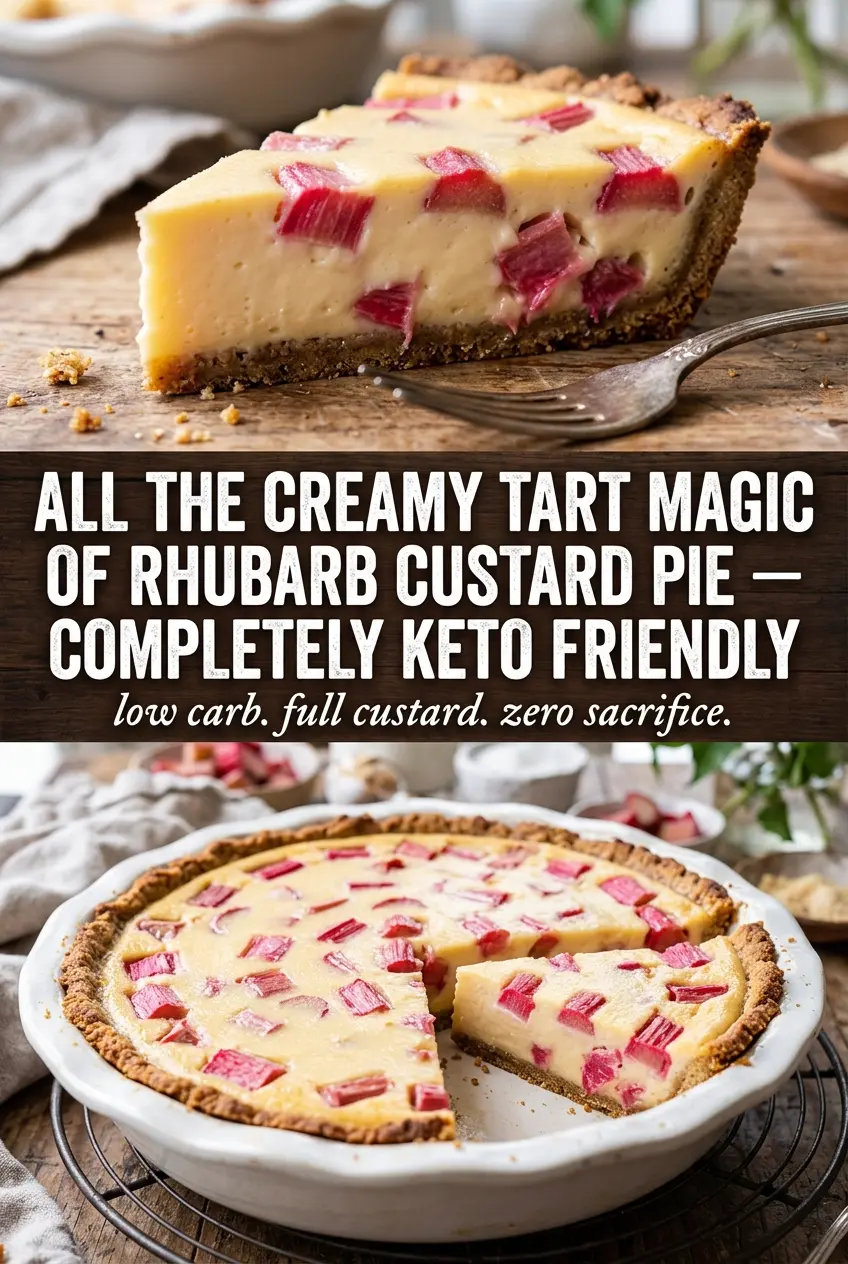
Keto Rhubarb Custard Pie
Ingredients
Equipment
Method
- Preheat the oven to 350°F and grease a 9-inch pie plate. Make sure the oven is fully heated so the crust sets on the first bake.
- Mix almond flour, melted butter, erythritol, and egg, then press the mixture into the pie plate. Press firmly to form an even crust layer.
- Bake the crust for 10 minutes at 350°F until it looks set. Remove it once the edges are starting to set.
- Arrange the diced rhubarb in the baked crust. Distribute it evenly so each slice gets rhubarb.
- Whisk together erythritol, eggs, heavy cream, almond flour, vanilla extract, and salt until smooth. Keep whisking until no lumps of almond flour remain.
- Pour the custard mixture over the rhubarb. Tap the pie gently to help the custard settle into the fruit.
- Bake for 40 to 45 minutes at 350°F until the custard is set and lightly golden. Look for a gentle jiggle in the center rather than sloshing custard.
- Cool the pie completely for at least 3 hours before slicing. Chilling time helps the custard fully set for clean slices.
- Refrigerate and serve chilled. Slice when cold for the firmest, creamy custard texture.