Ruby-pink rhubarb syrup brings a sharp, clean fruit flavor that tastes bright instead of heavy, and the color alone makes it worth putting up a batch. Once it’s strained and cooked with sugar, it turns into a translucent syrup that pours like liquid candy but still keeps that fresh rhubarb edge.
What makes this version work is the balance: enough water to pull flavor from the rhubarb, enough simmer time to extract it fully, and just a little lemon juice to keep the sweetness from flattening out. The biggest mistake with fruit syrups is rushing the strain or pushing too much pulp through, which leaves you with a cloudy jar and a muddy finish. Here, the juice does the work, not the solids.
Below you’ll find the exact point where the rhubarb is spent, how to know the syrup has dissolved cleanly, and a few smart ways to use it once the jars are sealed. It’s a simple preserve, but the details matter.
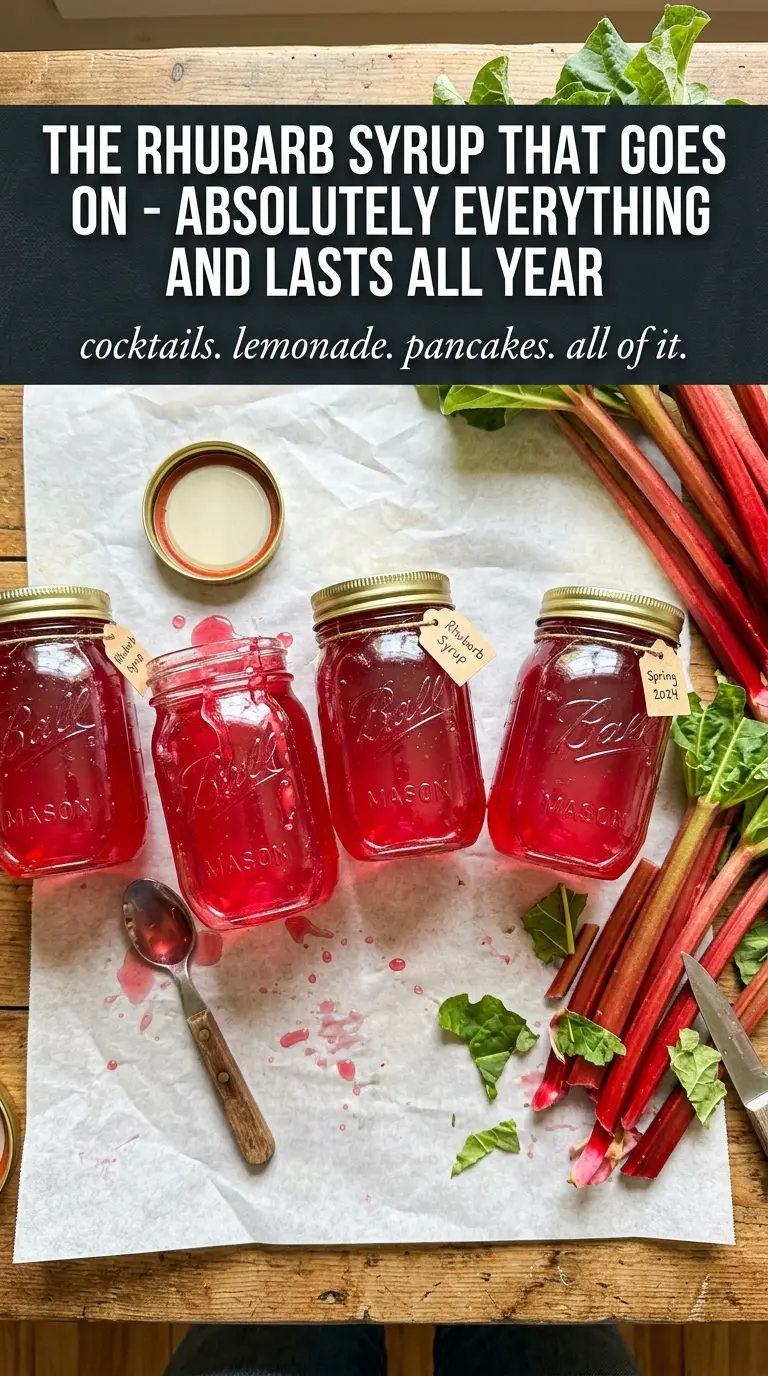
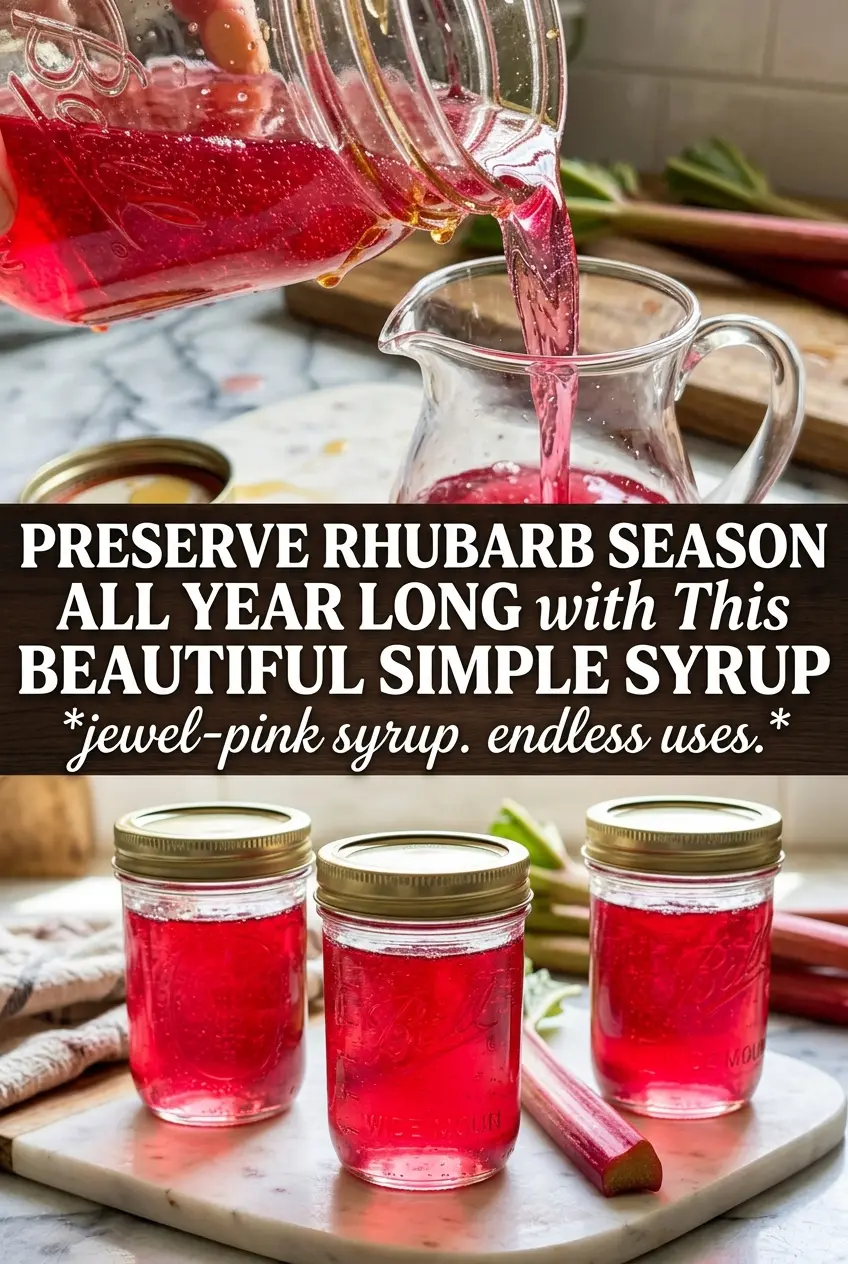
The syrup strained out beautifully clear, and the color stayed this gorgeous pink after canning. I drizzled it over pancakes the next morning and it was thick enough to coat them without running everywhere.
Love the jewel-toned finish of this rhubarb simple syrup? Save it to Pinterest for cocktails, pancakes, and sparkling water.
The Part Where Rhubarb Goes From Puckery to Pourable
Rhubarb needs water first because the fruit has to collapse and surrender its flavor before you can strain it cleanly. If you try to rush this stage, the juice comes out thin and the syrup ends up tasting like sugar water with a hint of rhubarb instead of something worth canning. The 15-minute simmer is doing the heavy lifting here.
The other mistake is squeezing so hard that you force pulp through the strainer. Press firmly enough to get the liquid out, but stop before the mixture turns thick and cloudy. Clearer juice gives you a smoother syrup and a cleaner finish in the jar.
- Rhubarb — Fresh stalks give the syrup its tart backbone and that unmistakable pink hue. Thin stalks tend to cook down faster and often have a brighter color, while older, thicker stalks can still work if they’re trimmed well.
- Sugar — This isn’t just for sweetness; it gives the syrup body and helps it keep. Reducing it will make the syrup thinner and less shelf-stable, so don’t cut it unless you’re planning to refrigerate and use it quickly.
- Lemon juice — The acid sharpens the flavor and helps the syrup taste lively instead of flat. Bottled lemon juice works here if that’s what you have, but fresh juice gives the cleanest edge.
- Cheesecloth or fine mesh strainer — This is what keeps the finished syrup translucent. A regular colander won’t give you the same clean result, and that cloudy pulp is what makes the texture muddy.
What Each Ingredient Is Actually Doing in This Rhubarb Sauce
- Rhubarb cut into small pieces — Smaller pieces break down faster and cook more evenly. They also release their liquid more readily.
- Sugar — This draws out the rhubarb’s liquid and creates a syrup. The sugar also balances the extreme tartness and helps the sauce thicken slightly.
- Water (minimal amount) — A little water helps the rhubarb cook without sticking. Too much water creates a thin, watery sauce instead of a thick compote.
- Heat (medium, not high) — Gentle heat breaks down the rhubarb evenly and doesn’t create a burnt, bitter taste. High heat can scorch the bottom.
- Stirring occasionally — This helps the rhubarb break down evenly and prevents sticking. Constant stirring can make the sauce mushy.
- Cooking time (15-20 minutes for sauce consistency) — The rhubarb should break down completely but still have some texture. Too long and you’ll end up with baby food consistency.
- Optional flavoring (vanilla, ginger, or orange zest) — These complement the tart rhubarb and prevent the sauce from tasting one-dimensional or harsh.
- Straining (optional) — Passing the sauce through a fine sieve creates a smooth compote. Leaving it chunky keeps more texture.
How to Cook the Juice So It Stays Clear and Seals Properly
Softening the Rhubarb
Combine the chopped rhubarb and water in a large pot and bring it to a full boil, then lower the heat so it simmers steadily. You want the rhubarb to collapse completely and look stringy and pale, with almost no defined shape left. If the heat is too high, the water can reduce too fast before the fruit has fully broken down.
Straining Without Clouding the Syrup
Pour the mixture through cheesecloth or a fine mesh strainer and press until you’ve pulled out as much liquid as possible. The yield should land around 4 cups, and that number matters because it tells you whether you extracted enough flavor. If the pulp is still juicy but dry on top, stop there; overworking it makes the syrup cloudy and can add a bitter edge.
Cooking the Syrup Base
Return the strained juice to the pot, add the sugar and lemon juice, and bring it back to a boil. Stir until the sugar disappears completely, then let it simmer for 5 minutes. The syrup should look glossy and slightly thickened, not aggressively reduced, because it will tighten a bit as it cools.
Filling and Processing the Jars
Pour the hot syrup into sterilized pint jars, leaving 1/4-inch headspace, and wipe the rims clean before putting on the lids. Process the jars in a boiling water bath for 10 minutes. If the jars aren’t at a true boil the whole time, or if the headspace is off, you risk weak seals and syrup that doesn’t hold the way it should.
Ways to Adjust the Batch Without Losing the Good Part
Make it for cocktails
Keep the recipe exactly as written, then use the syrup cold in spritzes, gin drinks, or anything that needs a bright tart-sweet note. The flavor is strong enough to stand up to spirits, and the clean finish means it won’t taste jammy in the glass.
Use it as a pancake topping
Warm the jar gently in hot water so it pours more easily, then spoon it over pancakes, waffles, or French toast. It stays looser than fruit compote, which means it soaks in at the edges instead of sitting in a heavy mound on top.
Make a smaller refrigerator batch
Skip the boiling-water bath and store the finished syrup in clean jars in the refrigerator for short-term use. The flavor stays the same, but you’ll lose the shelf-stable pantry storage that comes with proper canning.
Cut the sugar only if you’re serving it fast
You can reduce the sugar a little for a tarter syrup, but the texture gets thinner and the keeping quality drops. That version works best when you plan to use it within days, not stash it on the shelf.
Storage and Reheating
- Refrigerator: Once opened, keep the syrup refrigerated and use it within 3 weeks. The color may deepen a little, but the flavor stays bright.
- Freezer: This syrup freezes well in a freezer-safe container with room at the top for expansion. Thaw it overnight in the refrigerator and shake or stir before using.
- Reheating: You usually don’t need to reheat it, but if it thickens in the fridge, set the jar in warm water for a few minutes. Don’t boil it again or you can push the flavor dull and overly cooked.
Answers to the Questions Worth Asking
Canning Rhubarb Simple Syrup
Ingredients
Equipment
Method
- Combine fresh rhubarb and water in a large pot, then bring to a boil over high heat and cook until actively boiling, about 5 minutes, looking for rolling bubbles around the edges.
- Reduce the heat to maintain a gentle simmer and simmer for 15 minutes, until the rhubarb is very soft and breaks down easily when pressed with a spoon.
- Strain the mixture through cheesecloth or a fine mesh strainer, pressing firmly to extract all liquid, until you reach about 4 cups of rhubarb juice and the solids look dry.
- Return the rhubarb juice to the pot, add sugar and lemon juice, then bring to a boil over high heat, until the surface bubbles consistently.
- Simmer for 5 minutes at a steady boil, stirring occasionally and stopping when the sugar is completely dissolved and the syrup looks clear and evenly colored.
- Pour the hot syrup into sterilized pint jars, leaving 1/4-inch headspace, stopping when the level is consistent across jars and the syrup fills the space without overfilling.
- Process the jars in a boiling water bath for 10 minutes, keeping the water at a full rolling boil so jars remain submerged.
- Use the canned rhubarb syrup to drizzle over pancakes or into cocktails, or mix with sparkling water for an easy, bright drink with a ruby-pink glow.