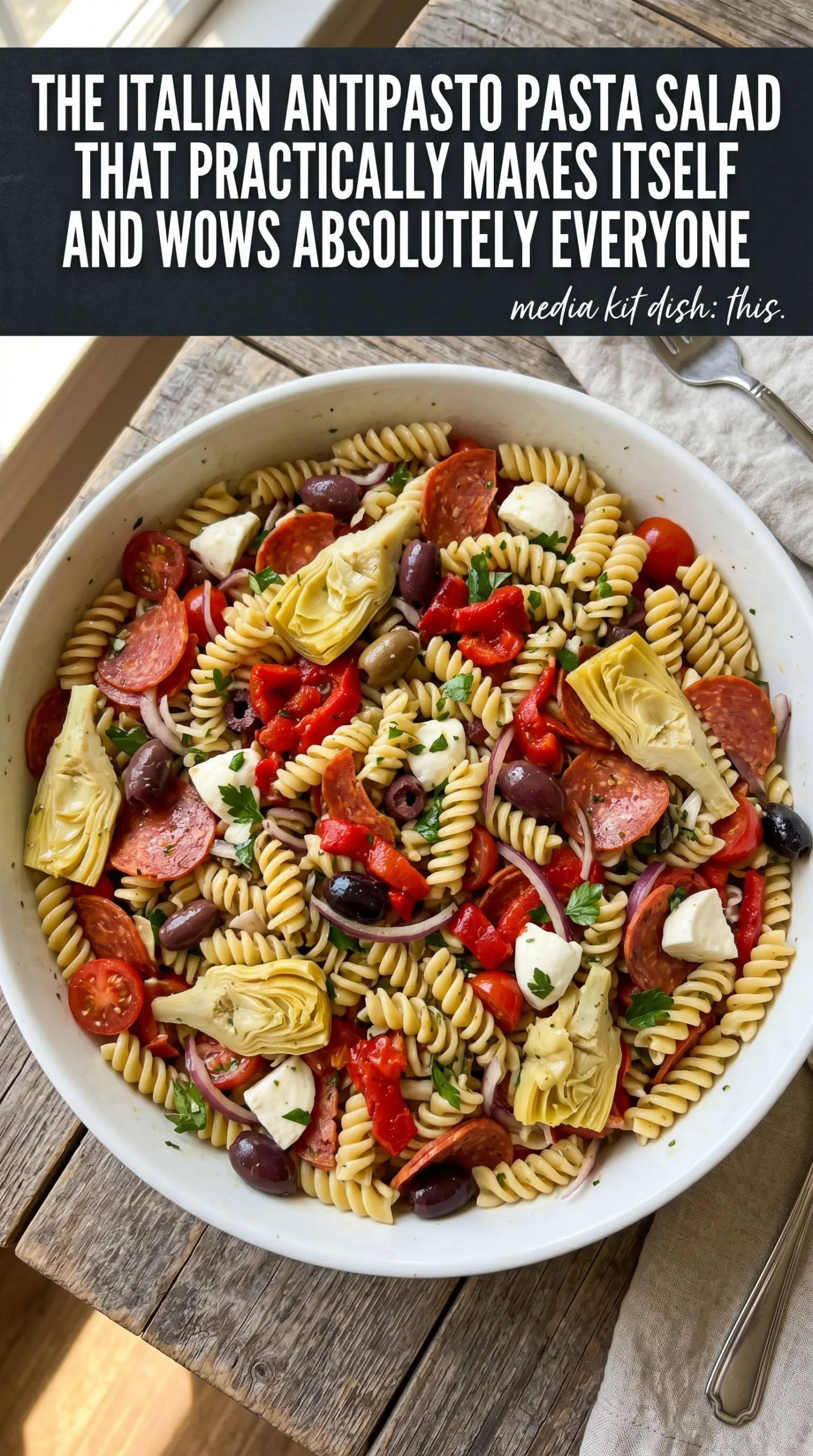
Pasta salad gets boring fast when it tastes like plain noodles with a little dressing on top. This antipasto version fixes that by packing every bite with the salty, briny, creamy mix you’d expect from a good appetizer spread. It eats like a deli counter in bowl form, and it holds up at a potluck without turning soggy or muddy.
The trick is balance. Rotini catches the dressing, but the real payoff comes from using a mix of cured meat, two cheeses, olives, peppers, and artichokes so the salad has contrast instead of just weight. Rinsing the pasta after cooking keeps the texture firm and stops the whole bowl from getting gummy while it chills. The dressing also needs time to settle in; right after mixing, it tastes sharp, but after a couple of hours the pasta absorbs the seasoning and everything comes together.
Below, I’ll show you the one step that keeps this salad lively after chilling, plus a few smart swaps if you want to make it lighter, meatless, or ahead for a crowd.
The pasta stayed firm after chilling and the dressing soaked into everything without making it soggy. I added a little extra pepperoncini juice before serving and it tasted like the best part of an antipasto platter.
Save this Italian antipasto pasta salad for potlucks, cookouts, and any cold side dish that needs big flavor and zero last-minute stress.
The Pasta Needs to Cool Before the Dressing Goes In
The most common mistake with pasta salad is throwing the dressing onto hot noodles. That traps steam, softens the pasta too far, and leaves you with a bowl that tastes watered down after it chills. Rinsing the rotini under cold water does two jobs at once: it stops the cooking fast and washes away enough surface starch that the dressing stays loose instead of turning pasty.
For this salad, texture matters more than for a hot pasta dish. You want the rotini cooked until just tender, then cooled completely before it meets the meats, cheese, and vegetables. That keeps every piece distinct, which is what makes antipasto pasta salad feel layered instead of heavy.
- Rotini — The spirals grab the dressing and small bits of pepperoncini and Parmesan. Any short pasta with ridges works, but rotini gives the best cling.
- Salami and pepperoni — These bring the salty backbone. Pre-cubed deli meat works fine, but cut it yourself if you want cleaner bites and less greasy packing liquid.
- Provolone and mozzarella — Provolone gives structure; fresh mozzarella softens the mix. If you swap in all hard cheese, the salad loses that creamy, antipasto-style contrast.
- Marinated artichokes, olives, and pepperoncini — These are the ingredients that make the bowl taste like antipasto instead of generic pasta salad. Their brine also helps season the pasta from the inside out.
- Italian dressing — Bottled dressing is fine here, especially if it’s punchy and herb-forward. If yours is mild, add a splash of pepperoncini brine or red wine vinegar to wake it up.
What Each Ingredient Is Actually Doing When Pasta Cools
- Pasta drained well after cooking — Extra water clinging to the pasta makes it absorb dressing unevenly. Drain thoroughly and let excess water drip off.
- Rinsed with cold water (optional but helpful) — Rinsing stops the cooking and cools the pasta. It also removes surface starch that can make the salad gluey.
- Spread on a baking sheet to cool (optional) — This cools the pasta faster and more evenly. A pile of pasta in a bowl cools slowly and continues to cook in the center.
- Cooled completely before dressing is added — Warm pasta absorbs dressing too fast and can become mushy. Cold pasta absorbs evenly and maintains its texture.
- Room temperature storage while cooling (if not chilling immediately) — Cool pasta at room temperature first so it doesn’t create condensation. Then refrigerate when ready.
- Tossed with dressing when completely cool — Cold pasta and room-temperature or cool dressing come together perfectly. The pasta absorbs the dressing at the right pace.
- First toss distributes dressing evenly — Toss thoroughly but gently so every pasta piece gets coated. Don’t over-mix or you’ll break the pasta.
- Additional ingredients added after first toss — Add vegetables and other mix-ins after the pasta is coated with dressing. This ensures everything gets flavored evenly.
Building the Bowl So Every Bite Tastes Like Antipasto
Cook and cool the pasta first
Boil the rotini until just tender, then drain it and rinse under cold water until it feels cool to the touch. If the pasta is even a little warm, it keeps absorbing dressing too aggressively and softens the cheeses. Drain it well after rinsing, because extra water is the fastest way to dull the seasoning.
Cut everything to the same bite size
Cube the salami, pepperoni, and provolone so they match the pasta shape instead of fighting it. Halve the olives, slice the pepperoncini, and quarter the artichokes so you get some of everything in each forkful. Big uneven chunks can be tasty, but they make the salad hard to scoop and uneven to season.
Dress, chill, then finish again
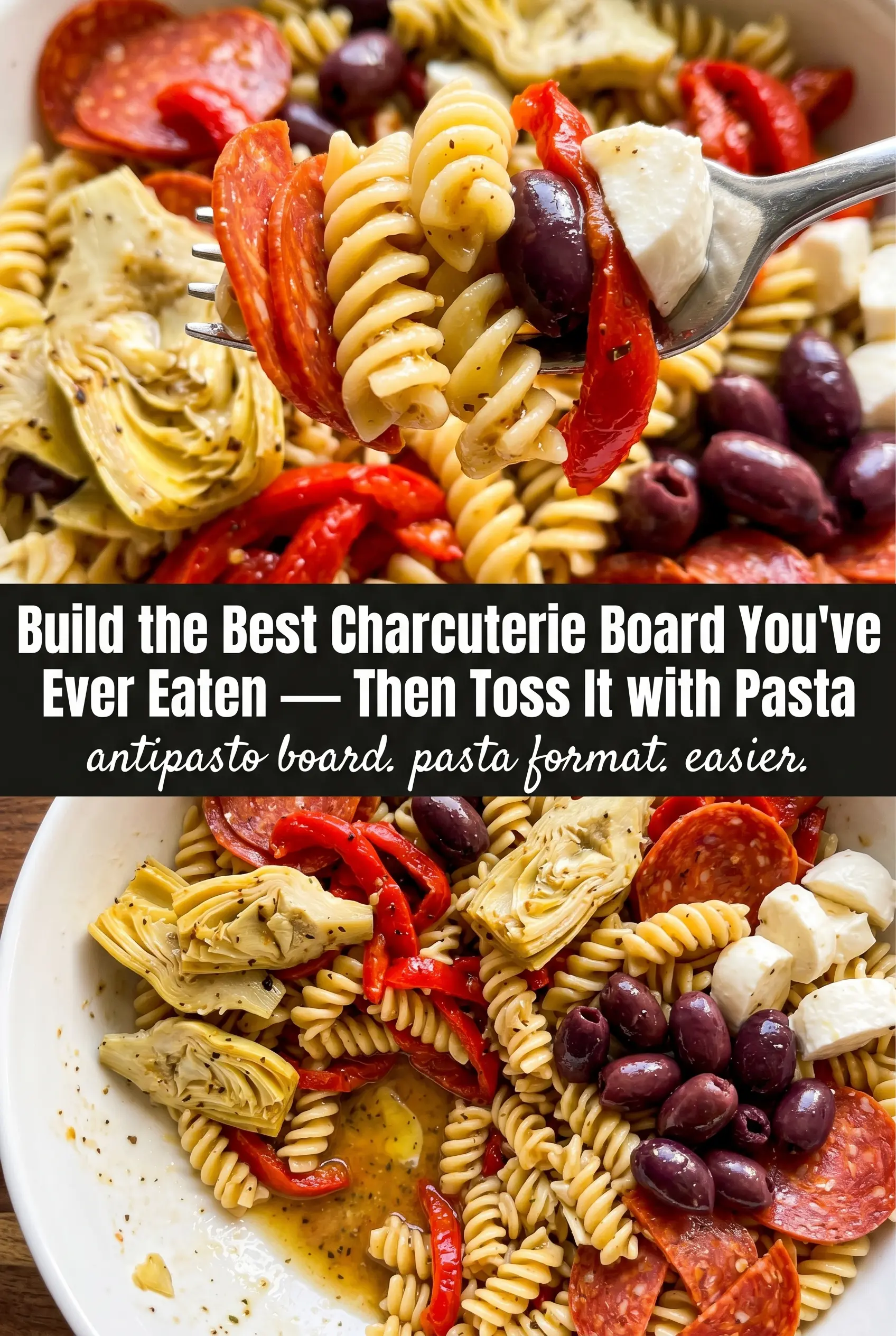
Toss everything with the Italian dressing, Parmesan, and Italian seasoning until the pasta looks evenly coated. The bowl needs at least 2 hours in the fridge so the flavor settles into the pasta and the brine from the vegetables can mingle with the dressing. Right before serving, toss again and add a little more dressing if the pasta has soaked up too much; that final refresh is what keeps the salad glossy instead of dry.
How to Adapt This for Different Tables and Diets
Make It Vegetarian Without Losing the Antipasto Feel
Skip the salami and pepperoni and add more artichokes, olives, roasted peppers, and mozzarella. The salad turns lighter, but it still tastes briny and full because the marinated vegetables carry the same savory punch that the meat usually brings.
Gluten-Free with a Short Pasta Swap
Use a sturdy gluten-free rotini and stop cooking it the moment it’s tender. Gluten-free pasta can go soft fast after chilling, so cooling it well and tossing gently matters more here than with regular pasta.
Lighter, Less Creamy, Still Bold
Use a lighter Italian dressing and cut the Parmesan back a little if you want a cleaner, sharper salad. You’ll lose some richness, but the artichokes, pepperoncini, and olives keep the flavor lively enough that nobody misses the extra heaviness.
Storage and Reheating
- Refrigerator: Keeps well for 3 to 4 days. The pasta will absorb more dressing as it sits, so expect the salad to get a little drier by day two.
- Freezer: I don’t recommend freezing this one. The pasta turns soft, and the cheese and vegetables lose their texture after thawing.
- Reheating: Serve it cold or slightly cool. If it tastes flat after chilling, stir in a spoonful of dressing or a splash of pepperoncini brine instead of trying to warm it up.
Answers to the Questions Worth Asking
Easy Italian Antipasto Pasta Salad
Ingredients
Method
- Cook the rotini pasta according to package directions, then drain and rinse with cold water to stop the cooking and keep it firm, drain well.
- Cube the salami and provolone cheese, quarter the pepperoni, and cut the fresh mozzarella balls as needed for bite-size pieces.
- Halve the cherry tomatoes, quarter the marinated artichoke hearts, slice the roasted red peppers, halve the Kalamata olives, and slice the pepperoncini.
- Combine the rotini pasta, salami, pepperoni, provolone, mozzarella, cherry tomatoes, artichokes, roasted peppers, olives, and pepperoncini in a large bowl.
- Add Italian dressing, Parmesan cheese, and Italian seasoning, then toss until every piece is coated and glossy.
- Refrigerate for 2 hours to let the flavors meld and the salad firm up slightly for easier serving.
- Toss again before serving and add more Italian dressing if needed to loosen the salad.