Seared chicken breasts, a blanket of sautéed mushrooms and caramelized onions, and a layer of melted jack cheese turn this Texas Roadhouse smothered chicken copycat into the kind of skillet dinner that disappears fast. The chicken stays juicy because it gets a hard sear first, then finishes under the broiler just long enough for the cheese to melt without drying out the meat. The pan juices underneath tie everything together with a savory, restaurant-style finish.
What makes this version work is the order. The chicken browns on its own first, which builds flavor in the pan and keeps the vegetables from steaming. Then the onions and mushrooms cook in the same skillet, picking up those browned bits before the broth loosens everything into a quick pan sauce. That means the topping tastes rich and layered, not watery.
Below, I’ve included the little details that matter most here: how thin to pound the chicken, when the onions are done enough to taste sweet instead of raw, and how to broil the cheese so it goes molten without turning greasy.
The chicken stayed juicy, and the mushrooms with the onions turned into this savory topping that tasted just like the restaurant. Broiling the cheese for only a few minutes kept it bubbly instead of greasy.
Save this Texas Roadhouse smothered chicken copycat for the nights when you want juicy skillet chicken, melted jack cheese, and a mushroom-onion topping that tastes straight from the restaurant.
The Sear Comes First, or the Chicken Turns Pale and Dry
The biggest mistake with smothered chicken is crowding everything into one pan and letting the chicken steam while the toppings cook. That gives you soft, gray chicken and vegetables that never develop the deep, savory edges you want. Here, the chicken gets full contact with the hot skillet first, so the surface browns and the meat stays juicy underneath.
Pounding the breasts thin matters too. It evens out the thickness, which means the thinner edges don’t dry out before the center is cooked. If one side is much thicker than the other, you’ll end up chasing doneness while the rest of the chicken overcooks. Thin, even cutlets also give the mushrooms and onions a better ratio of topping to chicken on every bite.
What the Mushrooms, Onions, and Jack Cheese Are Doing Here
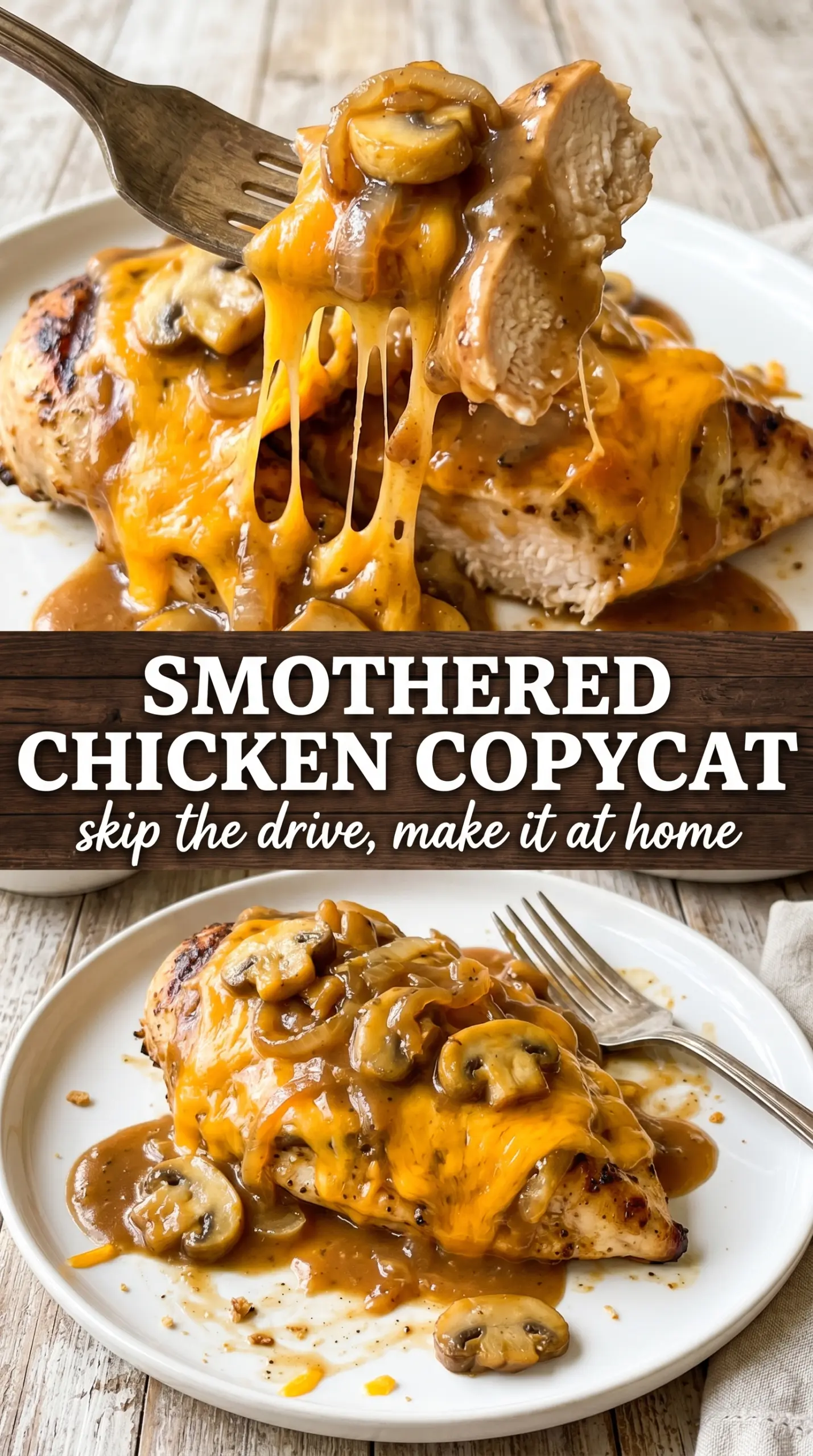
- Mushrooms — They soak up the butter and the chicken drippings, then concentrate into that savory topping you expect from a good smothered chicken. Use standard white or cremini mushrooms; save the fancy varieties for another recipe because they don’t change the dish much here.
- Onion — This is where the sweetness comes from. Slice it fairly thin so it softens and browns in the same window as the mushrooms. If you rush this step, the onion will taste sharp instead of mellow.
- Monterey jack cheese — Jack melts smoothly and stays creamy under the broiler. Shred it yourself if you can, because pre-shredded cheese often has anti-caking starch that can keep it from melting as cleanly.
- Chicken broth — This pulls the browned bits off the pan and turns the mushroom-onion mixture into a light sauce instead of just a pile of toppings. Water won’t give you the same depth, so broth is worth using here.
- Butter and olive oil — The oil helps the chicken sear without burning, while the butter carries flavor into the vegetables. Using both gives you better browning than either fat alone.
Building the Skillet So the Cheese Melts Before the Chicken Overcooks
Season and Sear the Chicken
Coat the chicken with garlic powder, onion powder, salt, and pepper before it ever hits the pan. The skillet should be hot enough that the chicken sizzles immediately, then stays there long enough to form a golden crust without sticking. If the pan is too cool, the chicken will release moisture and turn rubbery instead of browning. Once both sides are golden and the center is nearly cooked through, move it to a plate while you build the topping.
Cook the Onions and Mushrooms Down Fully
Add the butter to the same skillet and let the onions and mushrooms cook in the leftover fond. Stir often at first, then less once the mushrooms start giving off liquid and the onions begin to soften. You want the mushrooms browned at the edges and the onions sweet and translucent, not crunchy. If the pan looks dry before the vegetables are done, the butter may need a moment longer to coat everything.
Deglaze, Return the Chicken, and Broil
Pour in the broth and scrape the bottom of the pan until the browned bits dissolve into the liquid. Nestle the chicken back into the skillet so it sits on top of the vegetables and picks up the sauce without drowning in it. Pile the cheese directly over the chicken, then broil just until it melts, bubbles, and picks up a little color. Watch it closely, because the line between perfectly melted and scorched is short under the broiler.
How to Adapt This for Different Eaters and Leftovers
Dairy-Free Version That Still Feels Rich
Swap the butter for more olive oil and use a good dairy-free melting cheese if you like, but know the topping won’t have the same creamy pull as jack. The mushrooms and onions still bring plenty of richness, especially once they’re browned and deglazed with broth.
Make It Gluten-Free Without Changing the Method
This recipe is naturally gluten-free as written if your chicken broth is certified gluten-free. That’s the part people miss most often, since broth can hide wheat-based additives even when the rest of the dish looks safe.
Use Chicken Thighs for a Richer, More Forgiving Result
Boneless thighs work if you want extra juiciness and a little more richness. They take a minute or two longer to cook through than pounded breasts, but they’re more forgiving if you get distracted while searing.
Storage and Reheating
- Refrigerator: Store leftovers in an airtight container for up to 3 days. The cheese will firm up and the onions will soften more, but the flavor holds up well.
- Freezer: It freezes, but the texture of the cheese and mushrooms changes a bit after thawing. For best results, freeze only the cooked chicken and topping without the cheese, then add fresh cheese before reheating.
- Reheating: Warm covered in a 325°F oven until hot, or reheat gently in a skillet with a splash of broth. High heat dries out the chicken fast and can make the cheese greasy, so keep it low and slow.