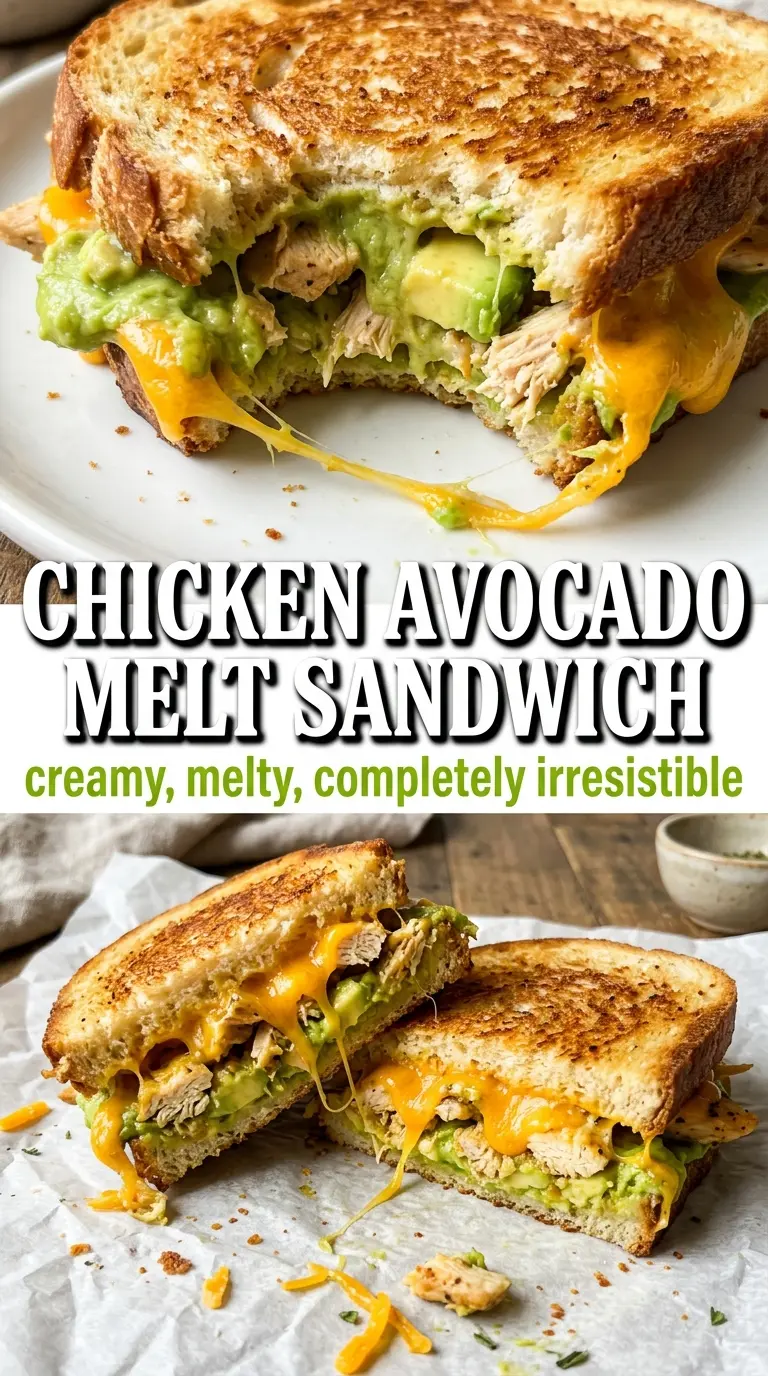
Golden toast, melted Swiss, juicy chicken, and creamy avocado make this sandwich one of those meals that disappears the second it hits the plate. The crispy bacon gives each bite a salty crunch, while the Dijon and mayonnaise keep the filling from tasting heavy or flat. When it’s built and cooked the right way, the bread turns deeply browned before the cheese finishes melting, so every bite has both structure and that gooey center people chase in a good melt.
The trick here is keeping the chicken thin and the skillet at a steady medium heat. Thin chicken cooks fast and stays tender, and medium heat gives the bread time to toast without burning before the Swiss softens. I also like using both Dijon and mayonnaise instead of one spread alone: the mustard brings sharpness, the mayo helps with browning and gives the sandwich a little more richness. The avocado goes in sliced, not mashed, so it stays creamy without turning the whole sandwich soggy.
Below, I’ve included the small details that matter most, from keeping the crust crisp to swapping ingredients when you need to work with what’s in the fridge.
The chicken stayed juicy, and the avocado didn’t turn mushy even after toasting. I loved how the Swiss melted into the bacon and made the whole sandwich hold together instead of sliding apart.
Save this chicken avocado melt sandwich for the days when you want a crisp, cheesy lunch with a creamy center and no extra fuss.
The Reason This Melt Stays Crisp Instead of Turning Soft
A lot of sandwich melts go wrong in the same place: the filling steams the bread before the cheese has a chance to glue everything together. That’s how you end up with a soft, slippery sandwich that tastes fine but eats like two separate problems. Here, the chicken is cooked first, the bread is buttered on the outside only, and the skillet heat stays moderate enough to brown the crust while the Swiss turns fully molten.
The other thing that matters is the order inside the sandwich. Cheese on both sides of the filling helps anchor the avocado and chicken in place, and the bacon gives the avocado something sturdy to sit against. If you load the center with only soft ingredients, the sandwich tends to collapse when you cut it. The Swiss does the real work here because it melts smoothly without turning oily or stringy.
What Each Layer Is Doing in the Sandwich
- Chicken breasts — Pounding them thin is what keeps this sandwich fast and tender. Thicker chicken takes longer than the bread needs, which usually means burnt toast or dry meat. If you’re using leftover cooked chicken, slice it thin and warm it first so the sandwich finishes evenly.
- Swiss cheese — Swiss melts cleanly and holds the filling together without getting greasy. Provolone works if that’s what you have, but it won’t give quite the same mild nuttiness. Lay cheese against both the chicken and the bread so it starts melting from both sides.
- Avocados — Use ripe avocados that yield gently when pressed. Hard avocado tastes flat and doesn’t spread with the heat; overripe avocado turns mushy and can leak into the bread. Sliced avocado keeps texture better than mashed, which is important in a hot sandwich.
- Bacon — Crispy bacon adds salt and crunch, and it keeps the sandwich from feeling too soft. If you skip it, the sandwich still works, but it loses the texture contrast that makes every bite interesting. Drain it well before assembling so the bread doesn’t pick up extra grease.
- Dijon and mayonnaise — Dijon gives the sandwich a sharp edge that cuts through the richness, while mayonnaise helps the outside bread brown evenly. Don’t replace both with one spread and expect the same result; they’re doing two different jobs.
Building the Melt Without Losing the Crunch
Cooking the Chicken Fast and Evenly
Season the chicken with garlic powder, salt, and pepper, then cook it in olive oil over medium-high heat until it’s cooked through and lightly browned on both sides. Thin chicken breasts usually need about 5 to 6 minutes per side, depending on thickness. If the chicken is still pale and floppy in the middle, keep it on the pan; if it’s curling hard at the edges, your heat is too high. Let it rest for a minute before slicing so the juices stay in the meat instead of running onto the bread.
Assembling the Sandwich So It Stays Put
Butter the outside slices of bread, then spread Dijon on one inner side and mayonnaise on the other. Stack the Swiss, chicken, avocado, and bacon on the Dijon side, then close the sandwich with the buttered sides facing out. That order matters because the cheese closest to the bread starts binding everything as soon as it softens. If you put the avocado directly against the bread, it’s much more likely to slide once the sandwich warms up.
Toasting Until the Cheese Melts
Set the sandwich in a skillet over medium heat and cook it slowly enough that the bread turns a deep golden brown at the same time the cheese melts. Press lightly with a spatula if needed, but don’t smash it flat or the filling will squeeze out. Flip once the first side is crisp and the cheese has started to soften, then cook the second side until the sandwich feels warm through the center. If the bread is browning too fast, lower the heat; if the cheese isn’t melting, cover the skillet for a minute to trap heat.
Three Ways to Tweak the Sandwich Without Losing What Makes It Good
Make it gluten-free
Use a sturdy gluten-free sandwich bread that can handle skillet toasting. Softer GF breads can fall apart under the weight of the filling, so choose a slice that feels dense and toast it a little longer over medium-low heat. The flavor stays the same, but the crust won’t get quite as shatteringly crisp as sourdough.
Skip the bacon and keep it vegetarian
Replace the chicken and bacon with thick slices of grilled portobello mushrooms or roasted zucchini, then keep the Swiss, avocado, Dijon, and mayo. You’ll lose the smoky salt from the bacon, so add a pinch more black pepper and a little extra salt to the vegetables. The sandwich will be softer and a little lighter, but still satisfying.
Use rotisserie chicken for a faster lunch
Shred or slice the chicken and warm it in a skillet with a tiny splash of olive oil and garlic powder before building the sandwich. This saves time, but the filling won’t have the same browned edges you get from freshly cooked chicken. It still works well as long as the chicken is warm before it goes into the sandwich, since cold filling slows the cheese melting.
Make it lighter without losing the melt
Cut the bacon to four strips and use a thinner layer of mayonnaise on the outside bread. You’ll still get the browning and richness, just with a less heavy finish. Don’t skip the butter entirely, though, because it’s part of what gives the bread that deep, even color in the skillet.
Storage and Reheating
- Refrigerator: Store the cooked chicken and bacon separately for up to 3 days. Assembled sandwiches soften fast, especially once avocado is inside.
- Freezer: I don’t recommend freezing the full sandwich because avocado and toasted bread both lose their texture. The chicken can be frozen on its own for up to 2 months.
- Reheating: Warm the chicken in a skillet or microwave, then build and toast the sandwich fresh. If you reheat an assembled sandwich, the bread usually steams before it crisps back up.
Questions I Get Asked About This Recipe

Chicken Avocado Melt Sandwich
Ingredients
Equipment
Method
- Season the pounded chicken with garlic powder, salt, and black pepper, then heat olive oil in a skillet over medium-high heat.
- Cook the chicken for 5–6 minutes per side until cooked through, then transfer to a plate.
- Butter the outside of all bread slices.
- Spread Dijon on the unbuttered side of half the bread slices and mayonnaise on the other half.
- Layer Swiss cheese, chicken, avocado slices, and crispy bacon on the Dijon side, then close the sandwiches with the buttered sides out.
- Toast the sandwiches in a skillet over medium heat for 3–4 minutes per side until golden.
- Check that the Swiss cheese is fully melted, then slice diagonally and serve immediately.