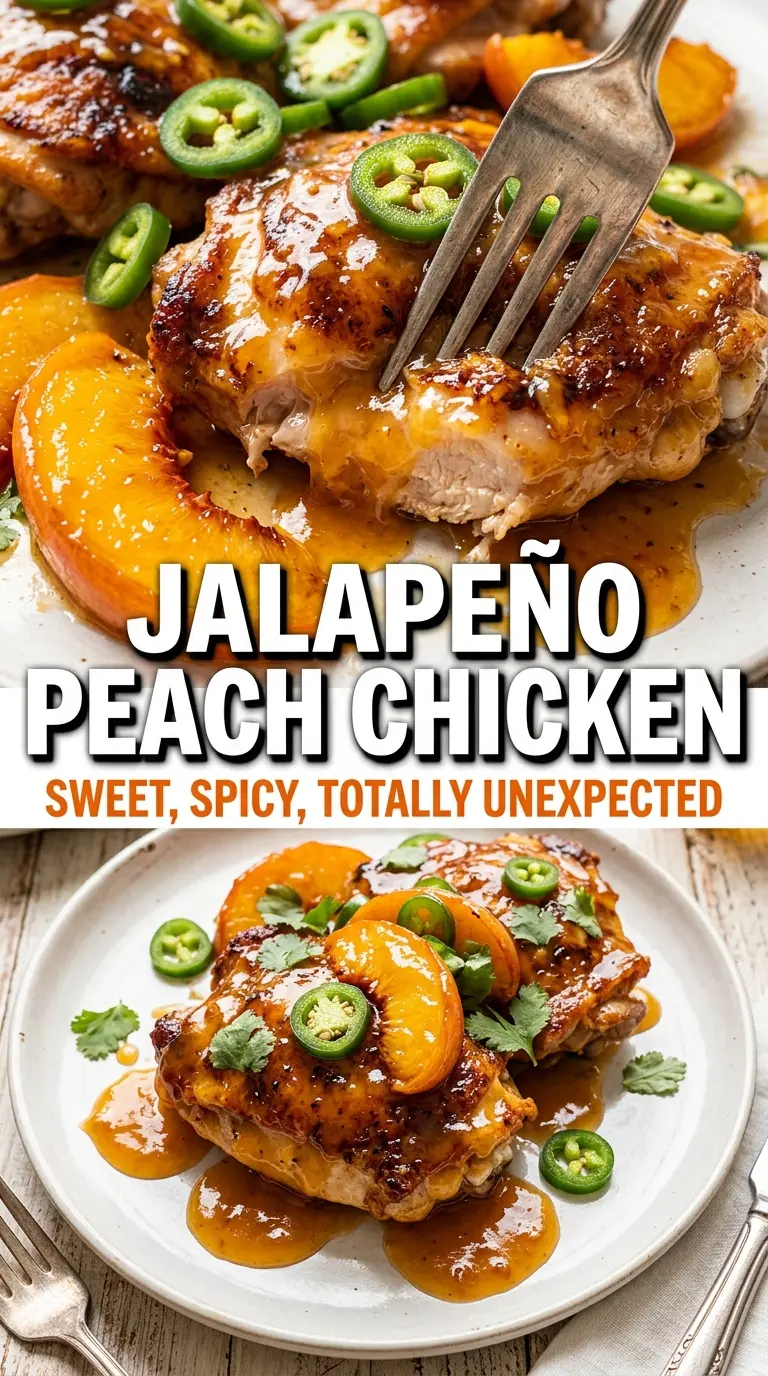
Jalapeño peach chicken hits that sweet spot between bright, sticky, and just a little fiery. The chicken sears up with a deep golden crust, then gets glossed in a peach glaze that clings to every slice without turning watery. It’s the kind of skillet dinner that feels a little special but still lands on the table fast enough for a regular weeknight.
What makes this version work is the balance in the pan. The peaches bring body and natural sweetness, the jalapeños keep the sauce from tasting flat, and the soy sauce and vinegar sharpen everything so the glaze doesn’t slide into syrup territory. Using the same skillet for the sauce means every browned bit from the chicken gets folded back in, which gives the glaze a deeper, more savory finish.
Below, I’ve included the part that matters most: how to keep the glaze thick instead of thin, plus a few smart swaps if you’re working with frozen peaches or want the heat dialed up or down.
The glaze thickened up beautifully and coated the chicken instead of pooling at the bottom. I used frozen peaches and it still came out glossy and balanced, with just enough heat from the jalapeños.
Save this jalapeño peach chicken for the nights when you want a glossy skillet dinner with sweet heat and a fast pan sauce.
The Secret to Keeping the Peach Glaze Glossy Instead of Thin
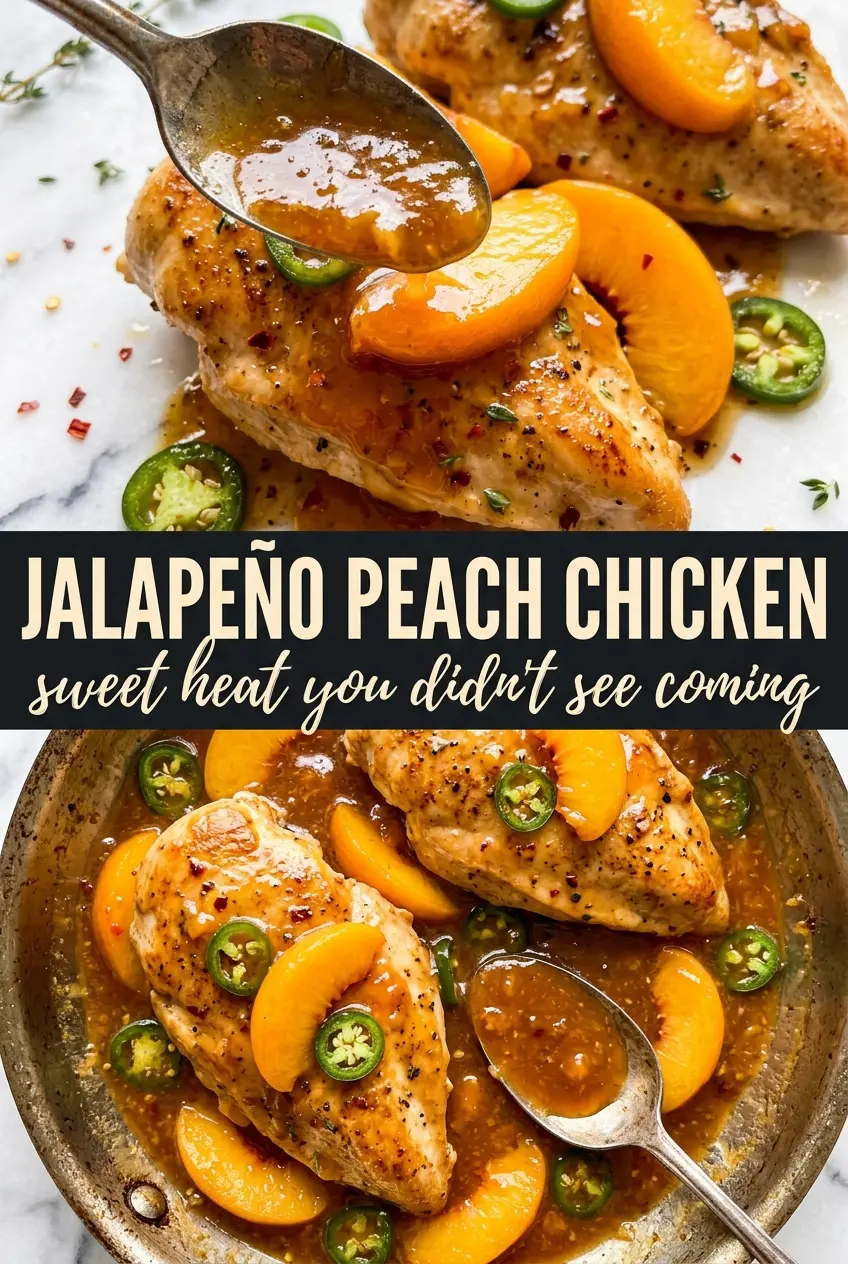
The biggest mistake with fruit-based skillet sauces is rushing the simmer. Peaches release juice as they break down, and if you move too fast, the sauce stays loose and never quite coats the chicken the way it should. Let the glaze bubble gently until it looks slightly reduced and the spoon leaves a brief trail through the pan before the sauce closes back in.
That extra minute or two matters more than adding more honey. Honey adds shine, but reduction adds body. If your glaze still looks watery after the peaches soften, keep it moving over medium heat until the liquid starts to concentrate and the jalapeño flavor stops tasting sharp and raw.
What Each Ingredient Is Actually Doing in This Dish
- Chicken breasts — They give you a lean, neutral base that takes on the glaze cleanly. Pound them lightly if they’re very thick so they cook evenly and stay juicy by the time the sauce is ready.
- Fresh or frozen peaches — Fresh peaches give the brightest flavor and the prettiest texture, but frozen peaches work well because they break down quickly into the sauce. If using frozen, don’t thaw them first; add them straight to the pan so they don’t turn mushy before the glaze thickens.
- Jalapeños — These bring the heat and the green, peppery edge that keeps the glaze from tasting like dessert. Leave the seeds in for a sharper kick, or remove them if you want warmth without much burn.
- Soy sauce and apple cider vinegar — These are the balance pieces. Soy sauce adds salt and depth, while vinegar wakes up the fruit and keeps the glaze from feeling sticky-heavy.
- Chicken broth — It loosens the glaze just enough to simmer properly, then reduces into the sauce instead of disappearing like water would. Use low-sodium broth if you want more control over the final salt level.
- Fresh thyme — It sounds small, but it’s what makes the finished pan sauce taste composed instead of one-note sweet. Add it at the end so it stays fragrant.
Building the Sear Before the Sauce Ever Starts
Getting the Chicken Golden
Season the chicken well before it hits the pan, then let it sear undisturbed in hot olive oil until the first side releases cleanly and turns deep golden brown. If you move it too soon, it will stick and tear instead of forming that crust you want. That crust matters because it gives the sauce more flavor to pick up later.
Cooking the Aromatics Without Burning Them
Once the chicken comes out, the garlic and jalapeños go into the same skillet for just a minute. You want them fragrant, not browned, because burned garlic turns bitter fast and will pull the whole glaze off balance. The pan should still have enough heat to sizzle, but if the garlic starts taking on color right away, pull the pan off the burner for a few seconds.
Reducing the Glaze to the Right Finish
Add the peaches, honey, soy sauce, vinegar, and broth, then simmer until the peaches soften and the liquid turns glossy and slightly syrupy. Stir often enough to keep the sugar from catching, but not so much that you break the fruit down into a puree. When the sauce lightly coats the back of a spoon, it’s ready for the chicken to go back in.
Finishing in the Pan
Return the chicken to the skillet and spoon the glaze over the top for the last couple of minutes. This is when the sauce clings to the chicken instead of just sitting underneath it. If the pan looks crowded, the glaze won’t reduce properly, so use a skillet large enough to leave a little space around each breast.
How to Adapt This for Different Kitchens and Different Heat Levels
Make It Milder Without Losing the Sweet Heat
Remove the jalapeño seeds and membranes, then use only one pepper if you want the sauce to lean sweet instead of spicy. You’ll still get that green pepper flavor, but the heat will stay in the background.
Use Chicken Thighs for More Forgiveness
Boneless thighs work well here and stay juicier if your stovetop runs hot. They need a few extra minutes in the pan, but the glaze still clings beautifully and the finished dish tastes a little richer.
Make It Gluten-Free
Use a certified gluten-free soy sauce or tamari. The flavor stays savory and balanced, and the rest of the recipe already fits naturally.
Swap in Frozen Peaches When Fresh Aren’t in Reach
Frozen peaches are a solid backup and usually break down faster than fresh fruit, which helps the glaze come together quickly. Add them straight from frozen so they release moisture gradually instead of flooding the skillet all at once.
Storage and Reheating
- Refrigerator: Store leftovers in an airtight container for up to 3 days. The glaze will thicken as it chills, which is normal.
- Freezer: It freezes, but the peaches soften more after thawing, so the sauce won’t be quite as pretty. Freeze in portions for up to 2 months and thaw overnight in the fridge.
- Reheating: Warm gently in a covered skillet over low heat with a splash of broth or water. High heat can tighten the chicken and scorch the sugars in the glaze before the center is hot.
Questions I Get Asked About This Recipe
Jalapeño Peach Chicken
Ingredients
Equipment
Method
- Season the boneless skinless chicken breasts with salt and black pepper. Heat olive oil in a cast iron skillet over medium-high heat and sear for 5–6 minutes per side until golden, then set the chicken aside.
- In the same skillet, add minced garlic and thinly sliced jalapeños and cook for 1 minute. Stir to keep the aromatics moving so they don’t brown too quickly.
- Add the sliced peaches, honey, soy sauce, apple cider vinegar, and chicken broth to the skillet. Stir well, then simmer the glaze for 5–6 minutes, stirring occasionally, until the peaches soften and the sauce thickens.
- Return the seared chicken breasts to the skillet and spoon the jalapeño peach glaze over the top. Cook for 2 more minutes to coat the chicken through.
- Sprinkle fresh thyme over the chicken and serve with the pan sauce spooned over the top. Let it sit for 1 minute so the glaze clings more evenly before serving.