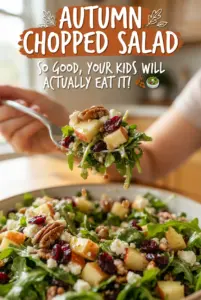
Autumn Chopped Salad earns its place because every bite gives you a little of everything: crisp kale, tender Brussels sprouts, sweet apple and pear, tart cranberries, and salty feta all chopped small enough to mix instead of sit in separate piles. The texture is what makes it memorable. Nothing gets lost, and the dressing catches on all those rough edges instead of sliding off.
The key is giving the kale a head start. A quick massage with a spoonful of the dressing softens the leaves just enough that the salad eats like a composed dish instead of a bowl of raw greens. The maple-Dijon vinaigrette is balanced on purpose: enough sweetness to play with the fruit, enough acidity to keep the whole bowl from feeling heavy, and enough fat to coat the sprouts without making them soggy.
Below you’ll find the one step that keeps kale from turning tough, plus a few smart swaps if you need to work with what’s in the fridge. This is the kind of salad that feels polished on the table but takes very little actual effort.
The kale softened up perfectly after the quick massage, and the maple dressing coated everything without making the fruit soggy. I chilled it for an hour and it still had great crunch.
Save this Autumn Chopped Salad for the crisp kale, maple-Dijon dressing, and sweet-savory crunch in every forkful.
The Part That Keeps Kale From Eating Like Sawdust
Raw kale can make a chopped salad feel stubborn and dry if it goes straight into the bowl untouched. The fix is tiny but important: a quick massage with a little dressing before anything else hits the greens. That breaks down the fibers just enough to soften the leaves without turning them limp, which is what lets the salad hold up after it’s dressed.
The Brussels sprouts matter for the same reason. Shredded finely, they add crunch without the bulky chew you get from big ribbons or thick slices. If the shreds are too coarse, the salad turns busy instead of balanced. Keep everything cut close in size so the dressing and toppings distribute evenly.
- Kale — Use curly or lacinato kale, but chop it fine. Large pieces stay tough, even after dressing. Remove the stems first; they stay fibrous and distract from the rest of the bowl.
- Brussels sprouts — Freshly shredded sprouts give the best crunch. Pre-shredded bagged sprouts work when you need speed, but if they look dry at the edges, toss them with the dressing a minute sooner so they soften slightly.
- Apple and pear — Use one crisp, one juicy. That contrast keeps the salad lively. If you only have apples, the salad still works, but the pear adds a softer sweetness that plays well with the feta.
- Candied pecans and pepitas — The pecans bring sweetness and the pepitas bring a cleaner, toasty crunch. If you skip one, the salad loses some depth, so I like keeping at least one sugary crunch and one savory crunch in the mix.
Building the Dressing So It Clings Instead of Pooling
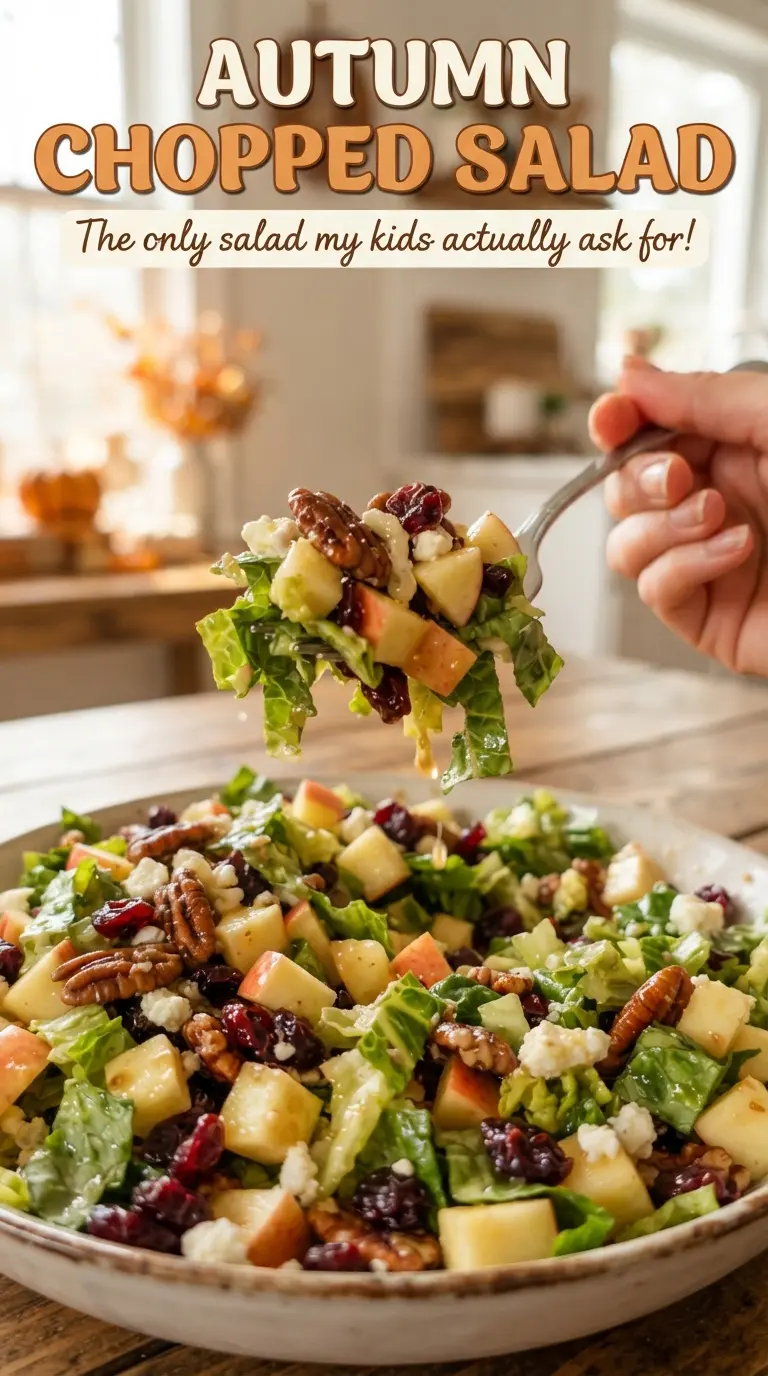
Olive oil carries the vinaigrette and gives it body. A decent extra-virgin oil is worth using here because the dressing is uncooked and the flavor comes through directly. If your oil tastes peppery or grassy, that character will show up in the salad.
Apple cider vinegar is what keeps the sweetness in check. Other vinegars can work, but apple cider vinegar matches the fruit and maple without tasting sharp or out of place. Maple syrup rounds the edges, while Dijon mustard helps emulsify the dressing so it doesn’t separate the second it sits. Whisk it until it looks slightly thickened and glossy before it goes on the greens.
Feta adds salt and creamy pockets that cut through the sweetness. If you need a dairy-free version, leave it out and add extra pepitas plus a little more salt to keep the salad from tasting flat. The dressing can be made a few hours ahead, but whisk it again right before using because oil and vinegar will loosen apart as they sit.
The Two Minutes That Decide the Final Texture
Whisking the Vinaigrette
Whisk the olive oil, apple cider vinegar, maple syrup, Dijon, salt, and pepper until the dressing looks smooth and lightly thickened. It doesn’t need to become fully creamy, but it should look blended, not streaky. If the mustard sits in little flecks, keep whisking for another few seconds; those are the bites that end up tasting unevenly seasoned.
Softening the Kale
Add about a tablespoon of dressing to the chopped kale and work it in with your hands or a spoon for a minute. The leaves should darken slightly and look less rigid. If you skip this, the salad can taste dry even when it’s fully dressed because kale doesn’t absorb vinaigrette the way tender greens do.
Bringing the Bowl Together
Add the Brussels sprouts, apple, pear, cranberries, pecans, feta, and pepitas, then pour over the remaining dressing. Toss until the mix looks evenly coated, with the fruit and nuts distributed through the greens instead of sinking to the bottom. Serve right away for the best crunch, or chill it briefly if you want the dressing to settle in a little more.
How to Adapt This When Your Pantry Doesn’t Match the Recipe
Make It Dairy-Free
Skip the feta and bump up the pepitas a little for extra savory crunch. Without the cheese, the salad tastes cleaner and lighter, so a pinch more salt in the dressing helps bring the flavors back into balance.
Swap the Fruit by What’s Crisp
Use firm apples, pears, or even thin-sliced grapes if that’s what you have. The important part is texture: soft fruit turns mushy once the dressing hits it, while crisp fruit keeps each bite bright and clean.
Use Toasted Walnuts Instead of Candied Pecans
Walnuts bring a deeper, less sweet crunch. If you use them, the salad lands a little more savory, so the maple syrup in the dressing pulls more weight and the finished bowl tastes less dessert-like.
Storage and Reheating
- Refrigerator: Store leftovers up to 2 days. The kale and Brussels sprouts stay sturdy, but the fruit softens and the nuts lose some snap.
- Freezer: Don’t freeze this salad. The fresh fruit, greens, and feta change texture in a way that doesn’t recover well.
- Reheating: No reheating needed. If it’s been chilled, let it sit at room temperature for 10 to 15 minutes and toss again before serving so the dressing loosens and tastes balanced.
Answers to the Questions Worth Asking
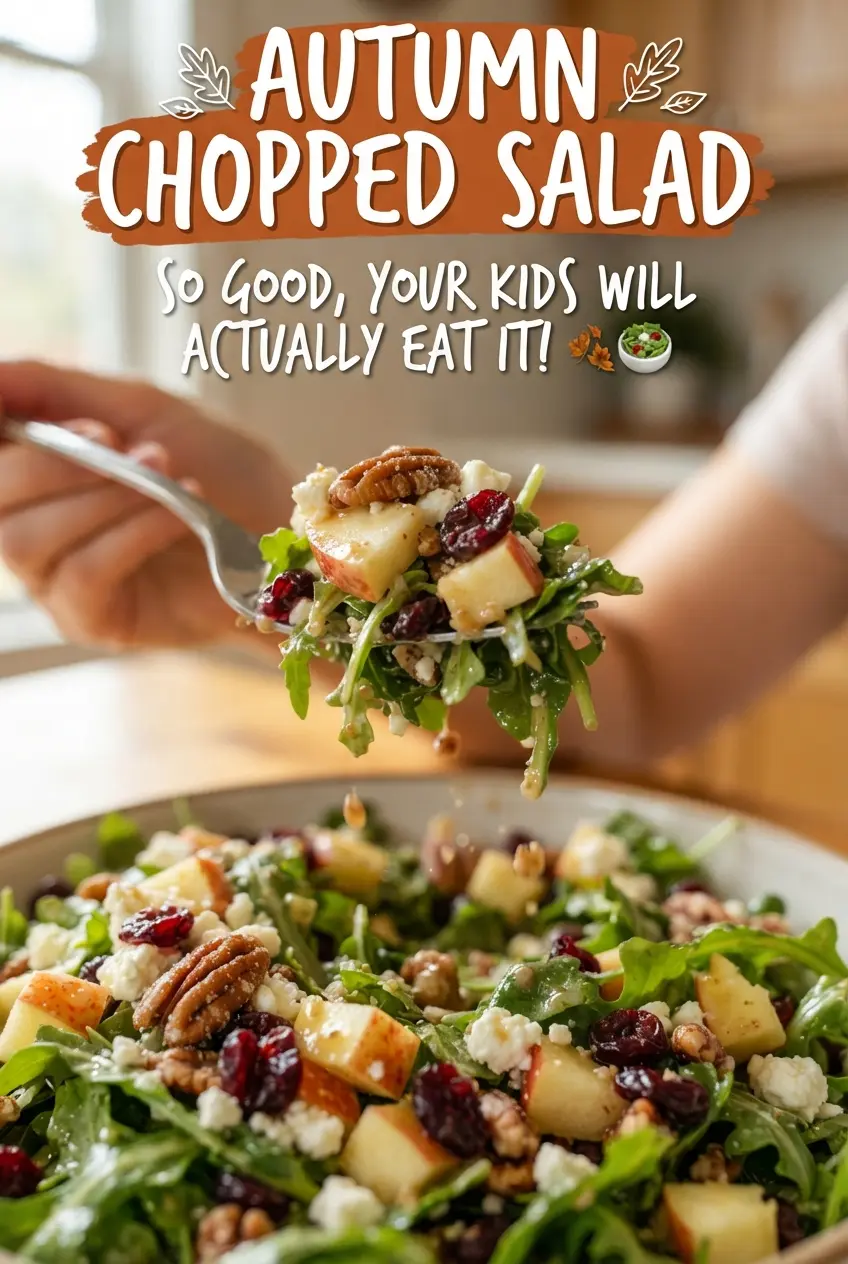
Autumn Chopped Salad
Ingredients
Method
- Whisk olive oil, apple cider vinegar, maple syrup, Dijon mustard, salt, and pepper until smooth and evenly combined. The mixture should look glossy and fully emulsified.
- Massage the kale with 1 tablespoon of the dressing for 1 minute until tender and slightly softened. Watch for the kale to turn more flexible and darker in color.
- Add Brussels sprouts, apple, pear, dried cranberries, candied pecans, feta, and roasted pepitas to the bowl. Spread the ingredients so they’re evenly distributed across the kale.
- Pour over the remaining dressing and toss well to coat every chop. Serve right away for maximum crunch.
- If you prefer, chill the salad up to 2 hours before serving. Keep it covered so the toppings stay crisp and the flavors meld.