Parmesan herb roasted acorn squash lands in that sweet spot between simple and special: tender in the middle, caramelized at the edges, and crowned with a salty, crisp cheese crust that crackles a little when you cut into it. Sliced into rings instead of wedges, the squash roasts evenly and gives you more browned surface area, which is exactly where the best flavor lives.
The trick here is using enough heat to soften the squash before the Parmesan goes on, but not so much that the cheese burns before the centers are done. Garlic, thyme, and rosemary work best when they’re tossed with the oil first, because they cling to the squash and perfume every bite instead of sitting in the pan. A parchment-lined sheet pan keeps the cheese from welding itself to the metal, which matters once those edges start turning crisp.
Below, I’ve included the timing cue that keeps the squash from going mushy, plus a few smart swaps if you need to work with what’s already in the kitchen.
The squash was tender without falling apart, and the Parmesan formed those crispy little edges we were all fighting over. I’ll be making this with pork chops again.
Save these Parmesan herb roasted acorn squash rings for a crisp, savory side with golden edges and fresh thyme in every bite.
The Reason the Parmesan Goes on After the First Roast
Acorn squash has enough moisture that the cheese would scorch long before the flesh turns tender if you added it at the start. Roasting the rings plain first drives off surface moisture and gives the squash time to soften, which is what lets the Parmesan sit on top and crisp instead of dissolving into a greasy layer.
The other detail that matters is the single layer on the pan. If the slices crowd each other, they steam and the edges stay pale. You want space around each ring so the hot air can move, the oil can fry the surface a little, and the cheese can turn into a brittle, golden crust in the last few minutes.
What the Garlic, Herbs, and Parmesan Are Each Doing Here
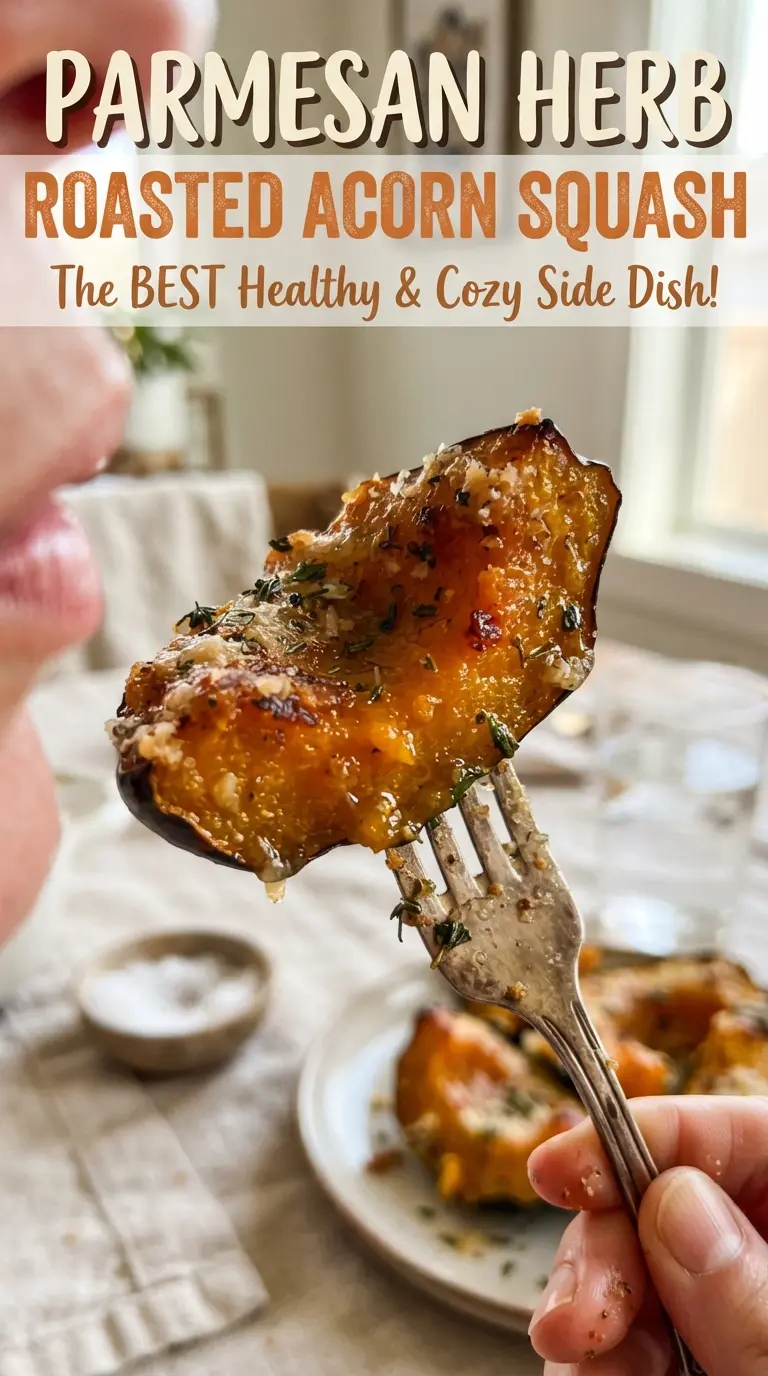
- Acorn squash — This is the base that gives you the soft, almost custardy center and sturdy enough shape to hold the topping. Slice it into 1/2-inch rings and keep the cuts even; thinner pieces can collapse before the cheese browns, and thicker ones need more time than the topping can safely handle.
- Olive oil — Oil carries the garlic and herbs across the squash and helps the edges blister. A good everyday olive oil works fine here. Don’t use so much that the pan looks slick; too much oil softens the cheese crust instead of encouraging it to crisp.
- Fresh thyme and rosemary — Fresh herbs hold up in the oven and stay fragrant after roasting. Dried herbs can work in a pinch, but use less because they concentrate fast and can taste dusty if overdone. Chop the rosemary finely so no one bites into a woody needle.
- Parmesan — Grated Parmesan is what gives you that salty, lacy crust. Use the finely grated kind for the best coverage, not thick shreds that fall off the squash. Pre-grated can work, but a block you grate yourself usually melts and browns more cleanly.
Getting the Rings Tender Without Losing the Crust
Coat the Squash Evenly
Toss the squash with the oil, garlic, thyme, rosemary, salt, and pepper until every ring has a light sheen. The garlic should cling to the surface instead of pooling in the bowl. If the seasoning ends up patchy, the finished squash tastes flat in some spots and sharp in others, so spend a few extra seconds mixing before the pan goes in the oven.
Roast Until the Edges Start Turning Gold
Lay the rings flat on the parchment-lined sheet pan and give them space. After about 20 minutes, the undersides should be taking on color and a fork should slide in with some resistance but not a fight. If they’re already soft enough to fall apart at this stage, they’ve gone too long before the cheese even had a chance to work.
Add the Parmesan for the Final Finish
Flip the rings, sprinkle on the Parmesan, and roast until the cheese is deeply golden and crisp. Watch the last few minutes closely, because Parmesan goes from bronzed to bitter quickly once the moisture is gone. Pull the pan when the squash is tender and the cheese has those browned lace-like edges that release from the parchment in little shards.
How to Adapt This for Different Tables and Pantry Days
Dairy-Free Version
Skip the Parmesan and roast the squash with the herbs, garlic, and oil only. You’ll lose the crispy cheese lid, but you’ll still get deeply browned edges and a savory herb coating. A dusting of nutritional yeast at the end can add a little cheesy note, though it won’t crisp the way Parmesan does.
Using Dried Herbs Instead of Fresh
Use 1/3 the amount if you’re swapping in dried thyme and rosemary. Dried herbs are stronger and can taste gritty if you use them like fresh ones. Crush the rosemary between your fingers before adding it so it softens a bit in the oven.
Extra Crispy Parmesan Topping
For a stronger crunch, mix a spoonful of finely grated Parmesan with a little extra and press it lightly onto the top of each ring after flipping. The thinner the cheese layer, the crisper it gets. Thick piles of Parmesan melt into blobs instead of forming that delicate crust.
Storage and Reheating
- Refrigerator: Store leftovers in an airtight container for up to 4 days. The squash softens a little, and the Parmesan loses some crunch, but the flavor stays good.
- Freezer: Freezing isn’t ideal. The squash turns watery after thawing and the cheese crust won’t stay crisp.
- Reheating: Warm on a sheet pan in a 375F oven until hot and the edges wake back up, about 10 minutes. The microwave makes the squash limp and the topping chewy, so use the oven if you want the best texture.
Questions I Get Asked About This Recipe
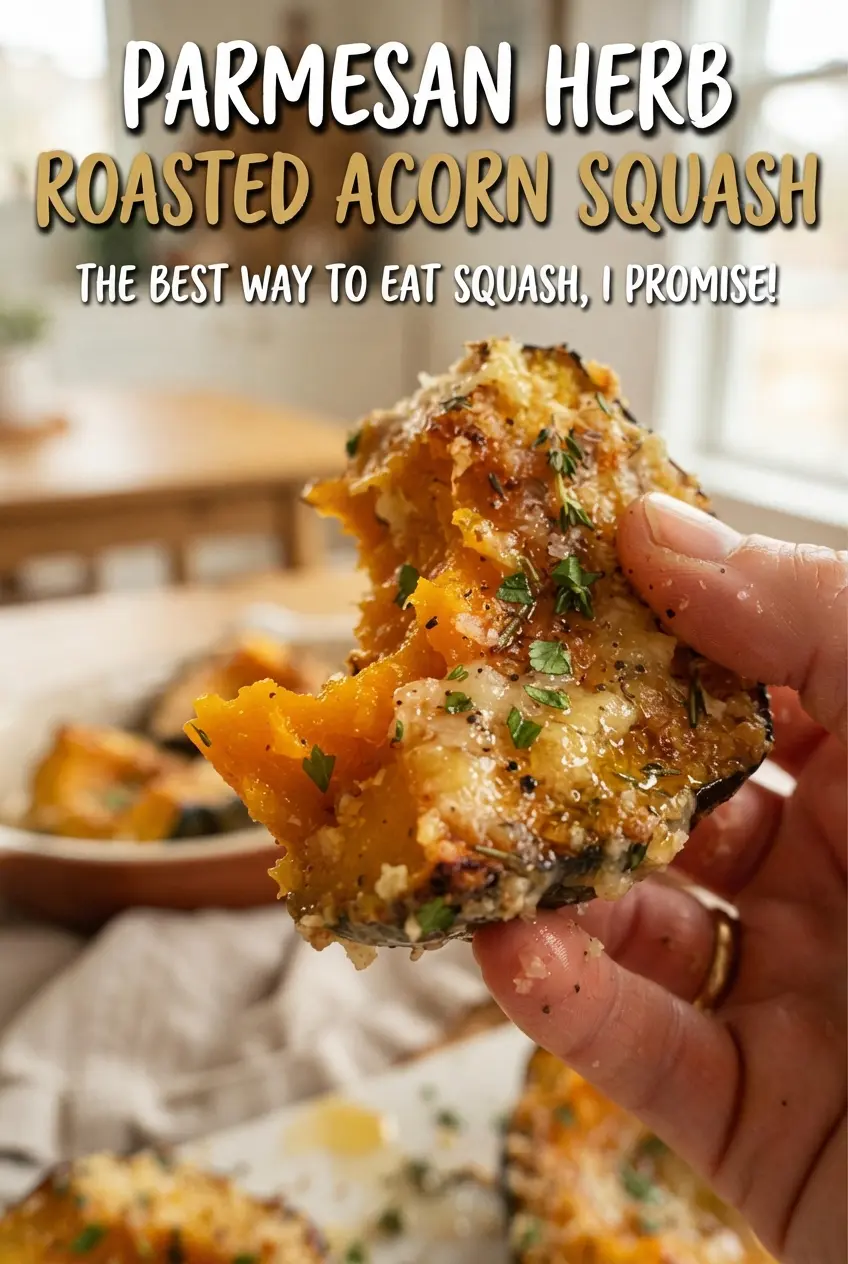
Parmesan Herb Roasted Acorn Squash
Ingredients
Equipment
Method
- Preheat oven to 400F and line a sheet pan with parchment so the squash roasts evenly.
- Toss the acorn squash rings with olive oil, garlic, thyme leaves, rosemary, salt, and black pepper until coated.
- Arrange the coated squash in a single layer and roast for 20 minutes to start browning.
- Flip the squash slices and sprinkle generously with Parmesan so the topping can crisp.
- Roast 12 to 15 minutes more at 400F until the squash is tender and the Parmesan is golden and crisp.