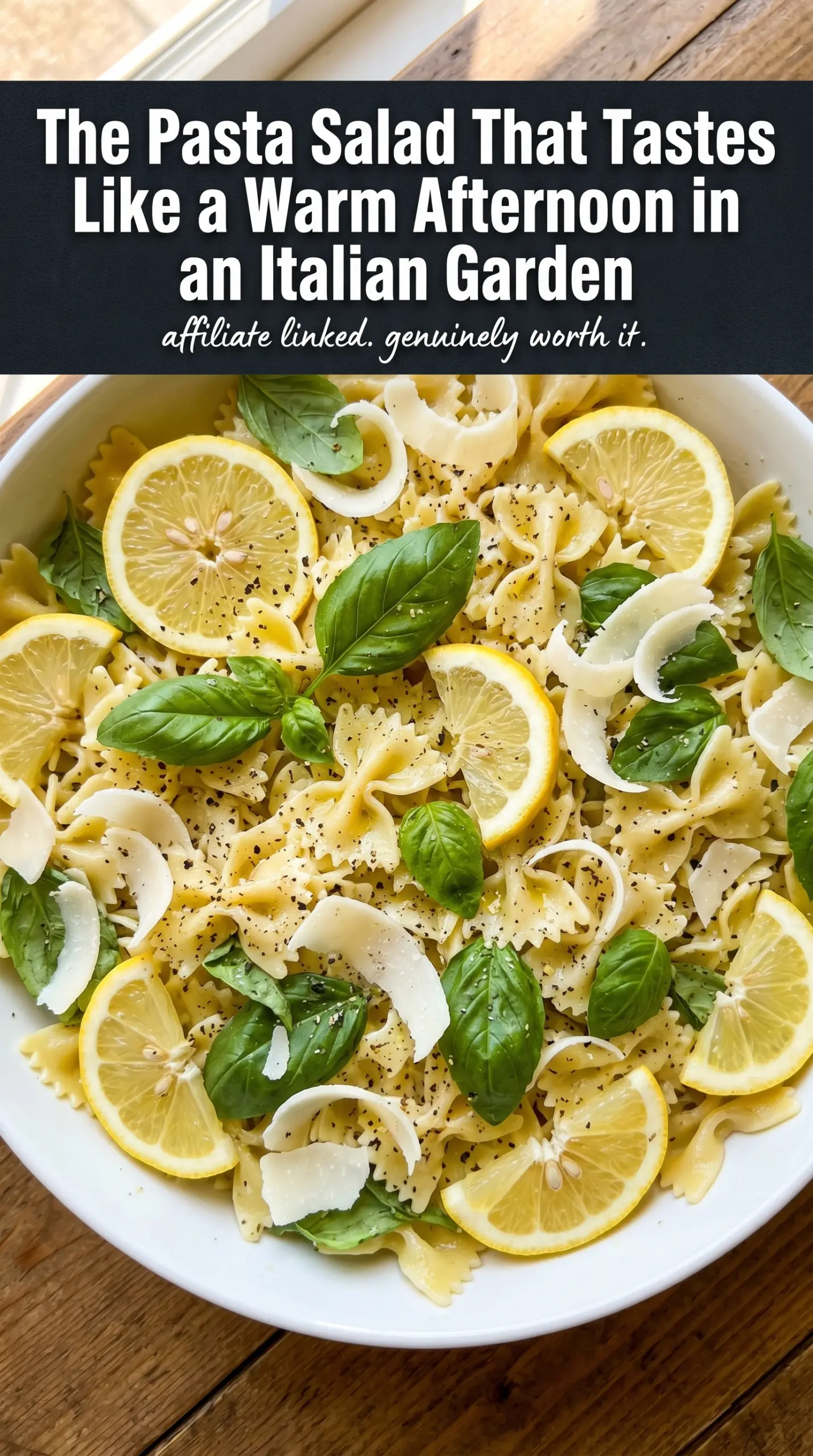
Pasta salad gets a lot better when the dressing tastes bright enough to wake up the noodles instead of just coating them. This basil lemon version stays light, fresh, and clean on the palate, with torn basil leaves, sharp Parmesan, and enough lemon to keep every bite tasting lively even after it chills. The farfalle or rotini grabs the dressing in all the right places, so you get flavor all the way through instead of a bland bowl with seasoning sitting on the bottom.
The trick here is balance. Lemon zest gives you the fragrant top notes, while the juice brings the tang, and the olive oil rounds both out so the salad doesn’t taste harsh. Rinsing the pasta under cold water stops the cooking fast and keeps the basil from turning muddy when you toss everything together. A short chill in the fridge gives the garlic time to mellow and lets the pasta absorb the dressing instead of fighting it.
Below, I’ll walk through the one step that keeps this salad from going flat, plus the swaps that still work if you’re short on an ingredient or need to adjust it for a different meal.
The lemon dressing soaked into the pasta after chilling, and the basil stayed bright instead of turning dark. I brought it to a cookout and the bowl was scraped clean before the burgers were even done.
Save this Basil Lemon Pasta Salad for the next picnic, potluck, or make-ahead side dish that needs to stay bright after chilling.
The Chill Time Is What Pulls This Pasta Salad Together
Fresh pasta salad can taste thin if it goes straight from the bowl to the table. The hour in the fridge changes that. The pasta absorbs the lemony dressing, the garlic mellows, and the basil gets a chance to perfume the whole dish without overpowering it. If you skip the rest, the salad still tastes good, but it won’t taste finished.
Cold rinsing matters here too. You’re not just cooling the pasta down; you’re stopping the starch from turning the dressing gummy. That rinse keeps the noodles separate and lets the olive oil and lemon cling in a thin, glossy layer instead of getting swallowed up by residual heat.
- Farfalle or rotini — Both shapes hold onto the dressing well. Farfalle gives you little pockets of basil and tomato, while rotini traps more of the lemony coating in its spirals. Long pasta doesn’t work as well here because it doesn’t catch the herbs and cheese in every bite.
- Fresh basil — Tear it instead of chopping it. Torn basil bruises less and keeps a brighter green color in the bowl. If your basil is a little soft, use it anyway; the chill time helps it settle into the salad.
- Lemon zest and juice — The zest is not optional if you want this to taste fresh instead of just sour. Juice gives the acidity, but the oils in the zest carry the real lemon aroma. Bottled juice works in a pinch, but it tastes flatter and less clean.
- Parmesan — Use the real grated cheese if you can. It melts into the dressing just enough to make it silky without turning heavy. Pre-shredded Parmesan can work, but it won’t blend as smoothly.
What Each Ingredient Is Actually Doing as the Salad Pulls Together
- Pasta absorbing dressing gradually — The pasta drinks in the dressing over hours in the fridge. By serving time, it tastes like one unified dish instead of separate pasta and dressing.
- Dressing thickening as it chills — Cold dressing becomes thicker and clings better to the pasta. The consistency changes from loose to well-coated and integrated.
- Seasonings becoming distributed — As the salad sits cold, the salt and spices dissolve throughout. No more bright spots of intense flavor or bland patches.
- Vegetables releasing subtle liquid — Fresh vegetables slowly weep into the dressing, adding flavor and moisture. This happens gradually over hours, not all at once.
- Acid becoming less sharp — The vinegar or lemon juice becomes softened and integrated. It’s still present but tastes harmonious instead of harsh.
- Herbs infusing flavor (if hardy herbs) — Dill, thyme, or other hardy herbs become more mellow and distributed. They flavor the whole salad instead of being distinct.
- Proteins flavored by the dressing — Any protein in the salad absorbs the dressing flavor. Eggs, cheese, or meat all become part of the cohesive whole.
- Final toss right before serving — A final gentle toss redistributes any dressing that settled. This ensures every bite tastes balanced and complete.
Building the Bowl So the Basil Stays Bright
Cooking and Cooling the Pasta
Cook the pasta in well-salted water until it’s just tender, then drain it and rinse under cold water until it’s no longer warm. If the pasta stays hot, it keeps cooking and turns the basil dull and the dressing oily. Shake off as much water as you can before moving on, because extra water is the fastest way to dilute the lemon.
Whisking the Dressing
Whisk the olive oil, lemon juice, zest, garlic, salt, and pepper until the mixture looks unified and a little glossy. The garlic should be minced fine enough that it disappears into the dressing instead of landing in sharp bites. If the lemon tastes too sharp, a pinch more salt softens it better than adding sugar.
Tossing and Chilling
Combine the pasta, basil, Parmesan, and tomatoes in a large bowl, then pour the dressing over the top and toss until everything looks evenly coated. The salad will seem a little loose at first, but that’s right; the pasta tightens up as it chills. Cover and refrigerate for at least an hour, then toss once more before serving so the dressing settles back over the noodles.
Make It Dairy-Free
Leave out the Parmesan and add a pinch more salt plus a spoonful of nutritional yeast if you want a little savory depth. You lose some of the salty richness, but the lemon and basil stay front and center, which keeps the salad light.
Turn It Into a Fuller Side
Add diced mozzarella, sliced cucumbers, or grilled chicken if you want this to eat more like a meal. Mozzarella softens the lemon edge, while chicken makes the salad heartier without changing the bright herb-and-citrus base.
Swap the Nuts
Pine nuts are optional, but if you use them, toast them lightly first so they taste buttery instead of raw. Slivered almonds or chopped walnuts work too, though walnuts bring a more earthy note that leans less Italian and more rustic.
Storage and Reheating
- Refrigerator: Keeps for 3 days in a covered container. The basil will darken a little, but the flavor stays good.
- Freezer: This one doesn’t freeze well. The pasta turns soft and the basil loses its freshness after thawing.
- Reheating: Serve it cold or let it sit at room temperature for 15 to 20 minutes. Don’t microwave it; heat makes the basil wilt and the Parmesan clump.
Answers to the Questions Worth Asking
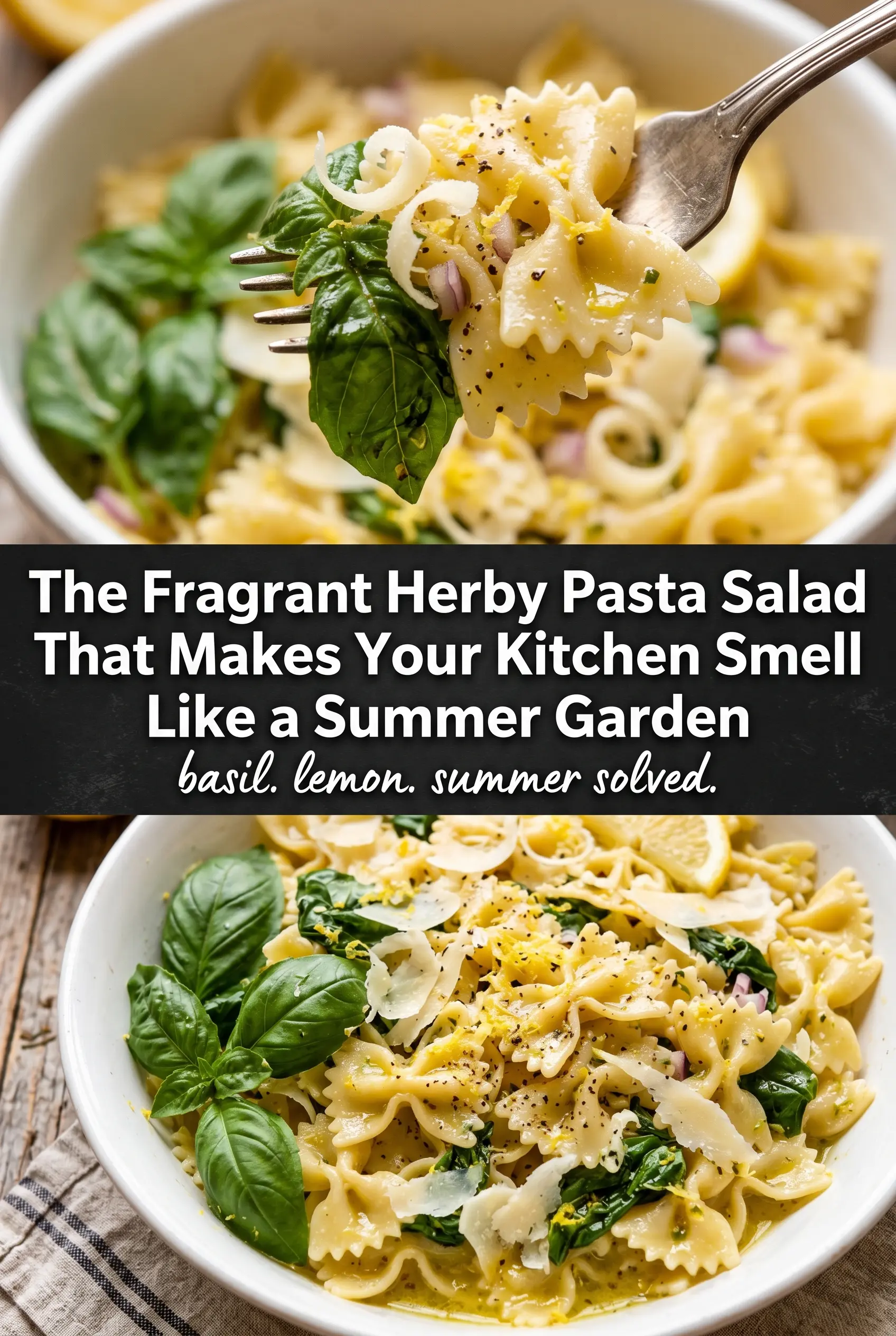
Basil Lemon Pasta Salad
Ingredients
Equipment
Method
- Cook farfalle or rotini pasta according to package directions until al dente. Drain and rinse with cold water to stop cooking and cool the pasta.
- Whisk olive oil, lemon juice, lemon zest, minced garlic, salt, and pepper until smooth and fragrant. Taste and adjust salt and pepper as needed.
- Combine the cooled pasta, torn basil, grated Parmesan, and halved cherry tomatoes in a large bowl. Toss gently to distribute the basil and tomatoes.
- Pour the lemon dressing over the salad and toss to coat thoroughly. Make sure the dressing clings to the pasta.
- Refrigerate the pasta salad for at least 1 hour. Chill until flavors meld and the basil stays bright.
- Top with pine nuts if desired and serve chilled. Add extra lemon zest or a pinch of pepper if you want a brighter finish.