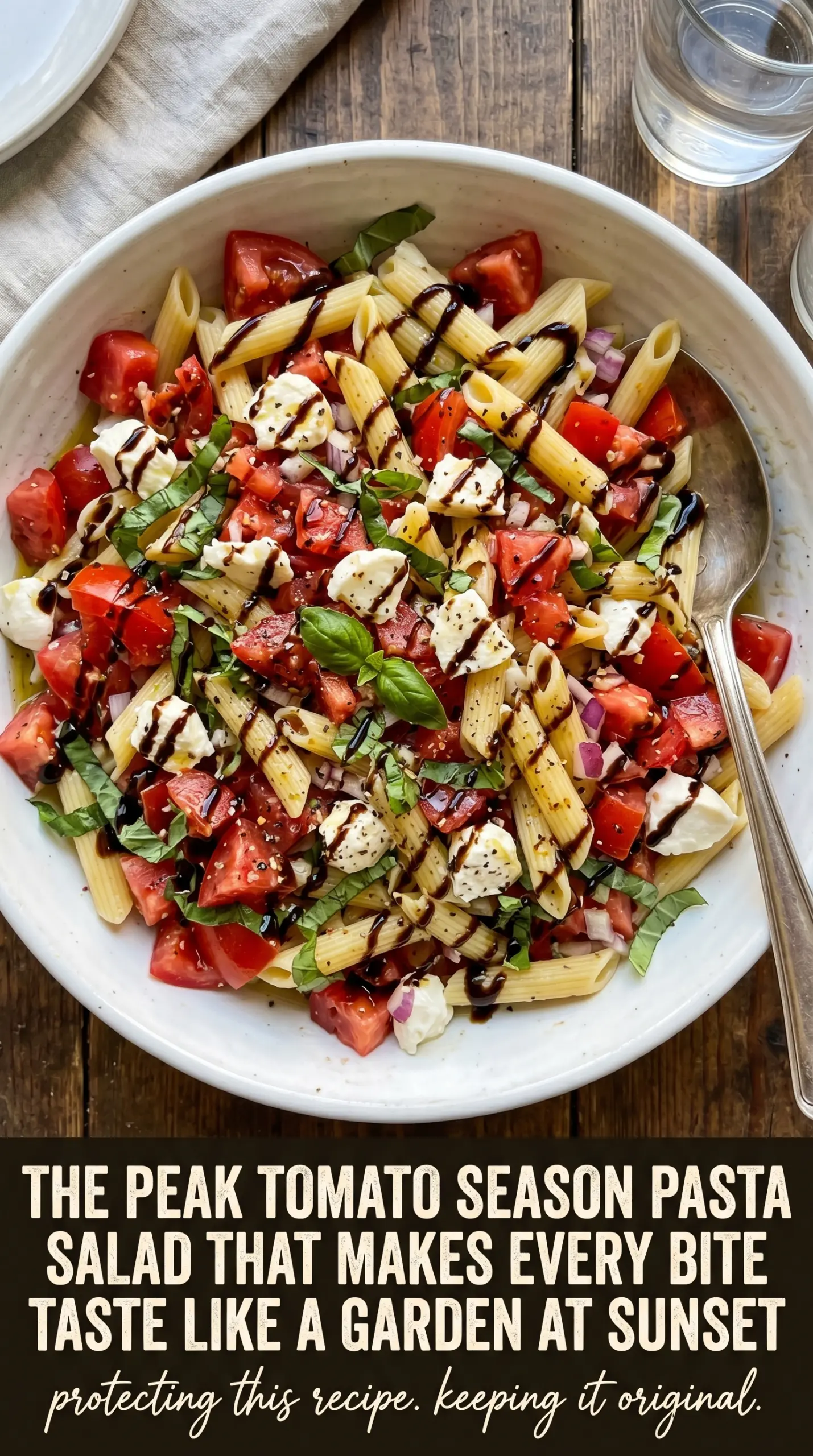
Pasta salad gets a lot more interesting when the tomatoes are treated like bruschetta instead of just tossed in at the end. The result is bright, garlicky, and full of that juicy-salty bite you want from a summer side, but it still eats like a proper pasta dish instead of a bowl of dressed noodles. Once the tomatoes sit with the basil, garlic, olive oil, and balsamic, they start making their own dressing, and that is what gives this salad its punch.
The key here is restraint with the pasta. You want it cooked just to tender, then rinsed cold so it stops carrying heat and keeps the tomatoes fresh instead of softening them into a wilted mess. A short chill matters too. It gives the garlic time to mellow, the balsamic time to round out, and the pasta time to pick up all that tomato juice without turning soggy.
Below, I’m walking through the part that matters most: how to keep the pasta from drinking up the dressing too fast, which tomatoes work best, and the small finish that keeps every bite tasting bright even after it has been chilled.
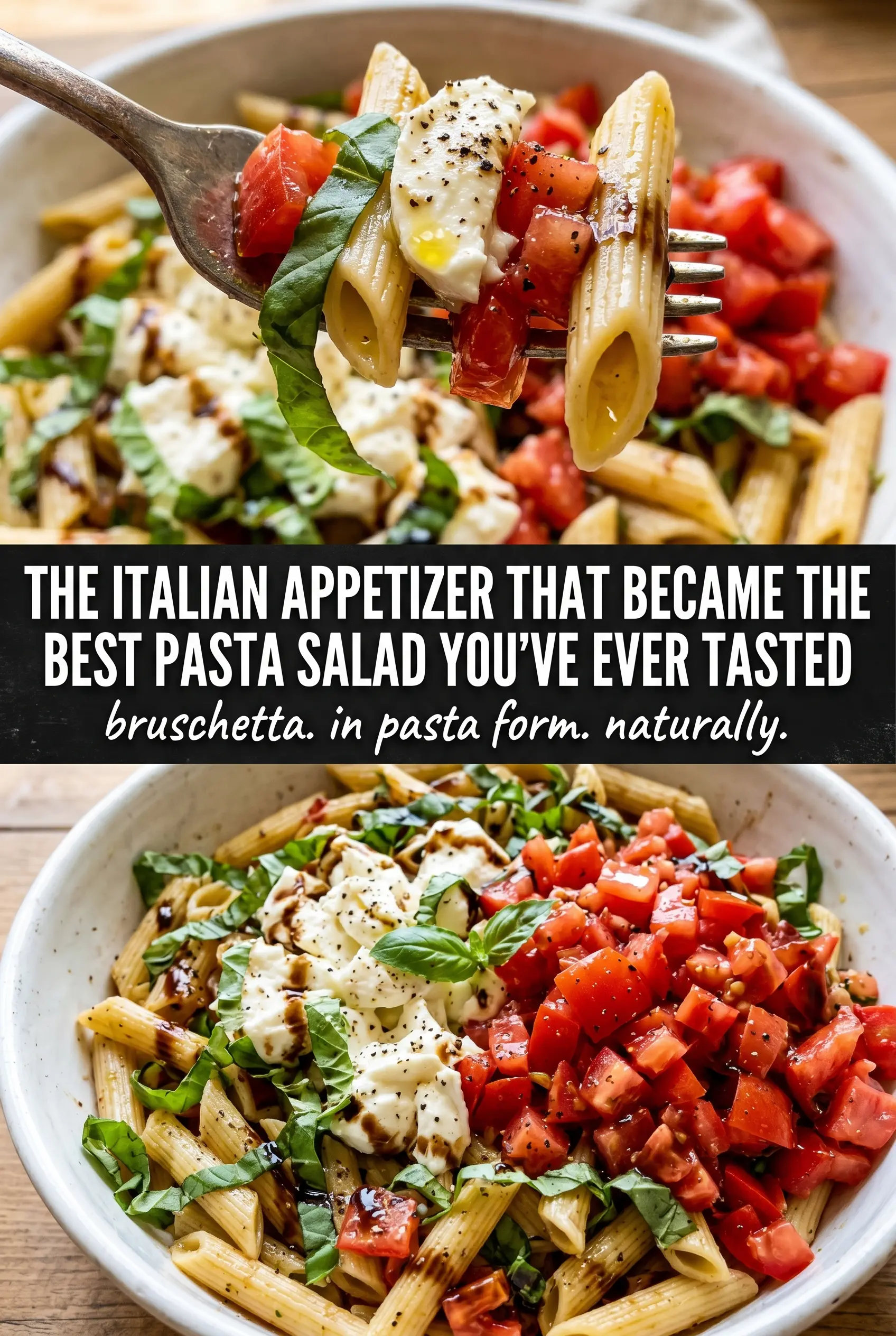
The tomatoes made their own little dressing while they sat, and after an hour in the fridge the pasta tasted like it had been marinating all afternoon. Even the mozzarella stayed creamy.
Save this bruschetta pasta salad for the nights when you want a cold Italian side that still tastes bold, garlicky, and fresh after chilling.
The Trick Is Letting the Tomatoes Start the Dressing
If you toss everything together the second the pasta is done, the salad tastes flat. The tomatoes need time with the garlic, basil, olive oil, and balsamic so they can release their juice and turn into a loose bruschetta-style sauce. That short rest is what keeps the finished salad from tasting like plain pasta with chopped vegetables on top.
The other mistake is using hot pasta. Heat pulls moisture into the noodles too aggressively, which means they soak up the dressing before it has a chance to coat everything evenly. Cold-rinsed pasta stays separate, holds its shape, and leaves enough of that tomato mixture behind to keep the salad glossy instead of dry.
- Tomatoes — Use ripe, flavorful tomatoes here. Bland tomatoes give you bland dressing, and there is nowhere to hide. If your tomatoes are extra juicy, that’s a good thing; the pasta will absorb some of that liquid and taste better after chilling.
- Basil — Fresh basil is non-negotiable. Dried basil won’t give you the bright, almost peppery finish that makes this taste like bruschetta. Chop it right before mixing so it stays fragrant.
- Balsamic vinegar — This adds the sweet-tart edge that balances the tomatoes and mozzarella. A cheap one is fine, but if yours is sharp and thin, use a little less and taste after chilling.
- Fresh mozzarella — This brings the soft, creamy bite that makes the salad feel complete. Pre-shredded mozzarella won’t give you the same texture. Dice it so every forkful gets a little richness without clumping.
What Each Ingredient Is Actually Doing in Tomato-Based Dressing
- Fresh tomatoes (ripe and juicy) — Ripe tomatoes release the most flavorful juice. This becomes the base of the dressing.
- Salt on the tomatoes (drawn-out liquid) — Salting the tomatoes first draws out their juice. This liquid becomes the main component of the dressing.
- Olive oil to carry the tomato flavor — Oil mixed with the tomato liquid creates a light but flavorful dressing. Use enough oil so the dressing feels balanced.
- Garlic and herbs infusing into the liquid — Raw garlic and fresh herbs sit in the tomato liquid and release their flavors. This creates a complex dressing.
- Acid (vinegar or lemon) to balance — The tomato juice is sweet, so acid balances it. Add just enough that the dressing tastes bright.
- Time for flavors to develop (at least 30 minutes) — The tomato liquid needs time to become dressing instead of just wet pulp. Sitting allows the flavors to meld.
- Optional: balsamic vinegar for depth — A small amount adds richness and complexity. Don’t overdo it or it overpowers the fresh tomato flavor.
- Toss with cool pasta when ready — The fresh tomato dressing coats the pasta evenly. The natural liquid helps the pasta absorb flavor without being heavy.
Building the Bruschetta Flavor Before the Pasta Goes In
Marinate the Tomato Mixture First
Combine the tomatoes, basil, garlic, olive oil, balsamic vinegar, salt, and pepper in a large bowl and let it sit for 15 minutes. The tomatoes should look glossy and a little saucy by the end of that rest. If you skip this, the salad tastes assembled instead of seasoned through, and the garlic can feel harsh instead of rounded out.
Cook and Cool the Pasta Properly
Boil the pasta until just tender, then drain and rinse it under cold water until it’s cool to the touch. That rinse stops the cooking and keeps the pasta from soaking up every drop of the tomato mixture before serving. Shake off as much water as you can so the salad doesn’t turn watery in the fridge.
Finish with Cheese and Chill
Add the cooled pasta and mozzarella to the tomato mixture and toss until everything looks evenly coated. Parmesan goes in at the end so it clings to the dressing instead of disappearing into the bowl. Chill for at least an hour, then toss again before serving, because the dressing settles and the flavor concentrates as it sits.
Make it vegetarian, not just meatless
This salad already works beautifully as a vegetarian side, but if you want to make it the main event, add chickpeas or white beans after the pasta has cooled. They hold the dressing well and give the bowl more substance without fighting the tomato-basil flavor.
Go gluten-free with a sturdy pasta
Use a gluten-free penne or bowtie that holds its shape after chilling. Some brands get soft fast, so pull it at the first sign of tenderness and rinse it well. The goal is a pasta that stays separate, not one that turns mushy once the dressing hits.
Swap in cherry tomatoes when the big ones are pale
If your large tomatoes aren’t great, use halved cherry tomatoes instead. They’re usually sweeter and hold their shape better, which means the salad tastes brighter and the texture stays more defined after chilling.
Storage and Reheating
- Refrigerator: Store covered for up to 3 days. The pasta will absorb some of the dressing, so expect it to taste a little less saucy on day two.
- Freezer: Don’t freeze this salad. The tomatoes and mozzarella break down after thawing, and the whole bowl turns watery.
- Reheating: This is best served cold or cool from the fridge. If it has dried out, let it sit at room temperature for 15 minutes and add a drizzle of olive oil and a splash of balsamic before tossing again.
Answers to the Questions Worth Asking
Bruschetta Pasta Salad
Ingredients
Equipment
Method
- Bring a Dutch oven of salted water to a boil and cook penne or bowtie pasta according to package directions, then drain.
- Rinse the cooked pasta with cold water until chilled to stop cooking and prevent sticking.
- Combine diced tomatoes, chopped fresh basil, minced garlic, olive oil, balsamic vinegar, salt, and pepper in a bowl.
- Let the tomato mixture marinate for 15 minutes at cool room temperature, so the garlic and vinegar start softening the tomatoes.
- Add the drained pasta and diced fresh mozzarella to the tomato mixture and toss until coated.
- Sprinkle grated Parmesan cheese over the salad and toss again to distribute.
- Transfer to the refrigerator and refrigerate for at least 1 hour to allow flavors to develop.
- Toss the chilled salad again before serving.
- Taste and adjust seasoning with more salt and pepper if needed, then serve cold.