Burger bowls hit the same salty, smoky, satisfying notes as a good burger, but they come together faster and stay crisp instead of soggy. You get juicy seasoned beef, cool lettuce, sharp cheddar, pickles, tomatoes, and that familiar burger sauce in every bite without dealing with buns that split or go soft. It’s the kind of dinner that disappears fast because everyone can build their bowl the way they like it.
The key is cooking the beef hard enough to get real browning before you drain it. That’s where the deep burger flavor comes from. The sauce also matters more than it looks on paper; the ketchup, mustard, relish, and mayo blend into something tangy and creamy that ties the whole bowl together instead of tasting like a pile of separate toppings.
Below, I’ve included the small details that keep the beef juicy, the lettuce crisp, and the sauce balanced. If you’ve ever had a burger bowl that felt flat, the fix is usually in the seasoning and the order you build it.
The beef got those browned edges I was hoping for, and the sauce was spot on. I layered mine with extra pickles and the bowls tasted like a Big Mac without the bun.
Save these juicy burger bowls for the nights when you want all the burger flavor without the bun or the mess.
The Reason Burger Bowls Taste Better When the Beef Is Broken Up Properly
The biggest mistake people make with burger bowls is cooking the beef like a loose ground meat skillet and expecting it to taste like a burger. It needs heat, contact, and a little patience. Let the meat sit long enough to brown before you start stirring it into tiny bits, or you’ll end up with gray crumbles that taste steamed instead of savory.
Draining the fat matters here, too. With 80/20 beef, you want enough fat left behind that the meat stays juicy, but not so much that it pools under the lettuce and turns the whole bowl greasy. The goal is rich beef, not a greasy pan of meat juice.
What Each Burger Bowl Ingredient Is Doing
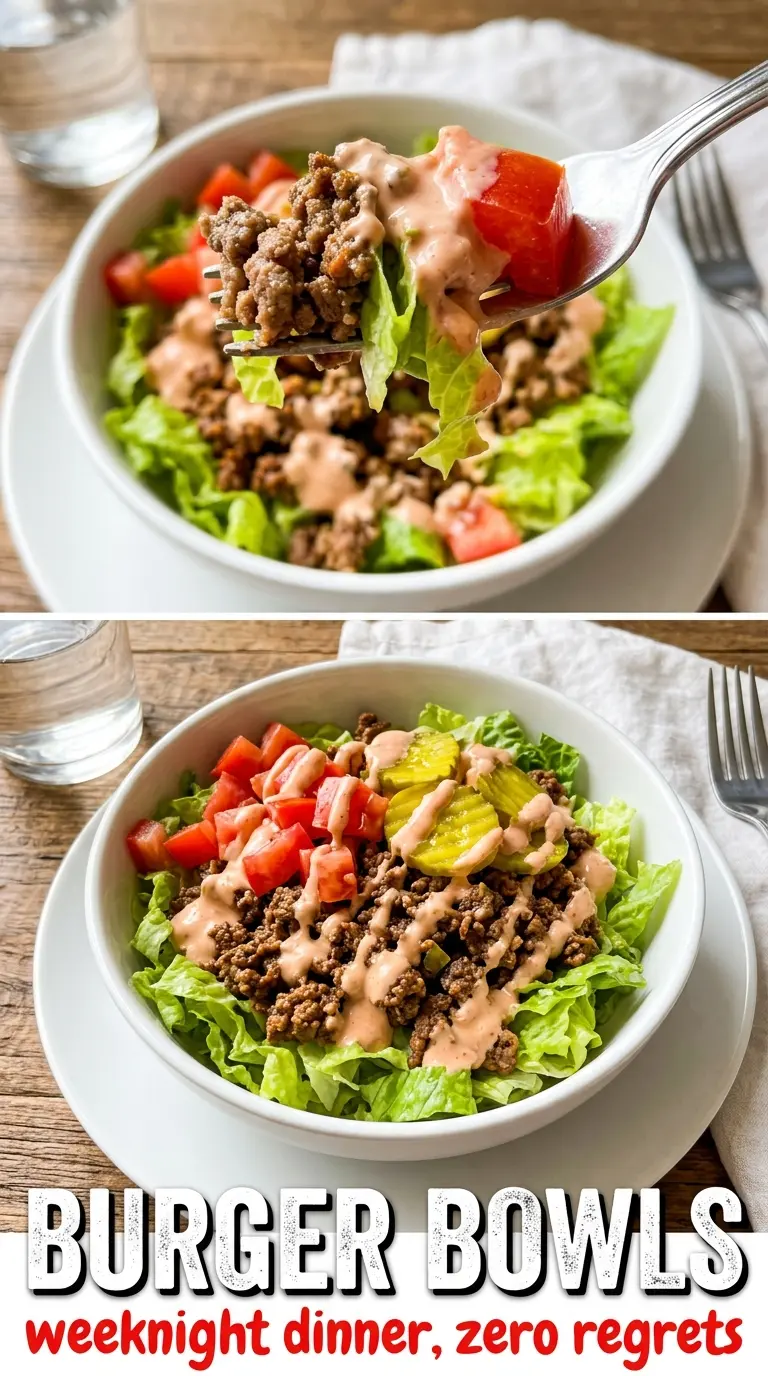
- Ground beef 80/20 — This gives you the best balance of flavor and juiciness. Leaner beef works, but it cooks up drier and less burger-like unless you add extra sauce.
- Romaine or iceberg — Iceberg gives the cold crunch that feels most like a fast-food burger, while romaine brings a little more structure and a slightly greener taste. Either one needs to be dry after washing, or the sauce will slide right off.
- Sharp cheddar — Sharp cheddar cuts through the richness of the beef and sauce. Pre-shredded works fine, but freshly shredded melts more softly into the warm meat.
- Pickle relish in the sauce — This is what gives the dressing that classic burger-shop tang. If you only have chopped pickles, mince them finely so the sauce still spreads smoothly.
- Mayonnaise — This holds the sauce together and gives it body. Don’t swap in a thin dressing; the sauce needs that creamy cling so it coats the beef and toppings instead of disappearing.
Building the Bowl So the Lettuce Stays Crisp
Brown the Beef First
Cook the seasoned beef over medium-high heat and leave it alone for the first minute or two so it can develop color. Once the bottom has browned, break it into crumbles and keep cooking until there’s no pink left. If the pan looks crowded or the beef starts steaming, the heat is too low or the skillet is too small.
Mix the Sauce Until It Tastes Like a Burger Joint
Whisk the mayonnaise, ketchup, mustard, relish, and garlic powder until smooth and glossy. The sauce should taste tangy, a little sweet, and just sharp enough to cut through the beef. If it tastes flat, it usually needs a pinch of salt or a touch more mustard rather than more ketchup.
Layer the Bowls in the Right Order
Start with lettuce, then add the warm beef and the toppings. Keep the sauce on top or spoon it over just before serving so the greens stay crisp. If you mix everything too early, the lettuce wilts and the bowl loses the fresh contrast that makes it work.
Three Ways to Make Burger Bowls Fit Your Night
Low-carb burger bowl
This recipe already lands low in carbs as written, but you can keep it even tighter by checking the ketchup and relish labels for added sugar. The flavor stays bold, and you won’t miss the bun because the beef, cheese, and sauce carry the whole dish.
Dairy-free version
Skip the cheddar and use a dairy-free mayo in the sauce. You’ll lose a little of the classic burger richness, so add extra pickles or a few sliced avocado pieces if you want more body in the bowl.
Cheeseburger-style add-on
Add a little shredded iceberg right under the beef and pile on extra pickles for a more classic fast-food-style bowl. If you like a smoky note, a pinch of smoked paprika in the beef works well, but don’t overdo it or it starts tasting more like taco meat than a burger.
Storage and Reheating
- Refrigerator: Store the beef, toppings, and sauce separately for up to 4 days. The lettuce stays crisp longer when it isn’t dressed ahead of time.
- Freezer: The cooked beef freezes well for up to 2 months. Freeze it flat in a sealed bag or container, then thaw in the fridge before reheating.
- Reheating: Warm the beef in a skillet over medium heat or in the microwave in short bursts until just hot. Don’t reheat the lettuce or sauce; assemble fresh so the bowl keeps its crunch.
The Questions That Come Up Before People Make Burger Bowls
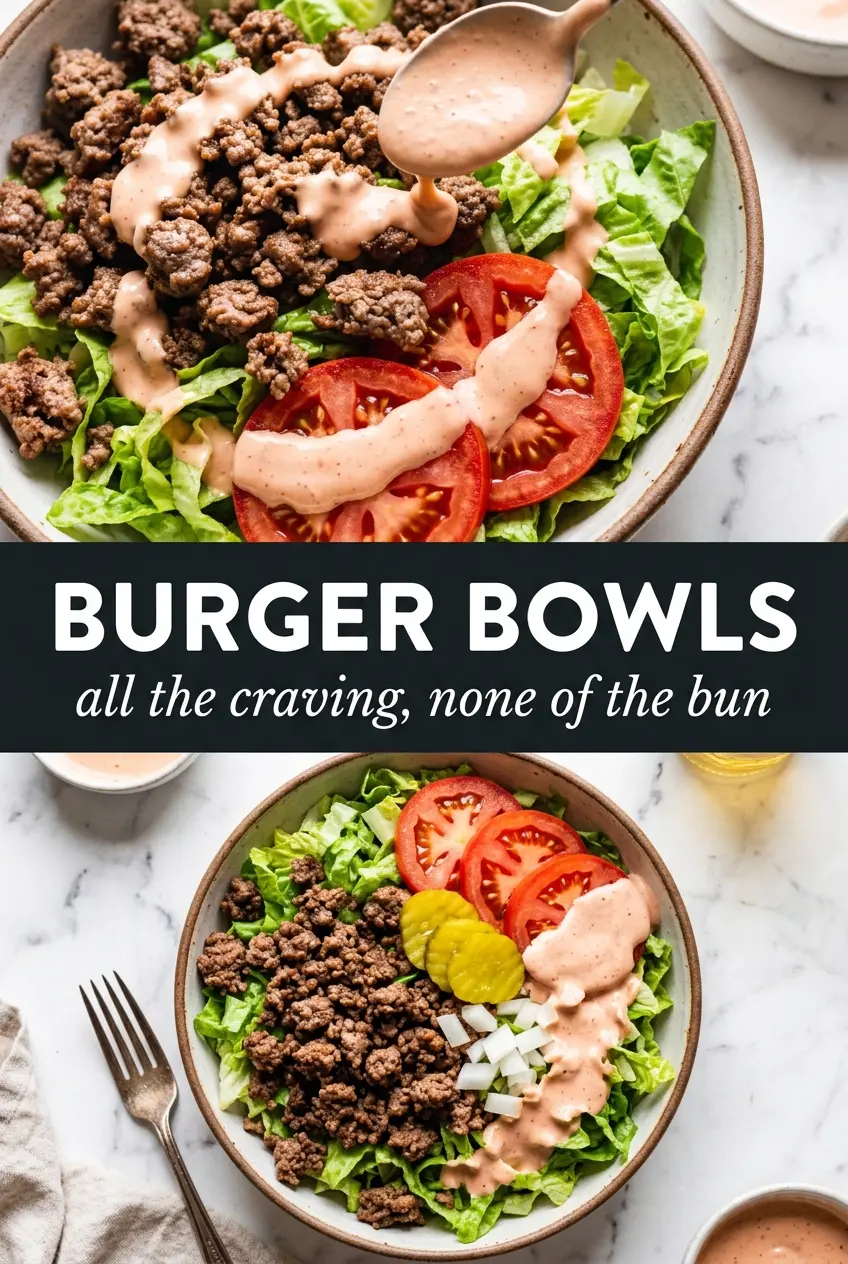
Burger Bowls
Ingredients
Equipment
Method
- Season the ground beef with garlic powder, onion powder, salt, and black pepper, then cook in a skillet over medium-high heat, breaking into crumbles, until browned, about 10–15 minutes; drain any excess fat.
- Whisk together mayonnaise, ketchup, yellow mustard, pickle relish, and garlic powder until smooth, then set aside.
- Divide shredded romaine or iceberg lettuce among four bowls as the base.
- Top each bowl with the browned beef crumbles, cherry tomatoes, dill pickles, diced red onion, and shredded cheddar.
- Drizzle generously with burger sauce and serve immediately.