Glossy whole berry cranberry sauce turns into something you’ll actually want to open on a weeknight when it’s canned the right way. The berries stay bright and tart, the syrup sets up with a clean spoonable texture, and the orange lifts the whole jar without making it taste candy-sweet. It’s the kind of pantry project that pays off later, especially when you want a homemade side dish sitting on the shelf instead of another last-minute pot on the stove.
This version leans on enough sugar to preserve the berries properly, but the lemon juice and orange juice keep the flavor from going flat. The sauce cooks just long enough for most of the cranberries to burst, which gives you that classic whole-berry look with a thicker, more jammy finish. I also like stirring in the orange zest at the end so it stays fragrant instead of tasting cooked out.
Below, I’m walking through the part that matters most: how to keep the jars hot, how to judge the thickness before canning, and why the extra five-minute rest in the canner helps with sealing.
The cranberries burst at just the right point and the sauce set up beautifully in the jars. I loved the orange zest at the end — it kept the flavor bright even after canning.
Save this canned cranberry sauce for the holidays, sandwich spreads, and any time you want a bright, jewel-toned jar in the pantry.
The part that keeps cranberry sauce from turning into syrup
The biggest mistake in canned cranberry sauce is treating the cook like a jam recipe and boiling it down too far before it ever reaches the jars. Cranberries set up as they cool, and if you reduce them until they look finished in the pot, the jars can end up overly stiff once sealed. You want a gentle boil until the berries burst and the sauce looks slightly looser than the texture you want on the table.
The other thing that matters is headspace. Cranberry sauce expands and bubbles during processing, and that quarter-inch gap keeps the lids clean enough to seal without pushing product under the rim. Hot jars, hot sauce, and a real boiling water bath are what make this safe and shelf-stable.
What each ingredient is actually doing in this jar
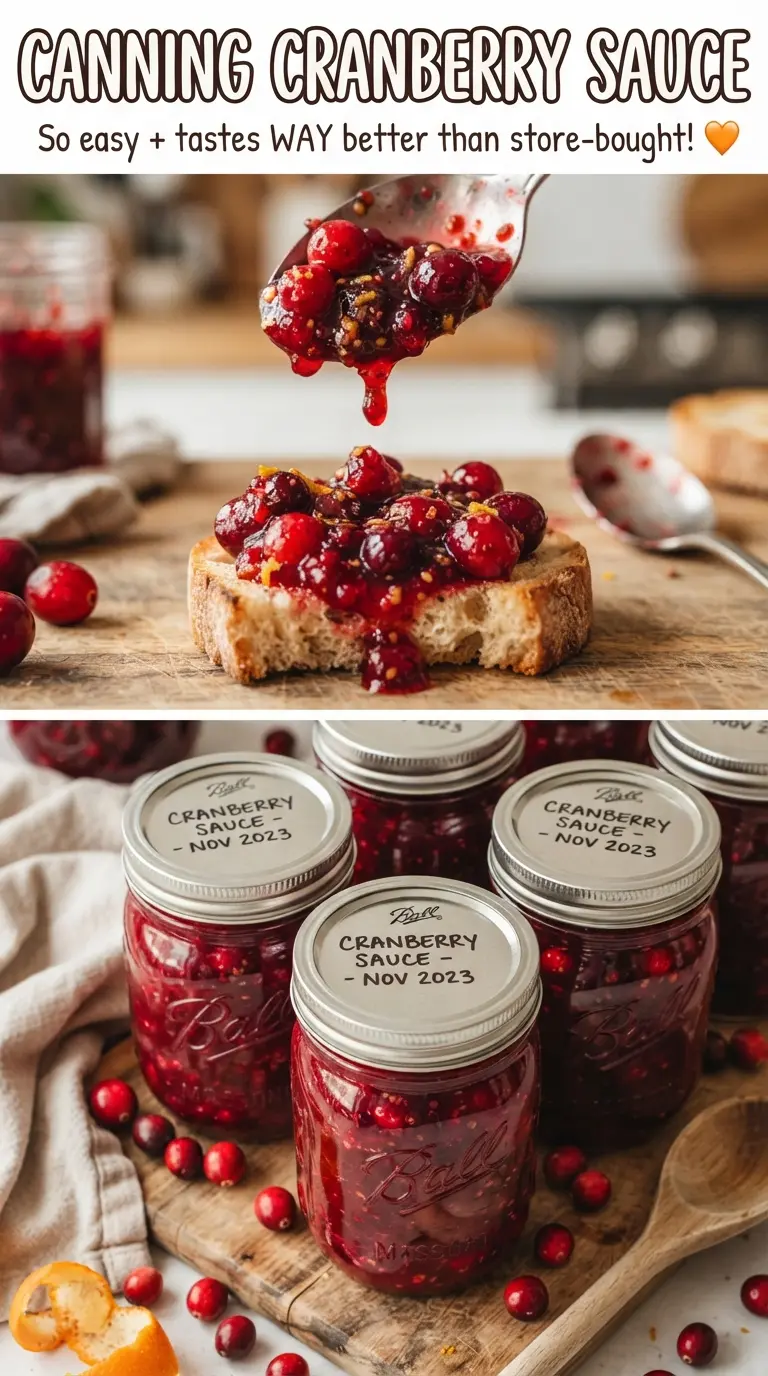
- Fresh cranberries — These are the backbone of the sauce. Frozen cranberries work too, and you don’t need to thaw them first; just expect the pot to take a little longer to come back to a steady boil.
- Sugar — This isn’t just for sweetness. It helps balance the tart berries and gives the sauce its thick, spoonable body after processing. Cutting it down changes the texture and can affect how the sauce behaves in the jar.
- Orange juice and orange zest — The juice adds liquid and a soft citrus note, while the zest brings the bright aromatic finish. Bottled orange juice is fine here, but zest from a fresh orange gives the cleanest flavor.
- Bottled lemon juice — Use bottled, not fresh-squeezed, because canned recipes need a measured acidity level. This is one place where the bottled version matters.
- Water — It helps the sugar dissolve cleanly and keeps the mixture from scorching before the berries start releasing their juices.
Getting the sauce into jars before it tightens up
Heating the canning setup
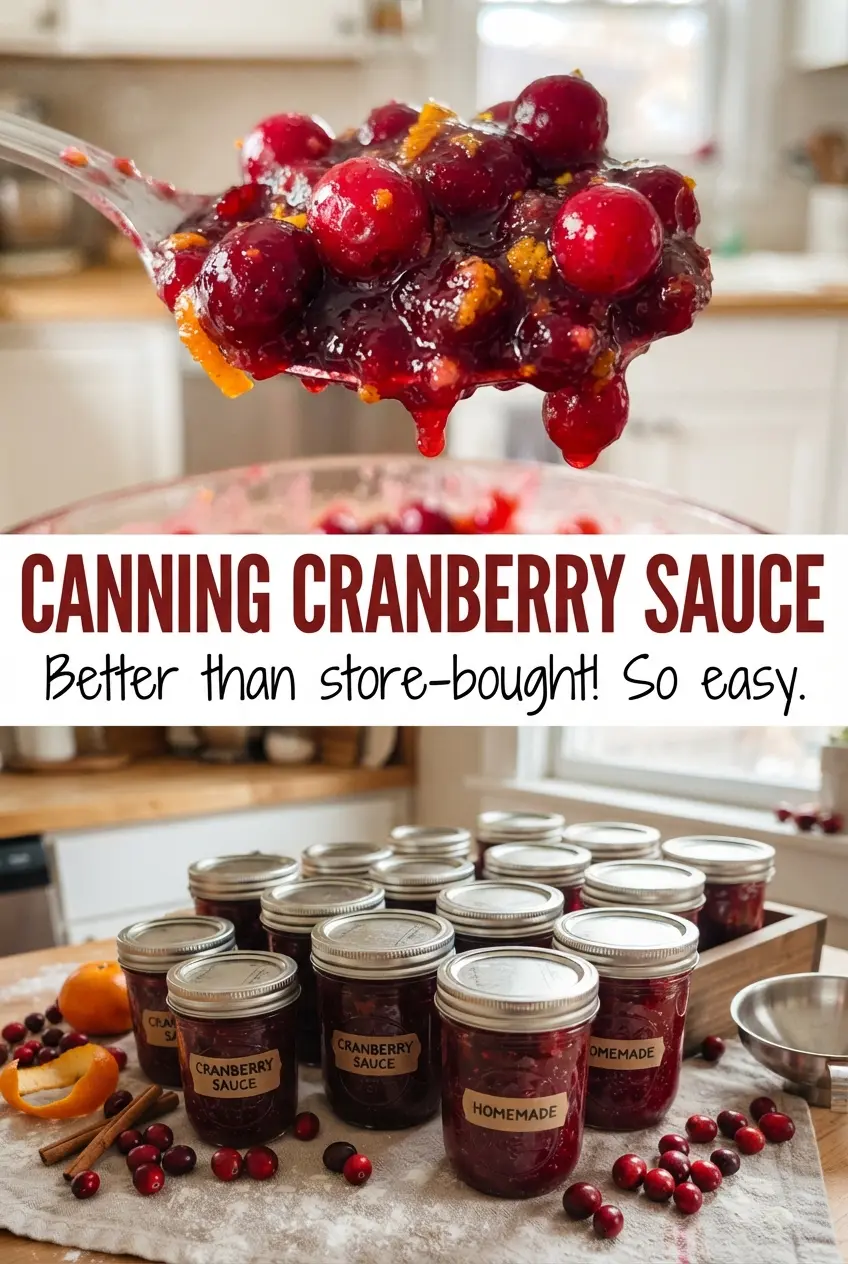
Wash the jars, lids, and bands, then keep the jars hot in simmering water while you make the sauce. Hot jars cut down on thermal shock and help the filled jars stay hot long enough for a proper seal. If the jars cool off on the counter, the sauce loses heat too fast and the seals suffer.
Cooking the cranberry base
Bring the sugar, water, and orange juice to a full boil first so the sugar dissolves completely. Add the cranberries and lemon juice, then keep the boil gentle, not furious, for 10 to 12 minutes. You’re looking for most of the berries to burst and the liquid to thicken slightly; if you boil it hard and mash the berries early, the sauce can turn cloudy and dense instead of glossy.
Finishing and filling the jars
Stir in the orange zest after the cranberries have cooked so the citrus stays fresh and fragrant. Ladle the sauce into the hot jars while it’s still bubbling hot, then wipe the rims carefully before applying the lids fingertip tight. If the rim has even a little sticky sauce on it, the lid may not seal cleanly.
Processing and cooling
Process the jars in a boiling water bath for 15 minutes, adjusting for altitude if needed. When the timer is up, turn off the heat and let the jars rest in the canner for 5 minutes before lifting them out; that short pause helps reduce siphoning. Leave the jars undisturbed for 24 hours, then check the seals before moving them to storage.
How to adapt this cranberry sauce without wrecking the seal
Make it less sweet, but not unsafe
You can trim the sugar a little for a sharper sauce, but don’t slash it aggressively. Sugar supports both the flavor and the final texture, and too little can leave you with a thin, tart sauce that doesn’t set the same way after canning.
Use frozen cranberries when fresh aren’t available
Frozen cranberries work without thawing. They may cool the pot a little at first, so give the mixture a minute or two longer to return to a steady boil before starting the timing.
Turn it into a lower-sugar refrigerator version
If you’re not planning to process the jars, you can reduce the sugar more freely and store the sauce in the fridge instead. The flavor turns sharper and the texture loosens a bit, which works fine for a short-term condiment but not for shelf-stable canning.
Storage and Reheating
- Refrigerator: Once opened, keep the jar chilled and use it within 2 to 3 weeks. The sauce may firm up more in the fridge, but it loosens again at room temperature.
- Freezer: This sauce freezes well in freezer-safe containers if you don’t want to can it. Leave headspace for expansion and thaw it in the refrigerator before serving.
- Reheating: Warm it gently over low heat or let it come to room temperature on the counter. High heat can break down the berries too much and make the texture watery.
Answers to the questions worth asking
Canning Cranberry Sauce
Ingredients
Equipment
Method
- Wash 12 half-pint jars, lids, and bands, then keep the jars hot in simmering water until needed. Keep everything warm so the hot filling goes into hot jars.
- Bring sugar, water, and orange juice to a boil in a large pot, stirring until the sugar is fully dissolved. Use medium-high heat and keep the boil steady.
- Add cranberries and bottled lemon juice, then boil gently for 10-12 minutes until the berries burst and the sauce thickens. Look for popping berries and a coating-like consistency that clings to the spoon.
- Stir in orange zest after the thickening stage, then heat just briefly to combine. The sauce should look glossy with visible whole berries.
- Ladle hot sauce into the hot jars, leaving 1/4-inch headspace, then wipe the rims clean. Apply lids and bands fingertip tight without over-tightening.
- Process jars in a boiling water bath canner for 15 minutes, adjusting time for altitude. Start timing once the water returns to a full boil.
- Turn off the heat and rest jars in the canner for 5 minutes. Keep jars undisturbed so bubbles settle safely.
- Lift jars out and cool undisturbed for 24 hours. Avoid moving or tightening bands during cooling to ensure seals form.
- Check that lids have sealed, then store sealed jars in a cool dark place up to 1 year. Any unsealed jars should be refrigerated and used first.