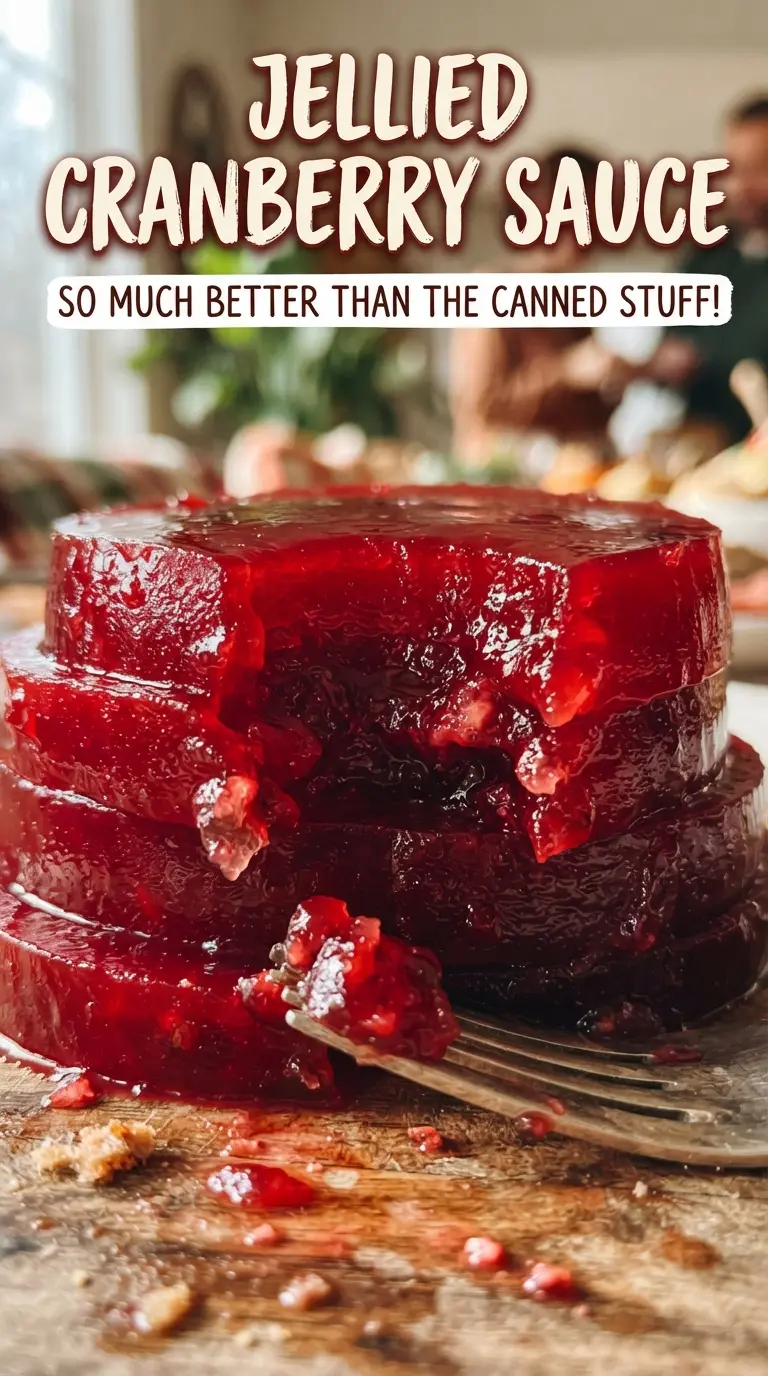
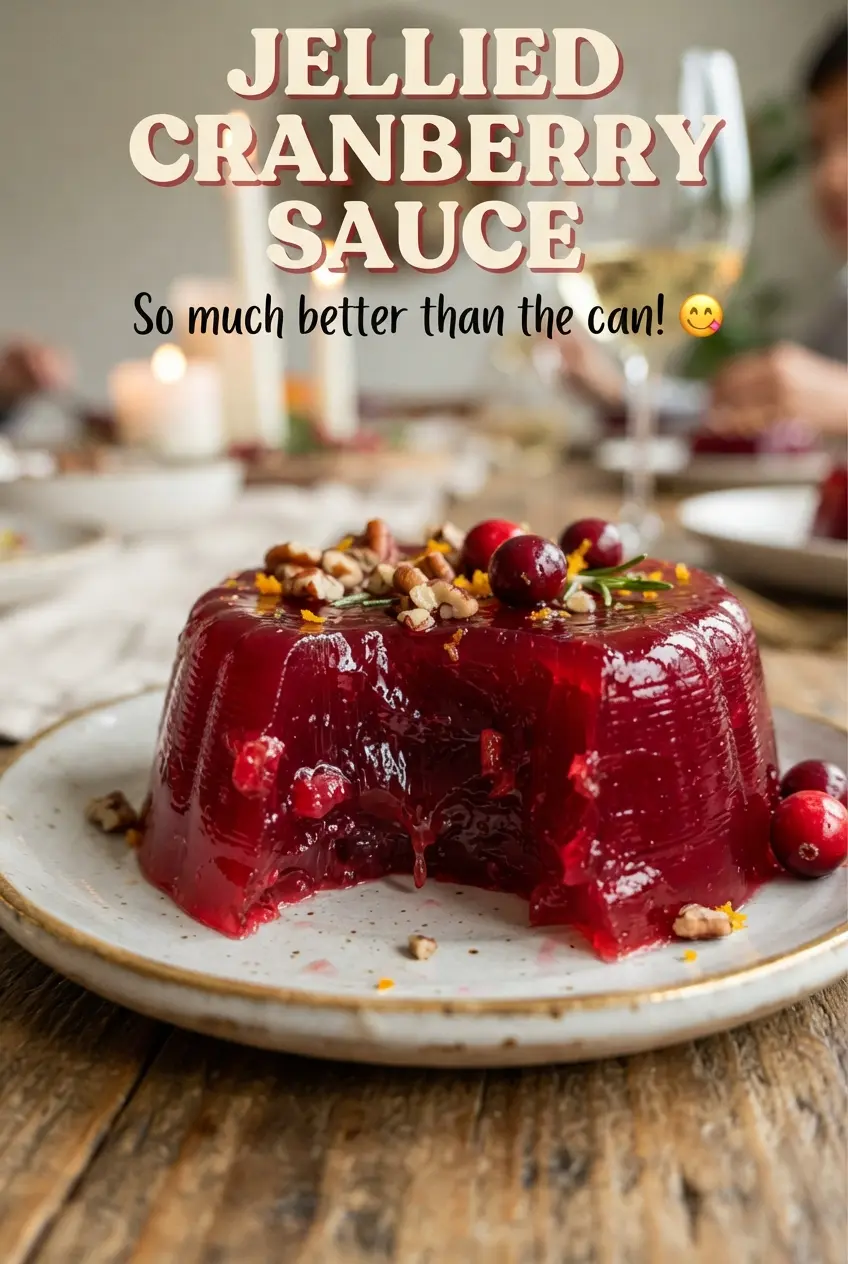
Jellied cranberry sauce sets up into that smooth, glossy slice people either grew up loving or never realized they were missing. When it’s done right, it holds its shape on the plate, slices cleanly, and brings a sharp cranberry tang that cuts through richer holiday food without turning watery or loose.
The texture comes from cooking the berries until every skin bursts, then pressing the puree through a fine-mesh strainer so the sauce finishes silky instead of chunky. The extra boil after straining matters too; it concentrates the puree enough to help it firm up once it chills. Skip that step and you’re much more likely to get a soft spoonable sauce instead of a true molded slice.
Below, I’m covering the small details that make the difference: how to know when it’s cooked enough, what to do if you want it to release cleanly from the mold, and a few practical swaps if you’re working with what’s already in the pantry.
I strained it like you said and it came out glossy and firm enough to slice after chilling overnight. The lemon kept it from tasting too sweet, and the ridge shape from the can looked just like the old-school version my mom used to serve.
Love that smooth, sliceable Jellied Cranberry Sauce? Save this glossy molded cranberry side for Thanksgiving and any meal that needs a bright, old-school finish.
The Part That Keeps It From Turning Into Cranberry Soup
The biggest mistake with jellied cranberry sauce is stopping at the point where the berries have burst and assuming it’s ready. That stage gives you flavor, but not enough body. You need the second boil after straining because that is where the puree tightens up and loses some of the extra water that would otherwise keep it soft.
The other thing that matters is the straining step itself. If you don’t press the puree through the mesh, you leave a lot of natural pectin behind with the skins and lose the smooth, firm texture that makes this sauce sliceable. A mold, a loaf pan, or even a rinsed can all work, but the mixture has to be thick enough before it goes in the fridge or it won’t unmold cleanly.
What Each Ingredient Is Actually Doing Here
- Fresh cranberries — They bring the tart flavor and the natural pectin that helps the sauce set. Fresh works best here because you want berries that burst cleanly and cook down into a bright puree. Frozen cranberries also work without thawing first; just give them the full simmer time.
- Sugar — This balances the tartness and helps the sauce thicken as it reduces. Don’t cut it too far or the finished sauce can taste harsh and set more loosely. If you like a brighter edge, you can reduce it slightly, but the slice will be softer.
- Water — This gets the berries moving at the start and keeps the pot from scorching before the fruit breaks down. There isn’t a substitute that does the same job better, so use the full amount. The goal is to cook off enough liquid later, not start with a dry pan.
- Lemon juice — It sharpens the flavor and keeps the final sauce from tasting flat or cloying. Fresh lemon is nicest, but bottled works in a pinch. Add it after straining so the brightness stays fresh.
Cooking the Berries Down to a Clean Slice
Breaking Down the Fruit
Bring the cranberries, sugar, and water to a boil over medium-high heat, then lower the heat just enough to keep a lively simmer going. In about 10 minutes, the berries should split open and look soft all the way through. If some berries are still holding their shape, the sauce won’t strain evenly, so give the pot a little more time rather than rushing it.
Pressing Out the Smooth Purée
Set a fine-mesh strainer over a bowl and work the mixture through with the back of a spoon. Scrape firmly enough to push the pulp through, but leave the skins behind; that’s what gives you the smooth, jellied texture. If you skip the pressure and only let it drain, you’ll lose too much body and the sauce can end up thinner than it should.
Cooking the Finish on the Stovetop
Return the strained puree to the pot with the lemon juice and salt, then boil for 3 to 4 minutes while stirring. The mixture should look glossy and slightly thicker, almost like loose jam. Pulling it off too soon leaves extra moisture in the sauce, which shows up later as a soft center that doesn’t slice cleanly.
Chilling Until It Unmolds Cleanly
Pour the sauce into a lightly oiled mold, loaf pan, or clean can, then chill it for at least 6 hours, though overnight gives the best set. When it’s firm, run a knife around the edge and invert it onto a plate. If it sticks, the mold probably wasn’t chilled long enough or the sides need a little more oil next time.
Three Ways to Adjust the Set, the Sweetness, and the Shape
Use frozen cranberries without thawing
Frozen cranberries work just as well as fresh here. Add them straight to the pot and expect the simmer to take a couple of extra minutes because the berries start colder, but the final texture stays the same.
Make it a little less sweet
You can reduce the sugar slightly if you want a sharper, more tart sauce, but don’t drop it too far. Sugar helps the finished mixture set with that clean slice, so a big reduction gives you a looser, more spoonable result instead of a firm mold.
Use a loaf pan instead of a can mold
A lightly oiled loaf pan gives you a nice straight-sided block that slices neatly. A clean can makes the classic ridged look, but the loaf pan is easier to unmold if you’re nervous about sticking.
Storage and Reheating
- Refrigerator: Store covered for up to 1 week. The texture stays firm, though the surface can pick up a little moisture after a day or two.
- Freezer: It freezes well, though the cleanest texture comes from freezing it whole in an airtight container rather than sliced. Thaw overnight in the refrigerator.
- Reheating: This one isn’t meant to be reheated. Serve it cold or at cool room temperature so it keeps its shape; warming it turns the gel loose and makes it slump on the plate.
Answers to the Questions Worth Asking
Jellied Cranberry Sauce
Ingredients
Equipment
Method
- Bring cranberries, sugar, and water to a boil over medium-high heat, then reduce to a gentle simmer for 10 minutes until all the berries burst.
- Press the mixture through a fine-mesh strainer, scraping to push all the pulp through, then discard the skins.
- Return the strained puree to the pot, stir in lemon juice and salt, and boil for 3-4 minutes until glossy and slightly thickened, stirring constantly.
- Pour the hot cranberry mixture into a lightly oiled mold, loaf pan, or clean can for clean edges.
- Chill at least 6 hours or overnight until firm and fully set.
- Run a knife around the edge, invert onto a plate, and slice into rounds.