Creamy queso rice with steak strips lands in that sweet spot between comfort food and a proper dinner. The rice turns glossy and rich without getting gluey, the steak stays browned on the outside and juicy in the middle, and every bite gets a little heat from the queso and a fresh hit from the pico on top.
The trick is keeping the rice cooked before it ever meets the sauce. Once hot queso goes into already-cooked long-grain rice, it clings to each grain instead of turning the whole bowl into a heavy mash. The steak gets a fast sear in a very hot skillet, which is exactly what you want for thin strips — enough time to build flavor, not enough time to dry them out.
Below, I’ve laid out the one step that keeps the queso smooth, the ingredient swap that matters most, and the timing that keeps the steak tender. If you’ve ever had rice bowls that taste flat or turn soggy fast, this version fixes both problems.
The queso coated the rice evenly without turning it mushy, and the steak stayed tender even after I topped the bowls. My husband went back for seconds and asked if I could make it again next week.
Creamy queso rice with steak strips is the kind of bowl that disappears fast, so pin it for the nights when you want a fast Tex-Mex dinner with real staying power.
The Part That Keeps the Queso Creamy Instead of Sticky
The biggest mistake in a dish like this is treating the rice like a blank canvas and drowning it in sauce. Long-grain rice works because the grains stay separate, so the queso can coat them instead of collapsing everything into one heavy spoonful. If the rice is clumped or overcooked, the bowl turns pasty fast.
The second thing that matters is heat control. Velveeta or processed cheese melts smoothly because it’s built for it, but it still needs gentle heat once the milk goes in. If the sauce gets too hot after the cheese is added, it can tighten up and get grainy at the edges before the center is fully smooth.
- The rice should be fully cooked and fluffed before it meets the queso. Warm rice absorbs the sauce better than cold rice, but it shouldn’t be wet.
- The steak needs a hot pan and space. Overcrowding steams the strips instead of browning them.
- Rotel adds acidity and a little chile bite that keeps the sauce from tasting flat.
What Each Ingredient Is Doing in the Bowl
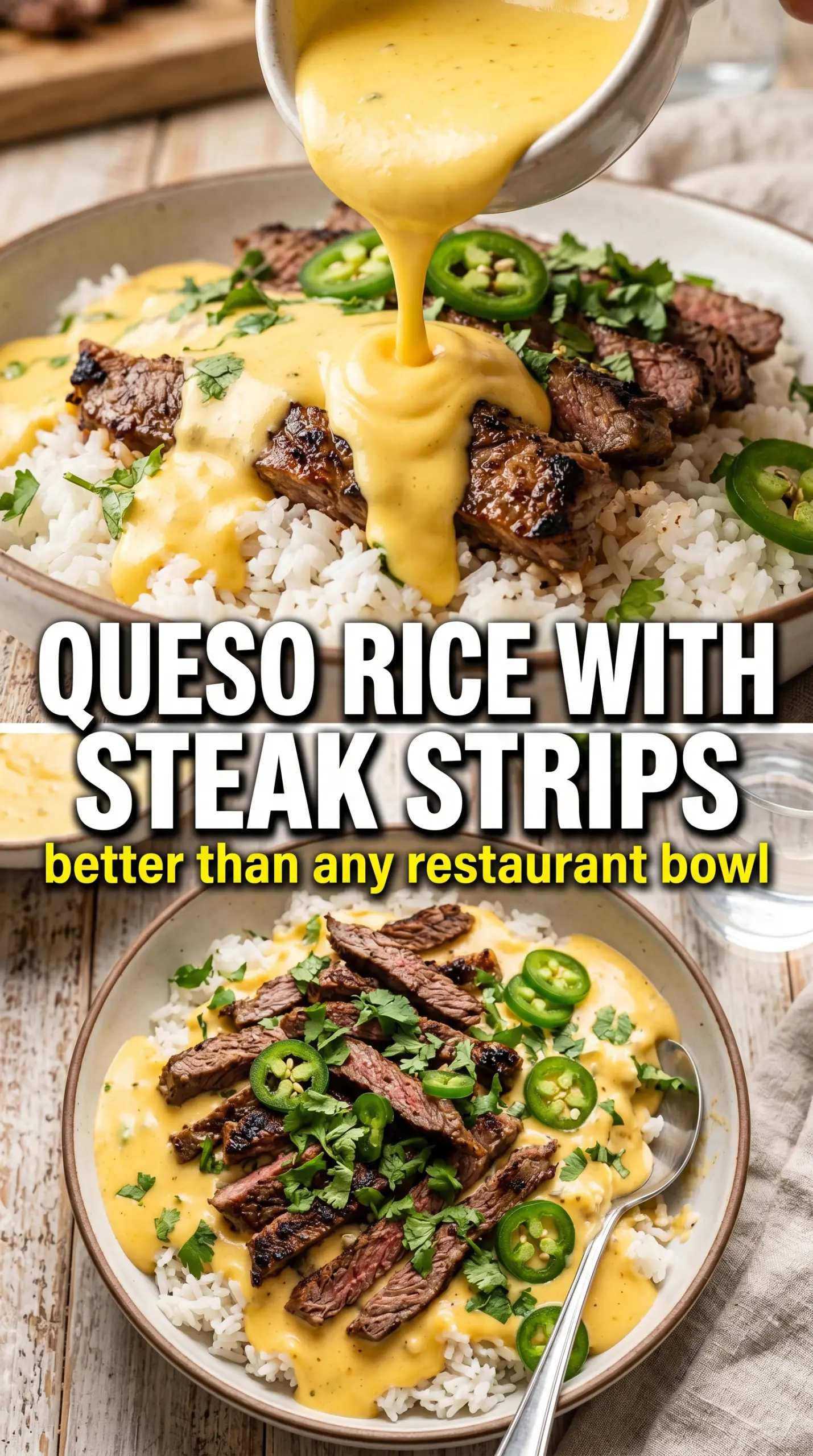
- Sirloin steak — Thin strips cook fast and stay tender if you sear them hard and briefly. Strip steak or flank steak also work, but slice them thin and against the grain so the bowl doesn’t eat chewy.
- Long-grain white rice — This gives you the best texture for a creamy bowl because the grains stay distinct. Short-grain rice gets too sticky here.
- Velveeta or processed cheese — This is the ingredient that makes the queso smooth and stable. If you swap in shredded natural cheese, melt it off the heat with a little cornstarch slurry or it may break.
- Rotel tomatoes with green chiles — These bring salt, acid, and a little heat in one can. Plain diced tomatoes won’t give the same bite, and the sauce will taste softer and less Tex-Mex.
- Garlic, cumin, and chili powder — These season both the steak and the sauce, which is why the bowl tastes integrated instead of like separate parts piled together.
How to Keep the Steak Browned and the Rice Glossy
Season and Sear the Steak
Toss the steak strips with cumin, chili powder, salt, and pepper before they hit the pan. Heat the olive oil until it shimmers, then add the steak in a single layer. You want a loud sizzle right away and browned edges within a couple of minutes. If the pan is crowded, the meat will steam and gray out before it ever gets a crust.
Build the Queso Slowly
Melt the butter, cook the garlic just until fragrant, then add the milk and bring it to a gentle simmer. Add the cubed cheese a little at a time and stir constantly until it melts into a smooth sauce. Keep the heat low once the cheese goes in; high heat is what makes the sauce split or turn oily.
Coat the Rice Without Crushing It
Add the cooked rice to the queso and fold until every grain looks glossy and evenly coated. Don’t stir aggressively or the rice will break down and lose its shape. If the sauce seems thick, a splash of warm milk loosens it without thinning the flavor. The finished rice should mound in the bowl but still slide a little when you spoon it.
Finish With Fresh Toppings
Top the bowls with the steak strips, then add pico de gallo, cilantro, and jalapeños. That fresh layer matters because the queso is rich and needs something sharp and bright to cut through it. Serve right away while the rice is still hot and the steak is at its best.
How to Adapt This for Different Nights
Dairy-Free Version With a Different Kind of Creaminess
Use a dairy-free cheese that melts well and swap the butter for oil. The texture won’t be quite as silky as the original queso, but keeping the heat low and adding a splash of unsweetened dairy-free milk helps it stay pourable. Choose a brand made for melting, not just snacking, or the sauce can turn grainy.
Make It Spicier Without Breaking the Sauce
Add diced jalapeños to the queso or use hot Rotel instead of mild. The cleanest heat comes from the toppings, not a huge amount of extra chili powder, because too much dry spice can make the sauce taste dusty. If you want a bigger kick, finish the bowl with hot sauce after plating.
Chicken or Shrimp Instead of Steak
This same bowl works well with sliced chicken breast or quickly seared shrimp. Chicken needs a little more seasoning and should be cooked through before it goes on top, while shrimp only needs a brief sear so it stays tender. Both options keep the bowl fast, but steak gives the most savory edge.
Storage and Reheating
- Refrigerator: Store the rice and steak separately for up to 3 days. The queso-coated rice will thicken as it chills.
- Freezer: The steak freezes fine, but the queso rice is best fresh. If you freeze it, expect a looser sauce after reheating and stir in a splash of milk to bring it back.
- Reheating: Rewarm the rice gently on the stovetop or in the microwave with a spoonful of milk. The common mistake is blasting it on high heat, which makes the cheese tighten up before the center warms through.
Questions I Get Asked About This Recipe
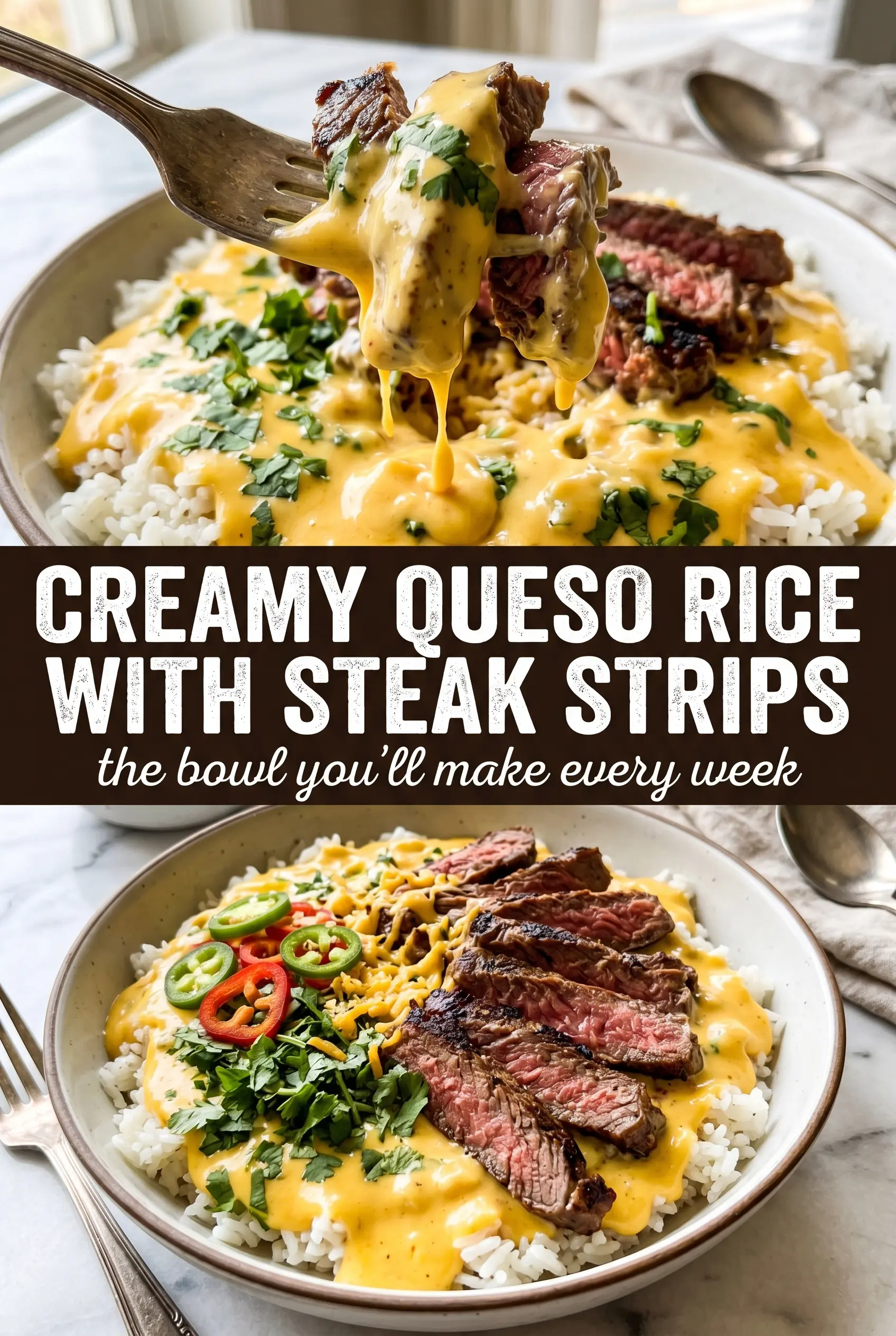
Creamy Queso Rice with Steak Strips
Ingredients
Equipment
Method
- Season the steak strips with cumin, chili powder, salt, and black pepper.
- Heat the olive oil in a cast iron skillet over high heat and sear the steak strips for 2–3 minutes until browned and cooked to desired doneness, then set aside.
- Melt the butter in a saucepan over medium heat and cook the garlic for 1 minute.
- Add the whole milk and bring it to a gentle simmer.
- Add the cubed Velveeta and Rotel, stirring constantly until fully melted and smooth.
- Toss the cooked long-grain white rice with the queso sauce until evenly coated and creamy.
- Divide the queso rice into bowls and top with seared steak strips, pico de gallo, cilantro, and jalapeños.