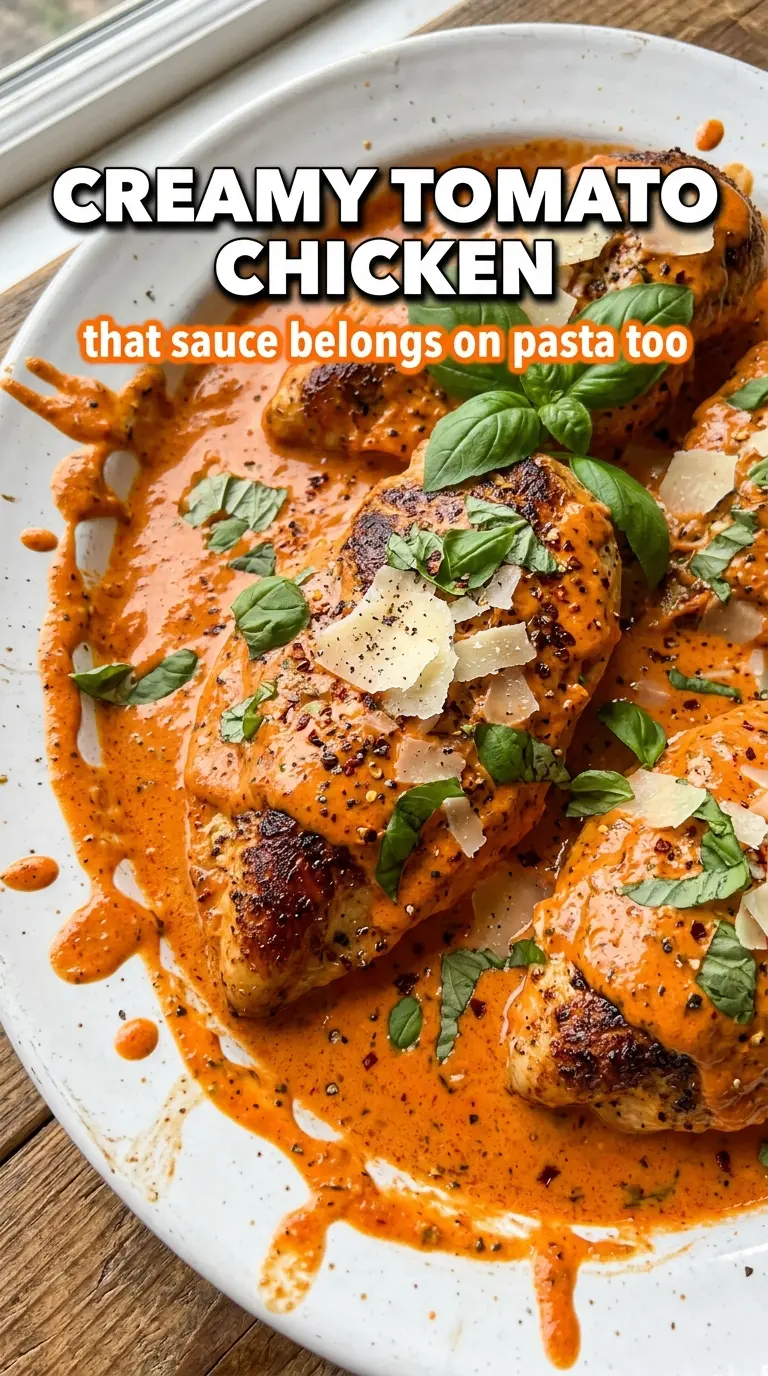
Golden-seared chicken breasts in a silky tomato cream sauce are the kind of skillet dinner that earns repeat requests fast. The sauce turns a deep rosy pink, thick enough to cling to every bite, with enough tomato brightness to keep the cream from feeling heavy. It tastes like something that simmered all afternoon, but the whole dish comes together in about half an hour.
The key is building the sauce in the same pan you used for the chicken. Those browned bits left behind after searing are what give the sauce its backbone, and the brief simmer after the tomatoes go in knocks off the raw edge before the cream is added. Parmesan helps thicken the sauce and adds salty depth, while a small amount of butter at the end gives it that glossy finish that makes the whole skillet look restaurant-level.
Below, I’ll walk you through the little details that keep the chicken juicy and the sauce smooth, plus a few practical swaps for making it work with what you already have on hand.
The sauce thickened beautifully and stayed silky instead of breaking, and the basil at the end made the tomato flavor pop. I served it over gnocchi and my husband went back for seconds before I sat down.
Save this Creamy Tomato Chicken for a quick skillet dinner with a silky pink sauce and tender chicken breasts.
The Part That Keeps the Cream From Turning Muddy
The sauce needs a quick tomato-first simmer before the cream goes in. That step matters because crushed tomatoes can taste sharp and a little raw straight from the can, and if you add cream too soon the whole pan can end up tasting flat instead of bright. Let the tomatoes cook for a few minutes until they darken slightly and the bubbling looks less aggressive, then add the cream and Parmesan over lower heat.
Another thing that helps: keep the chicken out of the sauce until the sauce has had time to thicken on its own. If you return the chicken too early, the pan gets crowded and the sauce stays thin. You want a sauce that coats the spoon before the chicken goes back in.
What Each Ingredient Is Actually Doing In This Dish
- Chicken breasts — Boneless, skinless breasts give you a clean canvas for the sauce and cook quickly, but they need even thickness so the outside doesn’t overcook before the center is done. If one end is much thicker, pound it lightly or slice it open so the sear stays even.
- Crushed tomatoes — This is what gives the sauce its body and that rich, spoonable texture. Fire-roasted tomatoes work too, but they’ll shift the flavor a little smokier and less bright.
- Heavy cream — This softens the tomato acidity and creates the rosy, velvety finish. Half-and-half can work in a pinch, but the sauce will be thinner and a little more likely to separate if it boils hard.
- Parmesan — Freshly grated Parmesan melts into the sauce and helps it thicken while adding salt and savory depth. Pre-shredded cheese often melts less smoothly because of anti-caking agents, so grate it yourself if you can.
- Dry white wine or chicken broth — The splash you use to deglaze the pan loosens the browned bits and gives the sauce a little lift. Broth is the easy swap if you don’t keep wine on hand, and it still does the job.
- Butter and basil — Butter gives the sauce a glossy finish at the end, and basil wakes everything up right before serving. Add both last so they stay fresh-tasting instead of cooking dull.
Getting the Sear, Simmer, and Finish Right
Seasoning and Searing the Chicken
Pat the chicken dry before it hits the pan, then season it generously. Moisture on the surface is what keeps the chicken from browning well, so a dry exterior gives you that golden crust instead of pale, steamed chicken. Heat the oil until it shimmers, then lay the chicken in without crowding the pan. If it sticks at first, leave it alone; once the crust forms, it releases on its own.
Building the Tomato Base
After the chicken comes out, add the garlic and stir it for about 30 seconds, just until fragrant. Garlic burns fast in a hot pan, so if the heat feels aggressive, pull the skillet off the burner for a moment. Deglaze with the wine or broth and scrape up every browned bit, then add the tomatoes and Italian seasoning. Let that mixture simmer until it looks a little thicker and the sharp canned-tomato edge fades.
Finishing With Cream and Cheese
Lower the heat before the cream goes in. That keeps the sauce smooth and prevents the dairy from getting grainy or splitting. Stir in the Parmesan a little at a time so it melts evenly, then add the red pepper flakes. When the sauce coats the back of a spoon and turns that deep rose color, take it off the heat and swirl in the butter for shine.
Bringing the Chicken Back
Return the chicken to the pan and spoon sauce over the top so it warms through without overcooking. If the chicken has cooled completely, give it a few minutes in the sauce until the center is hot. Finish with basil right before serving so the herbs stay bright and don’t sink into the sauce.
Three Ways to Make This Skillet Dinner Fit What You’ve Got
Make It Dairy-Free
Use full-fat coconut cream in place of the heavy cream and skip the Parmesan, then add a little extra salt and a spoonful of nutritional yeast if you want more savoriness. The sauce will be a touch less sharp and a little richer on the palate, but it still coats the chicken well.
Use Chicken Thighs Instead
Boneless, skinless thighs bring more flavor and stay juicier if you like a little margin for error. They may need a few extra minutes in the pan, but the sauce works exactly the same and tastes a little deeper because of the darker meat.
Make It Gluten-Free
The sauce is naturally gluten-free as written, so the only thing to watch is what you serve it with. Spoon it over gluten-free pasta, mashed potatoes, rice, or polenta, and you’ll still get the same creamy tomato finish.
Storage and Reheating
- Refrigerator: Store leftovers in an airtight container for up to 3 days. The sauce will thicken as it chills.
- Freezer: It freezes, but the cream sauce can separate a little after thawing. Freeze in a tightly sealed container for up to 2 months, and expect to stir it back together when reheating.
- Reheating: Warm gently on the stove over low heat with a splash of broth or water. High heat is the fastest way to make the sauce look broken, especially after it has been chilled.
Questions I Get Asked About This Recipe

Creamy Tomato Chicken
Ingredients
Equipment
Method
- Season chicken breasts with salt, pepper, garlic powder, and Italian seasoning. Heat olive oil in a wide skillet over medium-high until shimmering, then sear until golden and internal temperature reaches 165°F (about 5-6 minutes per side), and remove to a plate.
- In the same pan, cook minced garlic over medium heat for 30 seconds until fragrant (don’t brown). Pour in the white wine or chicken broth to deglaze, scraping up browned bits, then add crushed tomatoes and Italian seasoning and simmer for 5 minutes.
- Stir in heavy cream, grated Parmesan, and red pepper flakes. Simmer 4-5 minutes, stirring as needed, until the sauce is thick and rose-colored with a glossy, creamy look.
- Swirl in butter until fully melted and the sauce turns extra glossy. The surface should look smooth and lightly thickened.
- Return chicken breasts to the pan and spoon tomato cream sauce over each breast to coat the tops. The chicken should look lacquered with a thick, pink-tinged sauce.
- Garnish with fresh basil and serve over pasta or gnocchi. Add extra Parmesan if desired for a fresh, vibrant finish.