Glossy cucumbers and juicy tomatoes turn into something much better than a basic side dish when they sit long enough to pick up a tangy herb dressing. The cucumbers stay crisp at the center, the tomatoes soften just enough to leak into the vinaigrette, and the whole bowl gets that bright, salty-sweet edge that makes people go back for another forkful before the main dish even hits the table.
The trick here is balancing water and acid. Cucumbers and tomatoes both release juice as they sit, so the dressing needs enough flavor to stay lively after the vegetables start marinating, but not so much vinegar that it turns sharp and thin. A little honey rounds out the red wine vinegar, and the red onion adds bite without taking over. Fresh dill and parsley go on at the end so they stay fragrant instead of fading into the dressing.
Below, I’ve included the small timing detail that keeps this salad crisp, plus a few ways to tweak it when you need to work with what’s in the fridge.
The dressing was perfect after 15 minutes — the cucumbers stayed crisp, the tomatoes got juicy, and the dill came through without tasting heavy.
Crisp cucumber tomato salad with tangy dill vinaigrette for fast, fresh dinners and picnic sides.
The Reason This Salad Stays Crisp Instead of Going Watery
A cucumber tomato salad only works when you respect how much moisture these vegetables bring to the bowl. Cucumbers start releasing liquid as soon as they’re salted and dressed, and tomatoes do the same once their skins split and the cut sides meet acid. That’s why the dressing here is built to handle a short marinate without collapsing into a puddle at the bottom.
The 15-minute rest is the sweet spot. Long enough for the vinegar, honey, and herbs to soak in, short enough that the cucumbers still keep their bite. If you let it sit for hours, the tomatoes will soften too much and the onions will take over. If the bowl looks a little dry right after tossing, don’t panic — the vegetables will loosen as they rest.
- Use English cucumbers if you can. Their thinner skins and smaller seed core give you cleaner slices and less watery runoff.
- Cherry tomatoes hold up better than large tomatoes here because they stay juicy without disintegrating.
- Red onion needs to be sliced very thin. Thick onion slices can overpower the salad after the marinade has time to work.
- Salt is part of the seasoning, but it also pulls moisture from the vegetables. Taste again after marinating, because the salad will season itself a little as it sits.
What Each Ingredient Is Actually Doing in the Bowl
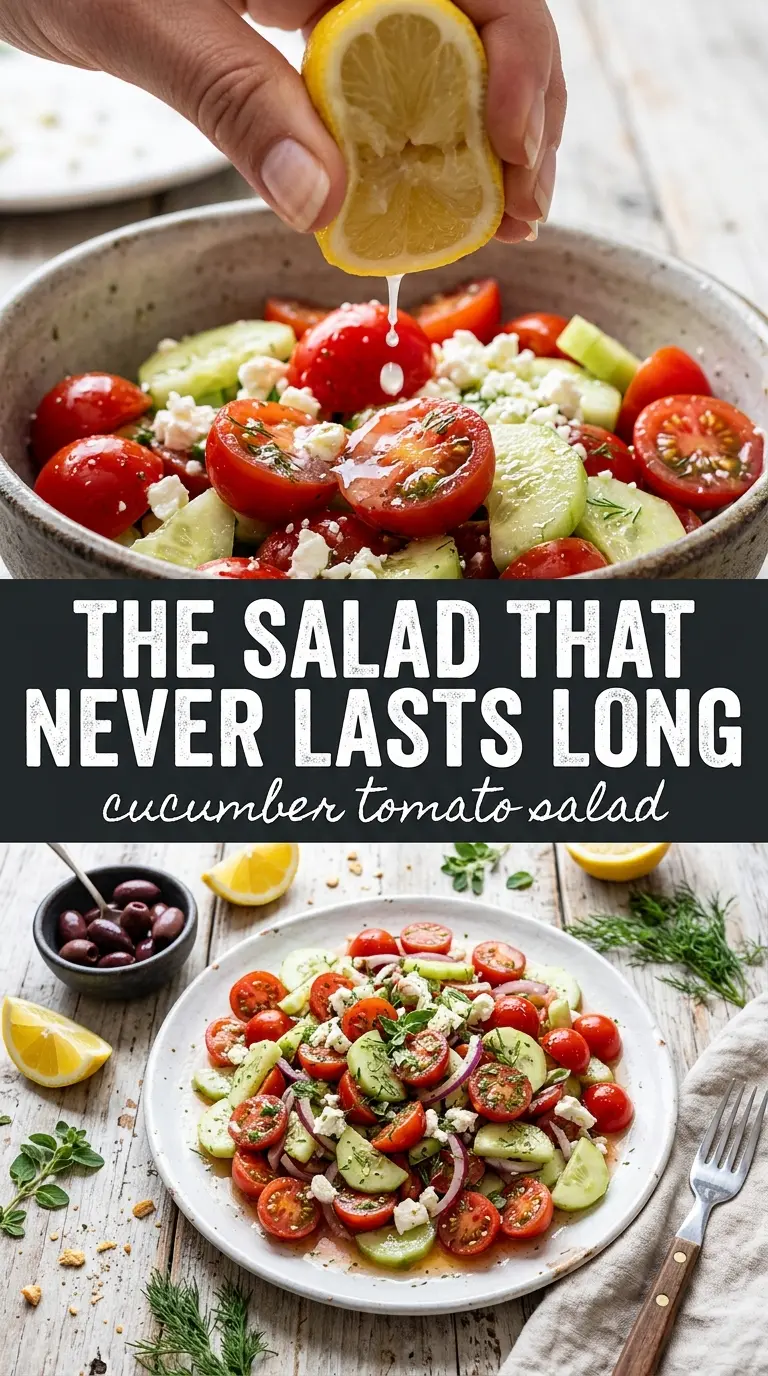
- English cucumbers — These are the backbone of the salad. Their mild flavor and crisp texture let the dressing shine, and the thin skin means you don’t need to peel them.
- Cherry tomatoes — They’re sweet enough to balance the vinegar and sturdy enough to keep their shape after tossing. If you use larger tomatoes, seed them first or the salad will get soggy fast.
- Red onion — This gives the salad its sharp edge. Slice it as thin as you can so it softens just enough in the dressing without turning harsh.
- Olive oil — It carries the vinegar and herbs across the vegetables and softens the acidity. Use a good-tasting oil here because it shows up in every bite.
- Red wine vinegar — This is the bright, tangy note that wakes up the whole bowl. Lemon juice can work in a pinch, but it tastes lighter and less rounded.
- Honey — A small amount takes the sharpness out of the vinegar and helps the dressing cling to the vegetables. You need that little bit of sweetness or the salad tastes flat.
- Fresh dill and parsley — Add these at the end so their flavor stays clean and fresh. If they go in too early, they’ll bleed into the dressing and lose that just-chopped taste.
Getting the Vegetables Marinated Without Breaking Them Down
Build the bowl first
Start with the cucumbers, tomatoes, and red onion in a large bowl so everything has room to move when you toss it. A crowded bowl crushes the tomatoes and makes the cucumbers bruise at the edges. You want enough space that the dressing can coat the vegetables instead of pooling under them.
Whisk the dressing until it looks smooth and slightly glossy
Combine the olive oil, red wine vinegar, honey, garlic powder, salt, and pepper in a separate bowl and whisk until the honey disappears. If the dressing looks streaky, the honey isn’t fully dissolved yet, and that means the seasoning won’t distribute evenly. The finished dressing should smell sharp, herby, and a little sweet before it ever touches the vegetables.
Toss, then let the salad sit just long enough
Pour the dressing over the vegetables and toss until everything looks lightly coated. Let it sit at room temperature for 15 minutes so the cucumbers pick up flavor without losing their snap. If you refrigerate it right away, the dressing thickens and the flavors stay muted; if you leave it too long, the tomatoes go soft and the salad starts to water out.
Finish with the herbs at the end
Toss the salad again, taste it, and adjust the salt and pepper before adding the dill and parsley. That last toss keeps the herbs bright and visible instead of muddy. Serve it right away while the cucumbers are still crisp and the dressing is glossy on the vegetables.
Three Smart Ways to Adjust This Salad
Make it dairy-free and naturally vegan
This salad already fits a dairy-free and vegan table as written, so the main thing to watch is the honey. Swap it for maple syrup or agave if you want to keep it fully plant-based. The texture stays the same, but maple brings a slightly deeper note than honey.
Add feta for a saltier, fuller side dish
Crumble in feta right before serving if you want the salad to feel more substantial. The cheese adds salt and creaminess, but it also softens the bright snap of the vinaigrette, so don’t add it until the vegetables are already dressed and rested.
Use white wine vinegar or lemon juice when that’s what you have
White wine vinegar keeps the closest flavor to red wine vinegar, just a little softer. Lemon juice works too, but it tastes brighter and less round, so you may want a touch more honey to balance it. Either swap keeps the salad fresh, but the character changes enough that you’ll notice it.
Make it ahead for a picnic or cookout
You can slice the vegetables and whisk the dressing a few hours ahead, but keep them separate until about 15 minutes before serving. If they sit together too long, the cucumbers lose their crunch and the tomatoes start to collapse. Toss in the herbs at the very end so they stay fresh and green.
Storage and Reheating
- Refrigerator: Store leftovers in an airtight container for up to 2 days. The cucumbers soften as they sit, so the salad will lose some crunch.
- Freezer: Don’t freeze this salad. The cucumbers and tomatoes turn mushy when thawed, and the dressing separates.
- Reheating: There’s no reheating here. Serve it cold or at cool room temperature, then drain off excess liquid and toss with a few fresh herbs if it’s been sitting overnight.
Questions I Get Asked About This Salad
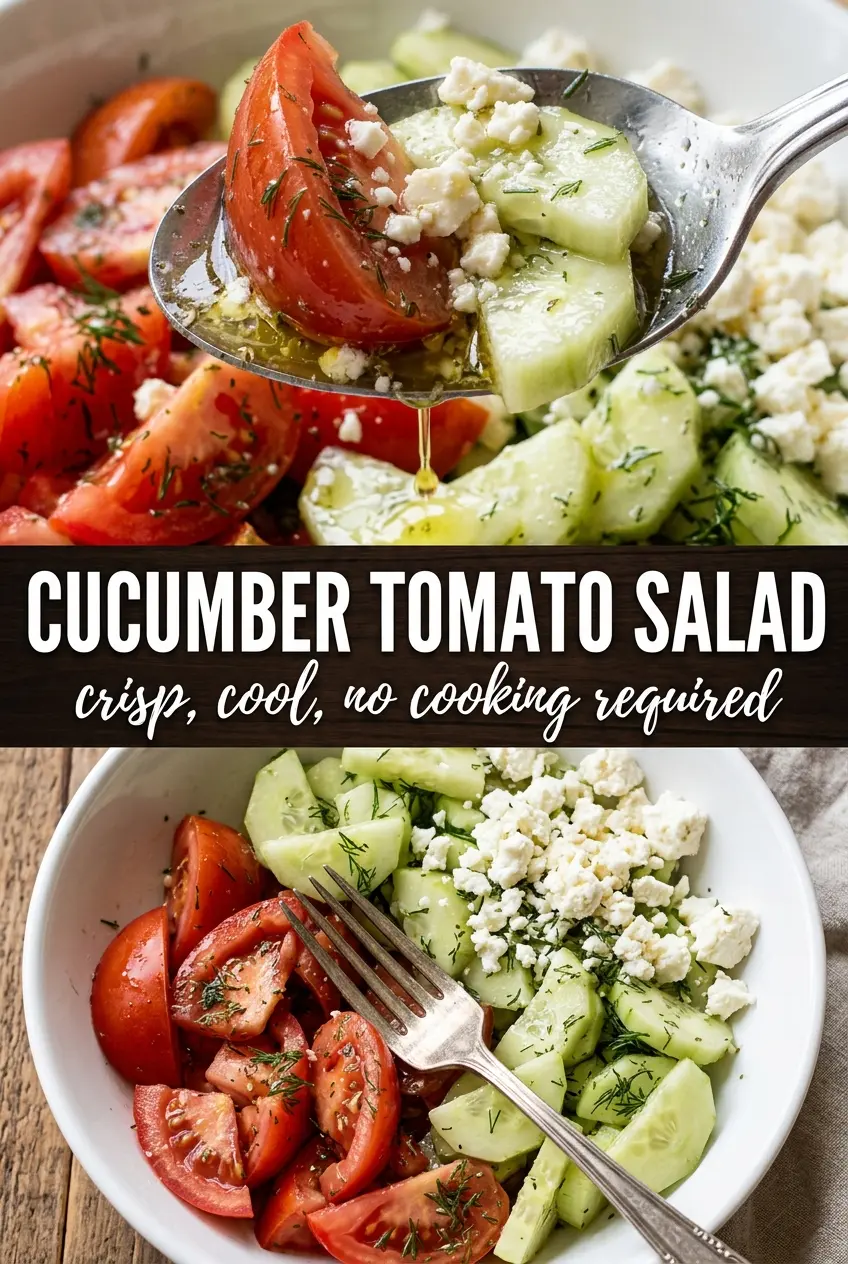
Cucumber Tomato Salad
Ingredients
Method
- Combine sliced English cucumbers, halved cherry tomatoes, and thinly sliced red onion in a large bowl. Toss gently so the red-and-green pieces are evenly distributed.
- Whisk together olive oil, red wine vinegar, honey, garlic powder, salt, and black pepper in a bowl. Whisk until the honey dissolves and the dressing looks glossy.
- Pour the dressing over the vegetables and toss well to coat. Make sure cucumbers and tomatoes look lightly glazed.
- Let the salad marinate at room temperature for 15 minutes to allow flavors to develop. You’ll see a little liquid pool in the bowl as the tomatoes release juices.
- Toss again, taste, and adjust seasoning with more salt and black pepper if needed. Keep tossing until the coating looks even and shiny.
- Top with fresh dill and fresh parsley before serving. Scatter the herbs over the top so they stay bright and fragrant.