Earthquake pumpkin cake bakes up with a crackled top, creamy pockets of sweetened cream cheese, and caramel running through every slice. The finished cake looks a little messy in the best way. That marbled, sunken surface is exactly what makes it special, because every bite gives you soft pumpkin cake, tangy cream cheese, and a sticky ribbon of caramel.
The trick is in how the layers go into the pan. The pumpkin batter stays thick enough to hold the cream cheese dollops on top at first, then the filling sinks and spreads as the cake bakes. That slow movement creates the signature earthquake look, so don’t try to swirl it. The cream cheese mixture should be smooth and spoonable, and the caramel goes on last so it can settle into the cracks instead of disappearing into the batter.
Below, I’ve included the small details that keep the cake from turning heavy or gummy, plus the easiest way to tell when it’s done even though the top will look uneven.
The cream cheese stayed in those perfect pockets and the caramel sank into the cracks just like the photos. Mine baked in 48 minutes and the center set up beautifully after cooling.
Save this Earthquake Pumpkin Cake for the cracked caramel top and those creamy cream cheese pockets that bake right into the pumpkin crumb.
The Part That Makes the Cream Cheese Sink on Purpose
Earthquake cake only works when the batter is thick enough to support the filling for a few minutes before the oven heat takes over. If the base is too thin, the cream cheese drops straight to the bottom and you lose the layered effect. If it’s too stiff, the top bakes up dense and the filling sits on the surface instead of sinking into those dramatic cracks.
The other mistake is trying to spread the cream cheese layer like frosting. Drop it in spoonfuls and leave it alone. As the cake bakes, the cream cheese softens, sinks, and spreads in uneven pockets, which is exactly what gives you that messy, bakery-style finish.
- Yellow cake mix — This keeps the crumb light enough to handle all the rich filling. A spice cake mix also works, but it pushes the pumpkin flavor in a warmer, sweeter direction.
- Pumpkin puree — Use pure pumpkin, not pumpkin pie filling. Pie filling is already sweetened and spiced, which throws off the balance and can make the cake too wet.
- Cream cheese — Full-fat cream cheese gives the cleanest pockets and the best tang. Low-fat cream cheese softens faster and can turn a little loose in the oven.
- Caramel sauce — A thicker sauce is best here because it holds some shape before baking and leaves those glossy streaks on top.
What Each Layer Is Doing While the Cake Bakes
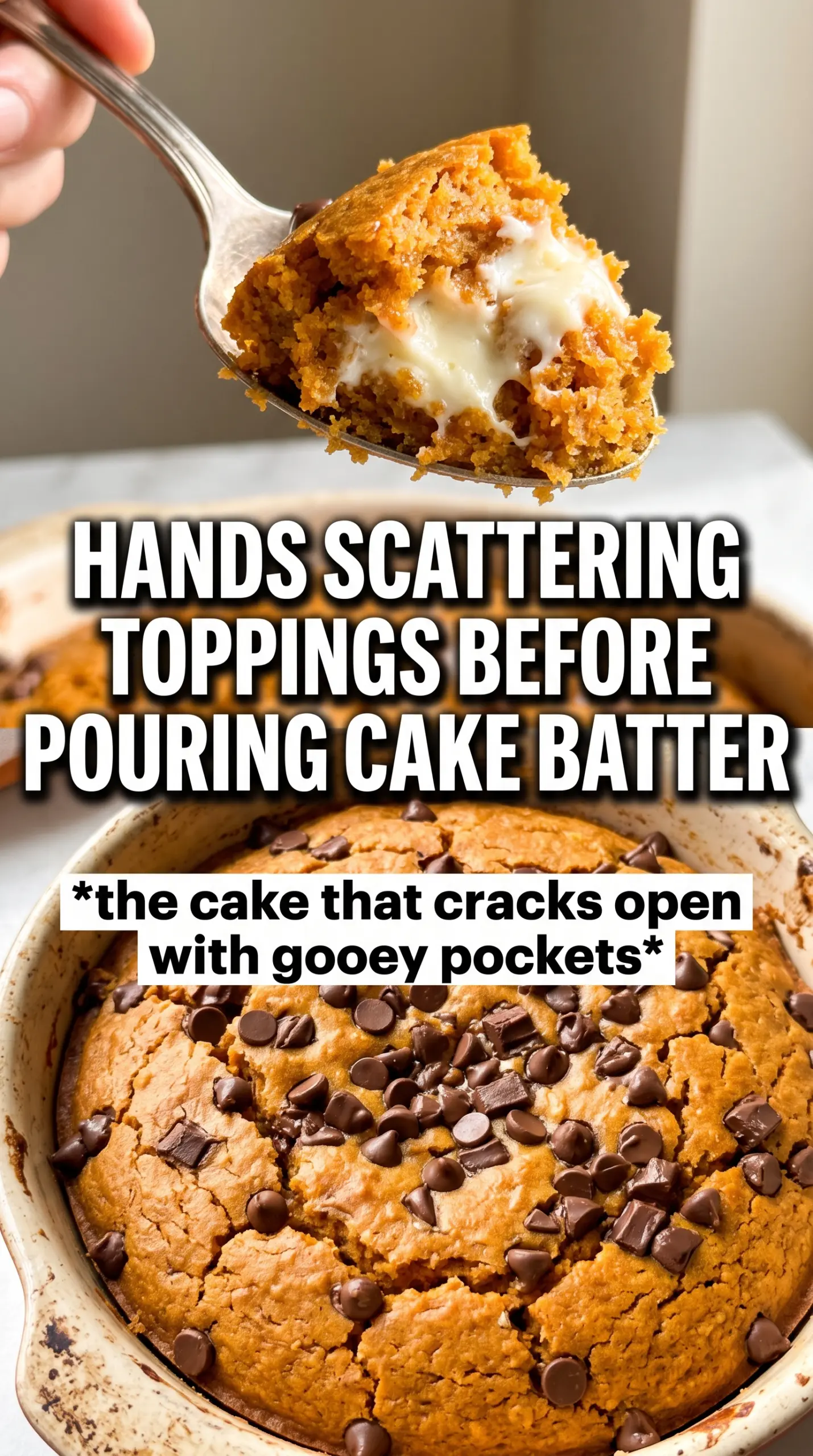
The cake batter sets first around the edges, then the center finishes last. That timing matters because it gives the cream cheese layer time to sink through the top instead of disappearing into the entire pan. The pumpkin puree adds moisture and keeps the boxed mix from tasting one-note, while the pumpkin pie spice gives the cake enough warmth to stand up to the tangy filling.
The cream cheese mixture needs to be smooth before it goes on top. If it’s lumpy, you’ll get uneven patches that bake up thicker in some spots and dry in others. The caramel is there for more than sweetness; it melts into the cracks and helps the top stay glossy instead of looking dry once the cake cools.
- Eggs — They do two jobs here: structure in the cake and silkiness in the filling. Bring the cream cheese filling eggs to room temperature if you can so the mixture blends without little stubborn bits.
- Powdered sugar — This sweetens the filling without grittiness. Granulated sugar won’t dissolve as smoothly and can leave the cream cheese layer a little sandy.
- Vegetable oil — Oil keeps the crumb tender after cooling. Melted butter can work, but the cake will bake up a little firmer and lose some of that soft boxed-cake texture.
Getting the Swirl and the Set Without Overbaking It
Mixing the Pumpkin Batter
Beat the cake mix, pumpkin puree, eggs, oil, water, and pumpkin pie spice until the batter is smooth and no dry streaks remain. It should be thick and spoonable, not pourable like pancake batter. If it looks runny, something was measured wrong, and the cream cheese layer won’t stay balanced on top long enough to create the earthquake effect.
Dropping on the Cream Cheese Layer
Beat the cream cheese, eggs, powdered sugar, and vanilla until completely smooth, then drop large spoonfuls over the batter. Don’t spread them out or press them down. The uneven mounds are what create the pockets and cracks as the cake rises around them.
Adding the Caramel
Drizzle the caramel over the cream cheese blobs in loose ribbons. It doesn’t need to cover every inch. Too much in one spot can sink heavily and make that section overly sweet and soft, while a lighter drizzle gives you better contrast in each bite.
Baking Until the Center Sets
Bake at 350°F for 45 to 50 minutes, watching for the edges to look set and the center to have only a slight wobble. The top will be cracked and marbled, and that’s the sign it’s doing exactly what it should. If the middle still looks wet, give it a few more minutes; if you pull it too early, the cream cheese layer stays loose and the cake won’t slice cleanly.
Make It with Spice Cake Mix
Swap the yellow cake mix for spice cake mix if you want a deeper cinnamon-clove note. The result is a more intense fall-style cake with less of the classic yellow-cake backdrop, so the pumpkin and caramel taste warmer and more dessert-like.
Dairy-Free Version
Use dairy-free cream cheese and a dairy-free caramel sauce. The texture will be a little softer and less tangy, but the cake still bakes into the same crackled, layered pattern if the filling is beaten smooth first.
Gluten-Free Cake Mix Swap
A gluten-free yellow cake mix works well here as long as you keep the batter thickness similar to the original. The cake may need a few extra minutes in the oven, and it usually slices best after a full cool-down.
Storage and Reheating
- Refrigerator: Store covered for up to 4 days. The cream cheese layer firms up in the fridge, which makes the cake slice cleaner the next day.
- Freezer: Freeze individual slices wrapped tightly for up to 2 months. Thaw in the refrigerator; the texture is best after thawing overnight instead of at room temperature.
- Reheating: Warm a slice in the microwave for 10 to 15 seconds if you want the caramel and cream cheese to loosen slightly. Heat too long and the filling turns greasy before the cake warms through.
Answers to the Questions Worth Asking
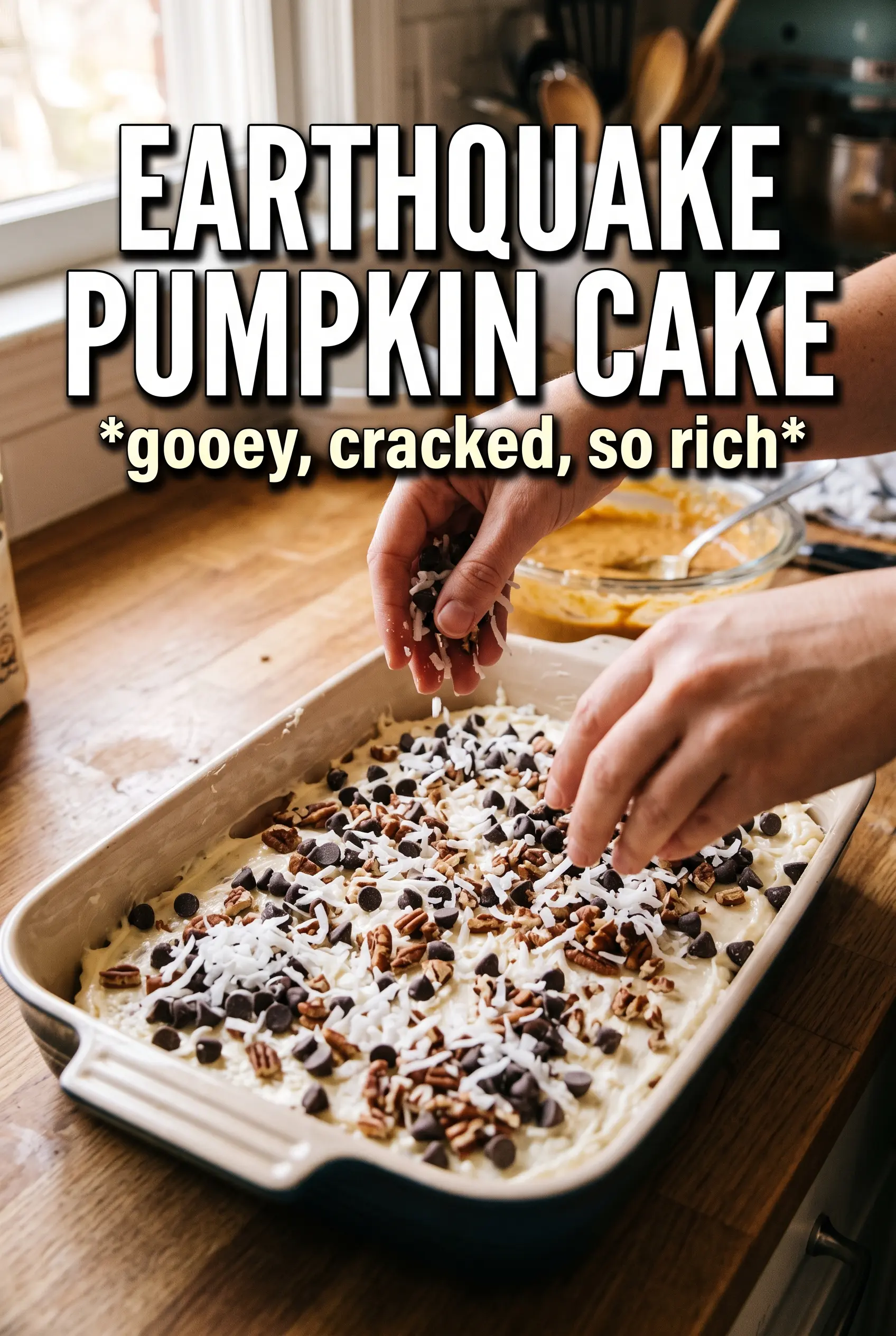
Earthquake Pumpkin Cake
Ingredients
Equipment
Method
- Preheat the oven to 350F and grease a 9x13 pan with a thin, even coating so the cake releases cleanly.
- Beat together yellow cake mix, pumpkin puree, eggs, vegetable oil, water, and pumpkin pie spice until smooth, then spread the batter evenly in the prepared pan.
- Beat cream cheese until smooth, then beat in eggs, powdered sugar, and vanilla until thick and creamy.
- Drop large spoonfuls of the cream cheese mixture over the cake batter without mixing them in, so they sit on top in visible blobs.
- Drizzle caramel sauce over the cream cheese blobs, letting some caramel fall into the batter between cracks.
- Bake for 45-50 minutes at 350F until the top looks cracked and swirled; the cream cheese will sink as it bakes, creating the earthquake pattern.
- Cool completely before cutting so the set cream cheese layer firms up and the slices hold their shape.