Golden-grilled chicken skewers with a salty Parmesan crust and little caramelized bits of garlic are the kind of dinner that disappears fast. The chicken stays juicy because the pieces are cut evenly, coated in oil and lemon, and cooked hard and fast over medium-high heat. What you get is smoky edges, tender centers, and enough savory garlic-butter finish to make plain grilled chicken feel like something worth repeating.
The trick here is using freshly grated Parmesan and adding part of it to the marinade, then finishing with the rest right after grilling. That gives you two layers of flavor: one that clings before the chicken hits the fire, and one that melts into the hot surface at the end. Lemon juice keeps the richness in check and helps the garlic read brighter instead of heavy.
Below, I’ll walk through the small details that matter most, including how to keep the cheese from burning, how long to marinate without turning the chicken soft, and what to do if you want to make these on a grill pan instead of an outdoor grill.
The chicken stayed unbelievably juicy, and the Parmesan formed those crispy little edges on the grill without burning. I added the butter at the end like you said, and it made the whole thing taste restaurant-style.
Save these garlic Parmesan chicken skewers for the nights when you want smoky grill marks, juicy chicken, and a buttery cheesy finish.
The Parmesan Crust That Sticks Instead of Falling Into the Fire
The biggest mistake with cheese-coated grilled chicken is treating Parmesan like a breading. It isn’t one. Parmesan works here because it’s grated fine enough to cling to the oil-and-garlic coating, then it hits high heat only after the grill grates are properly oiled. If the grates are dry, the cheese and garlic bits glue themselves to the metal before the chicken has time to release.
Cutting the chicken into even 1.5-inch pieces matters more than people think. Small pieces cook fast, but uneven pieces dry out before the bigger ones are done. The 30-minute marinade is enough for flavor without making the chicken mushy from the lemon juice. Any longer and the texture starts to soften at the edges instead of staying juicy.
- Chicken breasts — Boneless, skinless breasts keep the cook time short and give you clean grill marks. Thighs work too, but they need a little more time and stay a touch richer.
- Freshly grated Parmesan — Freshly grated cheese melts and clings better than the shelf-stable stuff, which tends to stay dusty and scorch unevenly.
- Garlic — Minced garlic gives you those little caramelized bits on the finished skewers. Garlic powder won’t burn the same way, but it won’t give you the same punch or texture.
- Lemon juice — This brightens the whole skewer and keeps the butter finish from feeling heavy. Bottled juice works in a pinch, but fresh juice tastes cleaner here.
What Each Ingredient Is Actually Doing in This Recipe

- Primary ingredient (the star) — Quality matters most. Choose the best you can find.
- Cooking medium (oil, butter, or broth) — This carries flavors and prevents dryness.
- Seasonings (salt, pepper, spices, herbs) — Layer flavors so nothing overpowers. Build depth gradually.
- Aromatics (garlic, onion, herbs) — Cook with fat to bloom flavors. Become the foundation.
- Supporting ingredients — Complement the main ingredient without overpowering it.
- Sauce or liquid (if applicable) — Brings flavors together. Balance richness with acid.
- Acid (lemon, vinegar, wine, or other) — Brightens and prevents flat-tasting results.
- Final finish (garnish, glaze, or sauce) — Prevents one-dimensional taste and adds visual appeal.
How to Grill Them So the Cheese Turns Golden, Not Bitter
Building the Marinade
Whisk the olive oil, garlic, a portion of the Parmesan, lemon juice, Italian seasoning, basil, salt, and pepper until the mixture looks thick and glossy. That little bit of cheese in the marinade helps create a sticky coating instead of a slick one, which is what keeps the seasoning on the chicken during grilling. Toss the chicken until every piece is well coated, then let it sit for 30 minutes. If you go much longer, the lemon starts changing the texture before the grill ever gets a chance to.
Threading and Prepping the Grates
If you’re using wooden skewers, soak them for the full 30 minutes so the ends don’t catch fire. Thread the chicken snugly, but don’t pack the pieces so tightly that heat can’t move between them. Preheat the grill to medium-high and oil the grates well. If the grates aren’t hot enough, the chicken steams instead of searing, and the Parmesan won’t pick up those toasty edges.
Grilling to a Deep Golden Finish
Lay the skewers on the grill and let them cook without moving them for a few minutes so they can develop color. Turn them once they release cleanly and you can see deep grill marks underneath. You’re looking for browned edges, a little char on the garlic, and an internal temperature of 165°F at the thickest piece. Pull them as soon as they hit temperature; if you wait for them to look fully dry, they’ve already gone too far.
The Butter and Parmesan Finish
As soon as the skewers come off the grill, drizzle on the melted butter and scatter over the remaining Parmesan while the chicken is still hot. That heat softens the cheese just enough to melt into the surface without losing its texture completely. Finish with parsley and lemon wedges. The lemon is not garnish here — a squeeze over the top cuts through the butter and wakes everything up.
How to Adapt These Skewers for Different Pans, Crowds, and Diets
Grill Pan Version for Indoors
Use a heavy grill pan over medium-high heat and oil it well before the skewers go on. You’ll still get good browning, though the char will be gentler and the smoke less dramatic than on an outdoor grill. Keep the pieces turning only once so the Parmesan has time to form a crust instead of sticking.
Dairy-Free Version
Skip the Parmesan and finish with a dairy-free garlic herb drizzle made from olive oil, extra lemon, parsley, and a pinch of nutritional yeast for a cheesy hint. You lose the crisp salty crust, but you keep the bright garlic-herb backbone and the same juicy grill texture.
Using Chicken Thighs Instead
Boneless thighs work well if you want a richer, more forgiving skewer. They can take an extra minute or two per side, and they stay tender even if your grill runs a little hot. The finished flavor is deeper, though the pieces won’t look as lean and tidy as chicken breast.
Storage and Reheating
- Refrigerator: Store leftovers in an airtight container for up to 3 days. The Parmesan crust softens a bit, but the chicken stays flavorful.
- Freezer: These freeze well for up to 2 months if you remove the skewers and wrap the chicken tightly. Freeze them in a single layer first so the pieces don’t stick together.
- Reheating: Warm in a 325°F oven until just heated through, or use a skillet over low heat with a splash of water to keep the chicken from drying out. High heat is the mistake here — it burns the cheese finish before the center is warm.
Questions I Get Asked About This Recipe
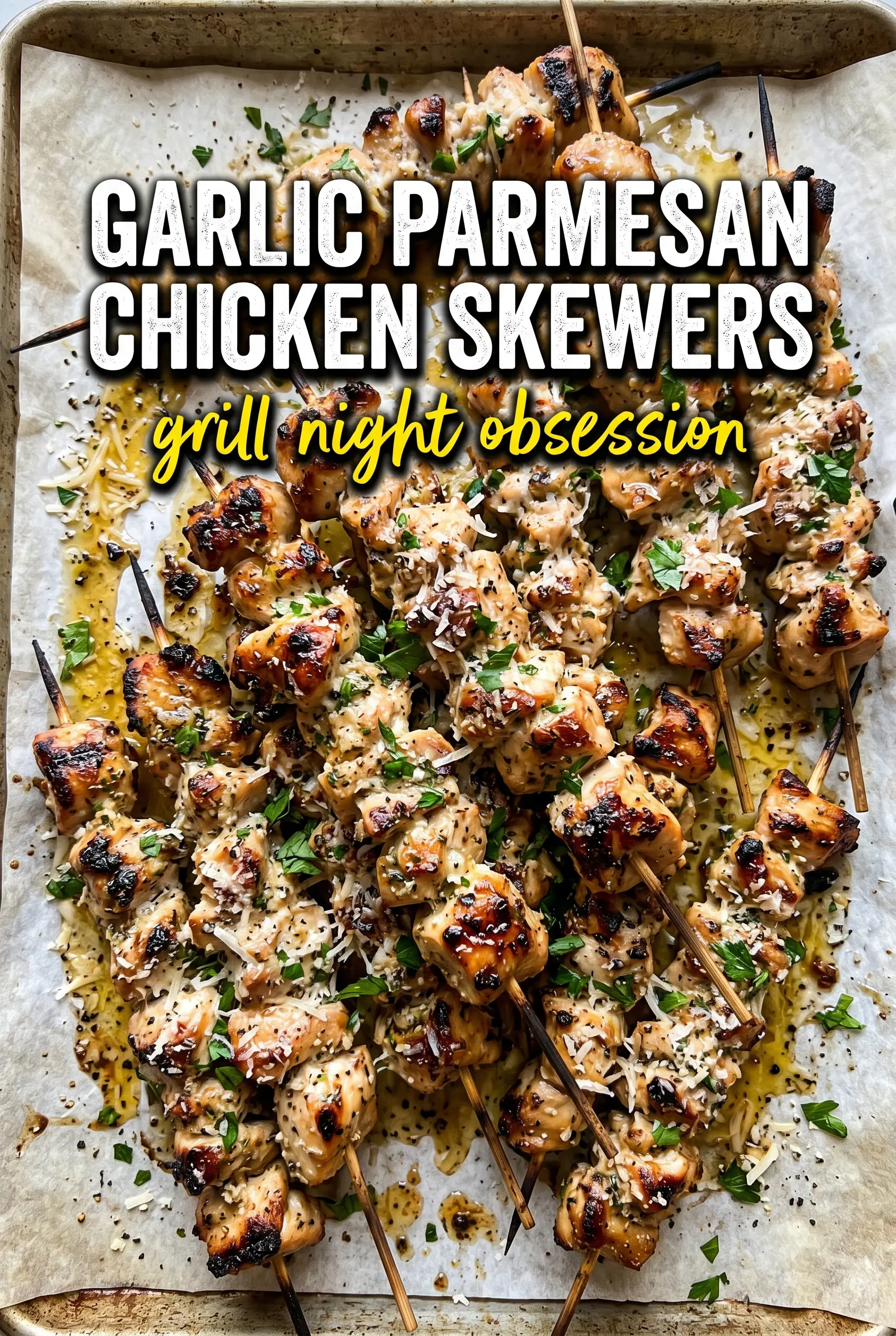
Garlic Parmesan Chicken Skewers
Ingredients
Equipment
Method
- Whisk together olive oil, garlic, 1/4 cup Parmesan, lemon juice, Italian seasoning, basil, salt, and cracked black pepper until evenly combined.
- Add the chicken cubes and toss thoroughly to coat, then let marinate for 30 minutes so the surface looks glossy with seasoning.
- Soak wooden skewers in water for 30 minutes, keeping them submerged until they look pliable rather than dry.
- Thread the marinated chicken onto the skewers, leaving a little space between cubes so the edges can char evenly.
- Preheat the grill to medium-high heat and oil the grates so the skewers release easily.
- Grill skewers for 4-6 minutes per side at medium-high until deeply golden with visible char marks and the thickest piece reaches 165°F.
- Remove skewers from the grill and drizzle with melted butter while they’re hot.
- Scatter the remaining Parmesan over the hot skewers so it melts into a lightly crisp, speckled coating.
- Garnish with fresh parsley and serve with lemon wedges on the side for bright squeeze-on flavor.