Garlic Parmesan Meatloaf comes out with a deep, savory crust and a tender slice that holds together without turning dense. The parmesan on top bakes into a salty, crackled cap, while the garlic butter soaks into the surface and keeps the loaf tasting rich all the way through. It’s the kind of meatloaf that gets more interesting as it rests, because the juices settle back into the meat instead of running all over the cutting board.
The trick here is balance. Too much mixing and the loaf turns tight; too little and it falls apart when sliced. The breadcrumbs and milk do the quiet work of keeping the texture soft, while the onion and garlic bring enough flavor that you don’t need a heavy sauce to carry the dish. I also like using a little parmesan inside the loaf and saving the rest for the top, because that split gives you flavor in every bite and a crust that actually tastes like something.
Below, I’ll walk you through the small details that matter most, like when to stop mixing, how to know the loaf is done, and what to do if you want to make it ahead. There’s also a simple storage note and a few smart variations if you need to adjust the recipe for your kitchen.
The loaf held together beautifully and the parmesan on top got that crunchy edge I was hoping for. I rested it the full 10 minutes and the slices came out clean instead of crumbling.
Save this Garlic Parmesan Meatloaf for a juicy dinner with a crackled parmesan crust and plenty of garlic in every slice.
The Parmesan Crust Needs Heat, Not Just Time
The top of this meatloaf is where a lot of the flavor lives, and it only works if the loaf sits exposed enough to brown properly. If you pack the mixture too tightly or cover it for part of the bake, the parmesan stays pale and the top turns soft instead of crackled. Baking it on a sheet pan gives the edges more airflow, which helps the fat render and the topping take on that deep golden color.
Another mistake people make is pulling meatloaf at the first sign of doneness. This one needs to reach 160°F in the center, but the real cue is a browned top with a little bubbling around the edges. That’s the point where the garlic butter has done its job and the cheese has fused into the crust instead of sitting on top in a dry layer.
What the Beef, Breadcrumbs, and Milk Are Each Doing Here
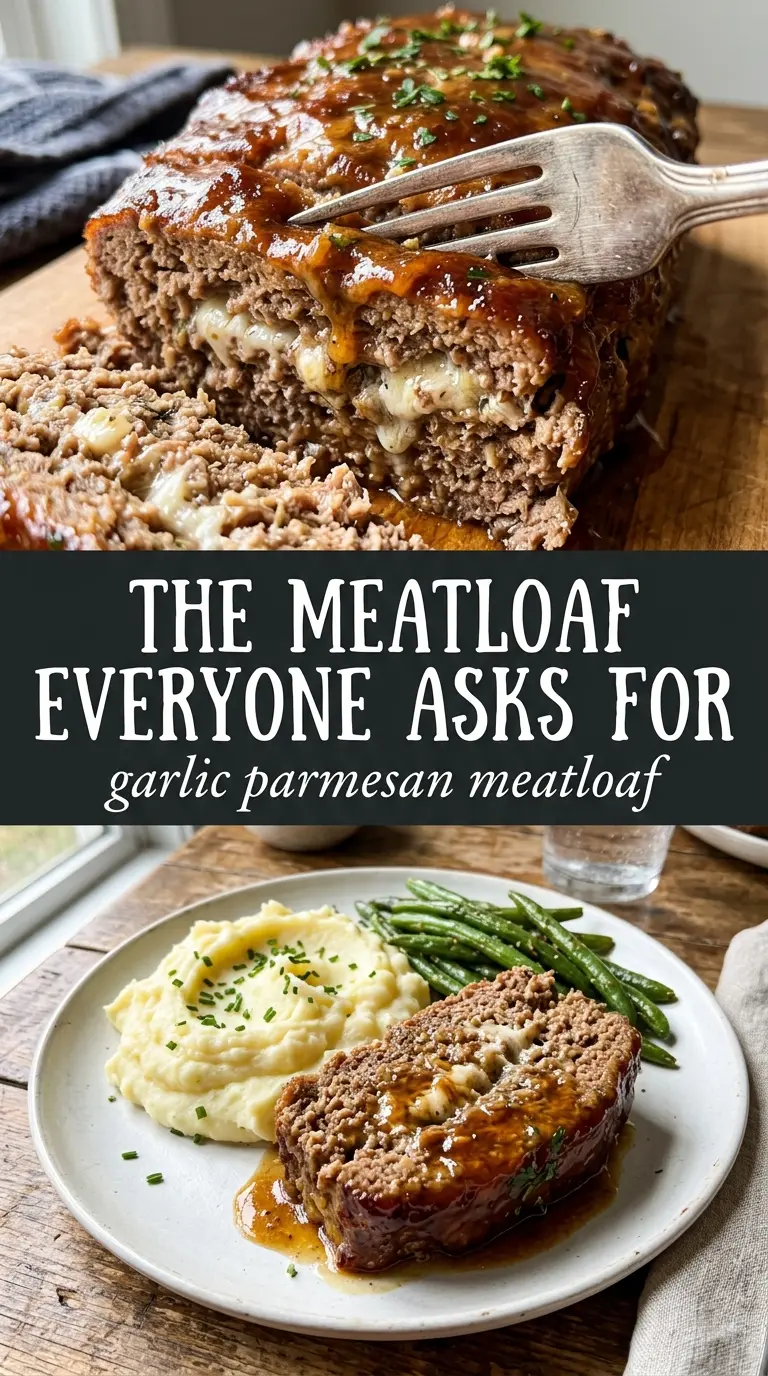
- Ground beef 80/20 — The fat content matters here. Leaner beef can work, but you’ll lose juiciness and the loaf will eat a little dry, especially after reheating.
- Parmesan — Use finely grated parmesan, not the big sandy shreds, if you want it to melt into the meat and form that tight savory crust on top. The block-style stuff also brings more flavor than the shelf-stable powder.
- Italian breadcrumbs — These lighten the texture and help the loaf hold onto moisture. If you need a gluten-free version, use a gluten-free breadcrumb with the same fine texture so the mixture doesn’t get gritty.
- Milk and eggs — This is the binder that keeps the slices tender instead of crumbly. Whole milk gives a better finish than skim, but any milk you have will work.
- Garlic and onion — Mince the garlic finely and dice the onion small so they soften inside the loaf. Big pieces can steam unevenly and leave sharp bites in the finished meatloaf.
Mixing Just Enough, Then Letting the Oven Do the Rest
Building the Meat Mixture
Combine the beef, half the parmesan, breadcrumbs, milk, eggs, three cloves of garlic, onion, Italian seasoning, garlic powder, salt, and pepper in a large bowl. Use your hands and stop mixing the moment everything looks evenly distributed. If the mixture starts to look paste-like, it’s already been worked too much, and the finished loaf will be compact instead of tender.
Shaping for Even Baking
Form the mixture into a loaf on a parchment-lined sheet pan or in a loaf pan if that’s what you prefer. A sheet pan gives you more browning around the edges, while a loaf pan gives you a taller, more classic shape. The surface should be smooth but not pressed hard; packing it tightly is one of the fastest ways to end up with a tough slice.
Finishing with Garlic Butter and Parmesan
Stir the melted butter with the remaining garlic, then brush it over the top before adding the rest of the parmesan. The butter helps the cheese adhere and encourages browning, while the garlic perfumes the crust as it bakes. If the topping looks bare in spots, press the cheese on gently instead of piling it high in one area, or the top will brown unevenly.
Baking and Resting
Bake at 375°F for 55 to 65 minutes, until the center hits 160°F and the top is deeply golden. Don’t slice it right away. The 10-minute rest lets the juices settle, which is the difference between neat slices and a puddle on the platter.
How to Adjust This Garlic Parmesan Meatloaf Without Losing the Good Part
Make It Gluten-Free
Swap the Italian breadcrumbs for a gluten-free breadcrumb with a fine crumb. The texture stays close to the original, but very coarse crumbs can make the loaf feel loose, so choose one that blends smoothly into the meat.
Use Turkey Instead of Beef
Ground turkey works, but it needs the extra fat from the butter topping and benefits from the full amount of parmesan for flavor. The finished loaf will be lighter and a little less rich, so don’t overbake it or it dries out fast.
Add a Little Heat
A pinch of crushed red pepper or a little cayenne plays well with the garlic and parmesan. Keep it modest so the topping still tastes savory and not spicy-first.
Storage and Reheating
- Refrigerator: Store leftovers in an airtight container for up to 4 days. The crust softens a little, but the flavor stays strong.
- Freezer: This freezes well either whole or sliced. Wrap tightly and freeze for up to 3 months, then thaw in the fridge before reheating.
- Reheating: Reheat slices covered in a 325°F oven with a splash of broth or water in the pan so they don’t dry out. The biggest mistake is blasting it in the microwave until the edges turn rubbery.
Answers to the Questions Worth Asking
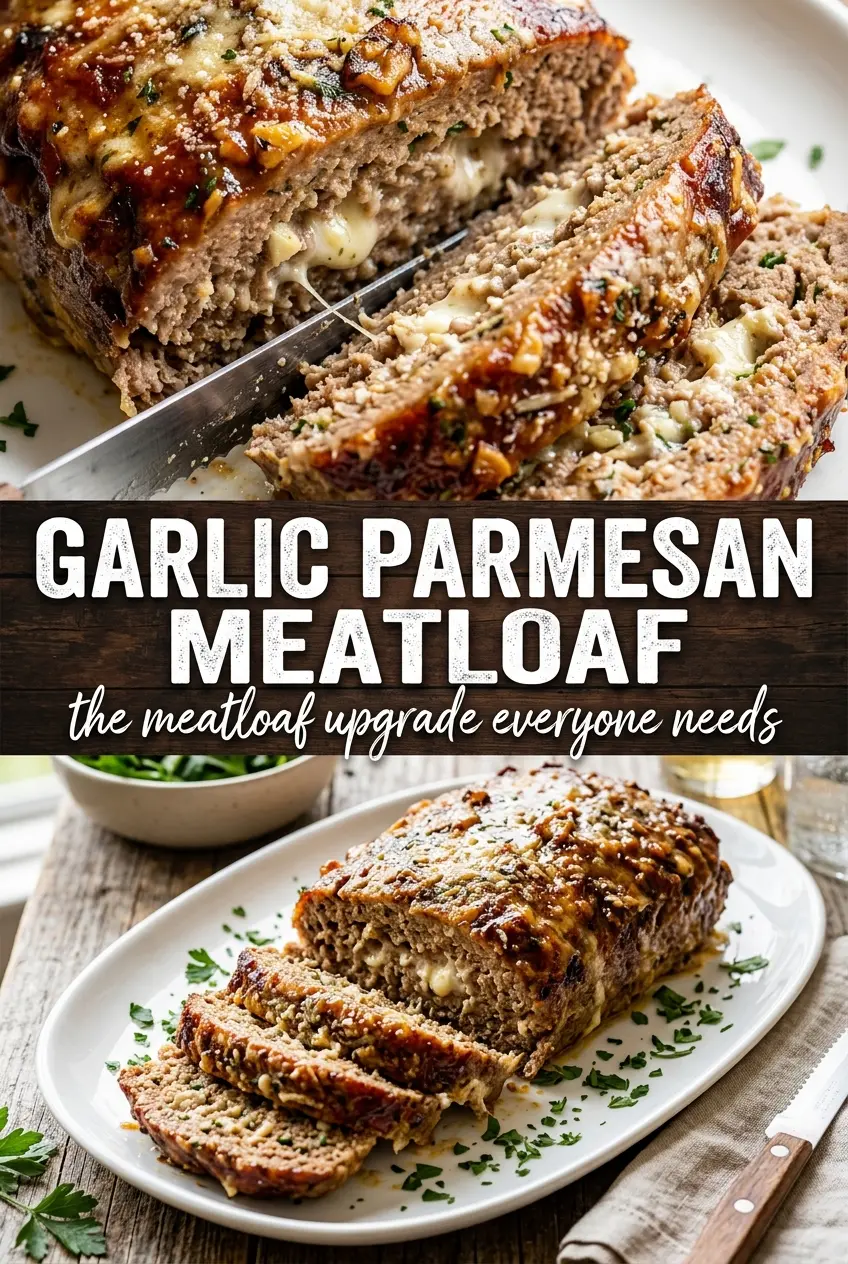
Garlic Parmesan Meatloaf
Ingredients
Equipment
Method
- Preheat the oven to 375°F and line a loaf pan or sheet pan with parchment. Keep the pan ready so the loaf can go straight in after mixing.
- Mix ground beef, 1/2 cup parmesan, Italian breadcrumbs, whole milk, eggs, 3 minced garlic cloves, onion, Italian seasoning, garlic powder, salt, and black pepper in a large bowl until just combined. Stop as soon as no dry pockets remain for a tender, juicy slice.
- Shape the mixture into a loaf on the pan and smooth the top. Create an even surface so the crust browns uniformly.
- Mix melted butter with the remaining minced garlic, then brush it over the loaf. Use a thin, even coat so you get a crackled parmesan crust as it bakes.
- Pat the remaining parmesan over the entire surface. Press lightly so it adheres and browns deeply.
- Bake at 375°F for 55–65 minutes, until the internal temperature reaches 160°F and the top is deeply golden. Watch for a firm, browned crust with a crackled look on the surface.
- Let the meatloaf rest for 10 minutes before slicing. This helps the juices set so the interior stays moist instead of pooling.
- Garnish with fresh parsley and slice to serve. Finish with a bright green pop on top for the classic family meatloaf look.