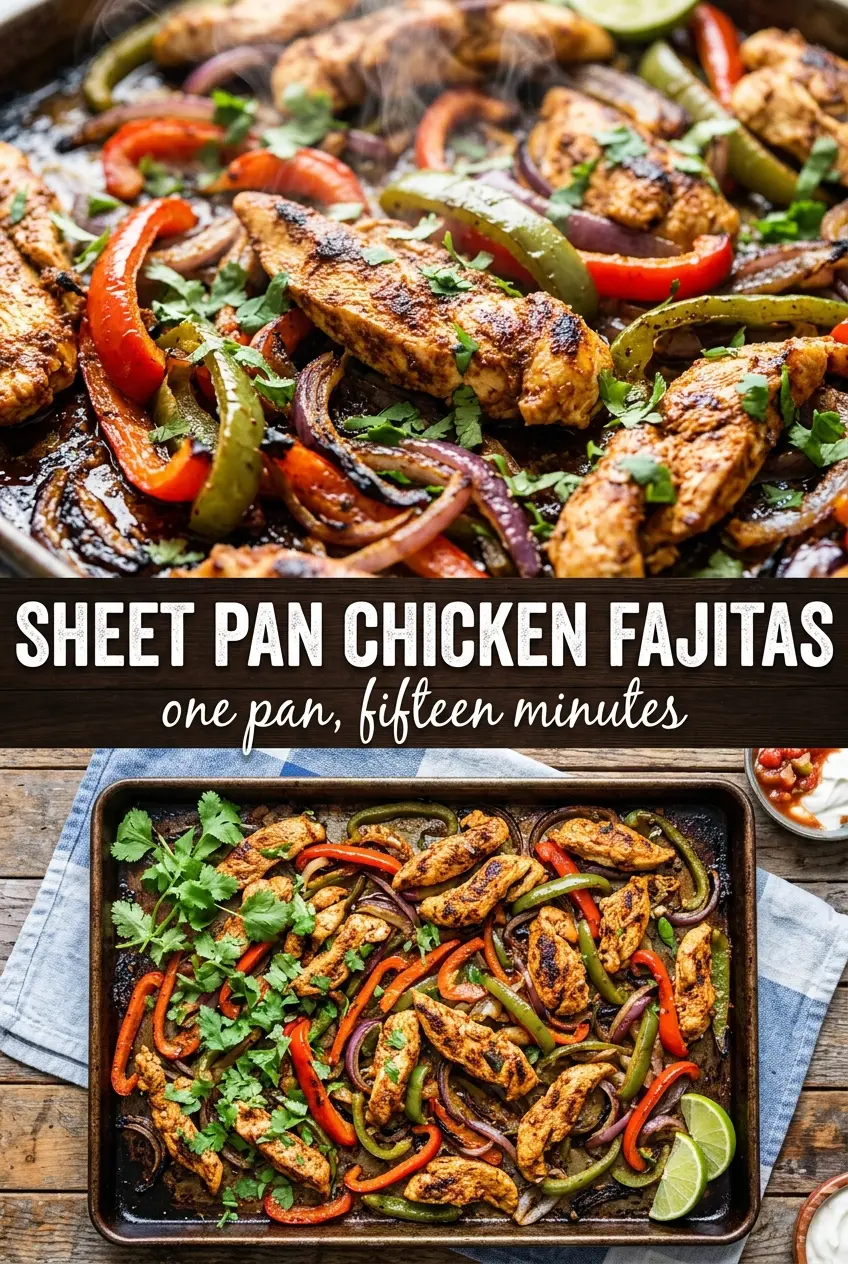
Charred edges, juicy chicken, and sweet peppers that still keep a little bite make sheet pan chicken fajitas one of the easiest ways to get real fajita flavor on a weeknight. Everything roasts together on one pan, which means the chicken picks up the seasoning from the vegetables and the peppers and onions soften just enough to turn sweet without going limp.
The trick is keeping the ingredients in a single layer so they roast instead of steam. A hot oven helps the chicken color quickly, and a small amount of oil carries the seasoning across every strip. Smoked paprika adds a deeper grilled note, and stirring once halfway through gives you those browned edges without drying out the meat.
Below you’ll find the one move that keeps the pan from turning watery, plus a few smart swaps for different diets and what to do if you want to stretch this into leftovers for another meal.
The chicken stayed juicy and the peppers got those caramelized edges I always miss when I cook fajitas on the stove. My husband said the pan smelled like a restaurant kitchen.
Save these sheet pan chicken fajitas for the nights when you want charred peppers, tender chicken, and almost no cleanup.
Why the Vegetables Need Space More Than Extra Time
The biggest mistake with fajita-style sheet pan dinners is crowding the pan. When the chicken and vegetables sit on top of each other, the moisture has nowhere to go, so everything softens and the spices turn muddy instead of toasted. A hot oven can’t fix that; spacing can.
Use a large sheet pan and spread the mixture into one layer with a little breathing room. If your pan looks packed, split it between two pans. That extra surface area is what gives you browned chicken edges and peppers that taste sweet instead of steamed.
- 425°F matters — Lower heat will cook the chicken, but it won’t give you the quick browning that makes fajitas taste finished.
- Foil is practical here — It keeps cleanup easy and helps the vegetables release without sticking, especially once the onions start to caramelize.
- Stir once, not constantly — One halfway toss is enough to expose new surfaces to the heat. More than that starts knocking off the seasoning and slows browning.
What the Seasoning Is Doing Before the Pan Even Hits the Oven
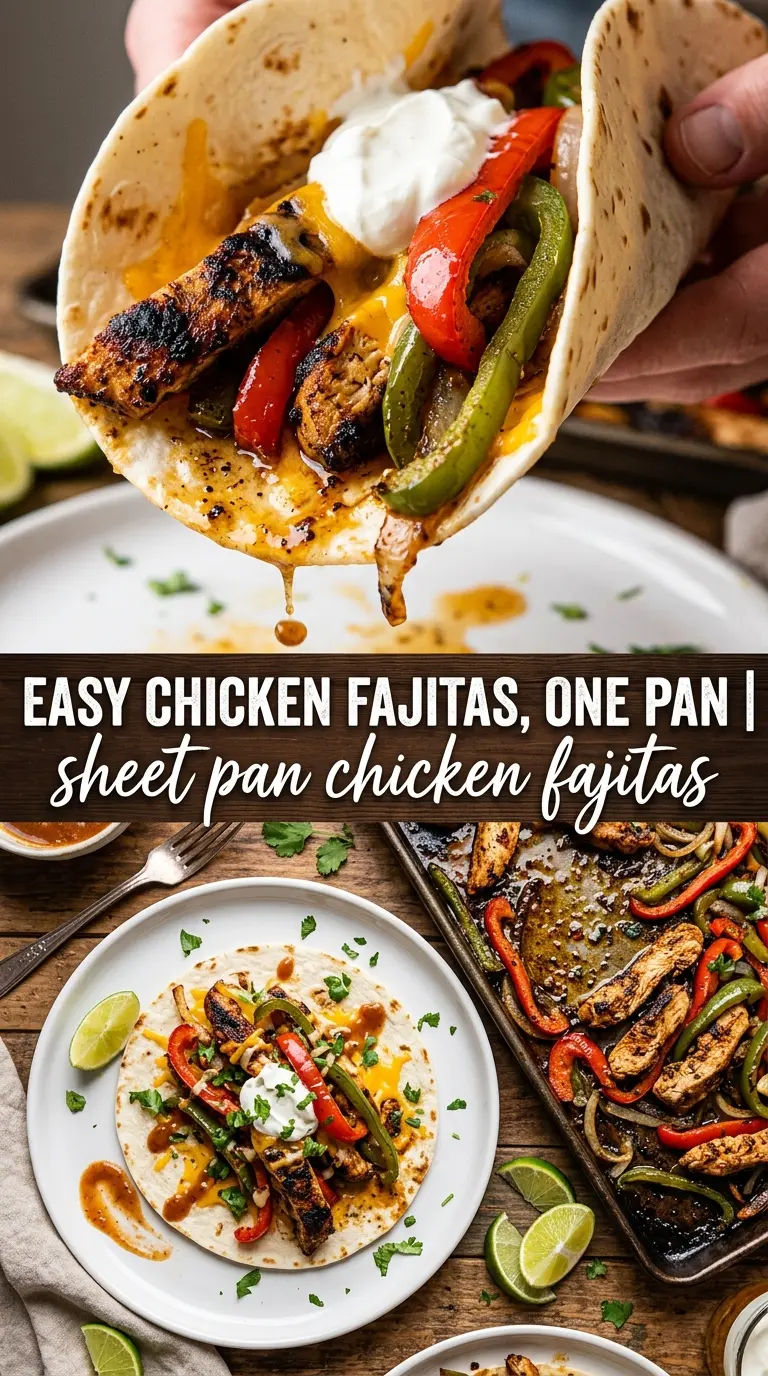
The fajita seasoning does more than add heat. Combined with olive oil, it clings to the chicken and vegetables, then toasts in the oven so the pan tastes layered instead of flat. Smoked paprika is worth keeping in the mix because it adds that grilled edge you usually only get from a skillet or grill.
- Chicken breast — Slice it into even strips so it cooks at the same speed as the peppers. Thin pieces cook fast and stay juicy; thick chunks take longer and dry out before the vegetables are ready.
- Bell peppers — Use a mix of colors for sweeter, more balanced fajitas. Red and yellow soften faster and taste sweeter, while green brings a sharper note that keeps the dish from leaning too soft.
- Onion — A large onion gives you enough bulk to roast well without disappearing. Slice it into strips, not dice, so it caramelizes at the edges instead of melting into the pan.
- Olive oil and seasoning — The oil helps the spices coat evenly and keeps the chicken from drying out. If you’re using a very salty taco seasoning, back off the added salt until after roasting and taste first.
The Part Where Everything Turns Brown Instead of Watery
Heat the Pan First
Preheat the oven all the way to 425°F before the pan goes in. A fully hot oven gives the chicken and vegetables a head start on browning, which is what keeps them from releasing too much liquid before they cook through. If the oven is only partly heated, the peppers will collapse before they ever color.
Toss for Even Coating
Combine everything in a large bowl so the oil and spices coat each strip before it hits the pan. That step matters because seasoning sprinkled over the top in the pan clumps in wet spots and burns in dry ones. Toss until every piece looks lightly slicked and evenly dusted, not caked.
Roast, Then Turn Once
Spread the mixture across the sheet pan without overlap. Roast for 22 to 25 minutes, then stir once halfway through so the bottom edges get a chance to brown on a new side. If the chicken is done but the vegetables still need color, leave it in for a few extra minutes at the end rather than pulling it early; underdone peppers taste raw and harsh next to the chicken.
Finish with Fresh Brightness
Serve the fajitas right away in warm tortillas with sour cream, guacamole, salsa, lime, and cilantro. The lime matters because it wakes up the roasted spices and cuts through the oil. If the pan sits too long before serving, the chicken keeps steaming in its own heat, so get the tortillas ready before the timer goes off.
How to Change the Pan Without Losing the Fajita Character
Make it dairy-free and still keep the full spread
The fajitas themselves are naturally dairy-free, so the only change is at the table. Skip the sour cream and use guacamole, salsa, and extra lime for richness and acidity. The result stays bright and satisfying without losing the creamy element if you add avocado.
Use chicken thighs for a juicier, more forgiving version
Boneless, skinless thighs work well if you want a little more richness. They stay tender even if they go a few minutes long, but they do release more fat, so don’t crowd the pan or you’ll lose the char. The flavor is deeper and a little less lean than breast meat.
Turn it into a gluten-free taco bowl
Serve the chicken and vegetables over rice, cauliflower rice, or shredded lettuce instead of tortillas. Just check your fajita seasoning packet, because some blends include wheat-based fillers. The bowl version keeps all the roasted flavor and gives you more room for salsa and guacamole.
Storage and Reheating
- Refrigerator: Store leftovers in an airtight container for up to 4 days. The peppers soften a little more as they sit, but the flavor stays good.
- Freezer: Freeze the cooked chicken and vegetables for up to 2 months. The texture of the peppers will be softer after thawing, so I like this best for tacos, bowls, or quesadillas.
- Reheating: Warm in a skillet over medium heat or in a 350°F oven until hot. The common mistake is microwaving too long, which turns the chicken rubbery and makes the vegetables collapse.
Questions I Get Asked About This Recipe
Sheet Pan Chicken Fajitas
Ingredients
Equipment
Method
- Preheat oven to 425°F and line a large sheet pan with foil.
- Combine sliced chicken, bell peppers, and onion in a large bowl.
- Drizzle chicken and vegetables with olive oil, then sprinkle with fajita seasoning, garlic powder, paprika, salt, and pepper and toss well to coat evenly.
- Spread the mixture in a single layer on the sheet pan without overlapping.
- Roast for 22–25 minutes at 425°F, stirring once halfway through, until chicken is cooked and edges are slightly charred.
- Serve immediately in warm tortillas with sour cream, guacamole, salsa, lime, and cilantro.