Caramelized pineapple, glossy chicken thighs, and tender roasted peppers make this Hawaiian Chicken Sheet Pan the kind of dinner that disappears fast. The chicken gets sticky at the edges without drying out, the pineapple turns jammy and browned, and the onions soften just enough to pick up every bit of the savory-sweet marinade. It all happens on one pan, which is exactly why this recipe earns a regular spot in the weeknight rotation.
The trick is in the balance: soy sauce brings salt and depth, honey gives the chicken that lacquered finish, and a little pineapple juice adds brightness without making the pan watery. Roasting at 425°F gives the vegetables enough heat to char before they turn limp, and keeping some marinade back for brushing helps build that sticky coating without cross-contaminating anything. Boneless thighs are the right cut here because they stay juicy even if the edges get deeply browned.
Below, you’ll find the timing that keeps the pineapple from steaming, the ingredient swaps that still give you that sweet-savory finish, and the reheating method that keeps leftovers from turning dull.
The pineapple got those browned edges without turning mushy, and the chicken stayed juicy all the way through. I brushed the extra marinade on at the halfway point like you said, and it thickened up into a glaze instead of pooling on the pan.
Save this Hawaiian Chicken Sheet Pan for the nights when you want sticky pineapple, caramelized chicken, and one-pan cleanup.
The Real Reason Sheet Pan Chicken Turns Watery
The biggest mistake with a dish like this is crowding the pan with too much wet fruit and too many vegetables. Pineapple throws off juice as it heats, and if the pieces are piled up, they steam instead of caramelize. Spreading everything in a single layer gives the edges enough direct heat to brown, which is where the best flavor comes from.
Chicken thighs are the other key piece. They stay tender at high heat, and they forgive the extra few minutes it takes for the pineapple to get those charred spots. If you use chicken breast, cut it into larger pieces and pull the pan as soon as the thickest pieces hit temperature, because breast meat dries out fast once it passes done.
What Each Ingredient Is Actually Doing in This Dish

- Boneless skinless chicken thighs — These stay juicy under high heat and soak up the marinade better than breast meat. Thighs also brown more deeply, which matters here because the glaze tastes best once it has a little caramelized edge.
- Fresh pineapple chunks — Fresh pineapple gives sharper flavor and better browning than canned. Canned pineapple can work in a pinch, but drain it well and expect less char and a softer texture.
- Soy sauce — This is the savory backbone of the marinade. Use regular soy sauce for the best balance; low-sodium works if you want more control, but the dish will taste lighter.
- Honey and pineapple juice — Together they build the sticky finish. Honey helps the glaze cling, while the juice keeps the sweetness bright instead of flat.
- Sesame oil, garlic, and ginger — These are the aromatic notes that keep the dish from tasting one-dimensional. Sesame oil brings nuttiness, while garlic and ginger give the marinade enough bite to stand up to the fruit.
- Bell peppers and red onion — These roast into tender, lightly sweet vegetables that catch the marinade in the corners of the pan. Cut them into larger pieces so they don’t collapse before the chicken is done.
How to Keep the Glaze Sticky Without Burning the Pineapple
Mixing the Marinade First
Whisk the soy sauce, honey, pineapple juice, garlic, ginger, and sesame oil until the honey is fully dissolved. If you leave streaks of honey in the bowl, they’ll end up caramelizing unevenly on the pan. The marinade should look smooth and glossy before it hits the chicken.
Coating the Chicken and Fruit
Toss the chicken thighs and pineapple with most of the marinade, then keep the rest back for brushing later. That reserved portion is what gives you the lacquered finish without putting raw marinade on cooked food. Let the chicken sit just long enough to coat while you prep the vegetables; you don’t need a long soak because the oven does the heavy lifting.
Roasting for Browning, Not Steaming
Spread everything out on a foil-lined sheet pan in a single layer and roast at 425°F. Halfway through, brush the chicken with the reserved marinade so the top starts to glaze before the pan finishes. If the pan looks crowded or the fruit is releasing a lot of juice, use a second pan; that extra space is what keeps the edges caramelized instead of soggy.
Knowing When It’s Done
The chicken should read 165°F in the thickest part and the pineapple should have browned spots at the edges. The onions will look soft and a little glossy, and the peppers should still hold their shape. If the top colors before the chicken is cooked through, tent the pan loosely with foil and give it a few more minutes.
How to Adapt This for Different Pan Sizes and Diet Needs
Make It Gluten-Free
Swap the soy sauce for a gluten-free tamari or coconut aminos. Tamari gives you the closest savory depth, while coconut aminos taste a little sweeter and lighter, so you may want to reduce the honey slightly if you’re using them.
Use Chicken Breast Instead of Thighs
Chicken breast works, but it needs a gentler hand. Cut it into large, even pieces and start checking for doneness a few minutes early, because breast meat turns dry fast once it’s overcooked. You’ll lose a little richness, but the pineapple glaze still carries the dish.
Make It a Little Spicier
Add crushed red pepper or a spoonful of chili garlic sauce to the marinade. The heat plays well against the pineapple’s sweetness and keeps the dish from leaning too sugary, especially if you’re serving it over plain rice.
Storage and Reheating
- Refrigerator: Store leftovers in an airtight container for up to 4 days. The pineapple softens a bit, but the flavor holds up well.
- Freezer: It freezes, but the peppers and pineapple lose some texture. Freeze for up to 2 months if needed, and expect the vegetables to be softer after thawing.
- Reheating: Reheat in a 350°F oven until warmed through, or use a skillet over medium-low heat. The main mistake is blasting it in the microwave, which makes the chicken rubbery and the fruit watery.
Questions I Get Asked About This Recipe
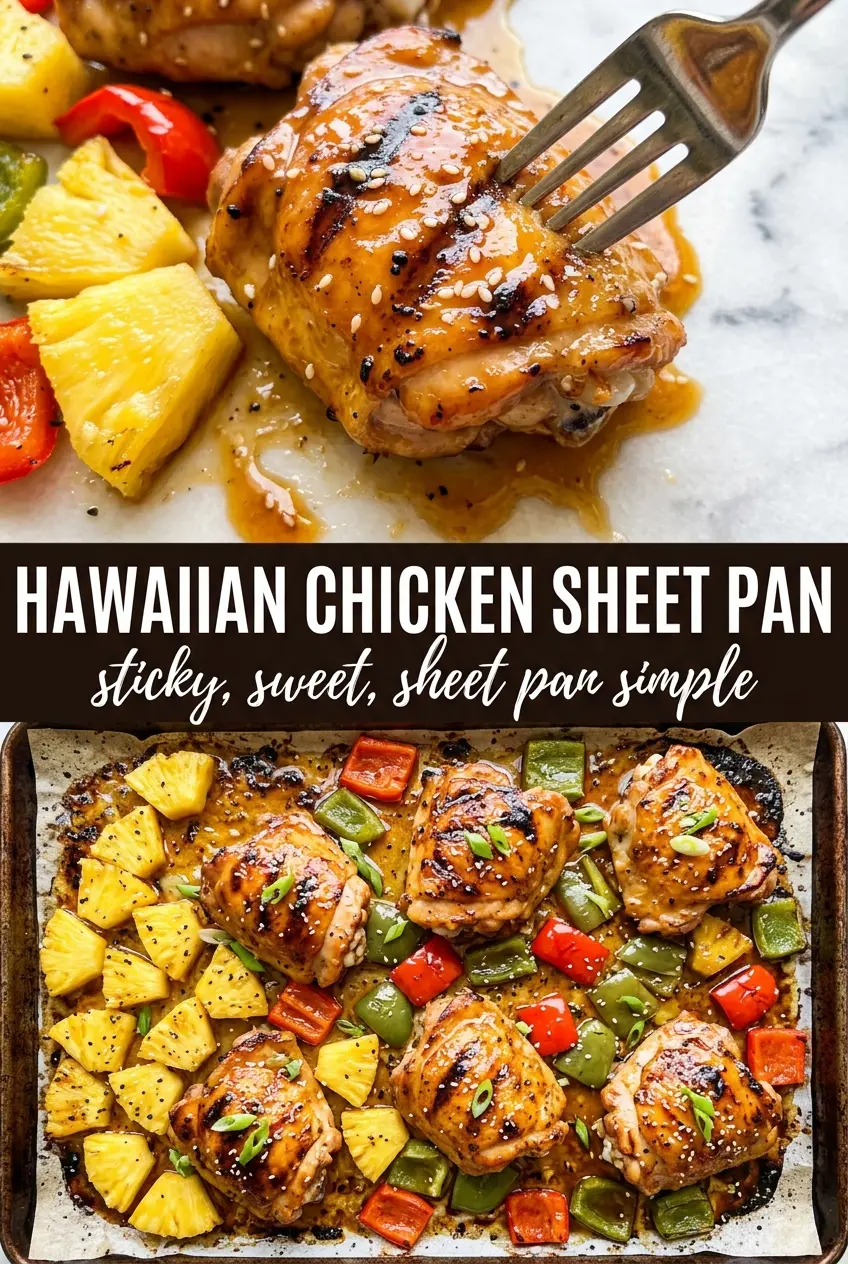
Hawaiian Chicken Sheet Pan
Ingredients
Equipment
Method
- Preheat the oven to 425°F and line a large sheet pan with foil.
- Whisk soy sauce, honey, pineapple juice, garlic, ginger powder, and sesame oil together until smooth.
- Toss chicken thighs and pineapple chunks with 3/4 of the marinade, then reserve the remaining marinade.
- Spread the chicken on the sheet pan, then scatter bell peppers, red onion wedges, and pineapple around the chicken.
- Roast at 425°F for 22–25 minutes, until the chicken is cooked through and caramelized.
- Brush the chicken and pineapple with the reserved marinade halfway through roasting for extra shine and color.
- Garnish with sliced green onions and sesame seeds right after roasting.
- Serve the sheet pan chicken over rice.