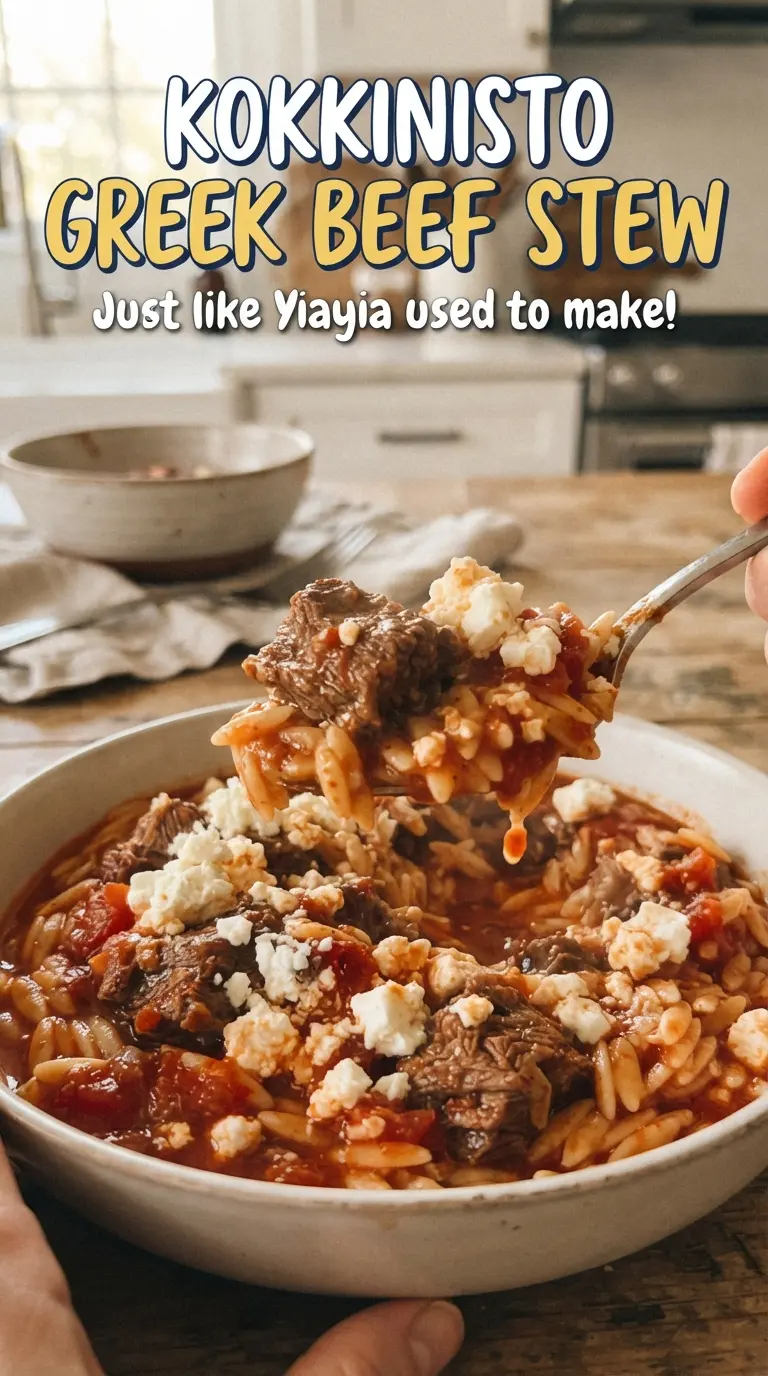
Deep, tomato-rich kokkinisto is the kind of beef stew that settles into the pot and comes out tasting like you spent all afternoon on it, even though the work is straightforward. The beef turns spoon-tender, the sauce cooks down to a glossy red coating, and the cinnamon and allspice give it that unmistakable Greek edge without turning it sweet or heavy. Serve it over orzo or soft potatoes, and you’ve got a meal that feels comforting without being dull.
What makes this version work is the layering. Browning the beef in batches builds the savory base, then the onions, garlic, and tomato paste cook long enough to lose their raw bite before the wine goes in. After that, the stew just needs patient simmering so the tomatoes mellow, the spices bloom, and the sauce tightens up naturally around the meat.
You’ll also find the small details that matter: when to stop stirring, how thick the sauce should look before you serve it, and why feta at the end is more than just garnish. It adds the salty finish this stew needs.
The beef got meltingly tender and the cinnamon in the tomato sauce was there in the best way — warm and subtle. I served it over orzo and the sauce clung to every bite.
Save this Kokkinisto Greek Beef Stew for the nights when you want tender beef, cinnamon-kissed tomato sauce, and a proper orzo dinner.
The Reason Kokkinisto Needs a Long Simmer, Not a Hard Boil
Kokkinisto can look straightforward, but the texture depends on restraint. If the pot boils hard, the beef tightens before the collagen has time to soften, and the sauce can turn greasy instead of silky. A low simmer gives the chuck time to break down gradually while the tomato sauce concentrates around it.
The other trap is rushing the base. Tomato paste needs a minute in the pot with the onions and garlic so it loses that sharp canned edge and picks up some caramelized depth. That small step is what keeps the finished stew tasting rounded instead of flat.
- Browning in batches — Crowding the pan steams the beef and leaves you with pale meat and weak fond. Brown in a single layer so you get deep color on the outside, then move the beef out before the next batch.
- Wine reduction — The red wine should simmer long enough to lose its raw alcohol bite before the tomatoes go in. That keeps the sauce bold without tasting sharp.
- Low heat finish — The stew is done when the beef yields easily to a fork and the sauce coats a spoon. If it still looks thin, uncover it for the last 15 to 20 minutes and let it reduce gently.
What the Cinnamon, Wine, and Tomato Paste Are Doing Here
The cinnamon stick and allspice berries are the signature here. They don’t make the stew taste like dessert; they push the tomatoes toward something warmer and more layered. Whole spices are better than ground in this dish because they perfume the sauce without turning it muddy.
- Beef chuck — This cut has enough connective tissue to turn tender over a long simmer. A leaner cut won’t give you the same soft, shreddable result.
- Tomato paste — It adds concentrated body and color. Let it cook briefly with the onions so it deepens instead of tasting raw.
- Dry red wine — Use something you’d drink, but it doesn’t need to be expensive. It sharpens the sauce and gives the tomatoes a little more backbone.
- Cinnamon stick and allspice berries — Keep them whole so you can remove them later. Ground cinnamon will overwhelm the pot fast, while the whole spices stay balanced.
- Crushed tomatoes — A good-quality can makes a difference because the sauce is built on them. If your tomatoes taste bright and clean straight from the can, the finished stew will too.
Building the Pot So the Sauce Turns Rich, Not Watery
Brown the beef first
Season the beef, then brown it in olive oil in batches until you get a deep brown crust on the outside. The pan will look crowded faster than you think, and that’s when people accidentally steam the meat instead of searing it. Pull each batch out as soon as it has color; the beef finishes cooking later in the sauce.
Cook the onions until they go soft and sweet
The onions need the full six minutes or so to lose their bite and turn translucent with a little gold at the edges. Add the garlic and tomato paste after that, not before, so the garlic doesn’t burn and the paste has time to darken slightly. You’re building sweetness and depth here, not chasing speed.
Deglaze and reduce the wine
Once the wine goes in, scrape the bottom of the pot well. Those browned bits dissolve into the sauce and carry a lot of the stew’s flavor. Let the wine simmer for about two minutes so the alcohol cooks off and the liquid tastes rounded instead of sharp.
Let the sauce do the work
Add the tomatoes, water, spices, sugar, and beef, then cover and keep the heat low enough for a gentle bubble. The stew should move lazily, not boil aggressively. If the liquid is racing, the beef can dry out before it softens, and the sauce won’t reduce with enough depth.
Finish when the sauce clings
After 1 1/2 to 2 hours, the beef should pull apart easily and the sauce should coat the spoon in a thick red sheen. Remove the cinnamon stick, allspice, and bay leaves before serving. If the sauce still looks loose, uncover the pot for a few minutes and let it tighten just enough to cling to the meat and orzo.
How to Adapt Kokkinisto for the Pot You Have and the Table You’re Feeding
For a more traditional serving style
Serve the stew over orzo for the classic pairing, or spoon it over mashed potatoes if you want something softer and more absorbent. Orzo catches the sauce in every curve, while potatoes give you a more rustic, heavier plate.
Gluten-free serving option
Skip the orzo and serve the stew with potatoes, rice, or polenta. The stew itself is naturally gluten-free as long as your broth-free ingredient labels are clean, and the sauce has enough body to stand on its own.
Wine-free version
Use an extra 1/2 cup water with a teaspoon of red wine vinegar stirred in at the end. You’ll lose a little of the wine’s depth, but the vinegar gives the sauce enough lift to keep it from tasting heavy.
Make-ahead and leftovers
Kokkinisto tastes even better after a night in the fridge because the spices settle into the sauce. The beef stays tender, and the tomato base thickens up, so it’s an excellent make-ahead stew for the week.
Storage and Reheating
- Refrigerator: Store for up to 4 days. The sauce thickens as it chills, which is exactly what you want.
- Freezer: Freezes well for up to 3 months. Cool it completely and freeze in portions so the beef doesn’t get overhandled later.
- Reheating: Warm it slowly on the stove over low heat with a splash of water if needed. High heat can make the beef stringy and push the sauce past its best texture.
Questions I Get Asked About This Recipe
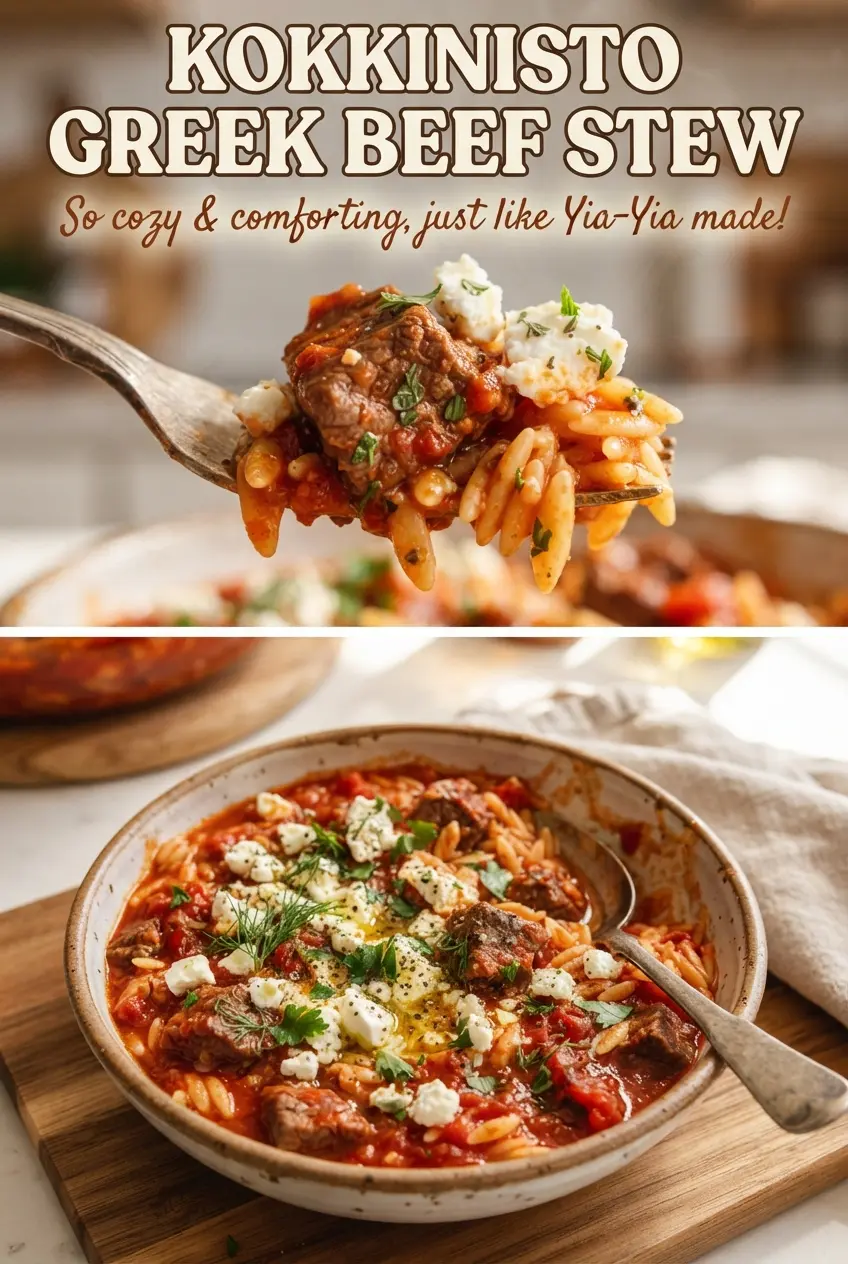
Kokkinisto Greek Beef Stew
Ingredients
Equipment
Method
- Pat the beef chuck dry, then season with salt and black pepper. Heat the olive oil in a Dutch oven until shimmering and brown the beef in batches, turning for even color with caramelized edges forming.
- Add the onions and cook for 6 minutes until soft. Stir in the garlic and tomato paste for 1 minute, until fragrant and slightly darkened.
- Pour in the dry red wine and simmer for 2 minutes, scraping the bottom of the pot. Keep the sauce bubbling so browned bits dissolve into the liquid.
- Add the crushed tomatoes, water, cinnamon stick, allspice berries, bay leaves, sugar, and the browned beef to the pot. Stir to combine so the beef is submerged in the red sauce.
- Cover and simmer on low until the beef is very tender and the sauce thickens for 1 1/2-2 hours. Check occasionally for gentle bubbling and sauce that coats the meat.
- Remove the whole spices from the stew. Serve hot over cooked orzo, then top with crumbled feta and parsley for garnish.