Lasagna soup gives you all the best parts of a baked pan of lasagna without the layering, waiting, or heavy cleanup. The broth turns rich and tomato-forward, the noodles soften just enough to feel comforting, and that spoonful of ricotta-mozzarella topping melts into the center like the creamiest part of a casserole. It eats like a full meal, but it comes together fast enough for a weeknight.
What makes this version work is the way each part is treated on its own before everything comes together. Browning the sausage first gives the broth a deeper base, and cooking the tomato paste for a minute or two takes the edge off and builds real body. The noodles cook right in the soup, which means they absorb flavor instead of tasting like a separate add-in.
Below, I’ve included the small details that keep the broth rich instead of thin, plus the one topping trick that makes every bowl taste like you worked on it longer than you did.
The noodles stayed tender without getting mushy, and the ricotta topping melted into the broth just enough to make each bowl taste like actual lasagna in a spoon.
Love the brothy, cheesy comfort of lasagna soup? Save this one for the night you want big flavor with one pot and no layering.
The Trick to Keeping the Noodles Tender, Not Bloated
Lasagna soup goes wrong when the noodles are treated like an afterthought. If they simmer too long, they swell past the point of comfort and steal too much liquid from the pot. The fix is simple: cook them just until tender, then stop the heat. They’ll continue softening in the hot broth, and that last minute matters more than most recipes admit.
Another common failure is starting with a weak base. This soup needs browned sausage and cooked tomato paste before the broth goes in. That step gives the finished bowl the savory depth that makes it taste like lasagna instead of tomato noodle soup.
- Italian sausage — This does the heavy lifting for seasoning the whole pot. Hot sausage gives the best balance, but mild sausage works if you want less heat.
- Tomato paste — Cooking it briefly darkens the flavor and removes the raw, metallic edge. Don’t skip this step or the broth will taste flatter.
- Lasagna noodles — Broken noodles give the right texture and shape, but they need close attention near the end. If you use another pasta, pick something broad and sturdy so it doesn’t vanish in the broth.
- Ricotta-mozzarella topping — The mix should stay thick enough to spoon over the soup, not melt into a thin cloud. Whole-milk ricotta gives the creamiest result, but part-skim will still work.
What Each Ingredient Is Doing in the Bowl

- Italian sausage — It seasons the broth from the start and adds the savory backbone you’d normally get from a long-simmered meat sauce. Drain excess fat if the pot looks greasy, but leave a little behind for flavor.
- Onion and garlic — These round out the tomato base and keep the soup from tasting one-note. Let the onion soften before the garlic goes in so the garlic doesn’t scorch.
- Crushed tomatoes plus diced tomatoes — The crushed tomatoes make the broth smooth and rich, while the diced tomatoes leave some texture. If you only have one type, use it, but the mix gives the best balance.
- Broth — Chicken broth gives a slightly lighter finish; beef broth makes the soup deeper and more robust. Either one works, so use what matches the rest of your pantry.
- Tomato paste — This is what gives the broth body. A minute or two in the hot pot is enough to concentrate it without burning it.
- Ricotta, mozzarella, parmesan, and basil — Together they make the topping taste like the cheesy center of a baked lasagna. Fresh basil matters here because it cuts through the richness and keeps the bowl from tasting heavy.
Building the Soup So It Tastes Like Lasagna, Not Just Pasta in Broth
Brown the Sausage First
Cook the sausage over medium-high heat until it’s deeply browned in spots and broken into small crumbles. Those browned bits are flavor, so don’t rush this stage or you’ll end up with a pale, bland broth. If there’s a lot of fat in the pan after browning, spoon some off before moving on.
Cook the Onion and Tomato Paste Together
Sauté the onion in the same pot until it turns soft and translucent, then add the garlic for just a minute. Stir in the tomato paste and let it darken slightly before anything else goes in. That short cook transforms the paste from sharp to rich, which is what gives the soup its lasagna-like depth.
Simmer the Broth Before the Noodles Go In
Add the tomatoes, broth, Italian seasoning, basil, and red pepper flakes, then bring everything to a boil before dropping in the noodles. The boil matters because it gets the broth hot enough to start cooking the pasta evenly right away. Once the noodles are in, lower the heat to a steady simmer so they soften without breaking apart.
Finish With the Cheese Topping Right at the Table
Mix the ricotta, mozzarella, parmesan, and basil just before serving so the topping stays fluffy and spoonable. Ladle the soup into bowls first, then add a generous dollop on top. If you stir the cheese into the whole pot, the broth turns muddy and the texture disappears. The topping should melt at the edges and stay creamy in the center.
How to Adapt This for a Bigger Crowd, a Lighter Bowl, or No Dairy
Make It Dairy-Free
Skip the ricotta-mozzarella topping and serve the soup with a drizzle of olive oil and extra basil instead. You’ll lose the creamy lasagna finish, but the broth and sausage still carry the dish well. For a closer stand-in, use a dairy-free ricotta style spread if you have one that’s thick enough to dollop.
Use Ground Turkey or Chicken
Lean poultry works, but it needs help. Add a little extra olive oil when browning and keep the seasoning generous, because turkey and chicken don’t bring the same built-in richness as sausage. The result is lighter and a bit cleaner tasting, but still satisfying.
Make It Gluten-Free
Use a sturdy gluten-free lasagna noodle or another short gluten-free pasta that holds up in soup. Cook it just to tender, because gluten-free pasta can turn soft faster than regular noodles once it sits in hot broth. If you’re making the soup ahead, keep the pasta separate and add it when serving.
Storage and Reheating
- Refrigerator: 3 to 4 days. The noodles will keep soaking up broth, so expect the soup to thicken as it sits.
- Freezer: Freeze the broth and sausage without the noodles if you can. Pasta gets soft after thawing, so add fresh noodles when reheating for the best texture.
- Reheating: Warm it gently on the stove over medium-low heat with a splash of broth or water. Don’t boil it hard or the noodles will turn mushy and the cheese topping will lose its fresh texture.
Answers to the Questions Worth Asking
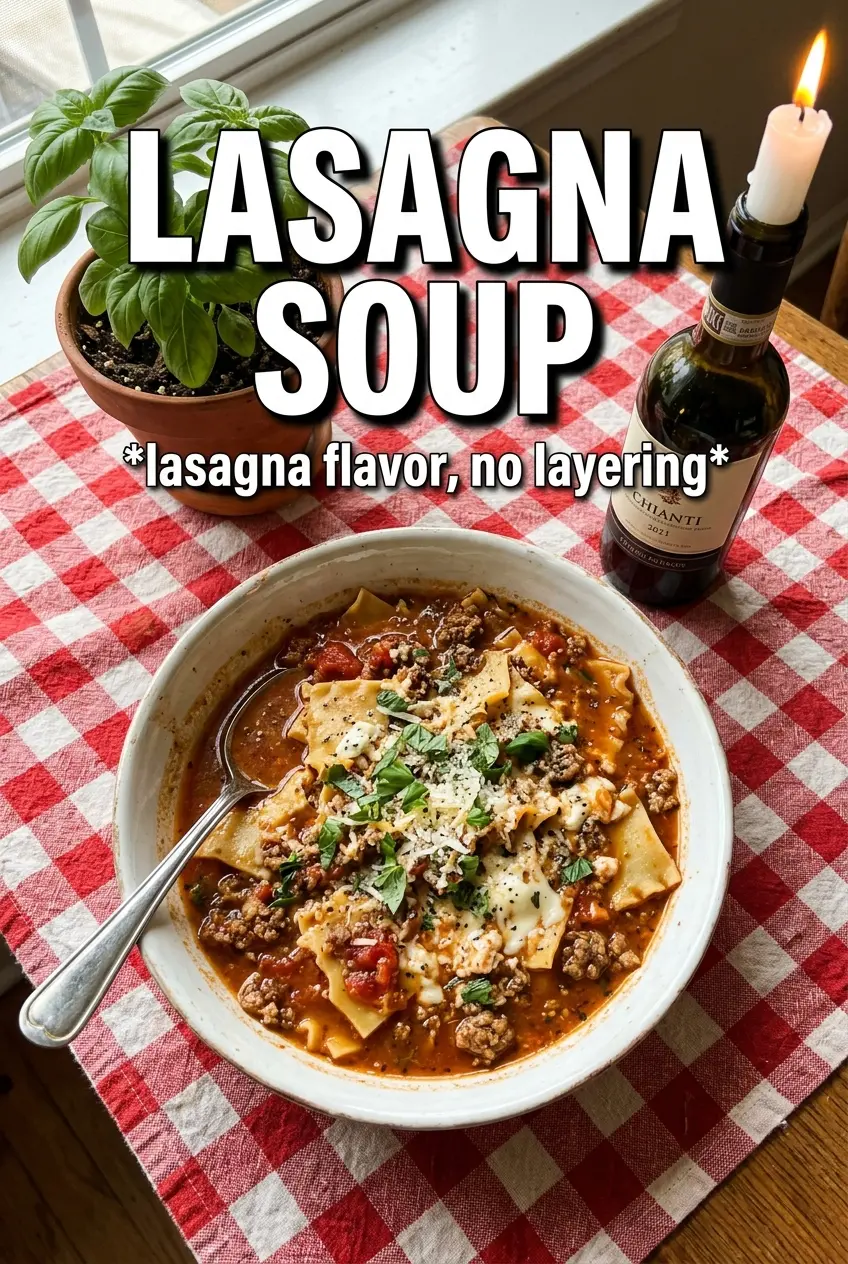
Lasagna Soup
Ingredients
Equipment
Method
- Brown Italian sausage in a large pot over medium-high heat, breaking it into crumbles — drain excess fat.
- Sauté onion in the same pot for 4 minutes.
- Add garlic and cook for 1 minute.
- Stir in tomato paste and cook 1-2 minutes until darkened, scraping up browned bits.
- Add crushed tomatoes, diced tomatoes, broth, Italian seasoning, dried basil, and red pepper flakes and bring to a boil.
- Add broken lasagna noodles and simmer for 10-12 minutes, stirring occasionally, until noodles are tender.
- Season with salt and pepper to taste.
- Mix ricotta, shredded mozzarella, parmesan, and fresh basil together until fully combined.
- Ladle soup into bowls and top each with a generous dollop of the cheese mixture, letting it melt into the center.