Parmesan pumpkin fritters come out with crisp, bronzed edges and a tender center that tastes like pumpkin should: savory, earthy, and just rich enough to keep reaching for one more. The parmesan doesn’t disappear into the batter here. It forms part of the crust, giving each fritter a salty, nutty bite that balances the soft pumpkin and fresh herbs.
The part that makes these work is moisture control. Pumpkin puree can look thick in the bowl and still be too wet for fritters, which is how you end up with pale pancakes instead of shattery, golden rounds. Blotting the puree first keeps the batter compact enough to hold its shape in the skillet, and a modest amount of flour is enough once the eggs and cheese are doing their job. A touch of nutmeg rounds out the pumpkin without turning this into dessert.
Below, you’ll find the small details that matter most: how dry the pumpkin should feel, when the skillet is hot enough, and what to do if the batter seems loose before it hits the pan.
I used fresh sage and the fritters held together perfectly after I blotted the pumpkin longer than I thought I needed to. The edges got crisp in the skillet and the sour cream on top made them feel restaurant-worthy.
Save these parmesan pumpkin fritters for the nights when you want crispy edges, a savory pumpkin center, and a quick sour cream dip.
The Dry Pumpkin Trick That Keeps Fritters Crisp
Most pumpkin fritters fail for one simple reason: the puree carries too much water into the pan. That extra moisture softens the batter, so the fritters spread before they set and never develop the deep, crisp crust you want. Blotting the pumpkin well changes the whole result. It tightens the mixture, helps the flour and parmesan cling, and lets the outside brown before the center turns mushy.
The other thing that matters is heat. Medium heat is the sweet spot here. If the oil is too cool, the fritters soak it up and turn heavy. If it’s too hot, the parmesan scorches before the middle cooks through. You’re looking for steady sizzling the moment the batter hits the skillet and a fritter that releases cleanly when it’s ready to flip.
What the Parmesan, Eggs, and Herbs Are Doing Here

- Pumpkin puree — Use puree, not pie filling. Puree gives you control over seasoning and texture, but it must be blotted until it feels dense and almost pasty. That step matters more than any other ingredient here.
- Parmesan — Finely grated parmesan melts into the batter and helps form the savory crust. Freshly grated is best because the pre-shredded stuff often has anti-caking agents that can keep the fritters from binding as smoothly.
- Eggs — They hold the fritters together and keep the center tender. There isn’t a true substitute if you want the same structure, though a flax egg can work in a pinch for a denser, softer fritter.
- Flour — Just enough flour gives the batter body without turning it bready. If you need a gluten-free version, a 1:1 gluten-free flour blend works better than almond flour here because it keeps the mixture scoopable and crisp.
- Chives or sage — Chives keep the flavor light and fresh, while sage makes the fritters taste deeper and more fall-forward. Fresh herbs matter more than dried in this recipe because they’re folded into a very short-cooked batter.
- Nutmeg — This is the small seasoning that makes the pumpkin taste fuller, not sweeter. Don’t skip it; even a little gives the fritters a rounder flavor.
Getting the Batter Into the Pan Without Losing the Crust
Mix Just Until the Batter Comes Together
Stir the blotted pumpkin, eggs, parmesan, flour, herbs, garlic, salt, pepper, and nutmeg until the mixture looks evenly combined. Don’t beat it hard or keep stirring once the flour disappears, because overmixing can make the fritters denser. The batter should be thick enough to mound on a spoon and hold its shape for a few seconds before settling.
Let the Oil Settle Before the First Fritter
Warm a thin layer of olive oil in a skillet over medium heat until it shimmers. If you drop in a tiny bit of batter and it sizzles right away, you’re in the right range. If it spits aggressively, lower the heat and wait a minute; if nothing happens, the oil is too cool and the fritters will soak instead of sear.
Flatten, Fry, and Flip at the Right Moment
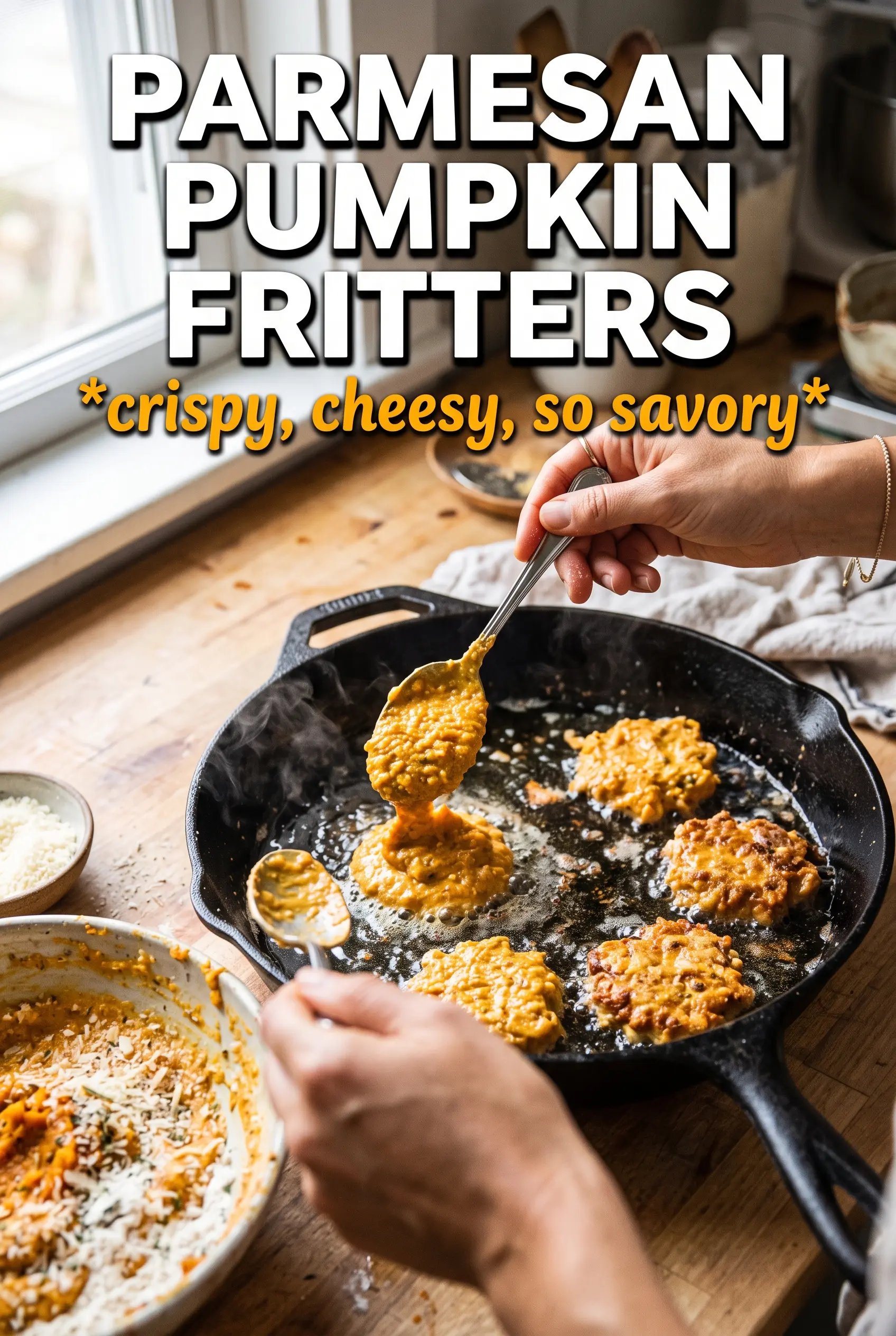
Scoop about 3 tablespoons of batter per fritter and flatten each one slightly in the pan. They need enough contact with the skillet to brown evenly, but not so much pressure that they squeeze out moisture. Cook for 3 to 4 minutes on the first side, until the edges look set and the underside is a deep golden brown, then flip once and finish the second side. If they stick, they need another minute; a properly browned fritter releases more easily.
Drain Fast and Serve Hot
Move the cooked fritters to paper towels as soon as they come out of the skillet. That short drain keeps the crust crisp instead of letting the oil soften the surface. Serve them right away with sour cream and extra chives, while the edges are still crunchy and the center is tender.
How to Adapt These Parmesan Pumpkin Fritters for Different Kitchens
Gluten-Free Version
Swap the all-purpose flour for a good 1:1 gluten-free flour blend. That keeps the batter light and scoopable without making the fritters gritty or dry. Avoid almond flour here; it changes the texture too much and can make the rounds fall apart in the skillet.
Dairy-Free Variation
Use a dairy-free parmesan-style alternative and serve with a dairy-free sour cream or plain unsweetened yogurt substitute. The fritters will lose a little of parmesan’s salty depth, so add a pinch more salt and a little extra garlic to keep the flavor balanced.
Herb Swap for a Different Mood
Chives keep these bright, while sage makes them taste woodsy and a little more savory. If you only have one or the other, use it generously and keep the garlic modest. Too much herb can crowd out the pumpkin, which is the flavor you want to stay in front.
Storage and Reheating
- Refrigerator: Store leftovers in an airtight container for up to 3 days. The crust softens a bit in the fridge, but the flavor holds up well.
- Freezer: Freeze cooked fritters in a single layer, then transfer to a bag or container for up to 2 months. Reheat from frozen for the best texture; thawing first can make them soggy.
- Reheating: Warm them in a 375°F oven or air fryer until hot and crisp again. Skip the microwave if you want the edges back; it softens the crust and makes the centers gummy.
Questions I Get Asked About This Recipe
Parmesan Pumpkin Fritters
Ingredients
Equipment
Method
- Blot the pumpkin puree extremely dry between paper towels to remove excess moisture.
- Combine the blotted pumpkin, eggs, parmesan, all-purpose flour, chives (or sage), garlic, salt, black pepper, and nutmeg until just combined.
- Heat olive oil in a skillet over medium heat until shimmering.
- Drop 3-tablespoon portions into the skillet and flatten slightly, then cook 3-4 minutes per side until golden and crispy.
- Work in batches and drain the fritters on paper towels after frying.
- Serve the fritters with sour cream and extra chives.