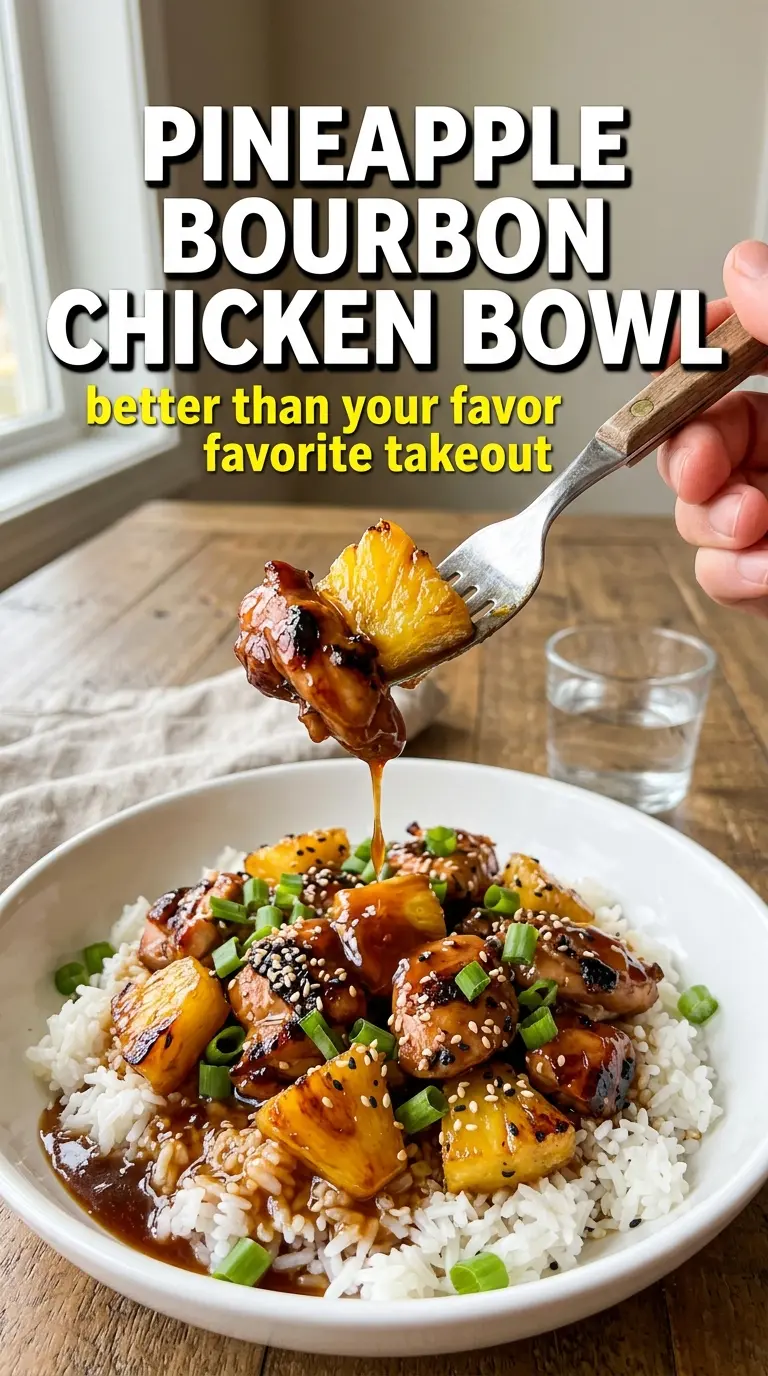
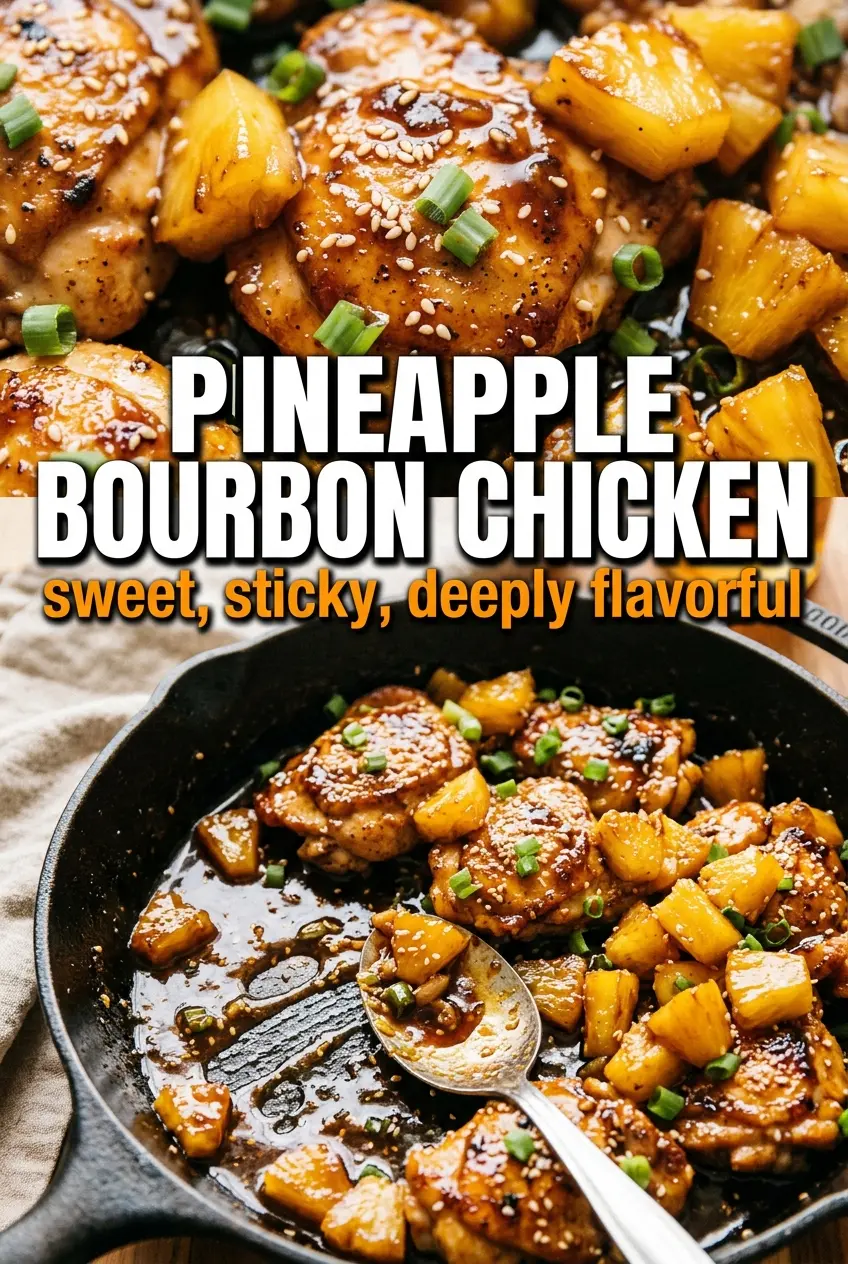
Sticky pineapple bourbon chicken lands in that sweet spot between takeout comfort and skillet dinner that actually tastes fresh. The chicken gets a quick hard sear first, which gives you browned edges that can stand up to the sauce instead of turning soft and bland once everything gets tossed together. Then the glaze cooks down until it clings to each piece in a glossy coating with a little caramelized bite at the edge.
The sauce works because it balances pineapple juice, bourbon, soy sauce, and brown sugar in a way that tastes layered instead of flat. Pineapple brings brightness and natural sweetness, bourbon adds depth, and the soy sauce keeps the whole thing from drifting into candy territory. A cornstarch slurry finishes the job and gives you that sticky, spoon-coating texture people expect from bourbon chicken.
Below, I’m breaking down the exact moments that matter most: how to keep the sauce from tasting thin, when to add the pineapple chunks so they stay intact, and what to change if you want a no-alcohol version that still keeps the same bold, glossy finish.
The glaze thickened up exactly like the takeout version I was hoping for, and the pineapple stayed juicy instead of turning to mush. I served it over rice and my husband went back for seconds before I even sat down.
Save this pineapple bourbon chicken for the nights when you want a sticky skillet dinner with caramelized edges and a glossy pineapple glaze.
The Secret to Keeping the Glaze Sticky Instead of Watery
The biggest mistake with bourbon chicken is rushing the sauce before the liquid has a chance to reduce. Pineapple juice brings a lot of water with it, so if you add the slurry too early, the finished sauce can taste thin and overly sweet instead of concentrated and glossy. Let the sauce simmer first until it smells rounded and the bubbles look a little tighter; that reduction is where the flavor deepens.
Another thing that matters here is the skillet. Those browned bits left behind after searing the chicken are part of the sauce, not something to clean away. They dissolve into the pineapple-bourbon base and give it that savory edge that keeps the dish from tasting like sweet syrup.
- Reduction first — Simmer the sauce before adding the cornstarch slurry so the pineapple juice cooks down and the bourbon loses its sharp alcohol edge.
- Slurry at the end — Cornstarch thickens fast once it hits heat. Add it only after the sauce has reduced, or the glaze can turn gummy.
- Use the same pan — The fond from the chicken adds depth and color. A clean pan gives you a flatter sauce.
- Chicken thighs hold up best — Thighs stay juicy during the final toss in sauce. Breast meat works, but it dries out faster and needs a shorter cook time.
What Each Ingredient Is Doing in the Skillet
- Boneless chicken thighs — These give you the juiciest result and stand up to the sticky sauce. If you swap in chicken breast, cut the pieces a little larger and pull them as soon as they’re cooked through.
- Pineapple juice — This is the backbone of the glaze. Fresh juice can be used, but canned juice is fine and often more consistent.
- Bourbon — Bourbon adds warmth and a little oakiness that makes the sauce taste deeper. If you want to skip the alcohol, use extra pineapple juice plus a splash of apple juice and a tiny dash of vanilla for roundness.
- Soy sauce — This keeps the glaze savory and balances the sugar. Use low-sodium soy sauce if that’s what you keep on hand, especially if you’re sensitive to salt.
- Brown sugar and ketchup — The sugar helps the glaze caramelize, while the ketchup adds body, tang, and color. They work together to create that familiar takeout-style finish.
- Cornstarch slurry — This is what turns the sauce from thin and glossy to sticky and clingy. Mix it with cold water first so it disperses evenly instead of clumping.
- Ginger and garlic — These keep the sauce from tasting one-note sweet. Fresh ginger matters here; the dried kind won’t give the same bright bite.
How to Build the Sauce So It Clings to Every Piece
Getting a Good Sear on the Chicken
Heat the oil until it shimmers, then add the seasoned chicken in a single layer. You want browning on the outside and the centers just cooked through, not pale steamed chicken. If the pan is crowded, the pieces will leak liquid and soften instead of searing, so cook in batches if needed. Pull the chicken once it’s golden and set it aside while the sauce comes together.
Cooking Down the Pineapple Bourbon Base
Pour the pineapple juice, bourbon, soy sauce, brown sugar, ketchup, garlic, and ginger into the same skillet. Stir and let the mixture come to a gentle simmer so the sharp edges mellow and the flavors start to concentrate. The sauce should smell deep and a little tangy before you add anything to thicken it. If it still tastes thin, give it another minute or two; reducing it now saves you from over-thickening later.
Thickening Without Turning It Gloopy
Stir in the cornstarch slurry and keep the sauce moving as it bubbles. It should go from glossy and loose to visibly thicker within a minute or two, coating the back of a spoon without looking paste-like. If you dump in too much slurry at once, the sauce can set up like pudding, so add it gradually and stop as soon as it turns sticky. Return the chicken and pineapple chunks to the pan only after the glaze has thickened.
Finishing the Glaze
Toss everything together for the last couple of minutes so the chicken gets fully coated and the pineapple warms through without breaking apart. The sauce should cling in shiny streaks, and the edges of the chicken should look lacquered, not soupy. Serve it right away over rice while the glaze is still loose enough to spread across the grains.
Three Ways to Adjust This Without Losing the Sticky Glaze
No-alcohol version
Replace the bourbon with extra pineapple juice and a tablespoon of apple juice or water. You’ll lose a little of the smoky depth, but the sauce still reduces into a sticky glaze if you keep the simmer time the same.
Gluten-free version
Use tamari or a certified gluten-free soy sauce in place of regular soy sauce. The rest of the recipe already works naturally without flour, so the texture stays the same.
Spicier takeout-style version
Add a pinch of red pepper flakes or a spoonful of chili garlic sauce to the simmering glaze. It doesn’t change the structure of the sauce, but it cuts the sweetness and gives the dish more bite.
Storage and Reheating
- Refrigerator: Store in an airtight container for up to 4 days. The glaze will thicken as it chills, and the pineapple will soften a bit.
- Freezer: It freezes well for up to 2 months. Let it cool completely first, then freeze in a sealed container. The sauce may loosen slightly after thawing, but it comes back together on the stove.
- Reheating: Warm it gently in a skillet over medium-low heat with a splash of water or pineapple juice. High heat can tighten the sauce too fast and dry out the chicken.
Questions I Get Asked About This Recipe
Pineapple Bourbon Chicken
Ingredients
Equipment
Method
- Season the chicken thighs with salt and black pepper. Heat the vegetable oil in a large skillet over medium-high heat and cook until golden and cooked through, 5–6 minutes, then remove and set aside.
- In the same pan, combine pineapple juice, bourbon, soy sauce, brown sugar, ketchup, garlic, and ginger. Bring to a simmer over medium-high heat.
- Cook the sauce for 5 minutes, then stir in the cornstarch slurry and cook until thickened and sticky, using a constant stirring motion.
- Return the chicken to the thickened sauce and toss to coat until the glaze clings to the pieces. Add pineapple chunks and cook for 2 more minutes.
- Serve the sticky bourbon chicken over rice. Garnish with green onions and sesame seeds so the pineapple pieces and amber glaze look glossy.