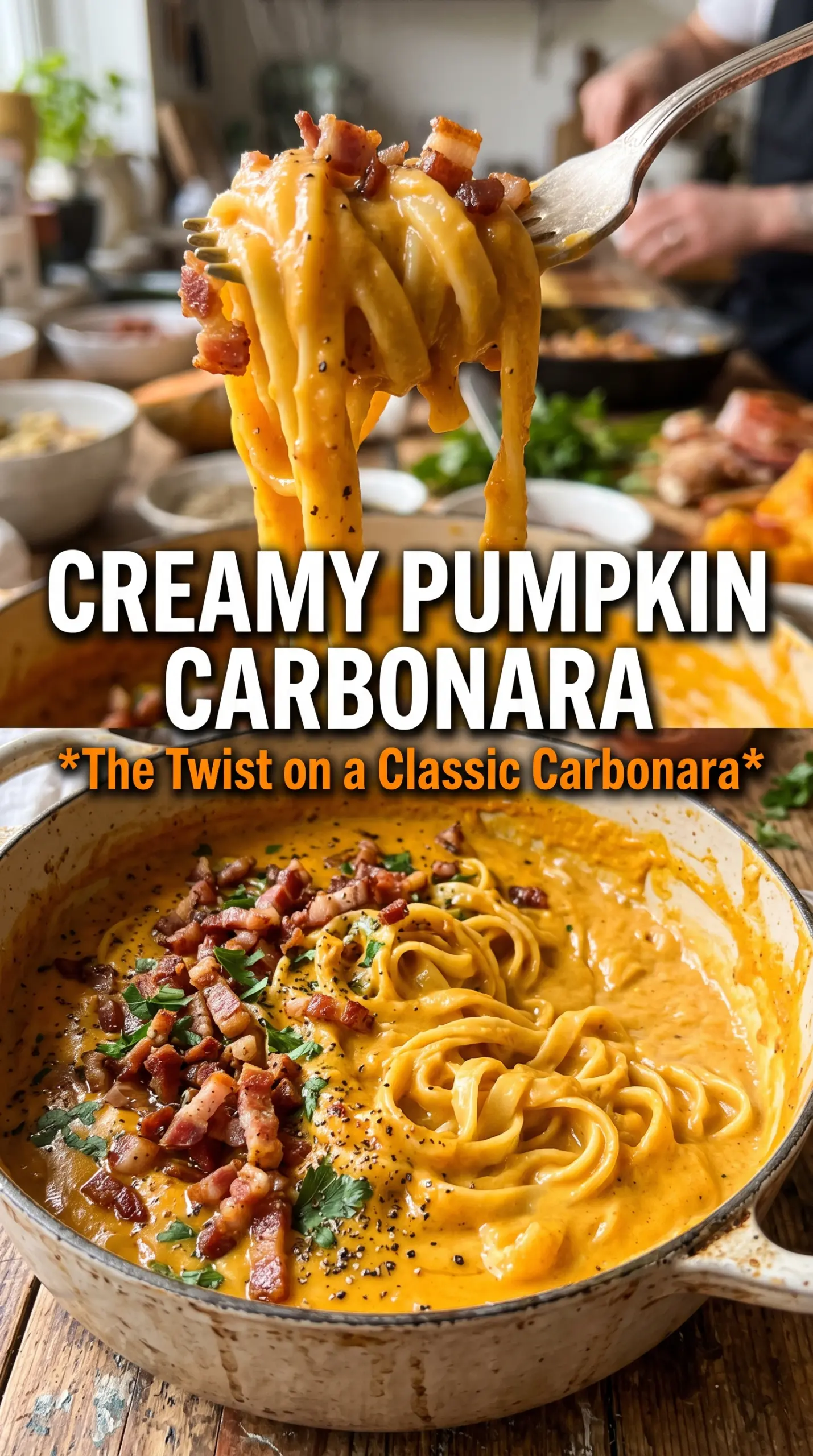
Pumpkin carbonara lands in that sweet spot between comforting and sharp, with a sauce that clings to every strand of pasta instead of pooling in the bowl. The pumpkin softens the richness of the egg and parmesan, but it doesn’t turn the dish into a cream sauce. What you get is glossy, savory, and peppery, with pancetta bringing the crunch that keeps each bite from feeling heavy.
The trick is treating the pumpkin like part of the carbonara base, not a shortcut to replace it. It gets whisked with the yolks, cheese, and pepper before the pasta ever hits the pan, so the sauce starts smooth and cohesive. Then the hot pasta and a splash of starchy water finish the job off the heat, which is what keeps the eggs silky instead of scrambled. If you’ve ever had carbonara turn grainy, this method fixes the problem at the source.
Below, I’ve included the small details that matter most: how to keep the sauce from tightening too fast, which ingredient is worth buying with care, and what to change if you want to make it gluten-free or a little lighter.
The sauce came out silky and coated the spaghetti perfectly. I was worried the pumpkin would make it heavy, but it stayed light and the pancetta stayed crisp right to the end.
Save this pumpkin carbonara for the night you want a silky pasta sauce with crispy pancetta and no cream.
The Move That Keeps Pumpkin Carbonara Silky Instead of Scrambling
Carbonara fails when the eggs hit direct heat. Pumpkin adds body, but it doesn’t protect the yolks from curdling if the pan is still on the burner. The whole dish depends on residual heat and quick tossing, not cooking the sauce hard. If the skillet is even mildly hot on the burner, the eggs can set into flecks before they have a chance to emulsify.
The other trap is adding too little pasta water. That water isn’t just thinning the sauce; it carries starch that helps the pumpkin, yolks, and parmesan turn into one glossy coating. Add it a splash at a time and keep tossing until the sauce loosens just enough to slide over the pasta. If it looks tight in the bowl, it usually needs another spoonful of water and a few more seconds of tossing.
- Off the heat completely — once the pancetta and garlic are done, pull the pan away from the burner before the pasta goes in. That one move keeps the yolks from scrambling.
- Hot pasta matters — straight-from-the-pot pasta helps the sauce emulsify. Letting it sit too long in the colander makes the final sauce clump.
- Reserved water is part of the recipe — start with less than you think you need. You can always loosen the sauce, but you can’t take water back out once it gets thin.
What the Pumpkin, Yolks, and Parmesan Are Each Doing Here
- Pumpkin puree — use plain pumpkin puree, not pumpkin pie filling. The puree adds body and a gentle earthiness without turning the sauce sweet. Canned works perfectly here, and honestly performs better than watery homemade puree unless you’ve cooked it down first.
- Egg yolks — yolks are what give carbonara its lush texture. Whole eggs can work in a pinch, but the sauce will be looser and a little less velvety.
- Finely grated parmesan — this is worth buying in block form and grating yourself. Pre-grated cheese often has anti-caking agents that keep it from melting as smoothly, which can make the sauce grainy.
- Pancetta or thick-cut bacon — pancetta gives the cleanest savory bite, while bacon adds a smokier edge. Either one works, but keep enough fat in the pan to carry the garlic and coat the pasta.
- Nutmeg and black pepper — the nutmeg should stay in the background. It rounds out the pumpkin without making the dish taste like dessert, and the pepper is what keeps the sauce tasting like carbonara instead of squash pasta.
Building the Sauce Without Letting It Break
Crisping the Pancetta First
Cook the pancetta slowly enough for the fat to render before the edges brown. You want crisp pieces and a little fat left in the skillet, not a dry pan. Add the garlic only after the pancetta is crisp, then cook just until fragrant. If the garlic starts browning hard, it turns bitter fast and can throw off the whole sauce.
Whisking the Base Until It’s Smooth
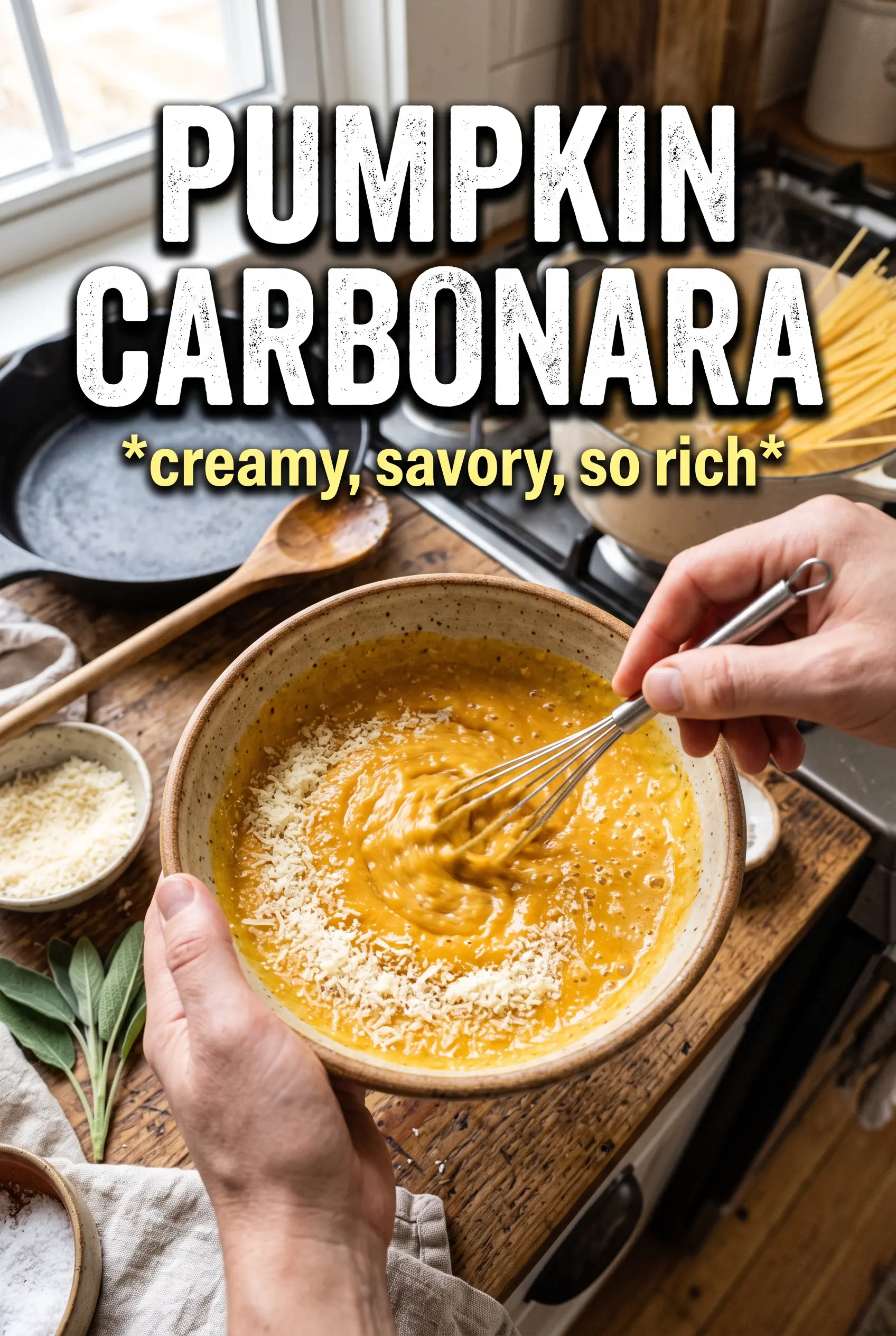
Combine the yolks, pumpkin, parmesan, nutmeg, and pepper in a bowl before the pasta is ready. The mixture should look thick and grainy from the cheese, not loose like cream. That’s fine. Once the hot pasta and water get involved, it turns silky. If you leave the cheese out of the bowl and add it later, it tends to clump before it melts.
Turning Heat Into Emulsion
Add the drained pasta to the skillet, then take the pan completely off the burner before the egg mixture goes in. Toss fast and continuously, adding pasta water a splash at a time until the sauce turns glossy and clings to the noodles. If it looks too thick, keep tossing before reaching for more water; often the sauce just needs movement to come together. Serve right away, because carbonara waits for no one and thickens as it sits.
Gluten-Free Pumpkin Carbonara
Use a sturdy gluten-free spaghetti or rigatoni that can handle tossing without breaking apart. The sauce itself stays the same, but gluten-free pasta usually needs a little more reserved water to help the starch carry the emulsion.
Make It Bacon-Forward
Swap pancetta for thick-cut bacon if that’s what you have. Bacon brings more smoke and a slightly sweeter finish, so the dish tastes a little bolder and less traditional, but the sauce structure stays exactly the same.
Dairy-Light Version
You can cut the parmesan back slightly, but don’t remove it completely. The cheese is part of what helps the sauce emulsify and gives it that carbonara finish. Without enough cheese, the pumpkin and eggs taste flatter and the sauce loses body.
Storage and Reheating
- Refrigerator: Store leftovers up to 3 days. The sauce will thicken as it chills and the pasta will absorb some of it.
- Freezer: I don’t recommend freezing this one. Egg-based pasta sauces tend to separate after thawing, and the texture gets rough.
- Reheating: Warm it gently in a skillet over low heat with a splash of water to loosen the sauce. High heat will scramble the eggs, so keep the heat low and stir until just warmed through.
Answers to the Questions Worth Asking
Pumpkin Carbonara
Ingredients
Equipment
Method
- Bring a pot of water to a boil and add enough salt to make it taste very well seasoned, then cook the spaghetti or rigatoni until al dente. Reserve 1 cup pasta cooking water before draining, then set aside.
- Add the pancetta or thick-cut bacon to a large skillet and cook until crispy, stirring occasionally. Add the minced garlic and cook 1 minute, then remove the skillet from the heat.
- Whisk the egg yolks, pumpkin puree, parmesan, nutmeg, and black pepper in a bowl until smooth. Keep it ready for immediate tossing.
- Add the hot pasta to the pancetta pan and immediately remove from heat completely. Quickly add the egg mixture, tossing constantly so the residual heat cooks the eggs without scrambling them.
- Splash in pasta cooking water a little at a time while tossing until a silky sauce forms that coats the pasta. If it looks tight, add another small splash and toss again.
- Serve immediately with extra parmesan and black pepper on top. Make sure the sauce is glossy before portioning.