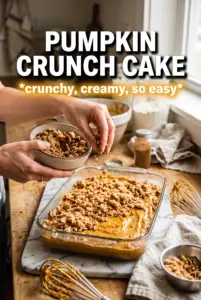
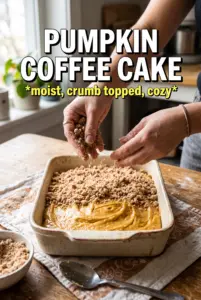
Pumpkin dump cake bakes into one of those desserts that disappears faster than you expect. The bottom turns into a soft pumpkin custard, the top stays craggy and crisp, and the buttery spice cake layer soaks up just enough moisture to taste almost cobbler-like without going soggy. Served warm with vanilla ice cream, it lands somewhere between pumpkin pie and a crisp, which is exactly why people keep coming back for another spoonful.
The part that makes this version work is restraint. The pumpkin layer is mixed smooth before it goes into the pan, but the cake mix stays dry on top and the butter does the work of turning it into a golden crust in the oven. If the butter doesn’t cover the surface evenly, you’ll get dry patches of powdery mix, so the slices need to go edge to edge. That’s the difference between a topping that bakes up crisp and one that stays dusty.
Below you’ll find the small details that matter most, including the topping coverage that keeps the cake mix from baking up unevenly and a few smart swaps if you want to adjust the flavor or make it your own.
The pumpkin layer set up beautifully and the butter slices gave the top those crunchy golden spots without any dry cake mix left over. I served it warm and my husband went back for seconds before I even got mine plated.
Save this pumpkin dump cake for the nights when you want a warm custardy filling and a crisp buttery spice cake topping with almost no effort.
The Butter Layer Is What Keeps the Topping from Staying Powdery
Dump cake sounds like it should be forgiving, and it is, but there’s one place it can go wrong: the dry cake mix needs enough butter contact to bake into a tender, crisp top. If whole sections of mix stay uncovered, those spots don’t brown properly and the topping turns dusty instead of crumbly. Thin butter slices solve that problem better than pouring melted butter in a few spots, because they spread coverage across the surface as they melt.
- Do not stir the cake mix into the pumpkin layer. The batter needs to stay underneath so the top can bake into a crust while the bottom turns creamy.
- Use thin butter slices, not thick chunks. Thin slices melt faster and cover more surface, which means fewer dry patches.
- Watch for deep golden spots at the edges. That’s where you get the best texture contrast, with crisp edges and a softer center.
- Let it rest before serving. A short cool-down helps the pumpkin layer set so the spoonfuls hold together instead of running.
What Each Ingredient Is Actually Doing in This Dessert
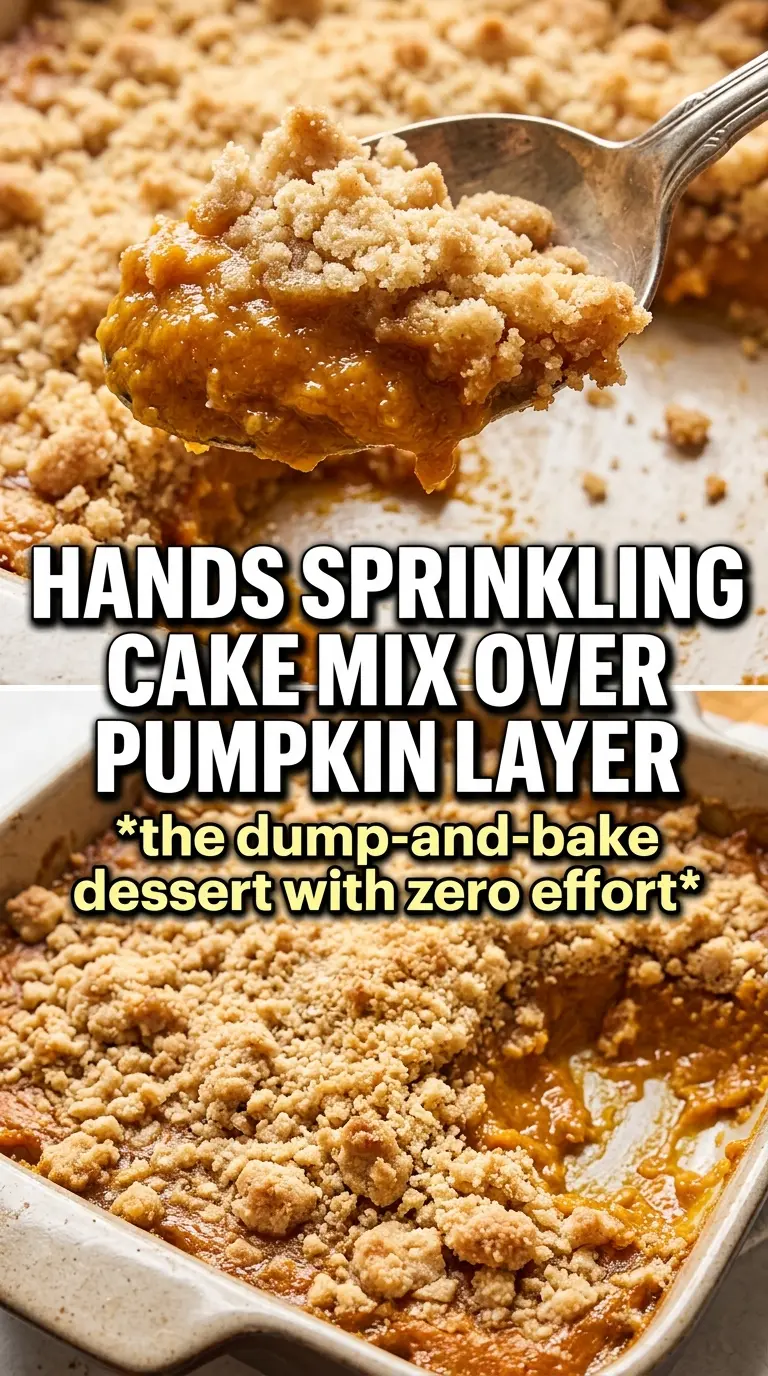
- Pumpkin puree gives the cake its custardy base and earthy pumpkin flavor. Use plain pumpkin puree, not pumpkin pie filling, which already contains sugar and spices and throws off the balance.
- Evaporated milk adds richness without making the filling as loose as regular milk would. It helps the bottom bake up smooth and set.
- Eggs give the pumpkin layer structure so it slices and spoons cleanly after baking.
- Spice cake mix brings the sweet, spiced top layer in one box. Yellow cake mix works too, but it tastes milder and needs the pumpkin spice and cinnamon to carry more of the flavor.
- Butter is what turns the dry mix into a crisp, golden crumble. This is not the place to cut back.
- Pecans add a toasted crunch if you want a little extra texture. They’re optional, but they fit the dessert well.
Building the Layers So the Center Sets and the Top Stays Crisp
Mixing the Pumpkin Base
Whisk the pumpkin puree, evaporated milk, eggs, sugar, pumpkin pie spice, cinnamon, and salt until the mixture looks smooth and even. You’re aiming for a pourable custard, not a foamy batter, so stop once the sugar dissolves and everything is fully blended. If you leave streaks of egg white, those streaks can bake into little bits of firm custard that break up the texture.
Spreading the Cake Mix Without Stirring It In
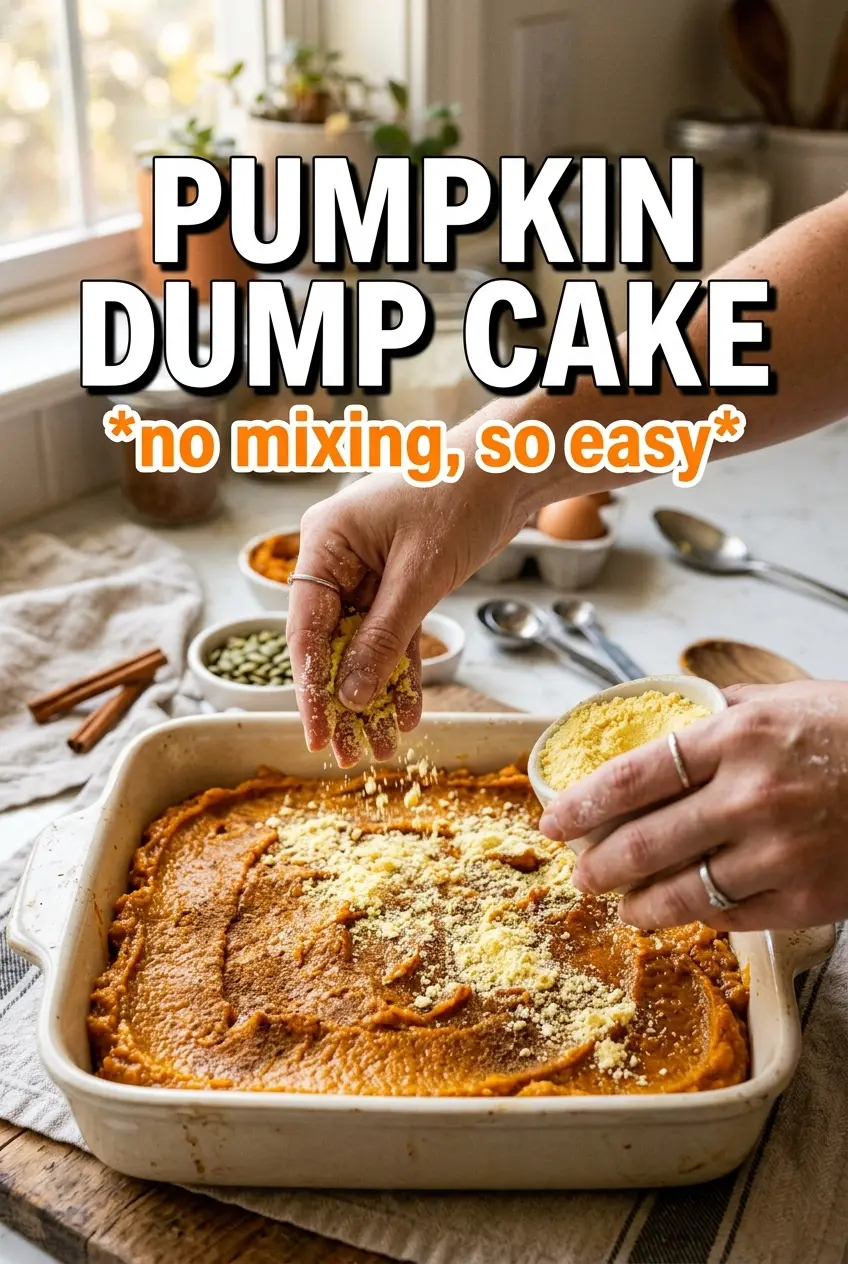
Pour the pumpkin mixture into the prepared dish, then scatter the dry cake mix across the top in an even layer. Don’t press it down or mix it into the filling. The dry powder needs to sit above the custard so the butter can melt through it and create pockets of crisp topping instead of a uniform paste.
Covering Every Inch with Butter
Arrange the butter slices in a single layer over the cake mix, making sure most of the surface is covered. This is the step that decides whether the top bakes up golden and craggy or stays floury in places. If you see large stretches of dry mix, add more butter slices before the pan goes into the oven.
Baking Until the Center Is Set
Bake until the top is deeply golden and the pumpkin layer no longer sloshes in the middle when you gently nudge the pan. The edges should look set and the top should be crisp in spots, with the butter fully melted into the cake mix. If the center still looks loose, give it a few more minutes; underbaking here leaves you with a soupy middle that won’t hold once served.
How to Change the Flavor Without Losing the Texture
Gluten-Free Cake Mix Swap
Use a gluten-free spice or yellow cake mix in the same amount. The dessert still bakes up with a crisp top, though some gluten-free mixes brown a little faster, so start checking a few minutes early.
Dairy-Free Version
Swap the evaporated milk for full-fat canned coconut milk and use a plant-based butter that bakes well. You’ll get a slightly richer coconut note, and the topping may brown a little differently, but the custard texture still sets nicely.
Extra Crunch on Top
Add chopped pecans before baking for a toasted, nutty layer that plays well with the spice cake mix. Toast them first if you want a deeper nut flavor, but keep the layer light so they don’t block too much butter from reaching the cake mix.
Using Yellow Cake Mix
Yellow cake mix makes a sweeter, milder topping and lets the pumpkin filling lead. If you go this route, keep the spices as written so the dessert still tastes like pumpkin and not plain custard under cake.
Storage and Reheating
- Refrigerator: Store covered for up to 4 days. The topping softens as it sits, but the flavor stays great.
- Freezer: Freeze in portions for up to 2 months. Wrap tightly and thaw in the refrigerator before reheating so the custard layer doesn’t separate.
- Reheating: Warm individual servings in the microwave in short bursts, or reheat the whole dish covered in a 300F oven. Don’t blast it on high heat or the edges dry out before the center warms through.
Questions I Get Asked About This Recipe
Pumpkin Dump Cake
Ingredients
Equipment
Method
- Preheat the oven to 350°F and grease a 9x13 baking dish so the topping can crisp without sticking.
- Whisk pumpkin puree, evaporated milk, eggs, granulated sugar, pumpkin pie spice, cinnamon, and salt until smooth.
- Pour the pumpkin mixture into the bottom of the prepared dish.
- Dump the dry cake mix evenly over the pumpkin layer and do not stir so the layers stay distinct.
- Arrange thin slices of unsalted butter in a single layer over the entire surface of the cake mix, covering every inch for an even crisp crust.
- Scatter chopped pecans over the top if using for added crunch.
- Bake for 45-50 minutes at 350°F until the top is deeply golden and crispy and the pumpkin layer is set.
- Serve warm with vanilla ice cream so the filling stays saucy and the crust contrasts with the cold scoop.