Thick slices of pumpkin French toast turn crisp and custardy at the same time, with a warm spiced center that tastes like breakfast done right. The edges brown into a buttery crust while the middle stays soft and rich, which is exactly what you want when pumpkin and brioche meet in the skillet.
The trick is keeping the custard balanced. Pumpkin puree adds body, but too much and the bread turns heavy before it has time to cook through. A mix of eggs, milk, maple syrup, and a little spice gives you that classic French toast soak with just enough pumpkin flavor to show up without turning the whole pan gummy.
Below, I’ll walk through the small details that keep the slices from getting soggy and the best way to serve them if you want that hot syrup-and-spice finish every time.
The custard soaked in just enough to flavor the brioche without making it fall apart, and the outside got that deep golden edge I always chase. I’ll be using the 30-second soak from now on.
Save this pumpkin French toast for a slow weekend breakfast with crisp edges, custardy centers, and plenty of maple syrup.
The Soak That Gives You Custardy Centers Without a Soggy Slice
The biggest mistake with pumpkin French toast is treating the bread like plain sandwich slices. Pumpkin puree thickens the custard, and that extra body means the bread needs a brief soak, not a long bath. Brioche and challah hold up best because they’re rich and sturdy enough to absorb flavor without collapsing before they hit the pan.
Medium heat matters here. If the skillet runs too hot, the outside browns before the custard in the center has set. If it’s too cool, the bread just dries out slowly and never gets that crisp, golden shell. You’re looking for a steady sizzle when the bread lands, then a surface that turns deep gold and releases cleanly from the pan.
- Thick-cut brioche or challah — Thin bread turns limp fast. Slice it thick enough that it can drink up the custard and still keep its shape.
- Pumpkin puree — This gives the toast its body and autumn spice base. Use plain puree, not pumpkin pie filling, which is already sweetened and spiced.
- Whole milk or half-and-half — Whole milk gives you a lighter custard, while half-and-half adds a richer, almost pudding-like middle. Either works, but don’t swap in skim milk if you want the same texture.
- Eggs — They set the custard so the bread cooks into a soft, sliceable center instead of staying wet. Three eggs is the sweet spot for this amount of pumpkin.
Building the Custard So It Cooks Through, Not Just Browned on Top
- Eggs — Whisk them first so the custard starts smooth before the pumpkin goes in. Any streaks of egg white will show up as uneven cooked spots on the bread.
- Pumpkin puree — This needs to be fully broken up into the liquid ingredients. If it stays lumpy, it clings to the bread in patches instead of coating it evenly.
- Maple syrup — A little in the custard gives the toast a rounded sweetness from the inside out. Don’t overdo it, or the bread will brown too fast in the pan.
- Pumpkin pie spice and cinnamon — The two-spice combination gives depth without tasting dusty. Cinnamon alone works in a pinch, but the pie spice brings that familiar bakery-style pumpkin note.
- Vanilla extract — This softens the pumpkin and makes the custard smell warm as soon as it hits the skillet. It’s subtle, but it pulls the whole dish together.
The Part of the Process Where the Texture Is Won or Lost
Whisking the Custard Until It’s Completely Smooth
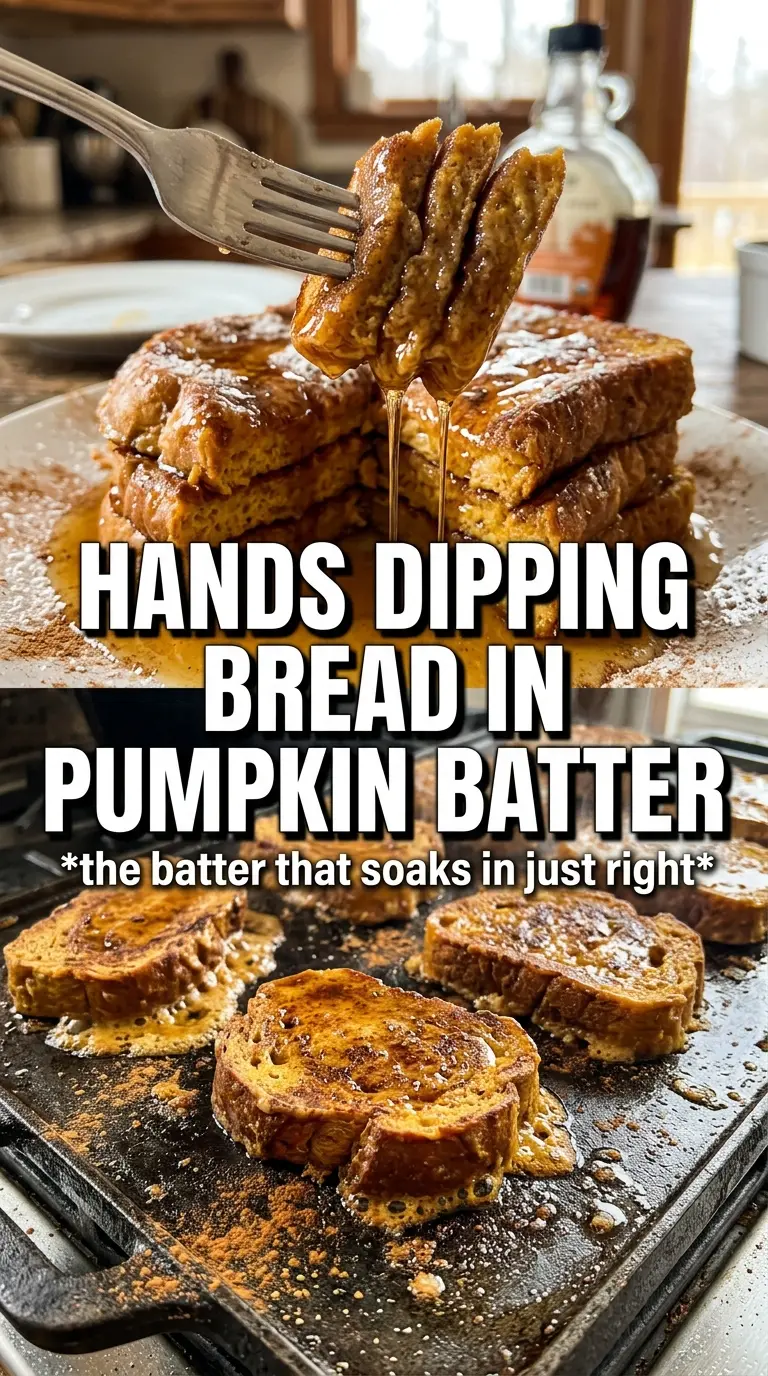
Combine the eggs, pumpkin puree, milk, maple syrup, pumpkin pie spice, cinnamon, vanilla, and salt in a wide bowl and whisk until the mixture looks uniform and silky. You shouldn’t see streaks of egg or little orange clumps of pumpkin. If the custard looks grainy now, it’ll cook that way later, so take a full minute and get it smooth before the bread goes near it.
Letting the Bread Soak Just Long Enough
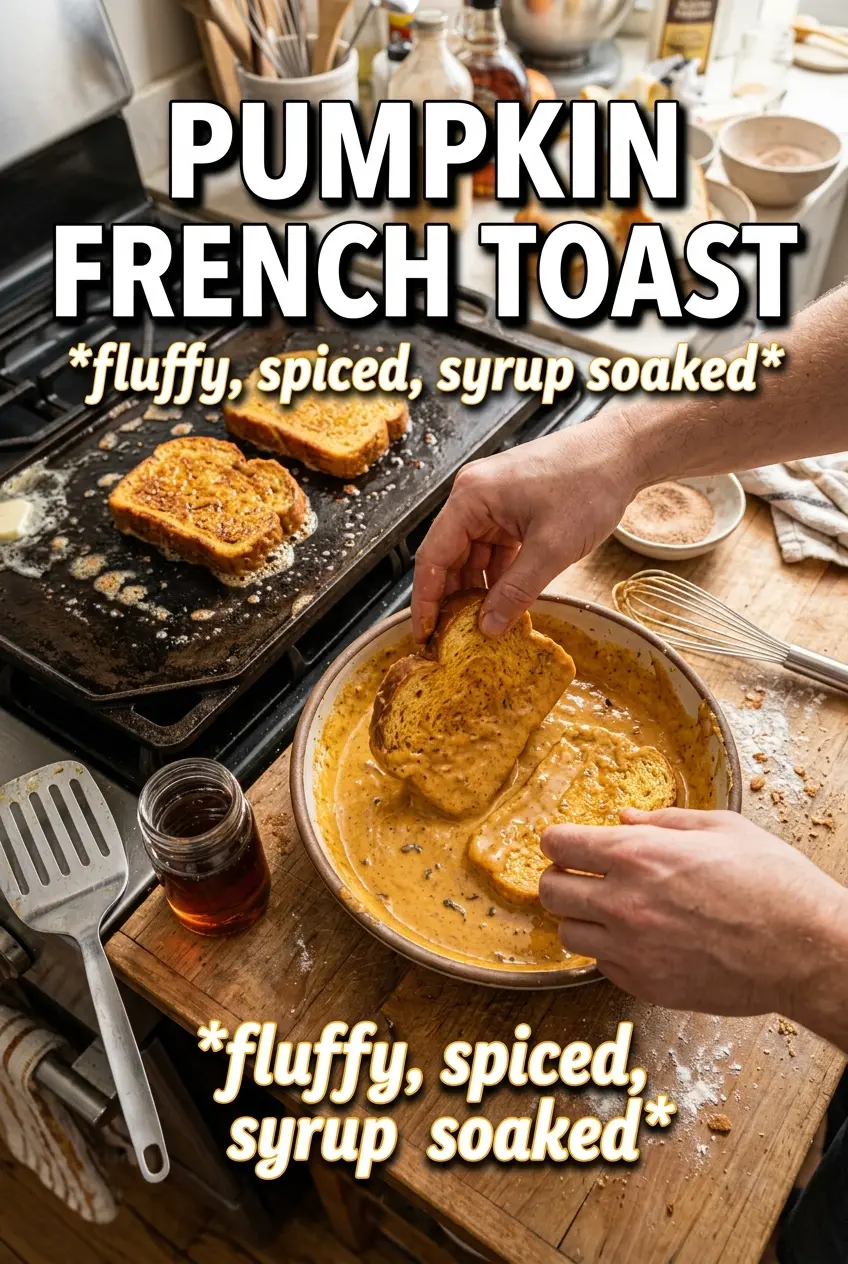
Dip each slice in the custard and let it sit for about 30 seconds per side. That’s enough for brioche or challah to absorb flavor without turning fragile. If the bread is especially fresh and soft, keep the soak on the short side. If it’s day-old and a little drier, it can handle the full 30 seconds without falling apart.
Cooking to a Deep Golden Crust
Melt butter on a medium griddle or skillet, then cook the bread for 2 to 3 minutes per side. You’re looking for a deep golden crust, not pale toast with wet centers. Add more butter between batches so each slice gets that buttery edge, but don’t crowd the pan or the slices will steam instead of browning.
Finishing With the Right Toppings
Serve the French toast hot with maple syrup, a dusting of powdered sugar, or whipped cream. The syrup should hit the plate warm, not cold from the fridge, because the temperature contrast is part of what makes each bite taste so good. If you’re serving a crowd, hold finished slices on a wire rack in a low oven so the bottoms stay crisp instead of going soft on a plate.
How to Change This Pumpkin French Toast Without Losing the Good Part
Dairy-Free Version
Use unsweetened oat milk or almond milk instead of dairy milk, and cook with a plant-based butter. Oat milk gives the closest body, while almond milk makes the custard a little lighter. The toast will still brown well, but it won’t have quite the same rich finish as the original.
Gluten-Free Bread That Actually Holds Up
Use a sturdy gluten-free brioche-style loaf if you can find one, and keep the soak short. Many gluten-free breads break down faster than wheat bread, so the key is a quick dip and a calm flip. You’ll get the best results from slices that are already a little dry.
Extra-Spiced Pumpkin French Toast
Add another 1/4 teaspoon of cinnamon or a pinch of nutmeg if you want a bolder spice finish. Go slowly here, because too much spice can crowd out the pumpkin and make the custard taste dry on the palate. The goal is warm and fragrant, not overpowering.
Storage and Reheating
- Refrigerator: Store leftovers in an airtight container for up to 3 days. The crust softens, but the flavor holds well.
- Freezer: Freeze cooked slices in a single layer, then stack with parchment between them for up to 2 months. This is one of the better breakfasts to freeze if you reheat it properly.
- Reheating: Warm in a 350°F oven or toaster oven until hot and crisp again. The mistake people make is microwaving it, which heats the custard but turns the bread rubbery.
Questions I Get Asked About This Recipe
Pumpkin French Toast
Ingredients
Equipment
Method
- Whisk eggs, pumpkin puree, milk or half-and-half, maple syrup, pumpkin pie spice, cinnamon, vanilla extract, and salt until smooth and uniform in color.
- Heat a griddle or skillet over medium heat and melt about 1 tablespoon butter, letting it foam slightly before you start dipping.
- Dip each bread slice in the pumpkin custard, letting it soak for 30 seconds per side so the center absorbs without becoming soggy.
- Cook the soaked slice for 2-3 minutes per side until deeply golden, adjusting heat as needed to maintain steady browning.
- Transfer the cooked French toast to a sheet pan to hold while you repeat cooking with remaining slices, adding more butter as needed for each batch.
- Serve immediately with warm maple syrup, dusted powdered sugar, and whipped cream on top.