Deep brown pumpkin molasses cookies bake up with crisp sugar-dusted edges, chewy centers, and that old-school spiced aroma that fills the kitchen before the timer even goes off. The pumpkin keeps the crumb soft without making the cookies cakey, while molasses gives them a darker, richer depth than a standard pumpkin cookie ever gets. Rolled in sugar and baked just until crinkled, they land somewhere between a classic molasses cookie and a soft fall bakery cookie, which is exactly why they disappear fast.
The trick here is restraint. Pumpkin adds moisture, but too much turns the dough dense and sticky, so the puree gets blotted dry before it ever meets the bowl. The spice blend matters too: cinnamon and ginger carry the warmth, while cloves, allspice, and a little black pepper give the cookies that rounded, almost peppery finish that keeps them from tasting flat. Chilling the dough helps the butter firm up again, which keeps the cookies thick enough to crackle on top instead of spreading into thin rounds.
Below you’ll find the specific cues I watch for in the bowl and on the baking sheet, plus a few swaps that still keep the texture right.
The pumpkin stayed in the background and the molasses came through just enough. I chilled the dough like you said and the cookies baked up thick with those crackly tops instead of spreading flat.
Save these pumpkin molasses cookies for the kind of batch that stays soft in the center and crinkled on top.
The Pumpkin Trick That Keeps These Cookies Soft Instead of Cakey
Pumpkin is the ingredient that can quietly ruin a cookie if it goes in unchecked. It brings moisture, but it doesn’t behave like butter or egg, so too much puree pushes the dough into muffin territory and blunts the edges. Blotting the pumpkin dry first keeps the flavor and color without flooding the dough.
The other thing that matters is baking time. These cookies should look set at the edges and still a little soft in the middle when they come out. If you wait until they look fully baked in the oven, they’ve already gone too far and you’ll lose that chewy center once they cool.
What Each Ingredient Is Actually Doing in the Bowl
- All-purpose flour — Gives the cookies their structure without making them tough. Measure it lightly; too much flour makes the dough dry and the cookies lose their chew.
- Baking soda — This drives the spread and the crinkled top. If it’s old, the cookies will bake up flatter and less lively, so use fresh soda for the best rise.
- Brown sugar — Brings moisture and that deep caramel note that works with molasses. Pack it firmly so the dough has enough sweetness and softness.
- Molasses — This is the backbone of the flavor. Use unsulphured molasses if you can; blackstrap is too bitter here and overwhelms the pumpkin.
- Pumpkin puree — Adds softness and a subtle earthy note, but only when it’s blotted dry. A wetter puree makes the dough sticky and can keep the cookies from setting properly.
- Spices — Cinnamon and ginger lead, while cloves, allspice, and black pepper round things out. The pepper doesn’t make the cookies hot; it sharpens the spice so they don’t taste one-dimensional.
- Granulated sugar for rolling — Gives the outside a light crunch and helps create those crackly, sparkly tops. Don’t skip it if you want that bakery-style finish.
Mixing the Dough So the Cookies Stay Thick and Crinkled
Blotting the Pumpkin First
Spread the pumpkin puree on a few layers of paper towel and press another towel on top until it feels dense, not wet. You don’t need to squeeze it bone-dry, but it should stop looking glossy. If you skip this, the dough gets slack and the cookies spread more than they should.
Building the Base
Beat the butter and brown sugar until the mixture looks fluffy and a little paler, then add the egg, molasses, pumpkin, and vanilla. The mixture may look slightly loose at this stage, and that’s normal. If it looks broken, keep going; the flour will pull it back together.
Keeping the Dry Ingredients Even
Whisk the flour, baking soda, salt, and spices together before adding them to the bowl. That keeps the cloves and pepper from clumping in one bite and helps the baking soda distribute evenly, which matters for the crinkled finish. Stir only until the flour disappears so the cookies stay tender.
Chilling for Shape
Thirty minutes in the fridge firms the dough just enough to handle cleanly and bake thick. If the dough is still sticky after chilling, give it another 10 minutes instead of adding flour. Extra flour changes the texture; a little extra chill fixes the problem without dulling the cookies.
The Sugar Roll and Bake
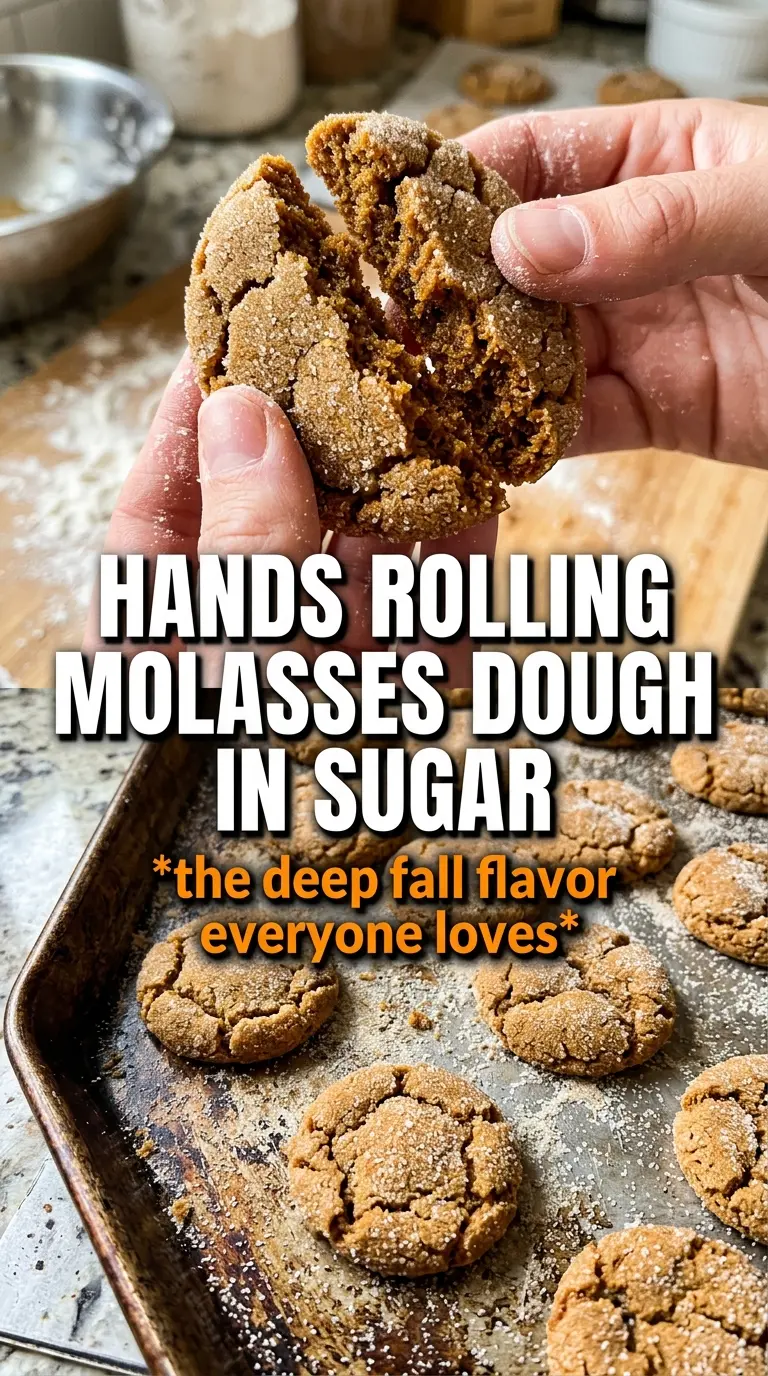
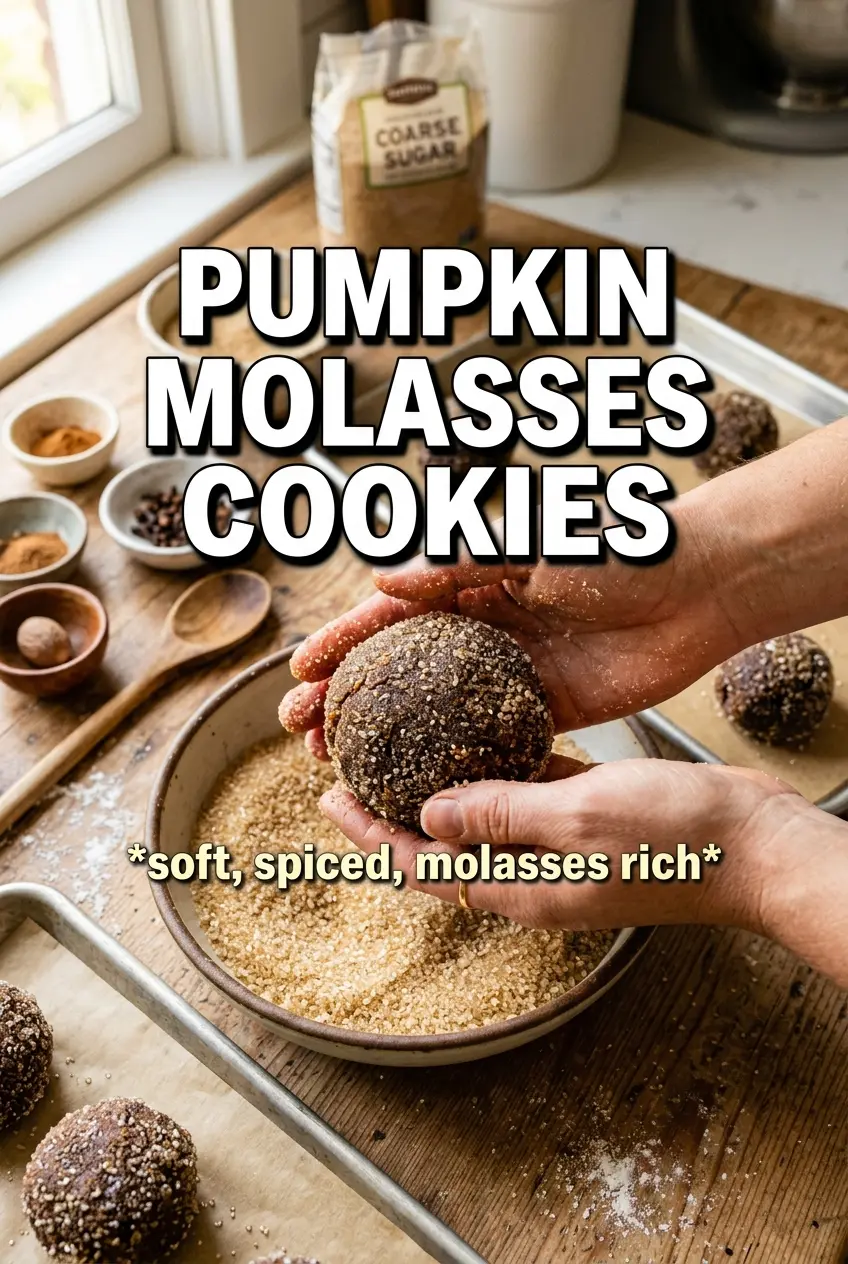
Scoop the dough into 1 1/2-tablespoon balls and roll each one generously in granulated sugar. Bake on lined sheets at 375°F until the tops are crinkled and the edges are set, usually 9 to 11 minutes. Pull them before they look fully done; they finish on the pan and stay soft in the center.
How to Adapt These Cookies Without Losing the Texture
Gluten-Free Version With a 1:1 Flour Blend
A good 1:1 gluten-free baking flour can work here, but the dough may need the full chill time and possibly a few extra minutes in the oven. The cookies usually come out a little more delicate and less chewy, but the sugar coating and deep spice still carry them well.
Dairy-Free Swap for the Butter
Use a plant-based stick butter, not a tub spread, so the dough still holds shape. The flavor is a little less rich, but the cookie structure stays close to the original and the edges still bake up with that nice crisp finish.
Extra-Spiced Batch for People Who Like a Stronger Molasses Bite
Add another 1/4 teaspoon of ginger or a pinch more black pepper if you want the spice to linger a little longer. Don’t push the cloves much higher than written, or the cookies start tasting heavy instead of warm.
Storage and Reheating
- Refrigerator: Store in an airtight container for up to 5 days. They stay soft, though the sugar coating softens a bit by day two.
- Freezer: Freeze baked cookies for up to 2 months, or freeze scooped dough balls and roll them in sugar right before baking. The dough freezes better than the baked cookies if you want the freshest texture.
- Reheating: Warm baked cookies at room temperature or for a few seconds in the microwave. Don’t overheat them, or the centers turn dry and the sugar coating melts into the cookie.
Questions I Get Asked About This Recipe
Pumpkin Molasses Cookies
Ingredients
Equipment
Method
- Preheat oven to 375F and line baking sheets. Visual cue: sheets are ready for scooped dough.
- Blot pumpkin puree very dry. Visual cue: the puree looks less wet and clings less to the surface.
- Whisk all dry ingredients together in a bowl. Visual cue: spices are evenly distributed in the flour mixture.
- Beat softened butter and packed brown sugar until smooth and creamy. Visual cue: mixture looks lighter and well combined.
- Add egg, molasses, blotted pumpkin puree, and vanilla, then beat to combine. Visual cue: dough turns glossy and darker brown.
- Fold the flour mixture into the wet ingredients until just combined. Visual cue: no dry streaks remain.
- Refrigerate the dough for 30 minutes. Visual cue: dough firms up and becomes easier to scoop.
- Scoop 1-1/2 tablespoon balls of dough and roll them in granulated sugar. Visual cue: cookies have a sparkling, even sugar coating.
- Bake at 375F for 9-11 minutes until crinkled. Visual cue: edges look set while centers stay soft, and you should not overbake.