Pumpkin risotto turns velvety and rich when the rice is cooked the right way, and the bacon and parmesan push it into the kind of dinner that gets scraped clean from the bowl. The pumpkin brings a soft sweetness and a deep golden color, but the real payoff is the texture: creamy without being loose, with each grain of rice still holding its shape under the spoon.
What makes this version work is the layering. The bacon fat seasons the onion, the rice gets toasted before any liquid goes in, and the broth is added slowly enough for the starch to build that classic risotto body. Pumpkin puree goes in near the end so it stays smooth and round instead of getting dull or gluey, and the parmesan finishes the dish with enough salt and depth to balance the sweetness.
Below, I’ve included the spots where risotto most often goes wrong, plus a few swaps that still keep the texture on track. If you’ve ever ended up with pumpkin rice soup or a pan that seized up halfway through, this is the part worth reading closely.
The rice stayed perfectly creamy and the pumpkin never turned grainy. I loved that the bacon stayed crisp on top instead of getting soft in the risotto.
Save this pumpkin risotto with bacon and parmesan for a creamy stovetop dinner with crispy sage and no broken sauce.
The Part Where Risotto Usually Goes Wrong
The biggest mistake with risotto is rushing the liquid. If you pour in too much broth at once, the rice boils instead of gently releasing starch, and you end up with something loose, uneven, or gummy at the edges. The slow ladle-by-ladle method isn’t fussy for the sake of it; it’s how you get that creamy, cohesive texture without turning the grains mushy.
Another common problem is adding the pumpkin too early. Pumpkin puree thickens the pan fast, which can make it harder to judge when the rice is actually tender. Stir it in after the rice is nearly done, when most of the broth has already been absorbed, so it blends smoothly and keeps the risotto from tasting heavy.
- Toasting the rice gives each grain a little structure before the liquid starts softening it.
- Warm broth keeps the cooking steady; cold broth drops the temperature and slows everything down.
- Finishing with butter and parmesan gives the risotto its glossy, spoonable texture.
What Each Ingredient Is Actually Doing Here
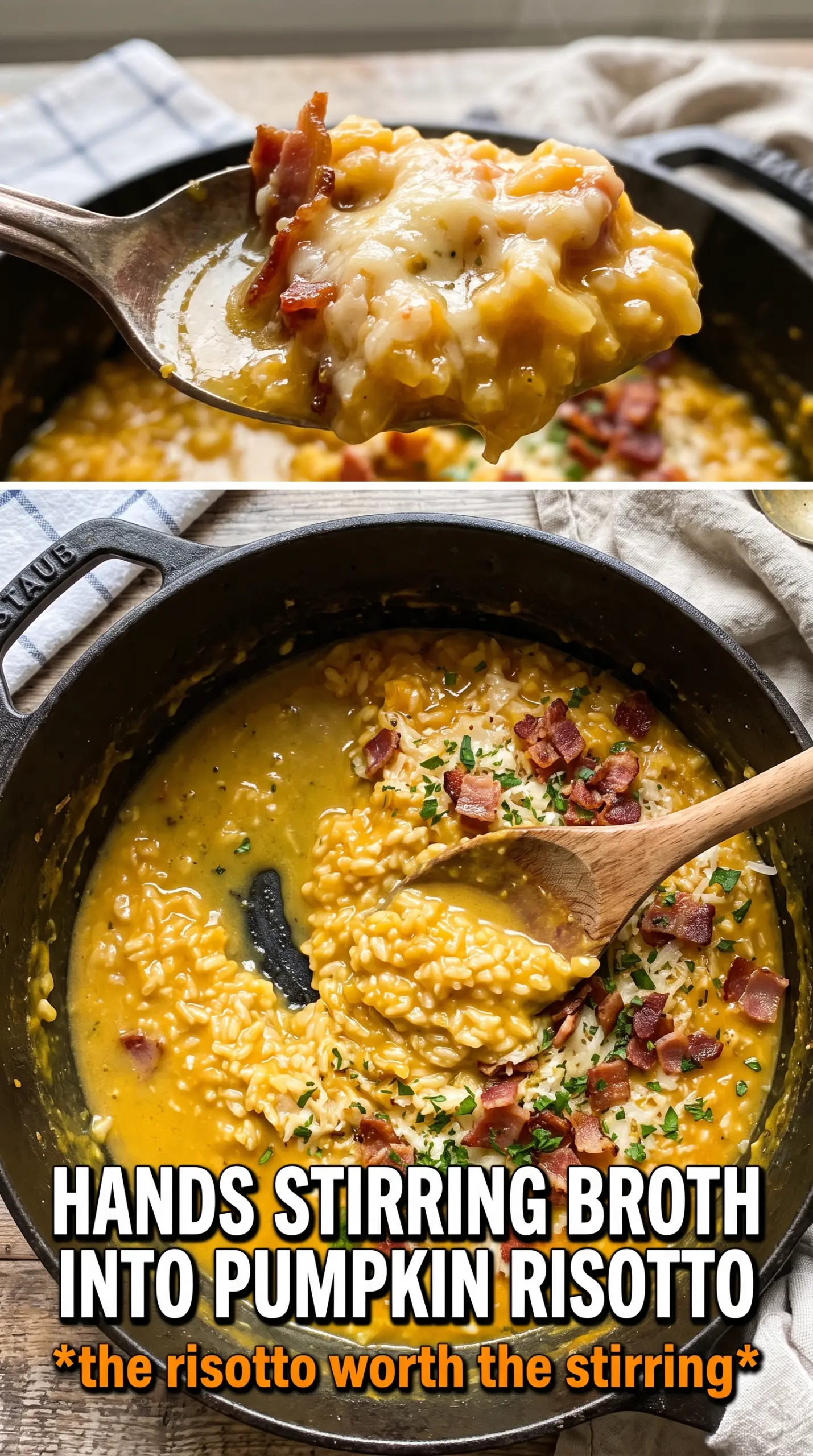
- Arborio rice is what makes risotto feel like risotto. It has the short, starchy grain that loosens into cream while still holding a little bite. Long-grain rice won’t give you the same body.
- Pumpkin puree adds sweetness, color, and thickness. Canned puree works well here, and homemade puree is fine as long as it’s smooth and not watery.
- Bacon brings salt, fat, and a crisp finish on top. The rendered fat also starts the flavor base, so don’t drain the pan completely.
- Dry white wine adds brightness and helps cut through the richness. If you need a substitute, use a splash of broth plus a little lemon juice at the end, though the flavor won’t be as layered.
- Parmesan needs to be finely grated so it melts into the rice instead of clumping. Pre-grated cheese often stays a little gritty, especially in a thick risotto.
- Sage gives the dish a sharp, savory finish that works beautifully with pumpkin. Frying the leaves in butter turns them crisp and takes away any raw, grassy edge.
The Stirring, Sipping, and Tasting That Build the Bowl
Render the Bacon First
Cook the diced bacon until it’s deeply crisp and the fat has melted out, then lift it onto paper towels and leave about a tablespoon of fat in the pan. That little bit of bacon fat carries the onion and garlic base, which matters more here than in a plain butter risotto. If you leave too much fat behind, the finished dish can taste greasy instead of rich.
Build the Aromatic Base
Sauté the onion until it’s soft and translucent, not browned. You want sweetness here, not caramelization, because risotto already has enough going on and a dark onion base can muddy the pumpkin. Add the garlic for just a minute at the end so it smells fragrant; if it browns, it turns bitter fast.
Toast the Rice and Let the Wine Disappear
Stir the arborio rice through the hot pan for about two minutes until the edges look slightly translucent. This coats the grains in fat and helps them cook evenly. When you add the wine, keep stirring until the pan looks nearly dry again; if the wine tastes sharp when you move to the broth, the acid hasn’t cooked off enough.
Bring It to Creaminess One Ladle at a Time
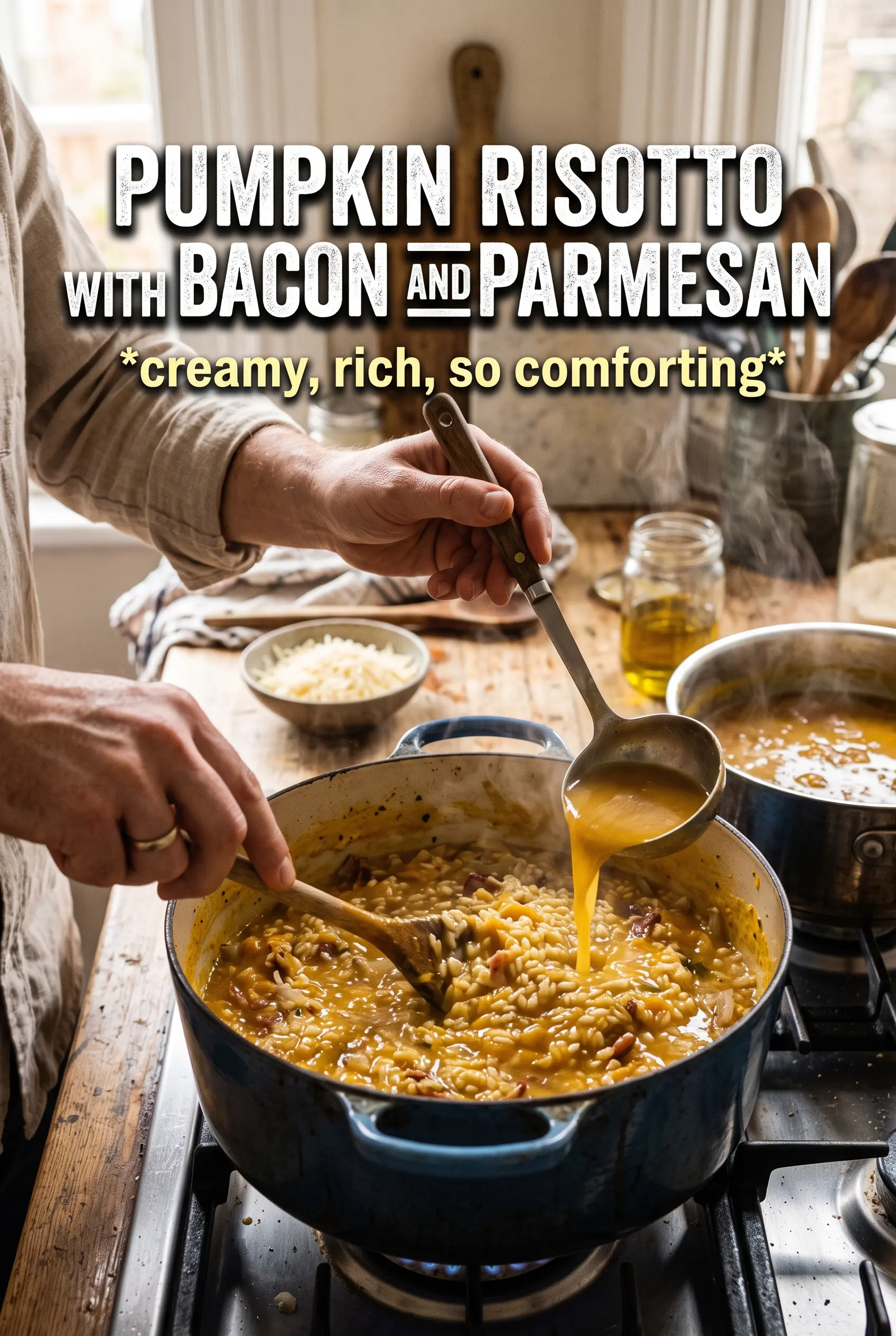
Add warm broth slowly, stirring often and waiting for each addition to absorb before the next one goes in. The mixture should move from soupy to thick and creamy as the rice releases starch, and the grains should soften without falling apart. If the pan starts looking dry before the rice is tender, your heat is too high; lower it and keep going so the liquid can absorb instead of evaporate.
Finish with Pumpkin, Parmesan, and Butter
Stir in the pumpkin once the rice is just about tender, then add the parmesan and butter off the heat or over very low heat. That gentler finish keeps the cheese smooth and prevents the dairy from turning grainy. Taste at the end and adjust with salt and white pepper, because bacon and parmesan already bring a lot of salt to the bowl.
How to Adapt This for a Different Table
Make It Vegetarian
Skip the bacon and start the onion in butter or olive oil. The risotto will still be creamy, but it loses the smoky, salty backbone, so add a little extra parmesan and a pinch of smoked paprika if you want that depth back.
Make It Dairy-Free
Use olive oil instead of butter and finish with a dairy-free parmesan-style alternative. You won’t get quite the same glossy finish, but the pumpkin still gives the dish enough body that it eats like a proper risotto.
Use Pancetta Instead of Bacon
Pancetta gives you a cleaner, less smoky pork flavor and renders in a similar way. It won’t bring the same crisp edge as bacon, but the risotto tastes a little more classic Italian.
Storage and Reheating
- Refrigerator: Store leftovers in an airtight container for up to 3 days. The risotto will thicken as it sits.
- Freezer: I don’t recommend freezing this one. Risotto turns grainy and the pumpkin can get a little loose after thawing.
- Reheating: Warm it gently on the stovetop with a splash of broth or water, stirring until it loosens back up. The mistake is blasting it in the microwave without any added liquid, which dries out the rice before the center heats through.
Answers to the Questions Worth Asking
Pumpkin Risotto With Bacon And Parmesan
Ingredients
Equipment
Method
- Cook the diced bacon over medium heat until crisp, about 6-10 minutes, then remove and drain, leaving 1 tablespoon of bacon fat in the pot.
- Sauté the finely diced onion in the reserved bacon fat for 4 minutes, stirring until softened.
- Add the minced garlic and cook for 1 minute, until fragrant.
- Add the arborio rice and toast for 2 minutes, stirring so the grains are lightly glossy.
- Pour in the dry white wine and stir until absorbed, deglazing the bottom of the pan.
- Add warm chicken broth one ladle at a time, stirring constantly and waiting until each ladle is absorbed before adding the next, about 20-25 minutes total.
- Stir in the pumpkin puree until evenly incorporated and glossy, then add the grated parmesan.
- Finish by stirring in the unsalted butter until melted and creamy, then season with salt and white pepper to taste.
- Fry the fresh sage leaves in a little extra butter until crispy, about 30-60 seconds, then drain on paper towels.
- Serve the risotto topped with the crispy bacon and the crispy sage leaves.