Pumpkin rolls bake up soft, pillowy, and lightly sweet with a warm orange crumb that stays tender long after they come out of the oven. The pumpkin doesn’t make them taste like dessert bread; it gives the rolls a plush texture and a subtle earthy sweetness that plays beautifully with the cinnamon-honey glaze brushed over the top while they’re still hot.
What makes this version work is the balance. The dough starts with warm milk and instant yeast for a quick, reliable rise, then the pumpkin puree adds moisture without turning the dough heavy. The butter goes in melted, which keeps the crumb soft, and the kneading time is long enough to build structure so the rolls still hold their shape after baking.
Below, I’ll walk you through the one place people usually go wrong with pumpkin rolls, plus the small details that keep the texture fluffy instead of dense. If you’ve ever wanted dinner-roll softness with a little more personality, these are worth making.
The dough rose beautifully and the rolls came out so soft in the middle with a golden top. I brushed the glaze on right away like you said, and it soaked in just enough without making them soggy.
Save these pumpkin rolls for a soft, pull-apart breakfast bread with cinnamon honey glaze and a tender pumpkin crumb.
The Dough Needs Enough Time to Go From Sticky to Smooth
Pumpkin dough can fool you. Right after mixing, it often looks softer and a little stickier than a standard roll dough because pumpkin adds moisture without adding structure. The fix is not extra flour right away. Let the kneading do its job for the full 7 to 8 minutes until the dough turns elastic and pulls cleanly from the bowl. If you dump in too much flour early, the rolls bake up dry and tight instead of fluffy.
The first rise matters here because instant yeast and warm milk give you a fast start, but the pumpkin still needs time to relax into the dough. You’re looking for a dough that has doubled, feels airy when you press it, and no longer springs back like a rubber ball. If the kitchen is cool, give it the full hour and a little extra instead of rushing to shape too soon.
What Each Ingredient Is Actually Doing in This Recipe
- Primary ingredient (the star) — Quality matters most. Choose the best you can find.
- Cooking medium (oil, butter, or broth) — This carries flavors and prevents dryness.
- Seasonings (salt, pepper, spices, herbs) — Layer flavors so nothing overpowers. Build depth gradually.
- Aromatics (garlic, onion, herbs) — Cook with fat to bloom flavors. Become the foundation.
- Supporting ingredients — Complement the main ingredient without overpowering it.
- Sauce or liquid (if applicable) — Brings flavors together. Balance richness with acid.
- Acid (lemon, vinegar, wine, or other) — Brightens and prevents flat-tasting results.
- Final finish (garnish, glaze, or sauce) — Prevents one-dimensional taste and adds visual appeal.
What Each Ingredient Is Actually Doing in These Pumpkin Rolls
- Pumpkin puree — This is what gives the rolls their soft, almost cloudlike crumb and warm color. Use plain pumpkin puree, not pumpkin pie filling, or the rolls can come out overly sweet and spiced in a way you can’t control.
- Warm milk — Milk enriches the dough and helps the yeast wake up quickly. It should feel warm, not hot; if it’s too hot for your finger, it can slow or kill the yeast.
- Instant yeast — Instant yeast keeps the rise reliable and saves you from a proofing step. If you only have active dry yeast, dissolve it in the warm milk and give it an extra 5 to 10 minutes before continuing.
- Butter and egg — These build richness and keep the crumb tender. Melted butter works well here because it blends smoothly into the dough without needing a mixer.
- Pumpkin pie spice — This is enough to give the rolls that cozy pumpkin character without overpowering the bread. Fresh spice matters more here than in many baked goods, since the flavor is subtle and can disappear if the spice is old.
Shaping and Baking So the Rolls Stay Soft, Not Dense
Mix Until the Dough Starts to Behave
Once the pumpkin, butter, and egg are added, the dough will look loose and a little messy at first. That’s normal. Add the flour gradually, then knead until it becomes smooth and stretchy instead of shaggy. If the dough tears when you stretch it, it needs more kneading, not more flour. The goal is a soft dough that still has enough strength to hold its shape.
Divide Into Equal Pieces for Even Baking
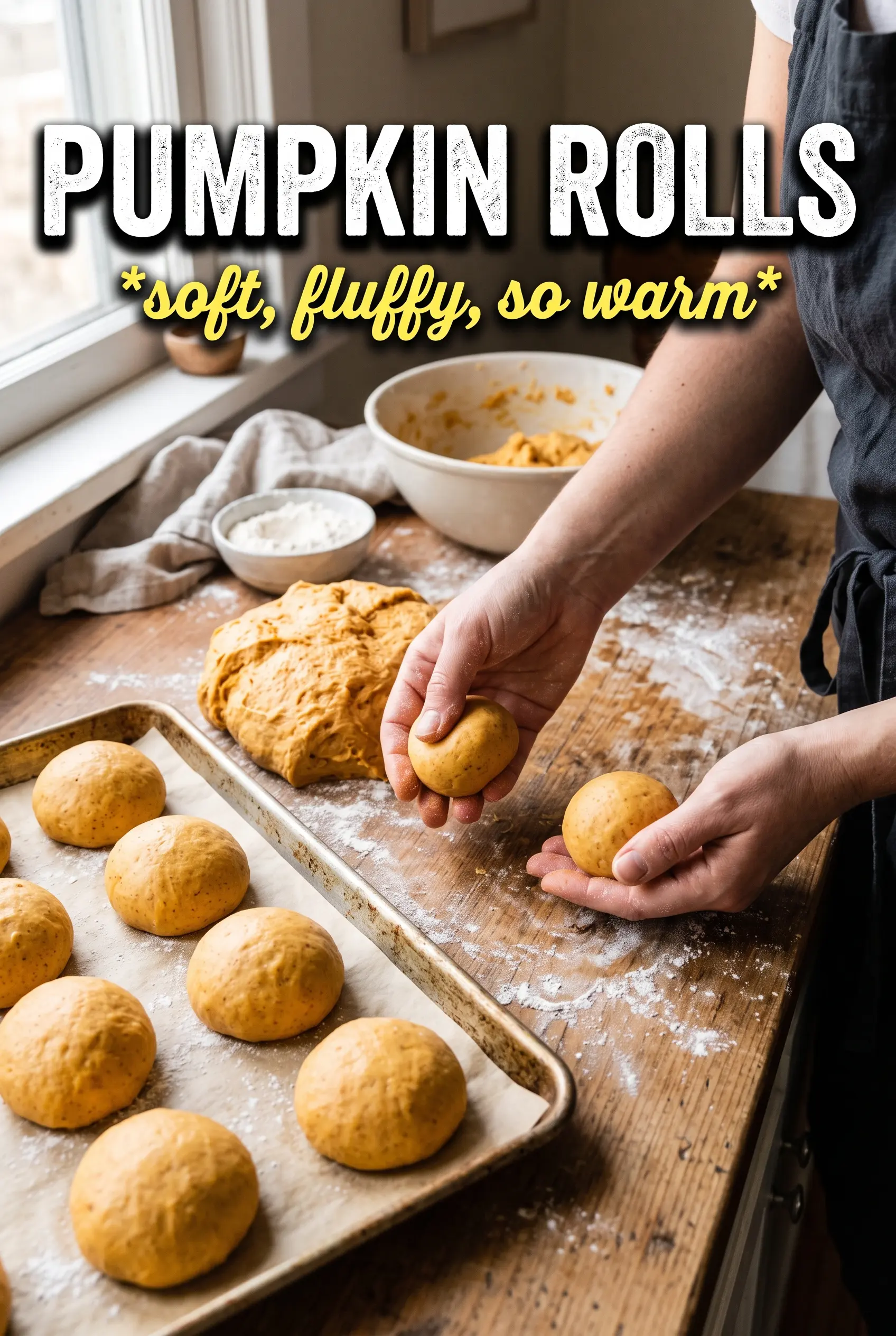
After the first rise, punch the dough down gently and divide it into 12 equal portions. Uneven pieces bake at different speeds, which leaves you with some rolls dry on the edges and others underbaked in the center. Roll each portion into a tight ball so the tops bake smooth and the rolls rise upward instead of spreading sideways.
Watch the Second Rise, Not the Clock Alone
Set the shaped rolls in a greased 9×13 dish and let them rise until they look puffy and touch each other. That last rise is what gives you the pull-apart texture. If you bake them too early, the crumb stays tight and the tops split awkwardly. If they go too far, they can collapse a little in the oven, so look for a soft, expanded dough that slowly springs back when nudged.
Brush the Glaze While They’re Hot
The cinnamon-honey butter glaze goes on as soon as the rolls leave the oven. Hot rolls absorb the glaze just enough to shine without turning greasy. If you wait too long, the butter sits on top instead of sinking in, and you lose that glossy finish. This is the moment that makes them taste bakery-style instead of plain dinner rolls.
How to Adapt These Pumpkin Rolls for Different Tables
Dairy-Free Pumpkin Rolls
Swap the milk for an unsweetened non-dairy milk and use a plant-based butter with a neutral taste. The rolls still rise well and stay soft, but the flavor gets a little less rich, so don’t skip the glaze if you want that buttery finish.
Make Them Sweeter Like a Breakfast Bun
Add another tablespoon of sugar to the dough and brush a little extra glaze over the tops after baking. That gives you a more noticeable bakery-style sweetness, but it also softens the bread-like character, so the rolls read more like a breakfast treat than a side bread.
Using Whole Wheat Flour
Replace up to half the all-purpose flour with white whole wheat flour for a nuttier flavor and a little more heft. The dough will need a touch more milk if it feels dry, and the texture will be a bit less fluffy, but the rolls still stay tender if you don’t overflour them.
Storage and Reheating
- Refrigerator: Store in an airtight container for up to 4 days. They’ll soften slightly from the pumpkin, but they still hold their texture well.
- Freezer: Freeze baked rolls for up to 2 months. Wrap them tightly and thaw at room temperature before reheating.
- Reheating: Warm in a 300F oven for 8 to 10 minutes, or until heated through. Don’t microwave too long or the crumb turns gummy instead of soft.
Answers to the Questions Worth Asking
Pumpkin Rolls
Ingredients
Equipment
Method
- Combine warm milk, instant yeast, and sugar, then rest for 5 minutes to activate the yeast. The mixture should look slightly foamy after resting.
- Add pumpkin puree, melted unsalted butter, and the egg, then mix until the batter/dough base is evenly combined.
- Knead in all-purpose flour, salt, and pumpkin pie spice for 7-8 minutes until smooth. Stop when the dough feels elastic and cohesive.
- Cover and rise for 1 hour. The dough should puff up noticeably, then be ready for punching down.
- Punch down the risen dough to release air, then divide into 12 equal portions.
- Shape each portion into a ball and place them in a greased 9x13 baking dish, spaced evenly.
- Rise the rolls for 30-40 minutes while you preheat the oven to 375F. They should look puffy and slightly risen in the dish.
- Bake at 375F for 18-20 minutes until golden on top. The rolls should look set and lightly browned.
- Brush the rolls immediately with the cinnamon honey butter glaze while they are warm. Use a shiny, even coat so it soaks into the tops.