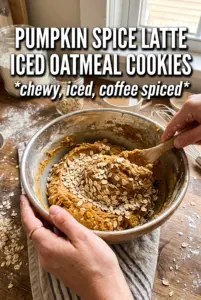
Pumpkin spice latte iced oatmeal cookies hit that sweet spot between hearty and indulgent: chewy in the center, crisp at the edges, and finished with a glaze that tastes like coffee shop autumn in cookie form. The oats give them a sturdy, rustic bite, while the espresso-kissed icing settles into a smooth, crackly top that makes each cookie feel a little more special than your average oatmeal batch.
What keeps this version from turning mushy is simple, but it matters. The pumpkin gets blotted dry before it goes into the dough, which keeps the cookies from spreading too much or baking up cakey. Coarsely pulsed oats do their part too — you still get texture, but the cookies hold together instead of collapsing into a soft oat mound. The espresso powder in the dough is subtle, just enough to deepen the spice without making the cookies taste like coffee.
Below, I’ve included the little details that make these cookies dependable: how to keep the glaze thick enough to stay put, what to look for when the cookies are baked through, and a few swaps that still keep the latte vibe intact.
I loved how the glaze set up on these instead of soaking in. The pumpkin stayed in the background and the espresso powder made the cinnamon taste deeper without making them taste like coffee cookies.
These pumpkin spice latte iced oatmeal cookies set up with a thick glaze and that chewy oat texture that makes them hard to stop at one.
The Pumpkin Purée Has to Stay Dry or the Cookies Lose Their Shape
The biggest mistake with pumpkin cookies is treating pumpkin purée like a wet flavoring instead of a moisture source. It brings water with it, and that extra water changes the dough fast: the cookies spread more, bake up softer, and can land in cake territory. Blotting the pumpkin first pulls back just enough moisture for a cookie that still tastes like pumpkin without turning heavy and damp.
Coarsely pulsed oats matter for the same reason. Fine oat flour would make these denser and less textured, while whole oats can make the dough awkward to portion and the cookies less cohesive. You want a rough mix that gives each bite some chew but still lets the dough bake into a proper cookie shape.
- Blotted pumpkin — Press it between paper towels until it looks matte instead of glossy. That one step keeps the dough from loosening up too much.
- Coarsely pulsed oats — Pulse just a few times. You want broken oats, not oat flour.
- Espresso powder — This deepens the spice and gives the glaze its latte character without making the cookies taste like coffee cake.
- Brown sugar — It gives the cookies the chew you want and helps the centers stay soft after cooling.
What Each Ingredient Is Actually Doing in the Dough and Glaze
- Rolled oats — These are the backbone of the cookie. A quick pulse breaks them down enough to help the cookies hold together while keeping the oatmeal texture intact.
- All-purpose flour — Enough to support the oats and pumpkin without making the cookies heavy. A gluten-free 1:1 blend can work here, but the texture will be a little more fragile.
- Butter — Softened butter creams with the sugar and gives the cookies their tender bite. Cold butter won’t aerate properly, and melted butter would make the dough too loose.
- Pumpkin pie spice and cinnamon — The spice blend gives the dough its warm base, and the extra cinnamon sharpens the glaze so it reads like a latte, not plain icing.
- Strong coffee or espresso — This is what makes the glaze taste layered instead of just sweet. Brew it strong; weak coffee will thin the icing and dull the flavor.
- Pumpkin purée in the glaze — It ties the topping back to the cookie, but the amount is small on purpose so the glaze still sets well.
Mix the Dough Just Until It Comes Together, Then Let the Oven Do the Rest
Start with the Butter and Sugar
Beat the softened butter and brown sugar until the mixture looks lightened and a little fluffy, not greasy. This gives the cookies some lift and helps the centers stay tender. If the butter is too soft and slumps into the bowl, the dough will spread more in the oven.
Fold in the Dry Ingredients Without Overworking Them
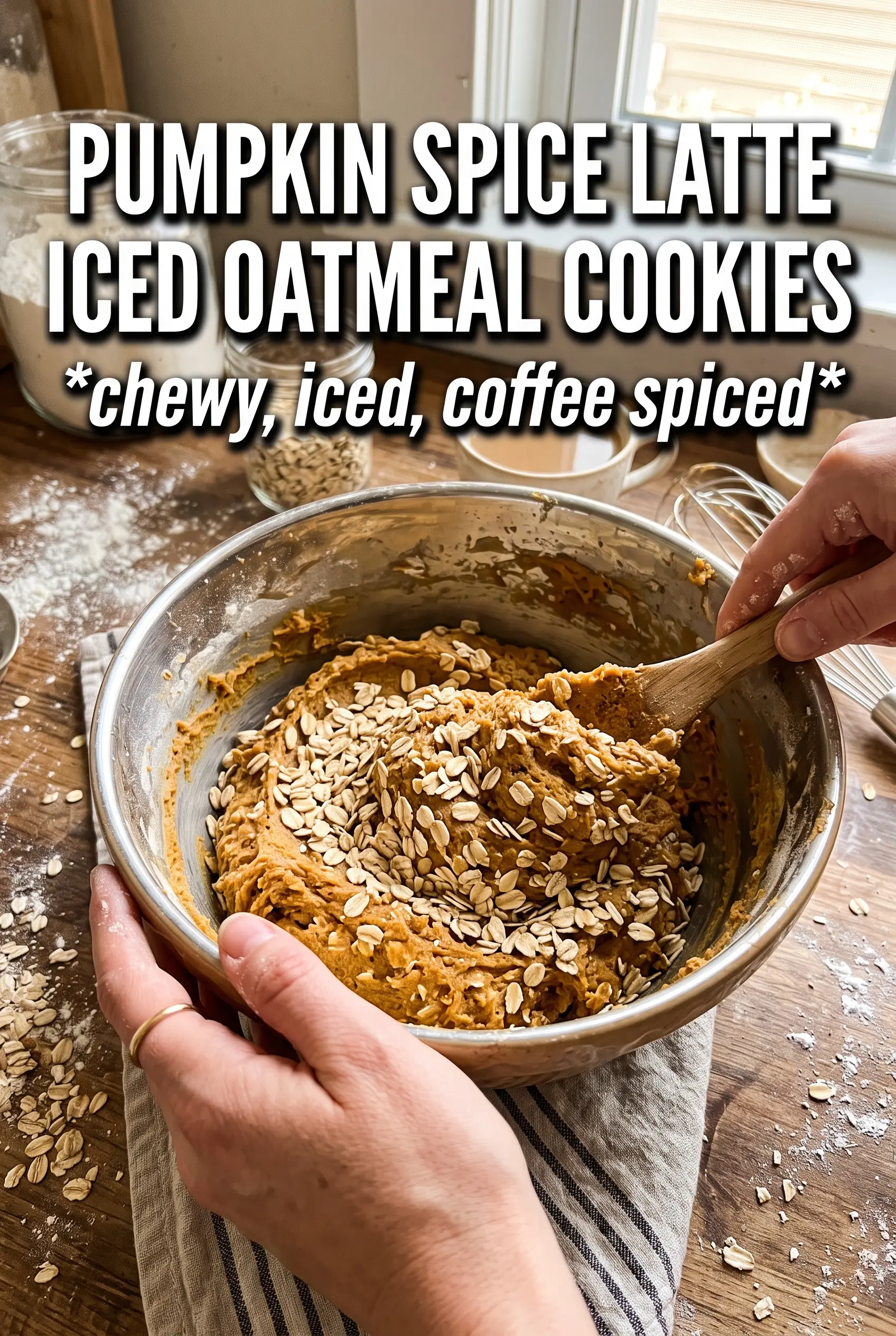
Add the blotted pumpkin, eggs, and vanilla, then fold in the oat mixture and flour mixture just until no dry streaks remain. Stop as soon as the dough looks evenly combined. Overmixing here tightens the dough and can make the cookies bake up tougher than they should.
Bake for Edges That Set and Centers That Stay Soft
Scoop the dough into 2-tablespoon rounds and give them room on the sheet pan. Bake at 375°F for 10 to 12 minutes, until the edges look set and the centers still look slightly soft. If you wait for the tops to look fully dry in the oven, they’ll be overbaked by the time they cool.
Glaze Only After the Cookies Cool
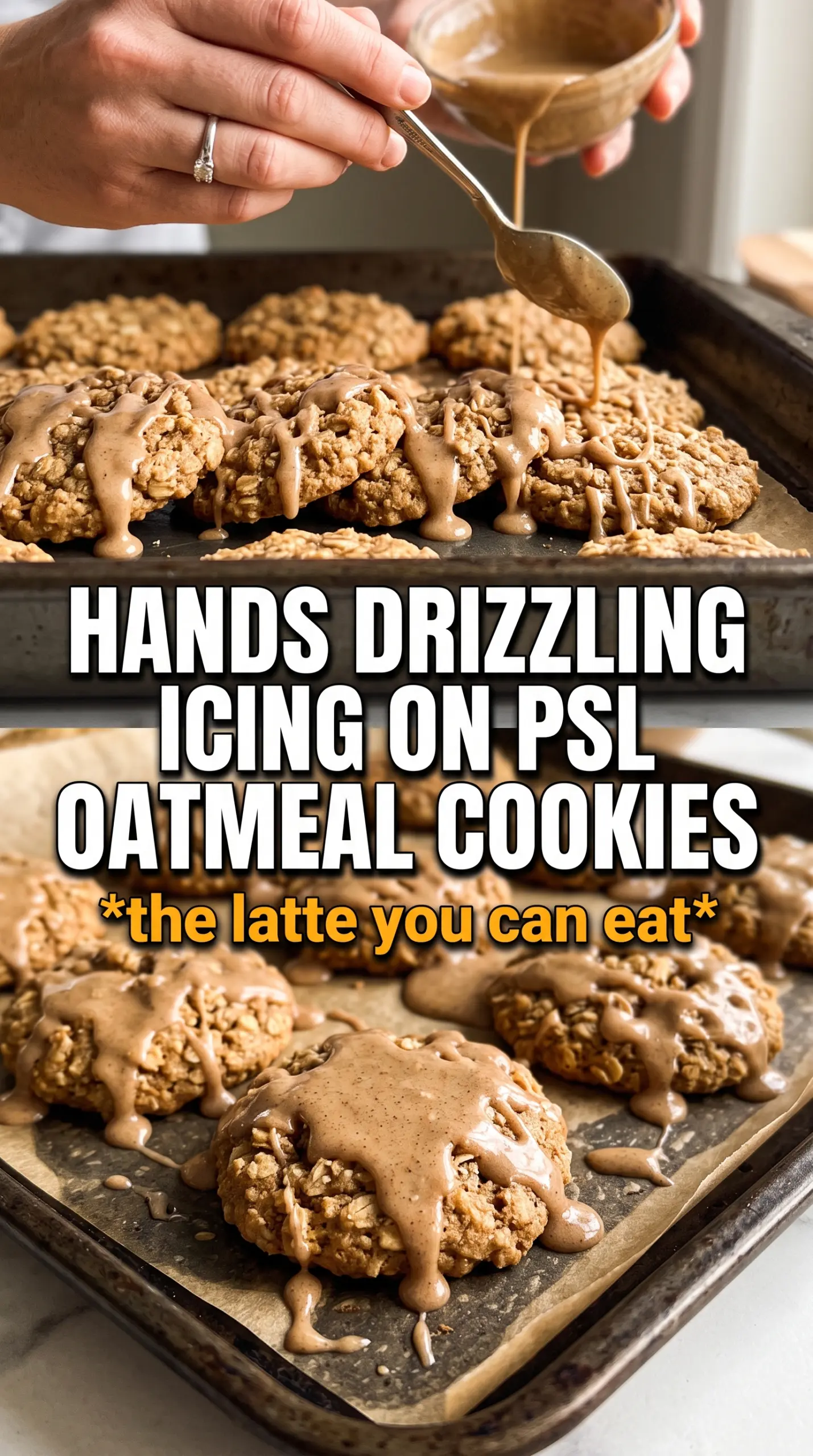
Let the cookies cool completely before spooning on the glaze. If they’re even a little warm, the icing slides right off and disappears into the tops instead of sitting in that thick, pretty layer. The glaze should be spoonable and slow-moving, not runny; if it’s too thin, add more powdered sugar a spoonful at a time.
How to Adjust the Spice, Dairy, or Batch Size Without Losing the Texture
Dairy-Free Version
Use a plant-based butter that behaves like stick butter, not a soft tub spread. The texture will still be chewy, but the flavor loses a little richness, so keep the espresso powder and cinnamon in the glaze for depth.
Gluten-Free Swap
A good 1:1 gluten-free baking flour can replace the all-purpose flour, but don’t swap the oats for instant oats. Keep the oats coarse so the cookies still bake with that chewy, hearty bite instead of turning sandy.
Extra Coffeehouse Flavor
If you want the latte side to show up more clearly, add another 1/4 teaspoon espresso powder to the dough and use espresso instead of coffee in the glaze. That gives the icing a deeper edge without making the cookies bitter.
Storage and Reheating
- Refrigerator: Store in an airtight container for up to 4 days. The glaze stays set, but the cookies soften slightly as they sit.
- Freezer: Freeze the unglazed cookies for up to 2 months. Thaw at room temperature, then glaze after they’ve fully warmed up.
- Reheating: These are best eaten at room temperature. If you want the cookie itself a little warmer, microwave an unglazed cookie for 6 to 8 seconds. Glazed cookies will melt if heated too long.
Answers to the Questions Worth Asking
Pumpkin Spice Latte Iced Oatmeal Cookies
Ingredients
Equipment
Method
- Pulse the rolled oats coarsely in a blender, leaving some visible oat pieces for texture.
- In a bowl, beat the softened unsalted butter and packed brown sugar until combined and creamy with a lighter color.
- Mix in the blotted dry pumpkin, then add the eggs and vanilla, stirring until the mixture looks uniform.
- Fold the oat mixture and flour mixture together just until no dry streaks remain, stopping when the dough comes together.
- Scoop 2-tablespoon rounds of dough onto a sheet pan, spacing them evenly so they can spread.
- Bake at 375F for 10-12 minutes, until the edges look set and lightly golden.
- Cool the cookies completely on the sheet pan, leaving them undisturbed until the tops are no longer warm.
- Whisk powdered sugar with strong coffee or espresso, pumpkin puree, pumpkin pie spice, and cinnamon until smooth and thick like a pourable icing.
- Spoon the pumpkin spice latte glaze over each cookie so the center is covered and the glaze coats the surface.
- Let the glazed cookies set until the icing firms up, then serve.