Pumpkin sugar cookies bake up soft in the center with lightly crisp edges, then get finished with a thick layer of cinnamon cream cheese frosting that settles into every little ridge. The pumpkin stays in the background where it belongs, giving the cookies that warm autumn spice flavor without making the dough cakey or sticky. What you get is a cut-out cookie that still tastes like a proper sugar cookie, just with a deeper, cozier personality.
The trick is keeping the pumpkin dry and the dough cold. Extra moisture is what turns pumpkin cookies from tender to puffed and bready, so blotting the puree makes a bigger difference than people expect. Chilling the dough for a full hour also keeps the shapes sharp and helps the cookies bake up with clean edges instead of spreading into soft little puddles.
Below, I’ve included the part that matters most: how to keep the frosting smooth, why the cinnamon sugar finish works, and the one texture cue I watch so these cookies stay soft without turning underbaked.
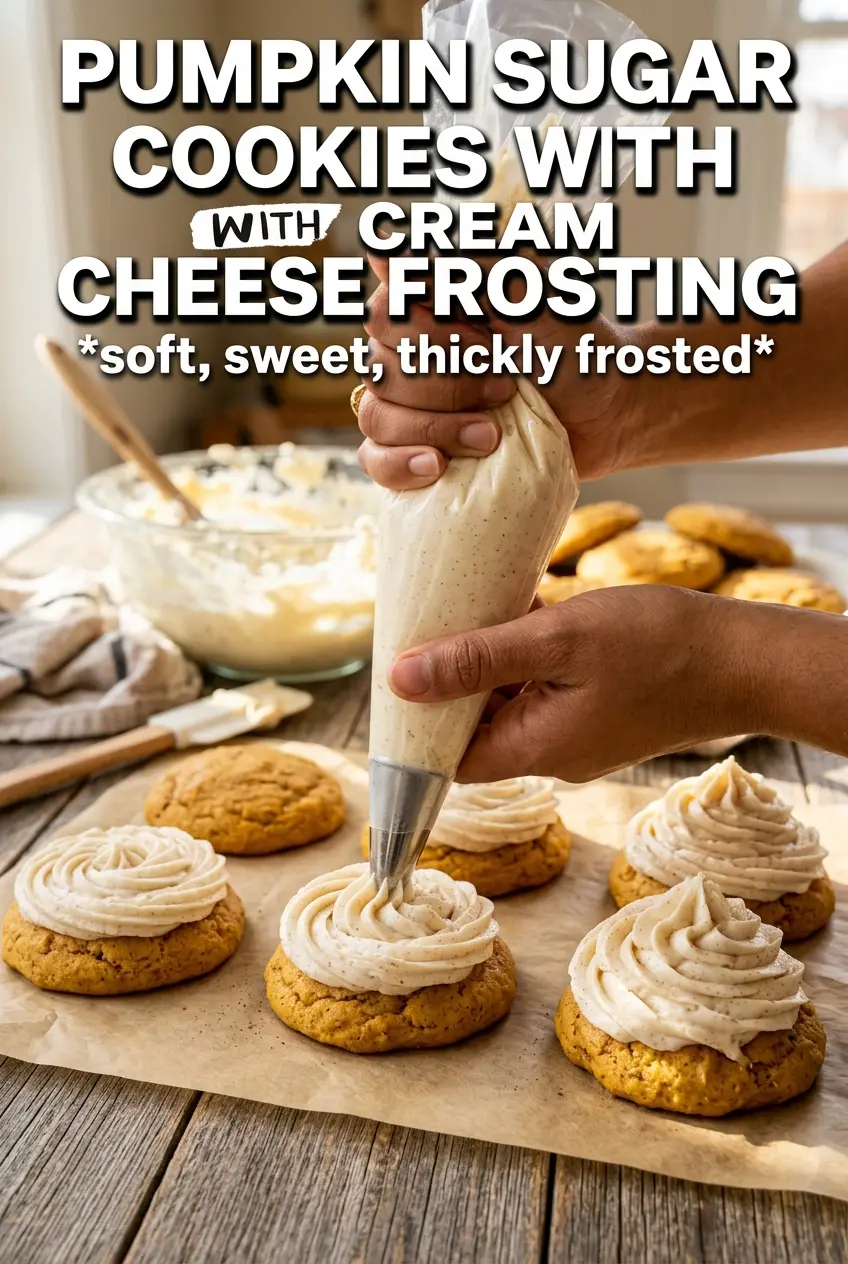
The dough rolled out cleanly after chilling, and the frosting stayed thick enough to pipe instead of sliding off. I loved the cinnamon sugar on top — it gave each cookie a little crunch that made the soft centers even better.
Save these pumpkin sugar cookies with cream cheese frosting for the days when you want soft cut-outs, warm spice, and a thick cinnamon finish.
The Dough Needs to Stay Cold, Not Just Mixed
Pumpkin cookie dough behaves differently from plain sugar cookie dough because the pumpkin brings extra moisture and a softer structure. If you roll it straight away, it sticks, spreads too fast, and bakes up thick in the middle instead of holding a clean edge. Chilling gives the flour time to absorb that moisture, which is why the dough becomes easier to handle after an hour in the fridge.
The other thing that matters here is how you measure the pumpkin. Blotting it dry is not optional if you want a cookie that cuts neatly and keeps its shape. Too much puree turns the dough slack, and even a perfect bake won’t fix that.
- Butter and sugar — Cream them until light, not just combined. That air helps the cookies stay tender and keeps the texture from turning dense.
- Pumpkin puree — Use plain pumpkin, not pie filling, and press it between paper towels until it stops weeping. That step does more than any extra flour ever will.
- Pumpkin pie spice and cinnamon — The combination gives the cookies a rounder spice flavor than cinnamon alone. If you only have pumpkin pie spice, use it plus a little extra cinnamon for a warmer finish.
- Flour — Spoon and level it if you can. Packing too much flour makes these dry before they even hit the oven.
What Each Ingredient Is Actually Doing in This Recipe

- Primary ingredient (the star) — Quality matters most. Choose the best you can find.
- Cooking medium (oil, butter, or broth) — This carries flavors and prevents dryness.
- Seasonings (salt, pepper, spices, herbs) — Layer flavors so nothing overpowers. Build depth gradually.
- Aromatics (garlic, onion, herbs) — Cook with fat to bloom flavors. Become the foundation.
- Supporting ingredients — Complement the main ingredient without overpowering it.
- Sauce or liquid (if applicable) — Brings flavors together. Balance richness with acid.
- Acid (lemon, vinegar, wine, or other) — Brightens and prevents flat-tasting results.
- Final finish (garnish, glaze, or sauce) — Prevents one-dimensional taste and adds visual appeal.
Rolling, Cutting, and Baking Until the Centers Are Just Set
Mixing the Soft Dough
Beat the butter and sugar until the mixture looks fluffy and pale, then add the egg, vanilla, and blotted pumpkin. The dough may look a little loose at first, but it should come together once the dry ingredients go in. Stop mixing as soon as the flour disappears; overmixing makes the cookies tougher and encourages spread.
Chilling for Clean Edges
Wrap the dough and chill it for a full hour. If it still feels sticky after chilling, give it a few more minutes instead of forcing it onto the counter. Cold dough rolls out cleaner, cuts sharper, and bakes with a thicker, softer center.
Baking for a Soft Middle
Roll the dough to 1/4-inch thick and cut it into circles or pumpkins, then bake at 350°F until the edges look set and the centers no longer look wet. They should not brown much; these cookies are best when they stay pale with just a hint of golden color underneath. Pull them from the oven on time, because an extra minute can turn soft cookies dry fast.
Frosting and Finishing
Beat the cream cheese, butter, powdered sugar, cinnamon, vanilla, and milk until smooth and spreadable. If the frosting seems loose, add a little more powdered sugar; if it feels stiff, add milk a teaspoon at a time. Let the cookies cool completely before frosting them, or the topping will melt and slide, and finish with a light dusting of cinnamon sugar for texture.
How to Adapt These Cookies Without Losing the Soft Texture
Dairy-Free Version
Use a plant-based butter in both the dough and frosting, and choose a dairy-free cream cheese that holds its shape well. The cookies still bake soft, but the frosting may be a little less tangy and a touch softer, so chill it briefly before piping.
Gluten-Free Swap
A good 1:1 gluten-free baking blend works here, but the dough may need a longer chill because the texture starts softer. The cookies will still be tender, though they may have a slightly more delicate crumb when you move them to the cooling rack.
Make Them Less Sweet
You can cut the frosting back to a thinner layer or skip the cinnamon sugar dusting if you want the spice to lead instead of the sugar. Don’t reduce the sugar in the cookie dough much, though, because it helps with both structure and that soft-baked texture.
Storage and Reheating
- Refrigerator: Store frosted cookies in an airtight container for up to 4 days. The frosting stays best when the cookies are layered with parchment, and the texture softens slightly as they sit.
- Freezer: Freeze the unfrosted cookies for up to 2 months. Thaw at room temperature, then frost after they’re fully defrosted so the topping keeps its texture.
- Reheating: These are better served at room temperature than warmed. If the cookies have been refrigerated, let them sit out for 20 to 30 minutes so the frosting softens again without melting.
Answers to the Questions Worth Asking
Pumpkin Sugar Cookies With Cream Cheese Frosting
Ingredients
Equipment
Method
- Preheat the oven to 350F, then mix together the dry ingredients and set aside.
- Cream the butter and sugar until combined, then beat in pumpkin (blotted dry), egg, and vanilla until the dough looks cohesive.
- Add the dry ingredients to the wet ingredients and mix just until combined, then form the dough into a disk and chill for 1 hour.
- Roll the chilled dough to 1/4-inch thickness and cut into circles or pumpkin shapes.
- Place the cutouts on a sheet pan and bake for 10-12 minutes at 350F, until just set.
- Let the cookies cool completely before frosting.
- Beat the cream cheese and softened unsalted butter until smooth, then mix in powdered sugar, cinnamon, vanilla, and milk until the frosting is thick and spreadable.
- Pipe or spread a generous swirl of frosting onto each cookie.
- Dust the frosted cookies with cinnamon sugar for finishing.