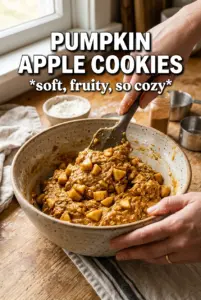
Pumpkin sugar cookies bake up soft in the center with just enough structure at the edges to hold a thick swipe of cream cheese frosting. The pumpkin stays in the background instead of taking over, which is what keeps these tasting like a proper sugar cookie with a fall bend rather than a spiced cake in disguise. The chilled dough rolls cleanly, cuts neatly, and bakes into round cookies that stay tender after they cool.
The trick is keeping the pumpkin puree dry before it ever hits the bowl. Pumpkin brings flavor and color, but it also brings water, and too much moisture turns sugar cookie dough sticky and bloated instead of smooth and workable. A short chill firms the butter back up, helps the cookies keep their shape, and gives the flour time to hydrate so the texture finishes soft instead of cakey.
Below, I’m walking through the one step that keeps these from spreading, the ingredient that matters more than it looks, and a few useful ways to change the cookies without losing that soft, frosted finish.
I blotted the pumpkin like you said and the dough rolled out without sticking to everything. The cookies stayed soft after baking and the frosting set up just enough that they stacked nicely.
These pumpkin sugar cookies are made for soft centers, neat cut-outs, and that thick cream cheese frosting finish.
The Pumpkin That Makes or Breaks the Dough
The biggest mistake with pumpkin cookies is treating pumpkin puree like a dry ingredient. It isn’t. Even a few extra spoonfuls of moisture can turn a dough that should roll cleanly into one that sticks, spreads, and bakes up puffy in the wrong way. Blotting the pumpkin on paper towels until it feels thick and almost paste-like keeps the sugar cookie texture intact.
Chilling matters for the same reason. Butter soft enough to cream easily will also melt fast in the oven if it goes in warm. An hour in the fridge gives you dough that holds a cutter edge, bakes with a tidy outline, and stays tender instead of greasy.
- Blotted pumpkin puree — This gives pumpkin flavor without flooding the dough. If you skip the blotting, expect more spread and a softer, stickier dough.
- All-purpose flour — This recipe needs enough structure to stand up to the pumpkin and frosting. Weighing the flour is ideal, but if you measure with cups, fluff first and level off gently.
- Butter — Real butter gives these cookies their rich, short-bread-like bite. Use unsalted butter so you control the salt in the dough and frosting.
- Pie spice plus cinnamon — The blend gives warmth without making the cookies taste like pumpkin pie filling. If you only have pumpkin pie spice, use that and skip the extra cinnamon.
What Each Ingredient Is Actually Doing in This Recipe
- Primary ingredient (the star) — Quality matters most. Choose the best you can find.
- Cooking medium (oil, butter, or broth) — This carries flavors and prevents dryness.
- Seasonings (salt, pepper, spices, herbs) — Layer flavors so nothing overpowers. Build depth gradually.
- Aromatics (garlic, onion, herbs) — Cook with fat to bloom flavors. Become the foundation.
- Supporting ingredients — Complement the main ingredient without overpowering it.
- Sauce or liquid (if applicable) — Brings flavors together. Balance richness with acid.
- Acid (lemon, vinegar, wine, or other) — Brightens and prevents flat-tasting results.
- Final finish (garnish, glaze, or sauce) — Prevents one-dimensional taste and adds visual appeal.
Getting Neat Cut-Outs and a Soft Center at the Same Time
Creaming the Base
Beat the butter and sugar until the mixture looks pale and fluffy, not greasy or dense. That step traps air, which helps the cookies bake up with a light crumb instead of a heavy one. Add the blotted pumpkin, egg, and vanilla after the creaming is done so the dough stays smooth. If the mixture looks a little curdled at first, keep going; the flour will bring it together.
Bringing the Dough Together
Fold in the dry ingredients just until no streaks of flour remain. Overmixing pushes these cookies toward toughness and makes them lose that tender sugar cookie bite. The dough should be soft but not wet enough to cling to your hands like batter. Divide it before chilling so it firms evenly and rolls without fighting you.
Rolling, Cutting, and Baking
Roll the chilled dough to 1/4 inch for cookies that stay plush in the center without feeling underbaked. If the dough warms while you work, slide it back into the fridge for a few minutes instead of forcing it. Bake until the edges are just set and the centers no longer look shiny. They will finish setting on the sheet pan, and pulling them early is what keeps them soft after cooling.
Frosting and Decorating
Beat the cream cheese frosting until completely smooth before adding color, because lumps show up fast on a plain cookie surface. Orange food coloring works best when added gradually; too much at once can throw off the frosting texture. Frost the cookies only after they are fully cool or the frosting will slide, melt, and lose that clean swirl on top.
How to Adapt These Pumpkin Sugar Cookies Without Losing the Soft Bake
Make them gluten-free
Use a 1:1 gluten-free baking blend that includes xanthan gum. The cookies will still be soft, but the edges may be a little more delicate, so chill the dough well and move the cut-outs carefully to the pan.
Skip the cream cheese frosting
A simple vanilla buttercream works if you want a sweeter, sturdier finish. You lose the tang that balances the pumpkin spice, but the cookies keep their soft texture and stack more easily for gifting.
Use cookie cutters instead of circles
Pumpkins, leaves, and stars all work as long as the dough stays cold. Sharp, simple shapes hold best because the dough is soft by nature, and detailed cutters can blur a little as the cookies bake.
Storage and Reheating
- Refrigerator: Store frosted cookies in an airtight container for 4 to 5 days. The frosting stays soft, but the cookie itself firms up a little after chilling.
- Freezer: Unfrosted baked cookies freeze well for up to 2 months. Layer them with parchment and thaw at room temperature before frosting.
- Reheating: These don’t need reheating once frosted. If you froze the cookies unfrosted, let them thaw fully on the counter so condensation doesn’t make the frosting slide later.
Answers to the Questions Worth Asking
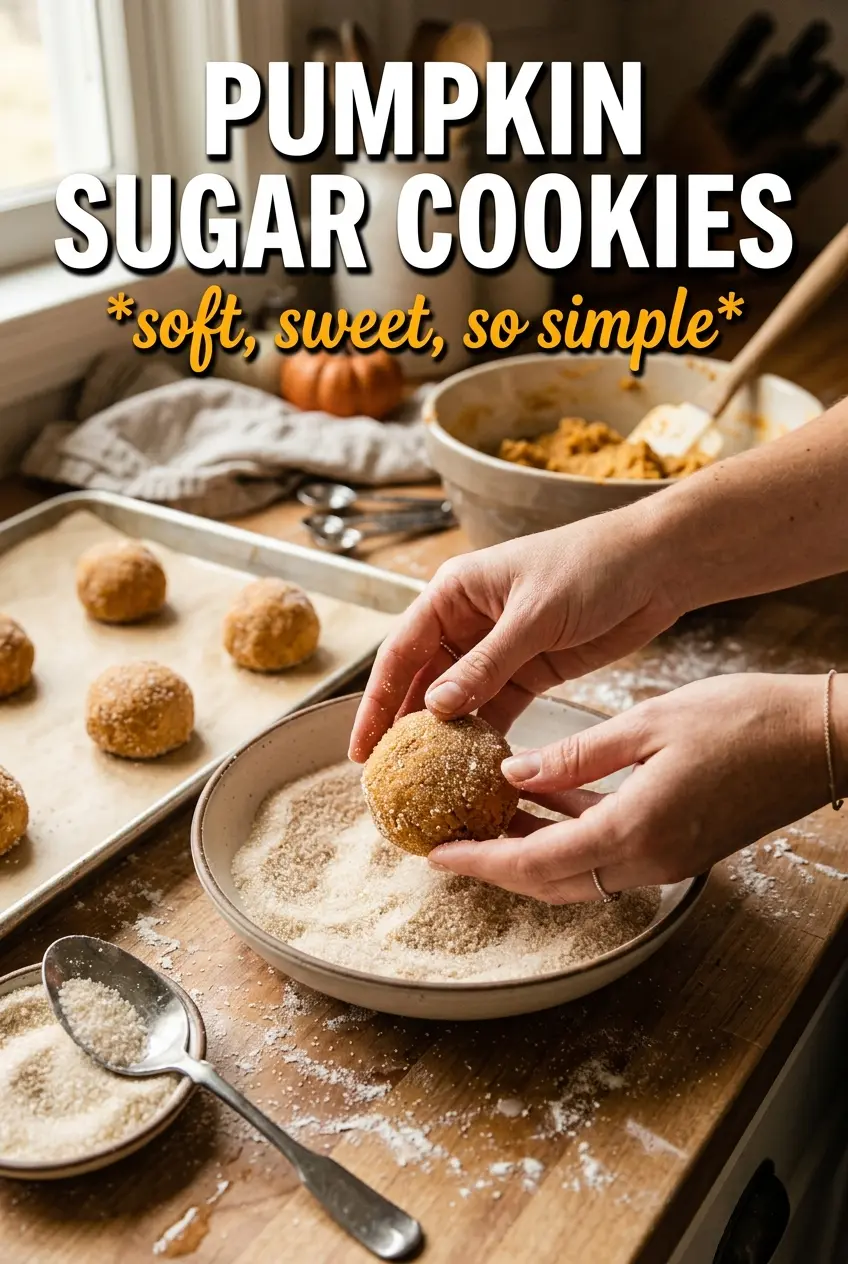
Pumpkin Sugar Cookies
Ingredients
Equipment
Method
- Beat the softened unsalted butter and granulated sugar until smooth. Add the blotted very dry pumpkin puree, then beat in the egg and vanilla until fully combined.
- In a separate mixing process, fold in the all-purpose flour, baking powder, baking soda, pumpkin pie spice, cinnamon, and salt. Mix just until the dough comes together with no dry streaks.
- Divide the dough and refrigerate for 1 hour to firm up for clean cut-outs. Chill until the dough is easy to roll without sticking.
- Preheat the oven to 350°F and line a sheet pan. Roll the dough to 1/4 inch thickness and cut into circles or pumpkin shapes.
- Bake for 10-12 minutes, just until the edges are set. Let the cookies cool completely before frosting.
- Beat the cream cheese frosting ingredients until smooth, adding orange food coloring as needed. Frost the cooled cookies and decorate as desired.