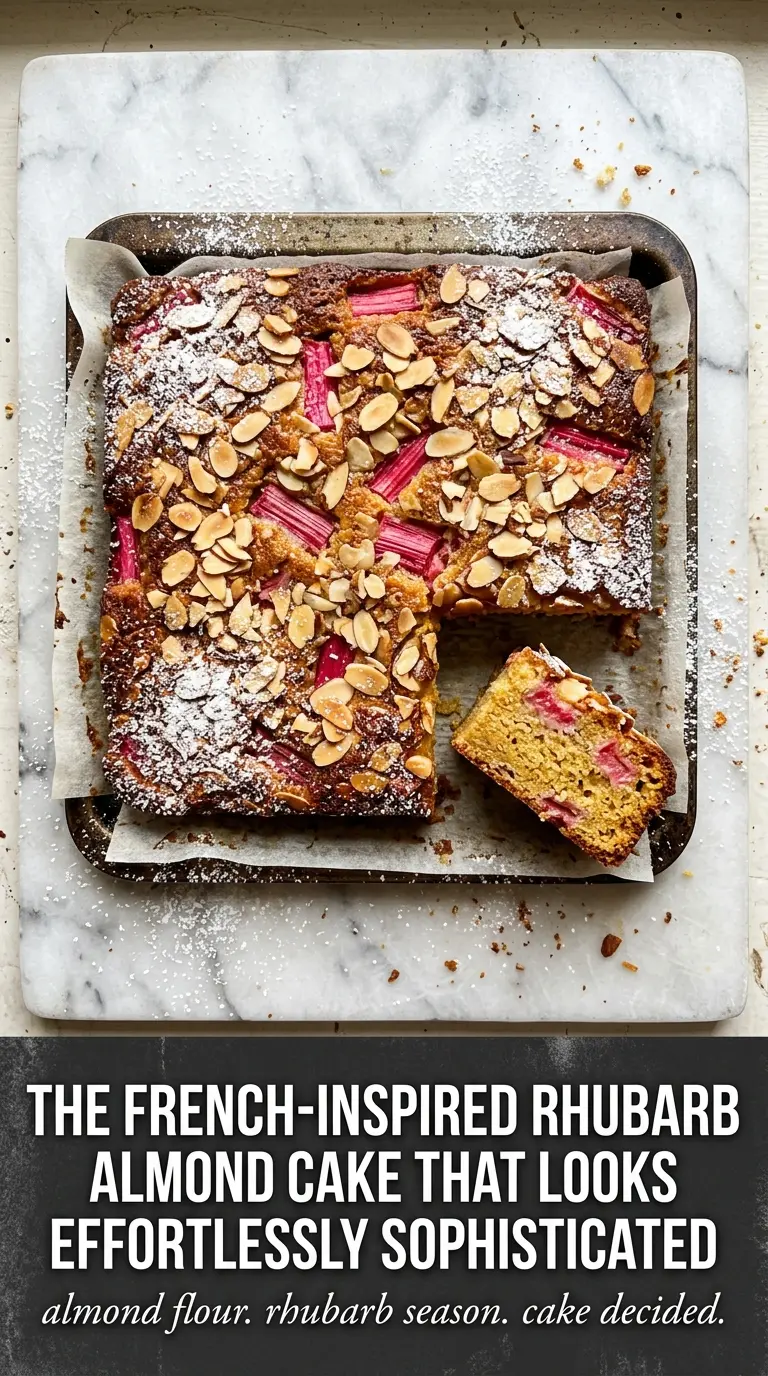
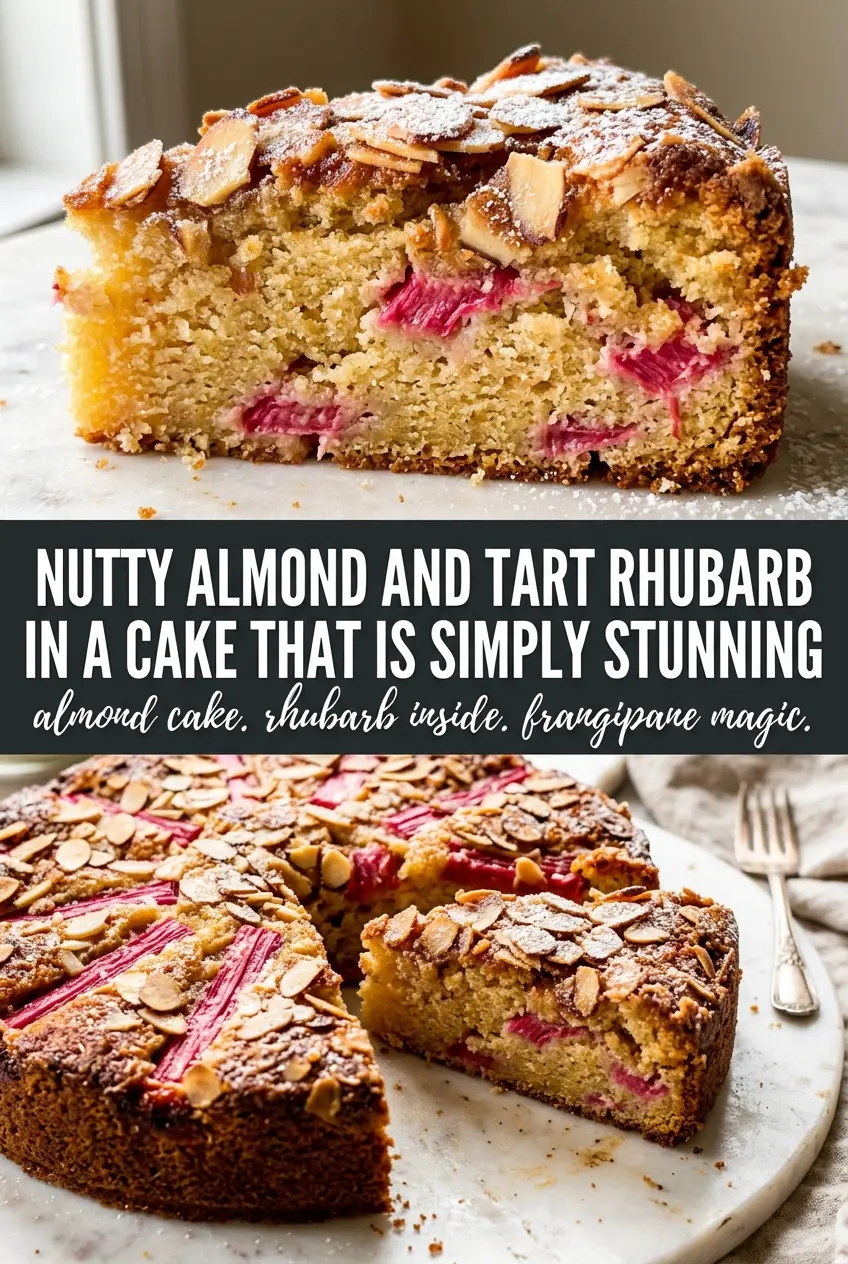
Moist almond cake with tart rhubarb baked right into the top has the kind of balance that keeps people coming back for a second slice. The cake stays tender and buttery underneath while the rhubarb softens just enough to turn jammy at the edges without losing its bright, sharp bite. A handful of sliced almonds on top gives the whole thing a light crunch that makes every forkful feel finished.
The trick here is the almond flour. It brings a soft, almost marzipan-like richness that plain flour alone can’t match, and it helps the crumb stay plush even after the cake cools. The rhubarb goes on top instead of being stirred through the batter, which keeps the fruit from sinking and keeps the slices looking clean when you cut into them.
Below, you’ll find the small details that matter most: how to keep the batter from turning dense, what to look for when the rhubarb is baked through, and a few smart swaps if you need to work with what’s already in your pantry.
The rhubarb stayed right on top and baked into the prettiest little pink pockets, and the almond flavor came through without tasting heavy. I let it cool the full 30 minutes and the slices held together beautifully.
Save this rhubarb-almond cake for the next time you want a tender spring dessert with a golden almond top and clean slices.
The Reason the Rhubarb Stays on Top Instead of Sinking
Rhubarb can turn a cake muddy if it’s mixed straight into the batter. It releases juice as it bakes, and that extra liquid can weigh down the crumb and create pockets that bake up gummy instead of tender. Placing the pieces on top solves that problem and gives the cake a clear, beautiful finish.
The other thing that matters here is the batter thickness. This is not a thin pour-and-pray batter. It’s sturdy enough to hold the fruit where you put it, but still soft enough to rise around it. That balance is what keeps the rhubarb visible and the crumb moist.
- Rhubarb — Fresh rhubarb gives the best color and the cleanest tart flavor. If the stalks are especially thick, cut them into even 1-inch pieces so they soften at the same rate.
- Almond flour — This is what gives the cake its rich, nutty depth and tender crumb. There’s no real substitute for the texture it adds, though finely ground blanched almonds are the closest swap if you grind them yourself.
- Butter — Softened butter traps air when you cream it with sugar, which helps the cake rise and keeps the crumb light. Cold butter won’t whip properly, and melted butter changes the texture completely.
- Milk — Milk loosens the batter just enough to make it spread in the pan without thinning it out. Whole milk gives the best result, but 2% works if that’s what you have.
What Each Ingredient Is Actually Doing to Keep Rhubarb on Top
- Rhubarb pieces (cut to size) — The size affects whether the rhubarb sinks or floats. Larger pieces are more likely to stay on top.
- Density of the base (heavier batter below) — A dense batter or custard helps the rhubarb float on top. Light batters let it sink to the bottom.
- Lighter rhubarb preparation — If the rhubarb is wet or heavily sugared, it becomes heavier and sinks. Keep it as dry and light as possible.
- Timing of rhubarb addition — Adding rhubarb on top after the batter is partially set helps it stay on top. Adding it to the raw batter lets it sink.
- Gentle handling — Don’t stir or disturb the batter after adding rhubarb. Stirring pushes the rhubarb down.
- Batter consistency (thick enough to support rhubarb) — A thin batter won’t support floating rhubarb. The batter needs enough body to keep the fruit on top.
- Even distribution on top — Spreading the rhubarb evenly on top helps it stay visible and attractive. Piling it in one spot lets it sink.
- Baking immediately after assembly — Don’t let the dessert sit before baking. The rhubarb is more likely to sink if it sits in the raw batter.
Building the Batter So the Cake Stays Tender
Creaming the Butter and Sugar
Beat the butter and sugar until the mixture looks pale and fluffy, not just blended. This step builds the base structure of the cake, and if you rush it, the crumb will come out heavier than it should. Add the eggs one at a time and wait until each one disappears before adding the next, or the batter can look curdled and uneven.
Bringing in the Dry Ingredients
Whisk the all-purpose flour, almond flour, baking powder, and salt together first so the leavening is evenly distributed. Add the dry ingredients and milk in alternating additions, starting and ending with the dry mixture, and stop mixing as soon as the batter comes together. Overmixing after the flour goes in is what makes the cake tough instead of soft.
Finishing with the Rhubarb and Almonds
Pour the batter into the prepared springform pan and scatter the rhubarb over the surface, pressing it in just slightly so it settles without disappearing. The sliced almonds should go on top before baking so they toast in the oven and give you that golden finish. If the fruit is pushed too deep, it can sink and lose the pretty surface pattern that makes this cake special.
Knowing When It’s Done
Bake until the top is golden and a toothpick inserted into the center comes out clean or with a few moist crumbs. Rhubarb should look softened and glossy, not dry or shriveled, and the edges of the cake will start pulling away from the pan. Let it cool in the pan for 30 minutes before removing it, or the cake can break while it’s still too fragile.
What to Change When You Need a Different Version
Dairy-Free Version
Use a plant-based butter that behaves like regular butter and swap in unsweetened almond milk or oat milk. The cake will still bake up tender, but it may lose a little of the rich dairy note that makes the original taste fuller.
Gluten-Free Adaptation
Replace the all-purpose flour with a good 1:1 gluten-free baking blend that already includes xanthan gum. The almond flour already adds softness, so the cake can handle the swap well, but don’t use a single-ingredient flour like rice flour on its own.
Less Sweet, More Tart
If your rhubarb is very tart, keep the sugar as written so the cake stays balanced. If you want the fruit to taste sharper, dust the finished cake lightly with powdered sugar instead of adding extra sweetness to the batter.
Storage and Reheating
- Refrigerator: Store covered for up to 4 days. The crumb stays moist, though the almonds on top soften a little.
- Freezer: Freeze slices tightly wrapped for up to 2 months. Thaw overnight in the refrigerator for the best texture.
- Reheating: Warm slices in a 300°F oven for about 8 minutes. Skip the microwave if you want the top to stay crisp instead of turning soft.
Answers to the Questions Worth Asking
Rhubarb-Almond Cake
Ingredients
Equipment
Method
- Preheat the oven to 350°F and grease a 9-inch springform pan.
- Cream butter and sugar until fluffy, then beat in eggs one at a time and add almond extract.
- Whisk together all-purpose flour, almond flour, baking powder, and salt.
- Add the dry ingredients to the butter mixture alternating with milk, mixing until just combined.
- Pour batter into the prepared pan and arrange rhubarb pieces on top, pressing slightly into the batter.
- Sprinkle sliced almonds over the top, then bake for 45-50 minutes at 350°F until golden and a toothpick comes out clean.
- Cool the cake in the pan for 30 minutes.
- Remove from the pan, dust with powdered sugar, and serve.