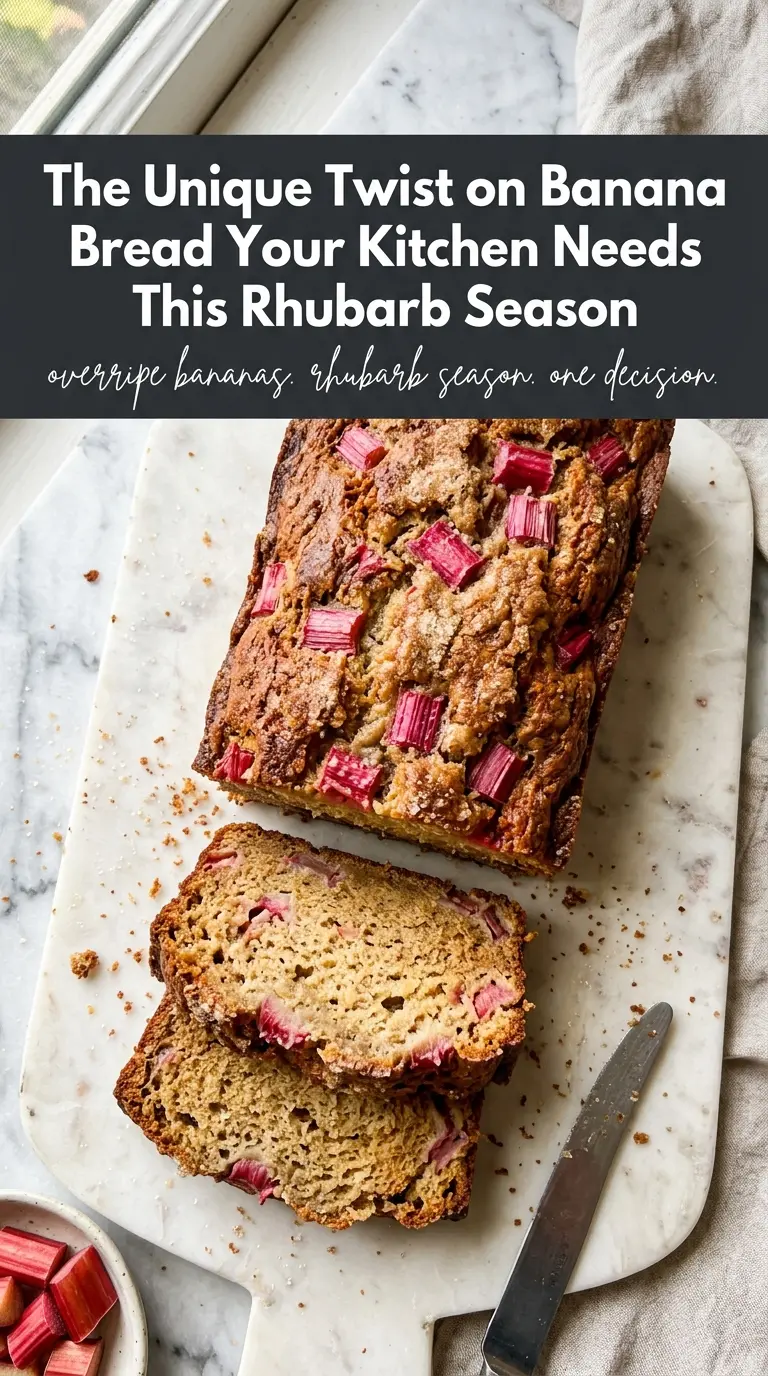
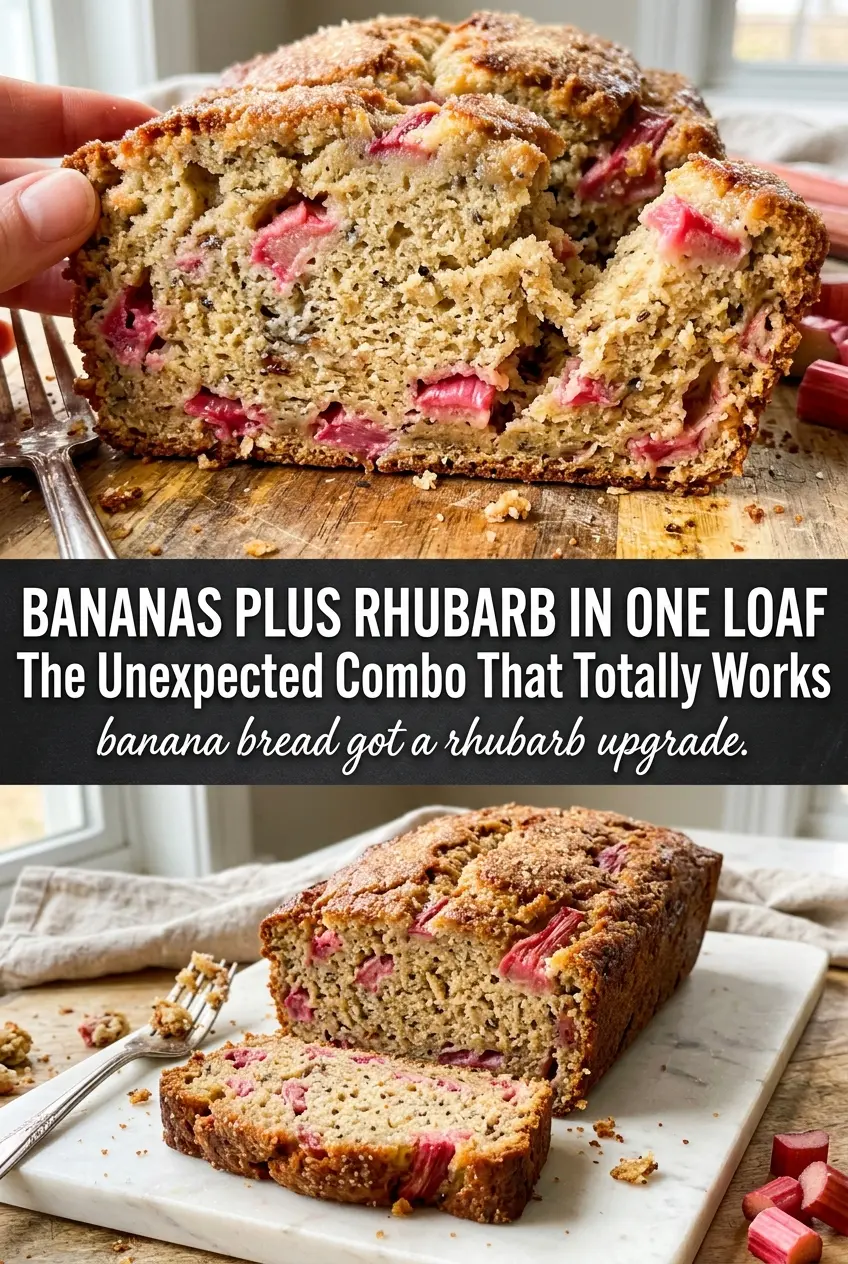
Rhubarb banana bread bakes up with a soft, moist crumb, little tangy bites of pink rhubarb, and the kind of banana-rich sweetness that makes a second slice feel justified. It tastes familiar at first bite, then the rhubarb wakes everything up. That contrast is what keeps this loaf from turning flat or one-note.
The bananas bring moisture and body, while the rhubarb keeps the loaf from leaning too sweet. Cutting the rhubarb finely matters here, because larger pieces can sink and leave pockets that bake unevenly. The batter stays thick, so the fruit doesn’t disappear; it stays scattered through the loaf and gives you that pretty speckled slice when you cut it open.
Below, I’ve included the small details that help this quick bread bake evenly and stay tender, plus a few swaps if you need to adjust for what’s in your kitchen.
The loaf came out incredibly moist and the rhubarb stayed in little tender bursts instead of melting away. I was worried the fruit would make it soggy, but it sliced cleanly after cooling and the texture was perfect.
Like this rhubarb banana bread? Save it to Pinterest for a soft, tangy loaf with pink rhubarb in every slice.
The Part That Keeps the Rhubarb From Turning the Loaf Wet
Quick breads get blamed for being heavy or gummy, but the real problem is usually too much fruit in the wrong shape. Rhubarb releases moisture as it bakes, and if the pieces are large, they create soft pockets that never quite set the same way as the rest of the loaf. Finely dicing it gives you small, even bursts of tartness without flooding the batter.
The other thing that matters is mixing only until the flour disappears. Once the dry and wet ingredients come together, the batter should look a little rough and thick. If you beat it smooth, the loaf bakes up tighter and loses that tender crumb that makes banana bread worth slicing warm.
- Ripe bananas — Use bananas with plenty of brown spots. They mash smoothly, taste sweeter, and keep the loaf moist without needing extra butter.
- Fresh rhubarb — Fresh is the right choice here because it holds its shape better than thawed frozen rhubarb. Frozen works in a pinch, but thaw and drain it well or the loaf can turn wet in the middle.
- Vegetable oil — Oil keeps quick bread soft for days. Melted butter adds flavor, but it also firms up more as the loaf cools, so the texture won’t stay as plush.
- Cinnamon — This doesn’t make the bread taste like spice cake. It just rounds out the tart rhubarb and keeps the banana from taking over.
What Each Ingredient Is Actually Doing in This Rhubarb Loaf
- Rhubarb prepared correctly (drained well) — Fresh rhubarb releases a lot of liquid. Chopping it and letting it drain, or cooking it slightly and cooling, removes excess moisture before it goes into the batter.
- Flour in the batter — The flour absorbs moisture from the rhubarb and helps the loaf stay structured. Don’t skip or reduce the flour just because there’s wet fruit.
- Sugar coating the rhubarb (optional but helpful) — Tossing the rhubarb in sugar first helps draw out excess liquid before it goes into the batter. Let it sit for 10 minutes, then drain.
- Eggs in the batter — Eggs help bind the batter and support the structure. They also help the loaf rise and stay moist without becoming soggy.
- Fat (butter or oil) — This keeps the loaf moist and tender. Use the full amount called for; don’t reduce it thinking the rhubarb adds moisture.
- Baking powder or baking soda — These help the batter rise and create structure that can support the wet fruit. Don’t skip or reduce these leavening agents.
- Vanilla or almond extract — These brighten the rhubarb flavor and prevent the loaf from tasting one-dimensionally tart.
- Salt in the batter — A pinch of salt enhances the rhubarb flavor and balances the sweetness. It also helps activate the baking soda.
How to Keep the Center Tender Without Overbaking the Edges
Mix the wet ingredients first
Beat the eggs, oil, mashed bananas, and vanilla until they look smooth and emulsified. That gives the loaf a more even crumb and keeps little streaks of egg from showing up in the baked slice. The mixture won’t get fluffy, and that’s fine; you’re building a bread batter, not a cake.
Fold the rhubarb in at the end
Stir the wet mixture into the dry just until the flour disappears, then fold in the rhubarb with a few slow turns of the spatula. If you add the fruit earlier, it can break down and bleed too much moisture into the batter. The goal is to see the pink pieces distributed throughout, not mashed into the base.
Bake until the center tests clean
Scrape the batter into a greased 9×5-inch loaf pan and bake at 350°F for 55 to 60 minutes. The top should be deeply golden and the center should spring back lightly when touched. If a toothpick comes out with wet batter, give it more time; pulling it too early is the fastest way to end up with a sunken middle.
Cool before slicing
Let the loaf sit in the pan for 10 minutes, then turn it out onto a wire rack and cool it all the way through. Warm banana bread is tempting, but cutting too soon compresses the crumb and makes the rhubarb streaks look messy. Once it cools, the slices hold together cleanly and the texture settles into that soft, moist finish you want.
What to Change When You Want a Different Kind of Loaf
Make it dairy-free without changing the crumb
This loaf is already dairy-free as written, which is one of the reasons the texture stays so soft. Serve it with dairy-free butter if you want that warm-slice finish, but the bread itself doesn’t need any adjustment.
Use frozen rhubarb when fresh isn’t available
Frozen rhubarb works, but thaw it first and pat it dry so extra ice water doesn’t thin the batter. The loaf will still taste bright and tangy, though the fruit pieces may soften a little more during baking.
Turn it into muffins
Portion the batter into lined muffin cups and bake at the same temperature for a shorter time, usually 18 to 22 minutes. You’ll get a more portable breakfast with crisper edges and slightly less of the soft center that makes a loaf feel extra tender.
Add chopped nuts for a little crunch
A handful of chopped walnuts or pecans adds texture and a mild toasty note that plays well with the banana. Keep the amount modest so the rhubarb still stands out and the loaf doesn’t crumble when sliced.
Storage and Reheating
- Refrigerator: Store tightly wrapped at room temperature for up to 2 days, or refrigerate for up to 5 days if your kitchen is warm. The crumb may firm up a bit in the fridge.
- Freezer: This loaf freezes well. Wrap slices or the whole loaf in plastic, then foil, and freeze for up to 3 months.
- Reheating: Thaw at room temperature, then warm slices in a toaster oven or microwave just until heated through. Overheating dries out quick bread fast, so heat it gently and stop as soon as it’s soft again.
Answers to the Questions Worth Asking
Rhubarb Banana Bread
Ingredients
Equipment
Method
- Preheat the oven to 350°F and grease a 9x5-inch loaf pan, keeping the pan ready for batter.
- Whisk together all-purpose flour, sugar, baking soda, salt, and cinnamon until evenly combined, with no visible streaks.
- In a separate bowl, beat eggs, vegetable oil, mashed ripe bananas, and vanilla extract until combined and smooth-looking.
- Pour the wet ingredients into the dry ingredients and stir until just mixed, with a few small flour patches okay.
- Fold in the finely diced fresh rhubarb so pink pieces are distributed throughout the batter.
- Pour batter into the prepared loaf pan and bake for 55-60 minutes at 350°F until a toothpick comes out clean.
- Cool the loaf in the pan for 10 minutes until it firms up slightly.
- Turn the loaf out onto a wire rack to cool completely for the remaining time so it slices cleanly.